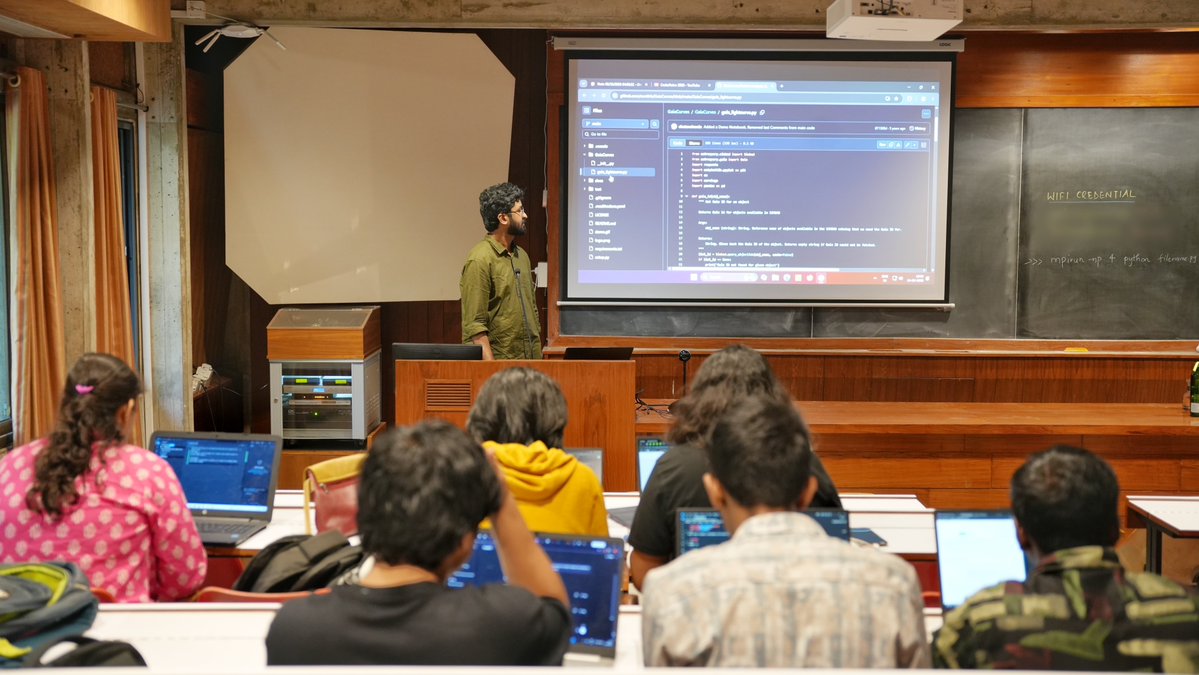
Had a wonderful experience organizing the Bangalore Local Hub for Code/Astro 2026 at @RRI_Bangalore. It was a great pleasure to work with participants from different institutes. Thanks to @saurabh_astro, the Code/Astro team, and everyone who contributed to making it a success!
Delighted to see the successful completion of the week-long CODE/ASTRO 2026!
The local chapter at @RRI_Bangalore saw enthusiastic participation in astronomy software development and collaborative coding. A big shout-out to Sonith L.S. for coordinating this wonderful event!
A 24-year-old Polish tennis player arrived in Paris last week ranked 114th in the world, with no sponsors, no guaranteed income, and no certainty she could even pay for her hotel room.
She had to win three qualifying matches just to enter the French Open main draw. Prize money is only paid at the end of the tournament, so a Polish sports drink brand quietly stepped in and covered her hotel bill.
Her name is Maja Chwalinska. And today, she plays in the French Open final.
Before this tournament, she had won exactly one Grand Slam main draw match in her entire career. She had battled depression so severe that in 2021 she couldn't get out of bed. She underwent knee surgery in 2022. She spent years grinding through small tournaments across Europe just to stay afloat.
Then she arrived in Paris, won three qualifiers, and kept winning. Zheng Qinwen. Elise Mertens. Maria Sakkari. Diana Shnaider. Nine straight matches. One set dropped.
She is now the first qualifier in French Open history to reach the final. The last time a qualifier reached a Grand Slam final, it was Emma Raducanu at the 2021 US Open. Raducanu won.
By simply making the final, Chwalinska has earned more prize money than her entire career combined. The runner-up cheque alone is $1.6 million. If she wins today, she takes home $3.25 million.
One week ago she couldn't pay for her hotel room.
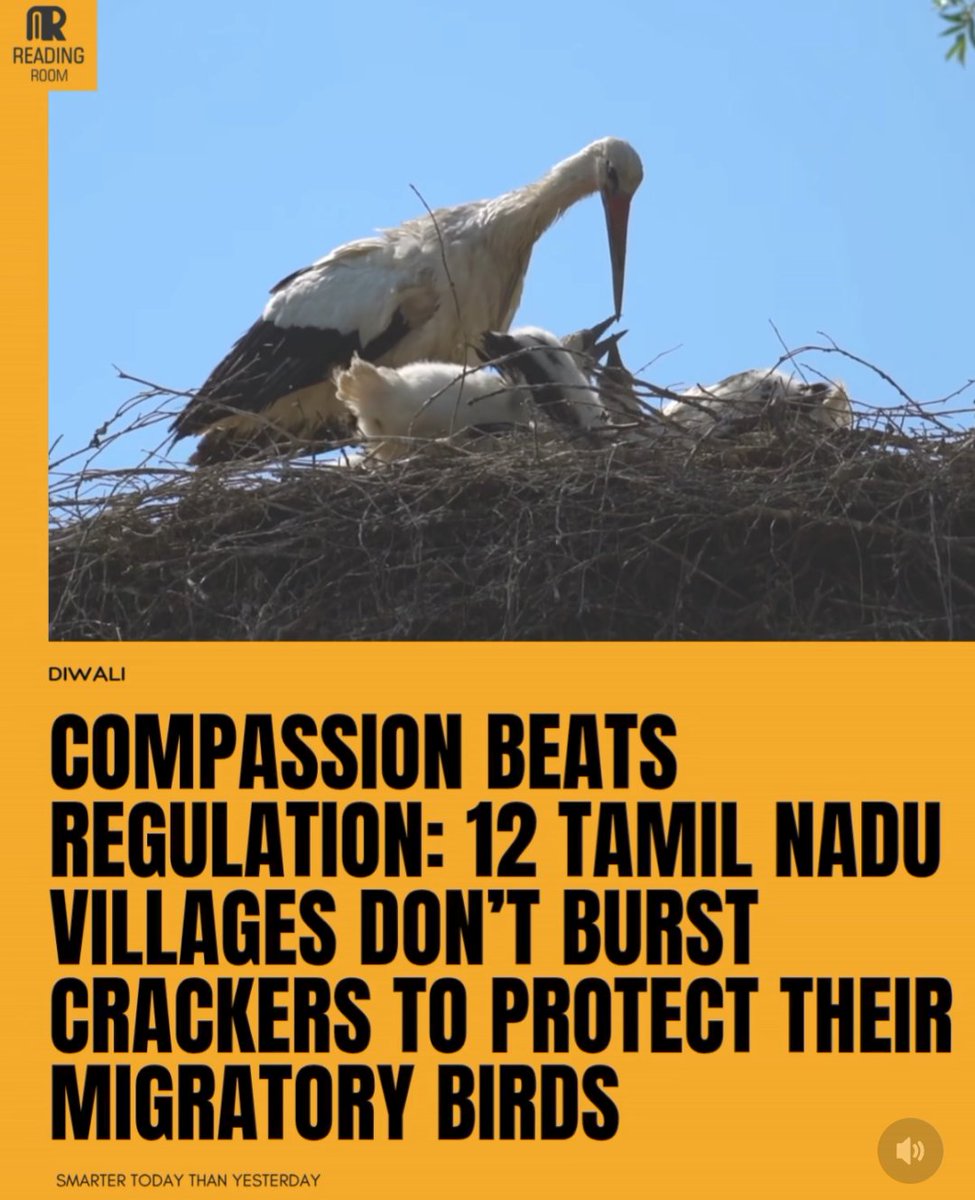
For 50 years, the villages Kollukudipatti and Vettangudipatti have celebrated cracker-free Diwali once they noticed firecrackers noise cracking birds' eggs. This has now slowly spread to neighbouring ten more villages.
Are you talking about the PhDs trying to crack the non academic job market?
A lot of it is due to bad self marketing:
PhDs will often use metrics and jargon in their CVs that no one outside academia cares about.
There is a perception problem as well. In fast startups having an imperfect hacky solution is much better than researching to find the best solution. Most products are initially shit. There is a fear that academics might not move at the pace that is required.
Also most jobs require writing production ready code. Code that is fit to be deployed on servers that can be used by users that are very different from
you. PhDs struggle with this.
One thing every student starting a PhD should be knowing is this: only do a PhD if you cannot imagine not doing it.
There is only a slim chance you will end up with a permanent position.
And honestly AI, space and biotech will be massive in the coming decades and opportunities will be plentiful outside traditional academia.
There is a solution to this: normalize spending a couple of months every year at companies as interns during your PhD.
This is standard in the US btw. Arav Srinivas interned at OpenAI during his PhD.
So if you are building computational models, talk to finance firms, talk to companies that do fluid simulations, talk to satellite companies . Trying to make yourself useful to them. This is not the culture in India or Europe but it should be.
She was born in England in the '30s.
Her father left the family, and her mother raised her and her sister.
Her mother couldn't afford to send her to college, and besides, in that time, only 1-in-10 English women went on to be college students.
So, she worked a series of secretarial jobs and saved up enough money to eventually travel to Africa hoping to work with animals. That's where she got a gig as an assistant for Dr. Louis Leakey, who recognized her aptitude in noticing things the scientists of those days did not.
At 26, with no formal scientific education and limited training, she did her first field research and discovered that chimpanzees use tools, completely upending her field and the broader scientific community overnight.
Such a long, extraordinary life, and it all started with a young woman who didn't accept the lot she had been given.
Rest in peace, Dr. Jane Goodall. Thanks for everything.
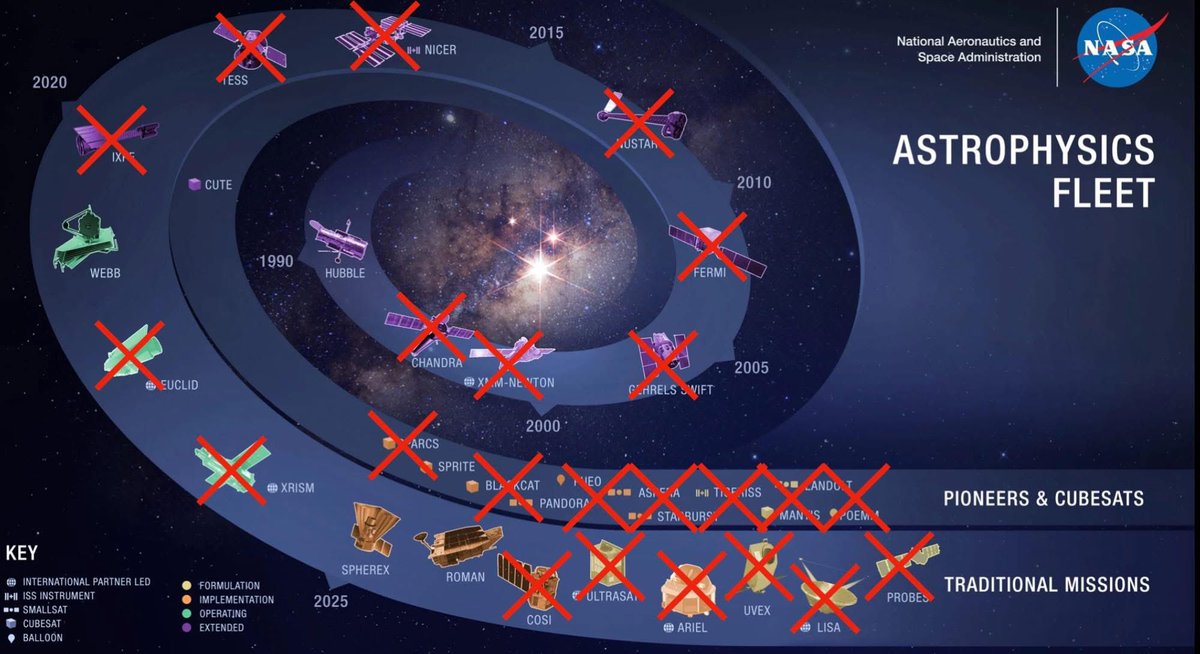
Just last month, some colleagues were discussing mass downloading data from certain archives given potential cuts just shutting some servers down, and apparently that actually might happen.
"we'll take people to Mars" rhetoric is hollow if there is no science to do.
The proposed NSF cuts withdraw the US from space missions they were contributing to, many of them won't fly. @M206265 is completely right, considering how international Astronomy is, American PIs using their position to scavenge some things out can save careers globally.
In 2001, the University Grants Commission of India decided to introduce astrology as a science course in India. Back then, Indian scientists still used to protest this sort of thing and JV
Narlikar was one of most vocal.
Perhaps this event motivated JVN and his friends to run a double blind study on astrology some years later. Their methodology was simple. They considered two groups of children—one group was children with severe intellectual disabilities, the other was a typically developing group. Could astrologers tell which is which from their horoscopes?
Many prominent astrologers backed off from taking the study but 27 took it up. It didn’t take a horoscope to predict the result of this study—not a single one beat the null hypothesis (link to the paper 👇). Astrology busted (again).
Narlikar, Dabholkar and the likes were old school scholars who dedicated their time to championing rationalism and scientific temper in the country, even in the face of hostility, instead of chasing personal wealth and status. They don’t make them like that anymore.
Recent explorations near the Malampuzha dam in Palakkad, Kerala has led to a fascinating discovery of megalithic structures spread across island-like mounds. The team of Archaeological Survey of India surveyed the area and came across more than 110 megaliths spread across 45 hectares of land.
Most of the burials are of Cists variety - both single and multiple chambered—Stone Circles, Urns, Dolmens, and Dolmenoid Cists. These structures are primarily constructed with massive granite slabs and boulders, some also incorporate laterite stones.(1/2)
#asi #excavation #kerala
Too large to be made from a single piece, the ELT's 39m main mirror will consist of 798 segments. But how can they work together as one?
Enter the edge sensors and actuators, which adjust misalignments among the segments with a precision of just a couple of nanometres 🤯
1997: Deep Blue defeats Kasparov at chess
2016: AlphaGo masters the game of Go
2025: Stanford researchers crack Among Us
Trending on alphaXiv 📈
Remarkable new work trains LLMs to master strategic social deduction through multi-agent RL, doubling win rates over standard RL.
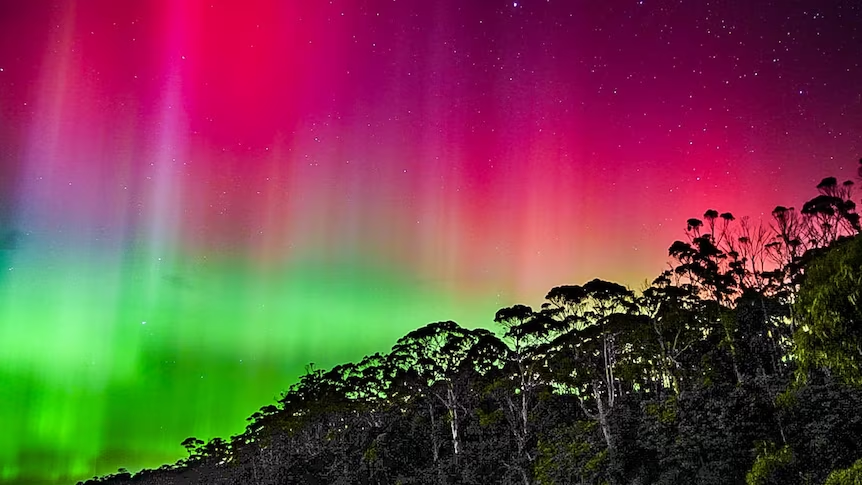
So many people are enjoying the Aurorae, both Northern (Borealis) and Southern (Australis!). But, surely you want to know how amazing the science is? This short🧵is about the atomic origins of the green and red light. 1/10
New ALMA data spectrally and spatially resolve water vapour in the inner regions of the famous planet-forming disk HL Tau, paving the way towards an observational characterisation of planet formation at the water snowline. @StefanoFacchi14 et al.: https://t.co/9be2ZwZRP5