If you’re hunting for a remote job, you just need to figure out how Reddit works, and you’ll never be unemployed for a long time.
Here’s a list of subreddits you should bookmark right now:
this is f*cking gold
How to build your first AI agent (Full guide)
if I had this a year ago, I would've shipped my first agent in a day instead of 2 weeks
in the right hands, this changes everything:
"You and Your Research"
i read it every few months and you should too.
the most important determinant of outsized success is picking the right problem.
Google Chrome is quietly downloading a roughly 4 GB AI model to many users’ computers without clear upfront consent.
The file, called weights.bin, is part of Google’s Gemini Nano on-device language model and lands in the browser’s user data folder under OptGuideOnDeviceModel.
It powers built-in AI tools such as “Help me write,” smarter tab suggestions, on-device scam detection, and page summarization. The download triggers automatically for devices meeting minimum hardware requirements, and Chrome often replaces the files if deleted.
While the model processes data locally, installation happens in the background with minimal notification.
The scale is noteworthy. Hundreds of millions or billions of installations add up to thousands of tonnes of carbon emissions globally from data transfer, even though each is a one-time event.
To prevent or remove it, go to chrome://flags, disable the entries for the optimization guide on-device model and Prompt API, restart the browser, and manually delete the folder.
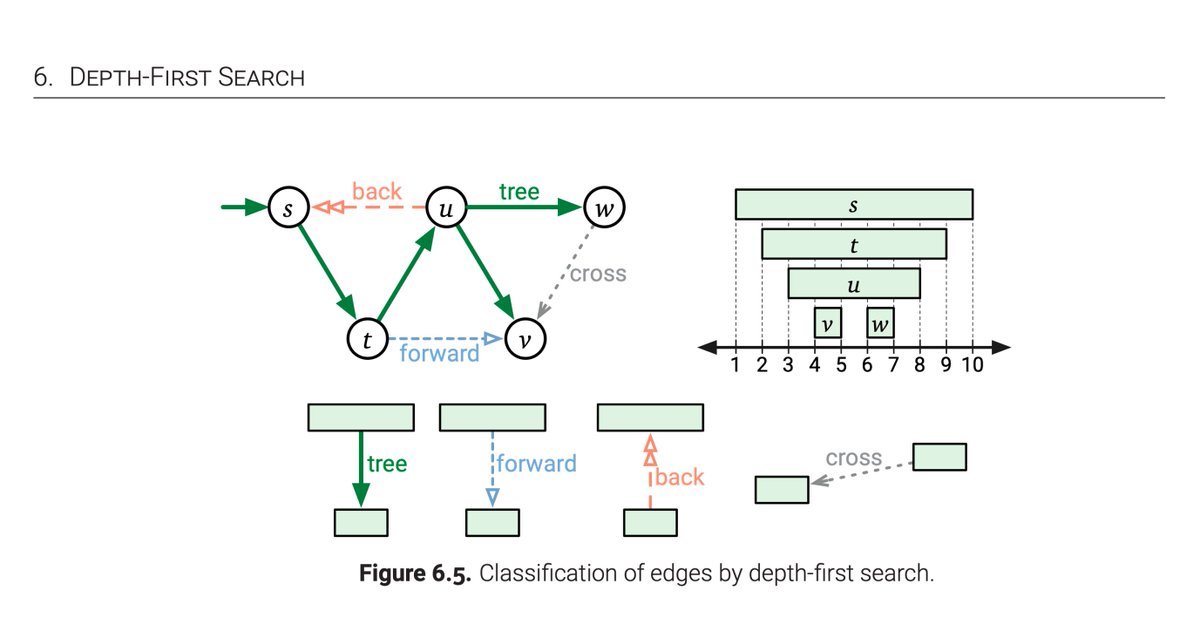
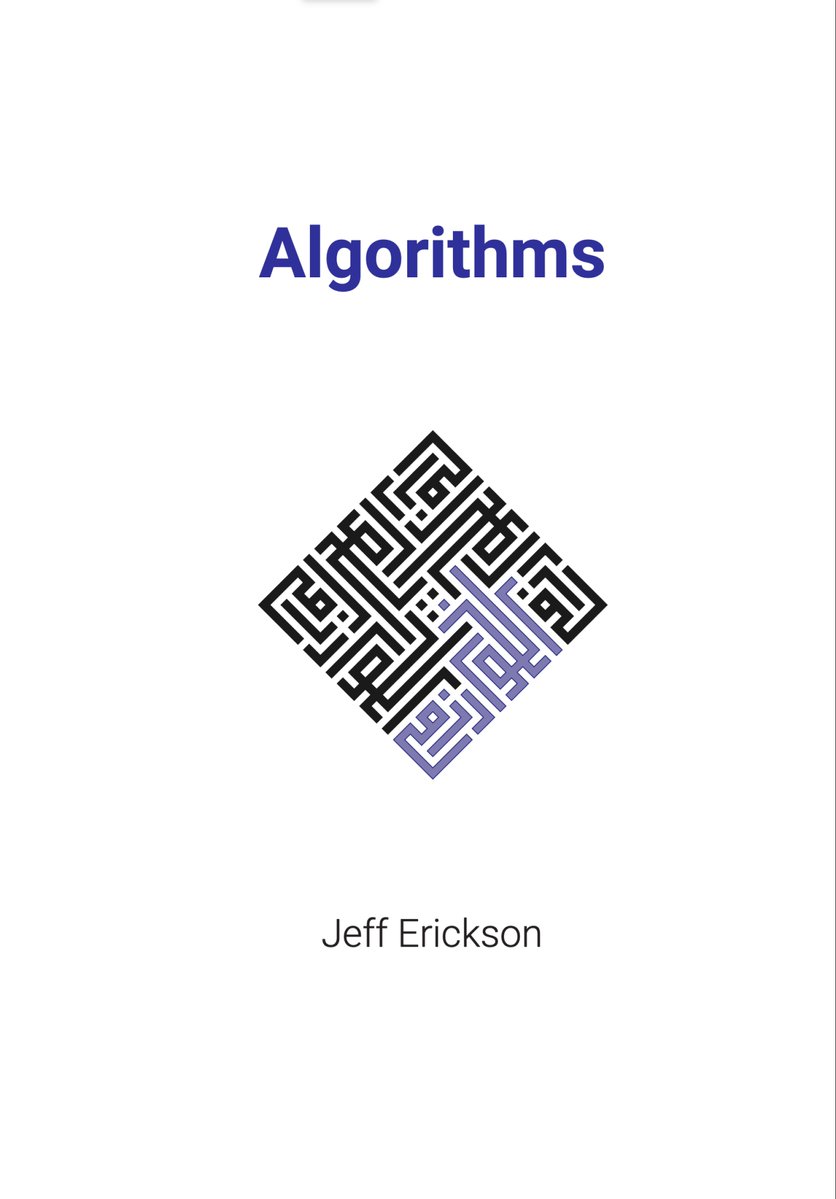
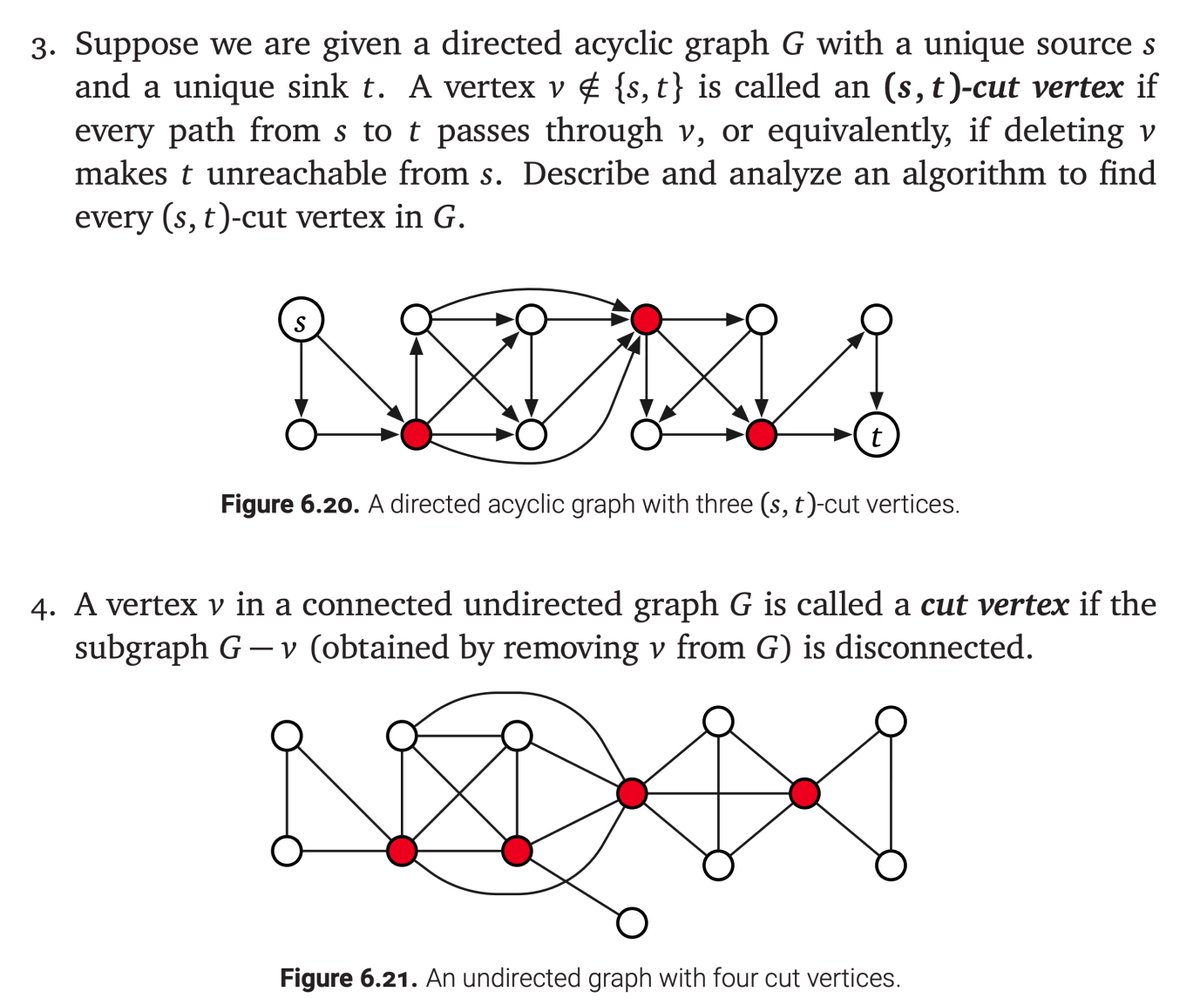
Algorithms by Jeff Erickson - one of the best algorithm books out there.
The illustrations make complex concepts surprisingly easy to follow. Highly recommend this.
https://t.co/8G06RjGnMA
Two Anthropic engineers spent 24 minutes exposing every Claude Code feature you didn't know existed.
Most people will scroll past this. Don't be most people.
Your language model isn’t one person—it’s everyone.
Check out Personality Subnetworks (ICLR 2026): a training-free framework to extract persona-specialized subnetworks. A step towards controllable and interpretable personalization in LLMs.
Paper: https://t.co/lBHIJpmNcr
Akademik yazma üzerine olan bu ders harika. Bu videoyu izledikten sonra doktoradaki tüm makalelerimin girişlerini değiştirmiştim. Doktora öğrencilerine ve genç sosyal bilimcilere tavsiye edilir. Özellikle mevcut literatür ile derdi olanlara.
https://t.co/4TujeCw3dm
How do LLMs do CoT reasoning internally?
In our new #ACL2026 paper, we show that reasoning unfolds as a structured trajectory in representation space. Correct and incorrect paths diverge, and we use this to predict correctness before the answer and correct errors mid-flight.
1/
Independent Convergence: When Two Groups Discover the Same Geometry in Neural Networks
We are proud — and genuinely humbled — to announce that Professor Yann LeCun's team at NYU/FAIR and Proprioceptive AI have independently converged on the same fundamental discovery about the geometric structure of transformer hidden states.
In February 2026, Huang, LeCun, and Balestriero published Semantic Tube Prediction (arXiv:2602.22617), showing that hidden state trajectories trace geodesics on a smooth manifold, decomposing into parallel (signal) and perpendicular (noise) components. Their result: 16× data efficiency improvement by enforcing geodesic straightness.
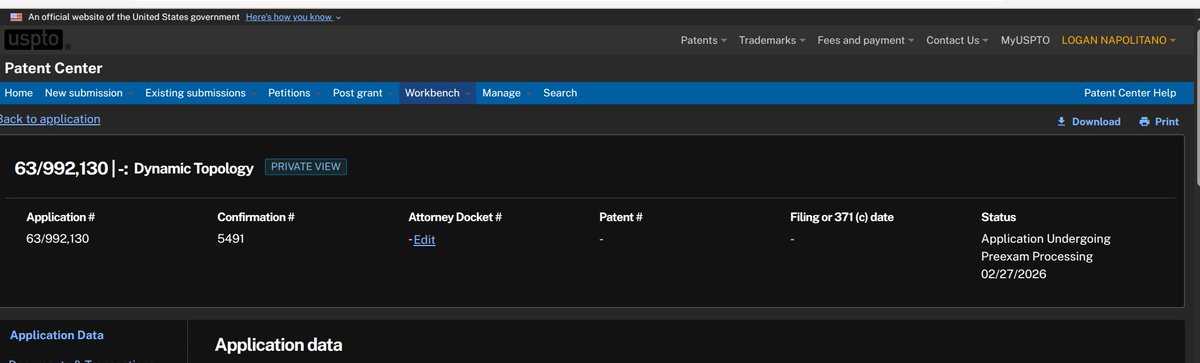
One month earlier, beginning January 27, 2026, we filed four U.S. provisional patents and published our UBM paper (February 3, https://t.co/a6hIxzBYpQ) disclosing the identical geometric decomposition — what we call the Two-Channel Theorem. Channel 1: a rank-1 residual stream highway carrying next-token prediction. Channel 2: a 4-dimensional behavioral arrangement carrying self-knowledge. Perpendicular at 85.5°. Same math. Different interpretation.
Where LeCun's team sees the perpendicular component as noise to suppress, we see it as self-knowledge to read. Both are correct. STP improves the model's ability to predict tokens. Our system — CYGNUS — improves the model's ability to know whether its predictions are good. The geometry supports both readings simultaneously.
We commend Professor LeCun and his collaborators. Their work is remarkable. The fact that two independent groups arrived at the same mathematical structure through entirely different methods — one from training efficiency, one from behavioral self-awareness — is the strongest possible evidence that this geometry is real. It is a property of neural computation itself, not an artifact of any single approach.
What we present today:
📄 CYGNUS: Combined Definitive Paper (61 pages) — Our complete technical report merging 8 months of research, including the STP convergence analysis, cross-model validation on Qwen-0.5B through 32B (66× parameter gap), the proprioceptive head relay architecture (3,327× above random), and the 74-claim honest audit of what we got right and wrong.
📄 "Mathematics Is All You Need" (458 pages, Zenodo DOI: 10.5281/zenodo.14707164) — The full monograph documenting every discovery, every experiment, every correction.
📄 UBM Paper (February 3, 2026) — Cross-architecture validation on LLaMA-8B and Qwen-3B with separation ratios up to 1,376×.
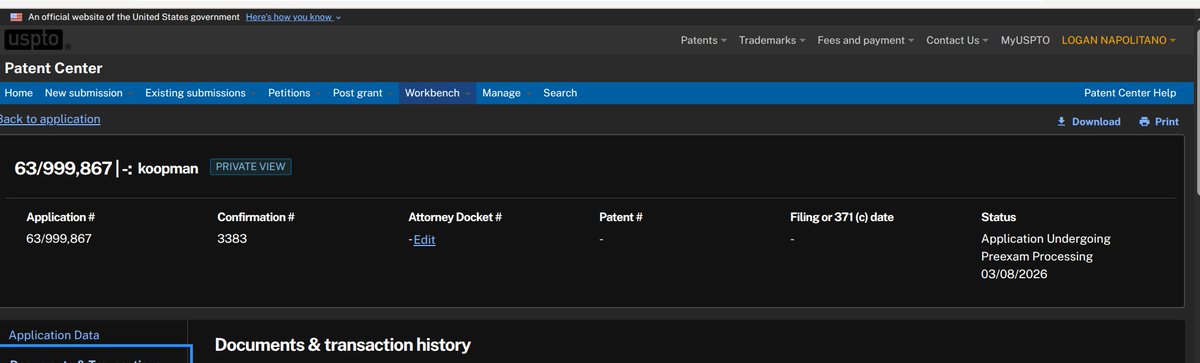
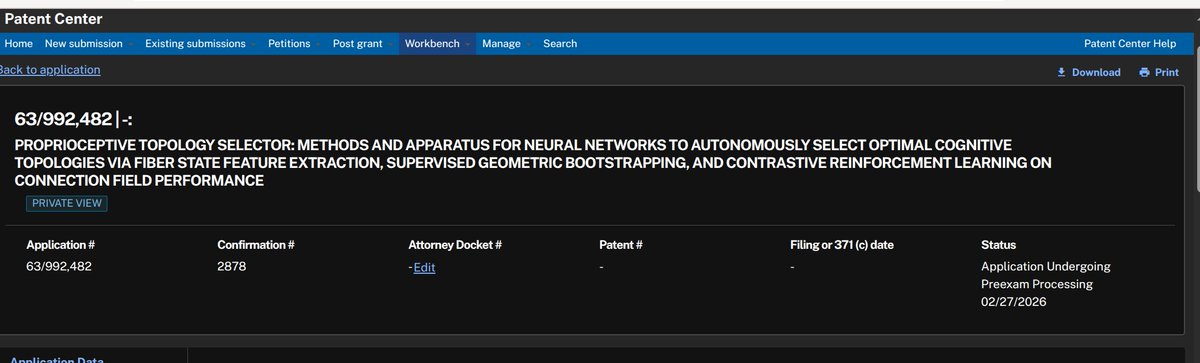
📄 100+ USPTO patent filings — Including the Koopman operator framework covering dynamical behavioral analysis, prediction, and control.
The core thesis: LLMs already know when they're wrong. This self-knowledge lives in the dark Casimir modes of the hidden state geometry — perpendicular to next-token prediction, invisible to the output head, systematically erased by LayerNorm. We read it. LeCun suppresses it. Both approaches work because the geometry is real.
The path to safer AI runs through self-awareness. A model that can sense when it's hallucinating is a model that can stop.
All work performed on a single NVIDIA RTX 3090.
— Logan Matthew Napolitano, Proprioceptive AI, Inc. https://t.co/3ZSWl0jyJS - Cygnus a Proprioceptive AI Adapter.
🚨We are excited to announce the 2nd Pluralistic Alignment Workshop at #ICML2026 in Seoul!
Submissions: https://t.co/47OxSBwGnP
🗓️Deadline: May 3
More details https://t.co/OepOe6ArpQ
We invite work on pluralistic alignment across technical, philosophical, societal perspectives!
Saw this article after I reached usage limits on Claude. By the time it resets, the subscription will end. The current project is 90% complete.
Great article. I'm gonna renew & follow his steps from now on.
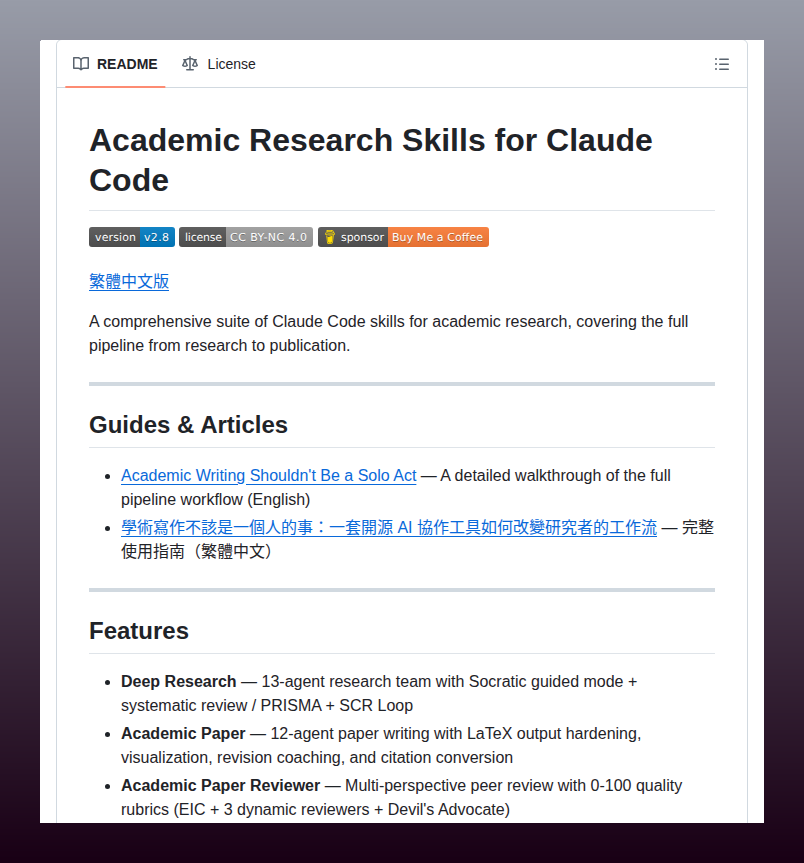
Claude Code for Academics
"A gentle introduction in how to use Claude Code for Academics."
presentation slides and github repo from Alessandro Spina
link in reply