There have only been a couple of times in my life when I entrusted others to manage my money—mostly early on, when I was inexperienced looking for guidance and looking for someone to get me rich. In hindsight, I’m actually grateful for those lessons. They forced me to take full control of my financial future. What I learned from those mistakes ultimately made me thousands of times what I lost.
But not long ago, I made a similar mistake.
I placed trust in @loukerner to be both a friend and competent in a space I was exploring.
While crypto performed exceptionally well (tripling in price), the results from the SPAC he pitched were quite the opposite to the tune of an 85% loss. Fortunately, the investment was a tiny test position simply because we were "friends." Unfortunately, not everyone I know was as cautious.
99.999% of my money is managed personally—and that’s exactly how I like it: in the best hands I know… my own. My suggestion to you is: learn how to invest and self-direct your capital. Why?
Because no one cares about your money or your future like you do.
🔮10/10: In summary, technical analysis complements fundamental analysis by adding timing and precision to traders' decisions. It helps spot patterns, confirm trends, manage risk, and ride the market's waves. 🌊📉📈
Embrace the power of charts! 🚀💰 #TradingTips#Investing101
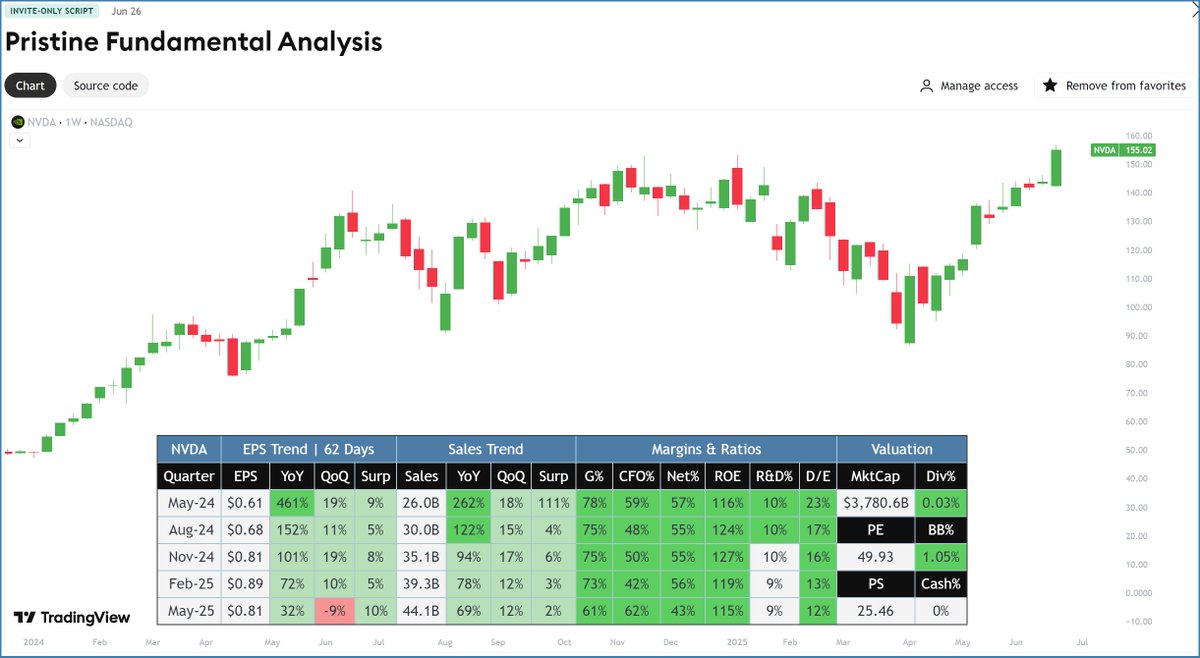
📊 Why do we combine fundamental analysis with technicals?
Because every ticker is more than a squiggly line—it's a real business.
In this thread, I’ll show you how I do it—and how our new Pristine Fundamental Analysis Indicator on @tradingview helps me spot hidden gems early 👇
If you had invested $10,000 into each of the current top 10 largest ETFs ranked by Assets Under Management 10 years ago and held them to today
Here's how much you'd currently have
$VOO - $38.7K🥉
$IVV - $38.6K
$SPY - $38.4K
$VTI - $37.2K
$QQQ - $59.3K🥇
$VEA - $24.9K
$VUG - $46.7K🥈
$IEFA - $23.7K
$VTV- $30.9K
$GLD - $36.4K
Total Invested - $100K
Total balance today - $374.8K
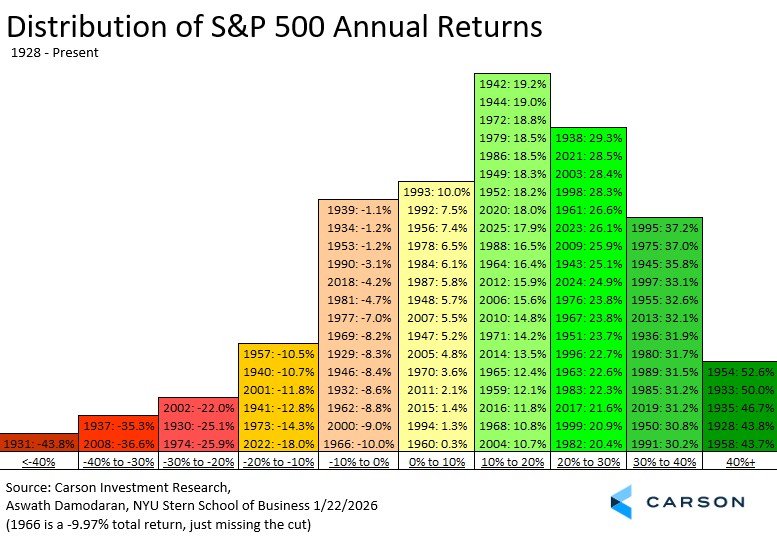
Some say the stock market is rigged. If anything, you could argue it is rigged to go higher over the long run.
Yes, down years happen, but big down years relative to big up years are quite skewed. You are significantly more likely to see a 10% up year than down year.
Here's why your veer form your plan, it's not just a discipline problem:
You think they’re trading the market.
But in reality, something else is happening...
You're trading your own Inner Market.
And when you don’t understand that…
you ignore your plan.
Ignoring your plan is actually an emotional regulation strategy.
Bored > take a trade
Anxious > avoid or exit early
Frustrated > revenge trade
Missed a move > chase
You’re not trading opportunity.
You’re trading for emotional relief.
Here’s the part most traders miss:
Your Inner Market has structure.
It has its own supply & demand:
• Demand for certainty
• Supply of patience
Its own support & resistance:
• Support = self-trust
• Resistance = fear, doubt, shame
Its own volatility:
• Calm, clear, intentional
• Or reactive, urgent, impulsive
When pressure rises, your Inner Market moves fast.
And if you can’t read it in real time…
you’ll use the buy/sell button to manage how you feel.
Your interaction with the market is an attempt to feel better.... instead following your plan, which often feels too uncomfortable.
The edge isn’t just reading price.
It’s reading yourself. In real-time.
Which is difficult to do under pressure
The moment you feel the urge to trade for relief…
you’ve already stepped away from your edge.
And this is why skilled 1:1 coaching works.
The best traders don’t eliminate emotion.
They understand it.
They track it.
They stay present with it.
And because of that…
they realize they don't have to act on it.
You’re not just trading the market.
You’re trading your Inner Market.
Learn its structure.
Or it will trade you.
If this post resonates, follow, like, r/t, BOOKMARK this post.
#tradingmindset #traderperformance #tradingpsychology $ES_F $NQ_F $QQQ $SPY