Reduced sea-ice and increased storms in the Arctic can change the upper ocean dynamics and lead to mixing of the subsurface warm waters towards up. We show that this process may important in Arctic fjords. @srvsxc@polarankit
https://t.co/k6tV8Ehhkl
‘Atmospheric rivers’ are getting increasingly important for causing extreme precipitation events. An example of such events in the Arctic is observed and explained in https://t.co/fhd6t4yyoz @AcharyaAsutosh @subeesh_mp@ncaor_goa@moesgoi
This is Arctic Ocean with eddies as simulated by #FESOM2 ocean model. Come to do your PhD with us to help parameterise effects of those eddies in climate simulations (PhD position)! BTW it's 100% salary.
Deadline 21.02.
Please distribute!
https://t.co/fB1o950JDu
Congratulations @KuschErik on a very useful #RStats package, KrigR—a tool for downloading and statistically downscaling climate reanalysis data https://t.co/HE1iExPyhs via @IOPscience
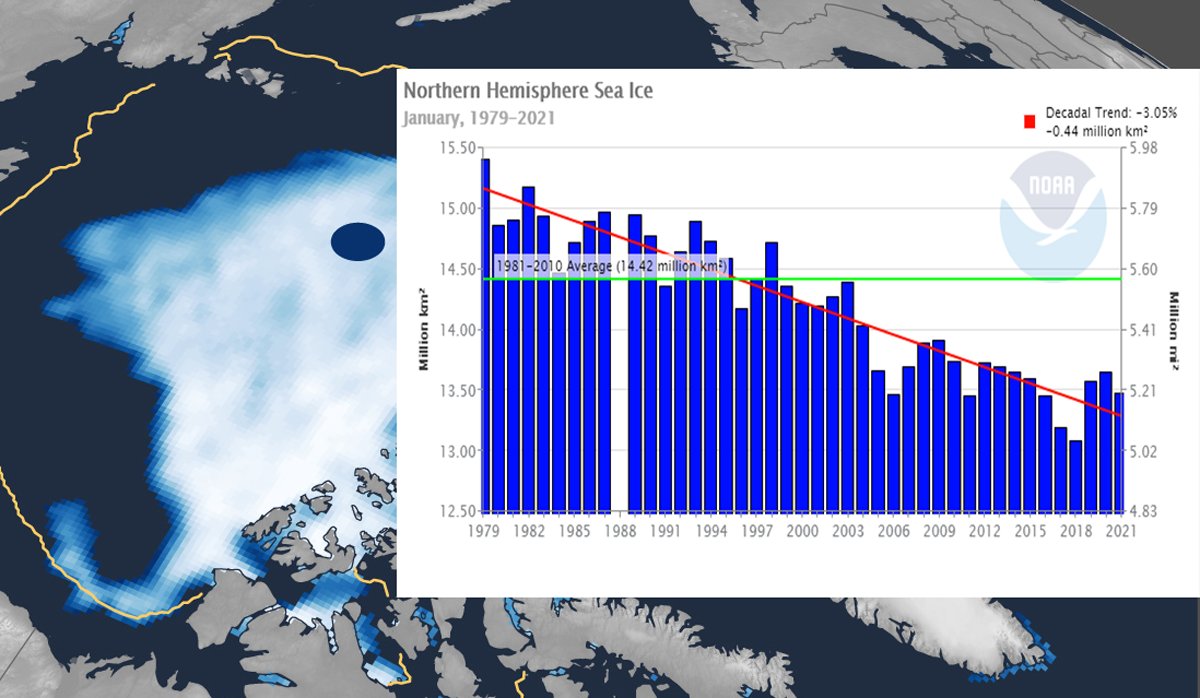
Happy to contribute to a chapter in CMEMS- Ocean State Report 5!! We investigated sea ice area & volume exports from the Arctic Ocean into the Nordic Seas. Role of atmospheric circulations and uncertainties rising from sea ice thickness estimates are highlighted. @ncaor_goa
Wind profiler radars are rare in Arctic and Antarctic. They are thus unique sources for validation of @esa_aeolus products in those regions. A study on the performance of Aeolus products compared to MST radars and @ECMWF ERA5 reanalysis @EGU_AMT
https://t.co/WcBf9Vg7zM.
The variability of seasonal sea ice in Greenland Sea is determined by different processes at varying space and timescale. We attempted to explore one of those in the following @EGU_TC
https://t.co/An72MfO3wk
After >10,000 expert review comments,
Over 1000 figure edits,
over 139 github pull requests,
reading and assessing >1500 publications,
blizzards of email and slack messages,
hundreds of hours of zoom meetings,
over 400 draft chapter versions,
Chapter 9 of the @IPCC AR6 is in!
The variability of seasonal sea ice in Greenland Sea is determined by different processes at varying space and timescale. We attempted to explore one of those in the following @EGU_TC
https://t.co/An72MfO3wk
The best proposals I review are consistently the ones with large font size, ample spacing between sections, a few choice figures, and a clear narrative? Why do people thinking that cramming in tons of detail is an effective strategy to persuade reviewers?