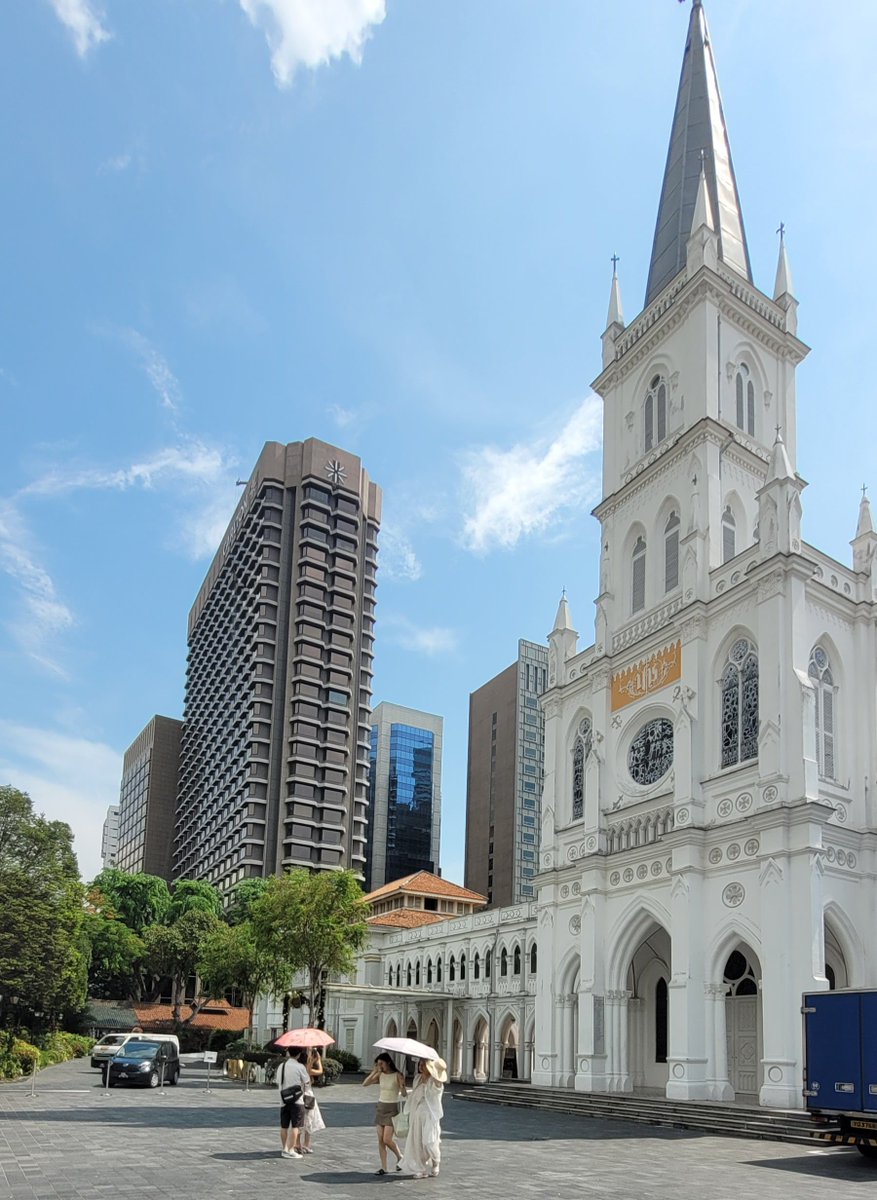
I had to go through a video interview to get my #Singapore visa but the immigration process was a breeze, unbelievable!! It was sans stern officers you encounter after an endless wait in a serpentine queue! Insert your passport, register your thumb impression and waltz out!
Didn't realise this version wasn't clear! Not aware if this was his first interview in an English publication but here's another I did in 1988 and a tribute too!! The more readers the merrier!!
@TheHinduCinema
On the birth anniversary of the visionary #ShankarNag, revisiting his first-ever English newspaper interview from March 6, 1983 (Sunday Mid-Day)
Pure candor on acting, directing, stage, and the trap of typecasting.
AI-restored, readable version (few typos are present) - https://t.co/pBtghWP3s0
From the first time I interviewed #KamalHaasan in 1980 he's never asked me which publication it would appear in. Impressed with the quality of paper,pics and layout I wanted to write for @frontline_india . I interviewed Kamal as he drove me to the set of 'Khaki Sattai.
Thread
A phenomenon was born 100yrs ago. He was 7 where he stunned the carnatic cognoscenti. I met him when I was six. Memories of time spent with him till he passed away are fresh. A flutist non pareil Semmangudi said he was a National treasure.
#TRMahalingam@cramspeaking@the_hindu
What if changing the way we eat today could significantly improve the nation's health over the next three decades?
A study published in the *European Journal of Nutrition* on 17 September 2026 explored this possibility by examining the impact of reducing red and processed meat consumption in the UK by half and replacing it with more vegetables and pulses.
The findings are certainly worth reflecting on.
According to the researchers' projections, this dietary change could prevent around 4.5 million cases of chronic disease over 30 years and increase average life expectancy by approximately 9.4 months.
The greatest health improvements were predicted in cardiovascular disease, with further benefits in reducing type 2 diabetes and colorectal cancer.
One particularly interesting finding was that around 75% of the projected mortality benefits were associated with increased consumption of vegetables and legumes.
This highlights an important point: healthier eating is not simply about reducing certain foods, but also about making better choices to replace them.
These figures are based on modelling rather than observed outcomes, and the actual benefits would depend on how successfully such dietary changes could be achieved and sustained across the population.
Nevertheless, the study reinforces the important role of plant rich diets in disease prevention and long term public health.
Source: European Journal of Nutrition, 17 September 2026.
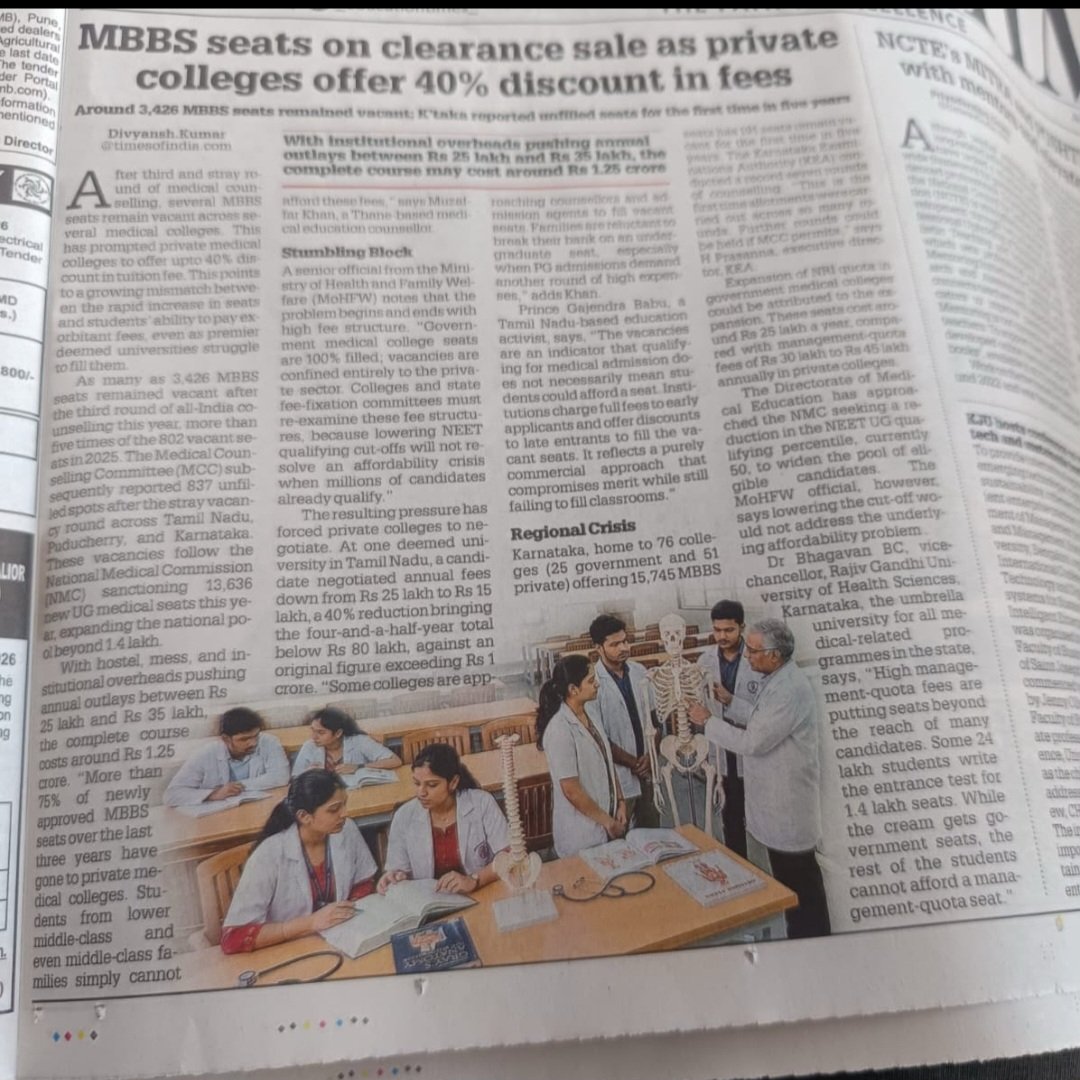
Have you heard of MBBS seats being offered on a clearance sale?
We have all heard of clearance sales in furniture stores, clothing outlets and retail shops preparing to shut down. But have you ever heard of MBBS seats being offered almost like discounted merchandise in a clearance sale?
Unfortunately, this is becoming a reflection of the reality of medical education in India today.
The unchecked expansion of medical colleges, particularly private institutions mushrooming across every nook and corner of the country, raises serious questions about the quality of medical education, infrastructure and, perhaps most importantly, the long term career prospects of medical graduates.
Increasing the number of seats without ensuring adequate clinical exposure, competent faculty, proper infrastructure and sufficient postgraduate training opportunities is a recipe for disaster.
Consider the numbers.
India's MBBS intake has increased from 51,348 seats in 2014 to 1,28,976 in 2025 to 26. That represents an increase of approximately 151% in just over a decade.
Expanding access to medical education is undoubtedly welcome. But the more important question is: Has the quality of education, clinical training and availability of career opportunities kept pace with this phenomenal expansion?
Every week, and I am genuinely not exaggerating, I receive calls or messages from medical graduates desperately exploring ways to leave India.
When a highly respected profession is subjected to excessive expansion and mass production, without a corresponding increase in opportunities, an inevitable imbalance develops between the number of graduates and the jobs and training positions available to them.
And what happens next?
Students and parents, many of whom have invested enormous sums of money in medical education, begin looking overseas for postgraduate training and employment. Unfortunately, they often discover that the grass is not necessarily greener on the other side either.
And now, a polite but important message to parents who contact me seeking employment opportunities in the UK for their MBBS qualified sons or daughters.
Please understand that the UK is no longer an easy or readily accessible employment destination for overseas medical graduates. Competition for available junior doctor posts is intense, and simply holding an MBBS degree does not guarantee a job in the NHS. Graduates must also navigate professional registration requirements, licensing examinations where applicable, and an increasingly competitive recruitment process.
I would therefore strongly advise parents not to invest huge sums of money in the hope that their children will automatically find employment in the UK or USA after completing MBBS in India.
I am sorry if this sounds discouraging, but I would rather give you an honest assessment than raise expectations that may be difficult to fulfil.
A medical degree should open doors to a meaningful professional career, not leave graduates scrambling to find an exit route from the very system in which they trained.
It is time for policymakers, medical regulators and those responsible for medical education in India to pause and take stock. Expanding the number of medical colleges and MBBS seats cannot be an end in itself. Every additional seat must be backed by adequate infrastructure, competent faculty, meaningful clinical exposure and realistic postgraduate and employment opportunities.
Producing more doctors without ensuring that they receive quality training and have viable career pathways is not progress. It is simply creating a larger pool of disillusioned graduates and financially distressed families.
India does not merely need more doctors. It needs well trained, competent doctors who can serve the country with confidence and dignity.
The question we must ask is not how many more MBBS seats we can create, but how many competent doctors we are actually preparing for the future.
It is time to put quality before quantity. The future of an entire generation of medical graduates depends on it.
Politicians rule us but they don't even visit the loo without consulting a battery of soothsayers who identify 'Doshas' and offer expensive 'Parihara'.
The Gowda family should sack their astrologer for not identifying they suffer from MOBILE DOSHA!
#HDKumaraswamy#HDRevanna
@sshivu Hi Shiva, the delivery partner tip is not added automatically while placing an order. You can choose to add or remove it manually as per your preference. If you need any assistance with this, please feel free to reach out to us via DM. https://t.co/tMLEg5LMZv ~SK
1 in 7 strokes are happening in the young in India.What was thought to be a disease affecting the elderly are now affecting youngsters.This trend will get worse as incidences of Hypertension, Diabetes increase with other risk factors of rapid urbanisation.
When an youngster gets a stroke and survives, the cost of the disability falls on the family to look after them.
Prevention is the key here.The education should start from the schooling days itself.
Read the article written by me with Suryanarayana Sharma P M a Stroke Physician in today’s Deccan Herald.
@DeccanHerald@shmira21@savitha@dr_huded@RWT_NHS@strokeindian@WorldStrokeOrg
https://t.co/zoMQQ9bgSB