only 46,672.35 USDC exists across the entire @arc chain, yet 142 tokens are already PvPing for the same tiny liquidity bag
> 142 DEX-indexed tokens, up from 85 yesterday
> $ARCANINE: $14.9k mcap, $3.64k liquidity, 137 traders
> $NOAH: $5.9k mcap, $1.09k liquidity, 104 traders
> $BRC: $4.9k mcap, $641 liquidity, 78 traders
the token count exploded because launch rails are now cooking
@ArcDEXScan’s LaunchFactory deploys a fixed 1B-supply token, opens a 1% Uniswap V3 pool and seeds it in the same tx. creators can bundle the first buy before snipers enter. the LP NFT gets sent into a no-withdraw FeeSplitLocker, with trading fees split 70% to the creator and 30% to the protocol
54 of the 142 indexed tokens already came through this factory
@SharcFun added another rail with a @Pumpfun-style bonding curve quoted in native USDC and migration infra waiting behind it
so every launcher, sniper and early bag is currently farming the same 46.7k USDC inside a closed casino
but casino may become public very soon - someone burned 2 USDC on Base through Circle’s Bridging Kit. 1.982753 native USDC landed on Arc four seconds later
Base burn:
https://t.co/afAz53nwoO
Arc mint:
https://t.co/gNWedbtnyy
Circle’s public Iris API still labels the message PENDING and @lifiprotocol still can’t return an executable quote
the pipe works. public access stays gated
once Circle flips the route for everyone, fresh stables flood in, the OTC premium gets nuked and every early Arc bag gets repriced against real outside liquidity
mainnet @arc
somebody is already buying usdc on arc for 40$ to catch a runner on a new chain. so here is deep dive on whats going on there
BitGo appears to have leaked a working Arc mainnet RPC while fixing a failed CI deployment. the network is supposed to be private right now, but this endpoint answers public JSON-RPC calls:
https://t.co/0PHiGLQCM3
it returns:
> chain ID 5042 / 0x13b2
> client reth/v1.11.3
> live peer connections
> 10m+ produced blocks
the cleanest way to reconstruct the rollout is to walk through GitHub chronologically, then verify every useful artifact onchain
> may 10 - Arc mainnet enters Chainlist. Chainlist merges an Arc mainnet config with chain ID 5042. commit:
https://t.co/tMGnq7jKce
this only proves the network metadata existed. it does not prove the chain was producing blocks yet. but 2 days later, the genesis timestamp hits
> may 12 - genesis
@circle 's published genesis.json is timestamped May 12. the file itself reached the public arc-node repo later, so the precise wording matters: genesis is dated May 12, while the next block appeared on May 15
https://t.co/vwrVEcKCXy
the config reveals a lot:
> chain ID 5042
> 500ms target block time
> 30m gas limit
> native USDC gas
> 11 genesis validators
> permissioned validator manager
> predeployed USDC, Permit2 and Multicall
> admin, pauser, controller and validator roles
by July 13, Arc had already produced more than 10m blocks
> may 26 - @Uniswap deploys V2, V3, V4, Universal Router and the supporting contracts. deployment manifest:
https://t.co/X0mV7DPYay
human-readable deployment:
https://t.co/bc4W67FWU8
Arc is unusual because its native gas asset is not ETH, WETH or even ARC
it is USDC
that sounds simple until every EVM assumption starts expecting ETH-shaped plumbing. routers, wallet logic, gas estimation, token pickers, wrapped-native abstractions and bridge interfaces all need special handling
some of the repos involved in the Arc rollout literally contain Claude or Cursor co-author metadata while teams work through these edge cases
the final Uniswap deployment used 19 transactions with no reverts
ownership was later handed to a 3-of-5 Safe, which looks much more like a coordinated production rollout than a random devnet deployment
the public economy is still basically switched off, though. the 2 V2 pairs I found are ArcSmokeA / ArcSmokeB smoke tests rather than real markets. contracts live, liquidity absent
Ю june 1 - @Morpho adds Arc to its Blue SDK using addresses from its deployment repo
https://t.co/mYwrPQvk8I
the commit is refreshingly explicit about one Arc quirk:
there is no real wrapped-native token because USDC is the gas asset. Morpho Blue bytecode is also present on Arc mainnet, so this is more than an SDK enum
still, deployed lending infrastructure does not automatically mean active markets, deposits or yield. those are separate things
> june 2 - @lifiprotocol, the team behind @jumperapp , merges Deploy Arc mainnet core setup
https://t.co/zUhbnuS2dR
the config exposes:
> RPC https://t.co/NA6Ci26M7d
> explorer https://t.co/8Ddx9DHpfX
> https://t.co/BZL1VPpsBk Diamond 0xA4072583658Fae592A3506A42431cb6316a8d40b
the explorer and that RPC have been access-controlled, which fits the private rollout
> june 3 - @MetaMask first adds Arc to its internal asset and network tooling. then the integration keeps getting deeper:
june 3 - Arc enters the Asset Controller
june 9 - Arc enters the Bridge Controller
june 12 - MetaMask Extension enables Arc mainnet for Swap/Bridge
june 24 - MetaMask Mobile adds Arc through a persisted-state migration
extension commit:
https://t.co/N2FWKRjJjD
mobile commit:
https://t.co/7iRxhfor4L
the mobile implementation is the interesting part. it injects Arc into existing wallets using:
https://t.co/Iq97pwrq8c${INFURA_PROJECT_ID}
if a user already has MetaMask's popular-network mode enabled, Arc can be inserted as an enabled network automatically
that is a distribution switch sitting inside one of the largest wallets in crypto
public launch day may not require users to find a leaked RPC, paste a chain ID and pray. the wallet rails are already being prepared for them
> june 3 - @worldnetwork ID deploys its identity stack
this is the sleeper integration
World ID, the identity protocol associated with Sam Altman's World project, deploys a verifier, permissioned gateway and WorldID Satellite on Arc mainnet
the deployment is timestamped June 3 and appears in GitHub on June 9 under the very direct title:
wip: deploy arc mainnet
https://t.co/d7BDlPORZJ
I checked every address through the leaked Arc RPC. all 4 have bytecode
why does a stablecoin L1 need a proof-of-humanity stack before the public mainnet is even open?
the straightforward answer is application infrastructure
projects may want proof-of-personhood for sybil resistance, reputation, compliance-aware flows, grants, gated markets or fairer incentive distribution
the spicier airdrop read is obvious, but it needs a giant caveat: there is no evidence that an ARC distribution will require World ID, and there is no confirmed ARC airdrop at all
the deployment only proves that identity and sybil-resistant application primitives are already available on the private mainnet
still, the timing is hard to ignore
> june 8 - @LayerZero_Core marks Arc active
LayerZero adds arc-mainnet, chain ID 5042, and V2 endpoint ID 30417. its deployment metadata marks the network active and includes V1/V2 infrastructure
https://t.co/ZlasdWXVtU
once again, endpoint deployment does not mean there is a liquid public bridge route. but by this point the pattern is pretty clear:
> the chain is producing blocks
> DEX infrastructure is live
> lending infrastructure is live
> CCTP plumbing is configured
> LayerZero endpoints are live
> wallet distribution is being wired
> identity infrastructure is deployed
> june 23 - Circle updates the ARC whitepaper
https://t.co/ElkcTzbMLL
the proposed initial supply is 10bn ARC:
> 60% ecosystem
> 25% Circle
> 15% long-term reserve
Circle describes a fee flywheel:
> users pay fees in USDC
> protocol-level mechanisms convert part of the fee
> flow into ARC
> part goes to stakers
> part may be burned
more network activity means more demand flowing through the ARC coordination layer
the token is also supposed to handle staking, governance, validator economics, fee discounts and access across Circle and ecosystem services
*we are here*
Architect roles started appearing in the timeline today. the timing gets more interesting because Arc's next hackathon starts today
Programmable Money runs from July 13 to August 22 as an online event - https://t.co/GEywR4oJ0h
Circle has already shown that these events are not purely ceremonial. previous Arc tracks paid:
> $10k USDC at HackMoney. 155 teams submitted
> $15k USDC at ETHGlobal Cannes. 69 teams submitted
HackMoney recap:
https://t.co/QZb6jgzvL7
Cannes recap:
https://t.co/k8p1aNYii1
the projects Circle keeps rewarding are not generic fork-and-farm DeFi apps
they usually sit around:
> AI agents with their own wallets
> x402 and nanopayments
> stablecoin FX
> crosschain treasury management
> payroll and global payouts
> RWA settlement
> programmable escrow
> agent-to-agent commerce
at Cannes, 98% of submissions used AI agents
40% used Circle Nanopayments, and 4 of the 6 winners made nanopayments part of the core product
the meta is not subtle
Circle wants Arc to become the settlement layer for software that holds wallets, hires services and pays other software without a human clicking every transaction
the whitepaper gives this theory some actual weight - 60% of the proposed ARC supply is reserved for the ecosystem
so you say me to whom they'll distribute them
and btw otc to buy a USDC on Arc for 40$ - https://t.co/4XV3ryYBJm
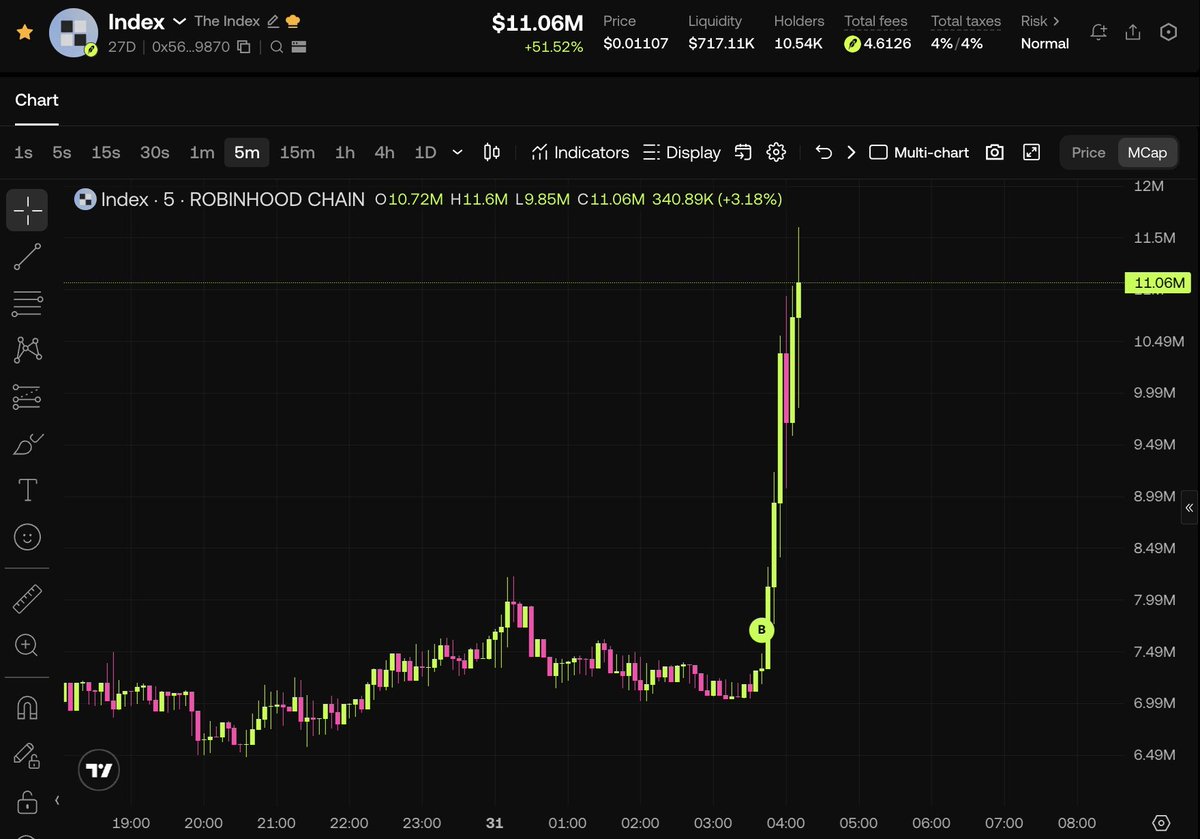
new product by @TheIndexFi which will fit nicely on @ponsdotfamily - https://t.co/f7VpviX3mw
it deployed couple hours ago so you've never seen this link/screenshots/etc before. everyone benefits:
> pons - new product on top of existing infra
> creators - new narrative, attention
> users - dividends
> index - new cash inflow
and its nice v4 case study. so how this works? tldr - token creators will be able to pay their token holders with dividends in stocks just like Index doing themselves with their holders. so every coin gets a treasury. details:
> a creator picks a basket of tokenized stocks
> chooses how much of the remaining fees go to holders
> gets a deterministic treasury address before deploying the treasury
> launches the coin on @PonsEcosystem and sets creatorFeeRecipient to that address
> $pons escrow starts accruing fees immediately
> the keeper binds the coin and each payout round buys one stock for that coin's holders
so creators are buying a product for their own bagholders: recurring $NVDA, $SPY, $QQQ, $AAPL or a custom stock basket, paid from the coin's own trading fees. whatever share the creator does not send to holders stays claimable by the creator
Indices clips a fixed 10% of everything routed through the treasury. receiver split():
> 50% buys $INDEX through the canonical pool and sends the bought tokens to DEAD
> 50% becomes USDG and goes to the existing USDGBuyerDistributor
> that distributor buys tokenized stocks and pays them pro rata to $INDEX holders
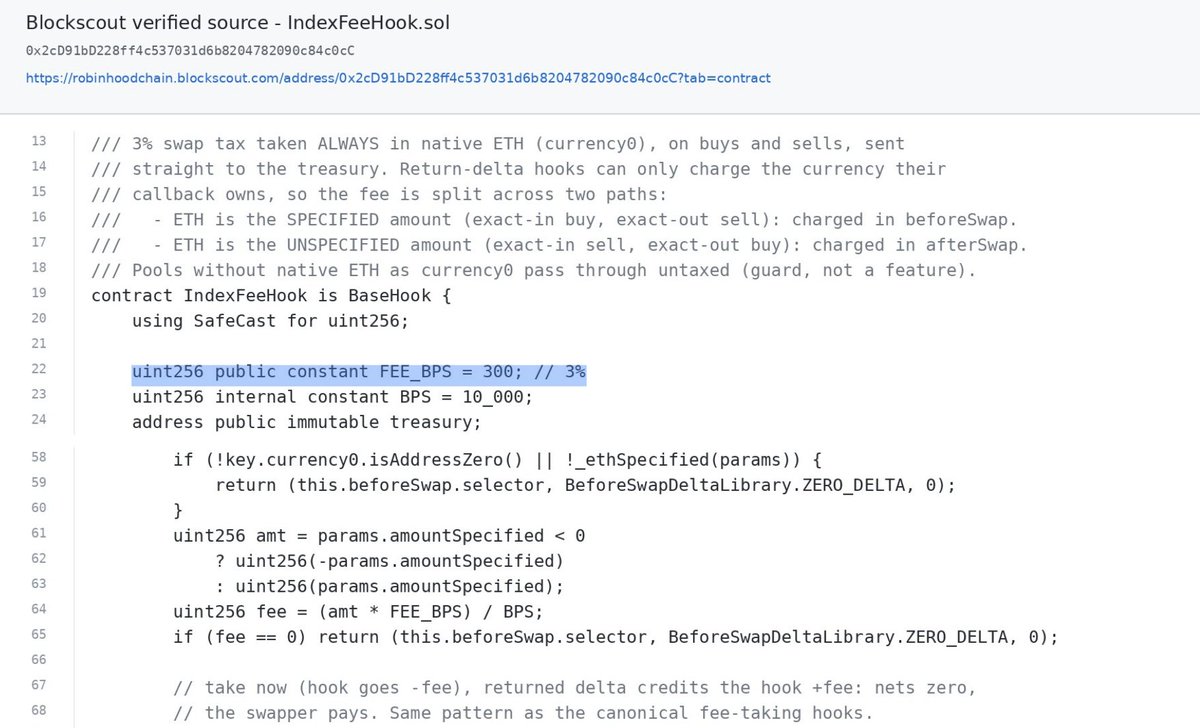
> the buyback itself crosses the existing 3% INDEX hook, adding another stock-buying stream
so the flywheel is:
pons coin volume
→ creator fees
→ stocks for that coin's holders
→ 10% Indices cut
→ 50% $INDEX buyback + burn
→ 50% stock rewards for $INDEX holders
this is how $INDEX rewards stop living off organic $INDEX volume alone. every opted-in pons coin can become an external revenue source
all of this shipped today:
> 19:34:57 UTC - early factory deployment
> 21:23:27 UTC - current IndexTreasuryFactory deployed
> 21:51:23 UTC - protocol receiver deployed
> 21:51:24 UTC - receiver wired into the factory
> 21:56:14 UTC - the current TLS certificate for https://t.co/K7gQXg9nbP became valid
> 23:07:15 UTC - first treasury deployed
> 23:10:29 UTC - first treasury funded with 0.1 ETH
> 23:32:33 UTC - frontend redeployed again while I was tracing it
contracts:
> factory: 0x3450cEdfDD7F1082D766c8B8998C326D3696E8Df
> implementation: 0x6bDc8993Dc922DC32E33A9c654b795AF53005C8e
> protocol receiver: 0x0f5A32F791f536482d5BA27A58749F02c8b0cBbC
> stock distributor: 0x2459DedB3012d1E929EdD17DF26620120bDF11bf
> first treasury: 0xFACA543C31693d504B598222DEafaA59F720C978
i bet you don't get that @ponsdotfamily x @TheIndexFi collab
@MEADGod told that "creator payout will no longer include the deployed token, but the token it was paired with"
1. what if creators will be able to launch tokens in pair with $index and receive not only fees but also distribution of rwa stocks from @TheIndexFi?
2. what if those pairs will also include 3% fee which will bootstrap volumes, distributions and cash inflow to Index? awesome flywheel for both protocol and users
its just my speculations and its not approved since @ponsdotfamily are using v3 pools while you need v4 hooks for those 3% fee taking. if they won't develop new v4 hooks - its still possible that 30% protocol fees will be divided between pons and index which is new inflow for both
launches with $INDEX but using eth routing via index pools also makes sense and adding more value
unbelievable bullish but i still didnt find anything onchain or anywhere else. will update you on this as soon as i'll have smth new