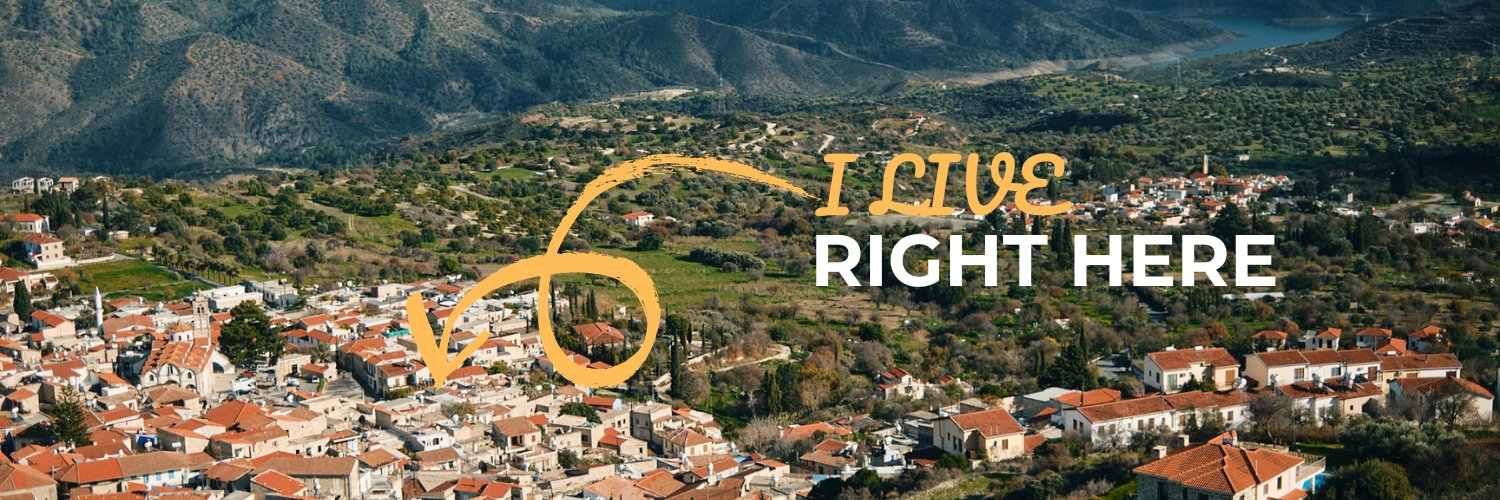
After 14y in online marketing + 5y in rural tourism, I'm launching Teleport Agency - to help rental hosts and villages boost their online presence.
Time to share what I’ve learned. Let’s teleport your brand to the next level 🌍
👉 https://t.co/acCl4R1gRq
@marclou@bryan_johnson Amazing idea and I believe it will become soon a big trend.
Here is one of the first projects going life (for your inspiration) https://t.co/qvVknEWUoi
PS. I am in property management business so if you need any help, let me know know ;)
Don’t trust anyone who says your short-term rental doesn’t need OTAs. They’re just trying to sell you their direct booking system. The truth? You need both. Visibility and control
#str#vacationrental#directbookings#OTA
Analyzed hundreds of Airbnb listings. Only 3 villas had real photos of the massage service in action.
Result? They get monthly bookings for this add-on!
Tip: Photograph your extra services AT your property. Guests don't buy services, they buy experiences. Show them visually ;)
Airbnb’s new update brings chefs, massages & more—directly in-app.
Sounds cool? Maybe.
But when Airbnb owns the full guest experience…
Hosts risk becoming background players.
Your space. Their platform.
Don’t fade. Build your own brand.
🔗 https://t.co/acCl4R1gRq
I don't think it will happen as fast as Greg writes about it. I think the inertia will take more than 2-3 years. But in general yes, we are living in exciting and times!
SaaS is being dismantled as we speak!
We're witnessing the slow-motion collapse of an entire business model that dominated tech for two decades. The $1.3 trillion SaaS is being quietly hollowed out from within by AI agents.
Here's how I see it playing out:
Phase 1 (Now): AI as co-pilot. We're seeing this everywhere, Copilot for developers, Gamma for presentations, Harvey for legal research etc. These AI layers sit atop existing software, making it more efficient.
The SaaS companies feel safe, even excited, as AI seems to make their products more valuable. They're bringing knives to what they think is a knife fight.
Phase 2 (Next 12-18 months): The agent invasion. AI moves from co-pilot to autonomous operator. They're replacement workers that can fully operate existing software on your behalf.
The dam breaks when someone can say "analyze our Q2 performance" rather than clicking through Tableau, or "optimize our ad campaigns" instead of navigating Meta's ad manager. The expertise previously bundled with the software gets unbundled by agents.
Phase 3 (2-3 years): Software invisibility. The final phase happens when the agents bypass the human interfaces altogether. Why render dashboards, buttons and menus when AI can just access the APIs directly?
The value proposition of SaaS, bundling software, workflow, and expertise into user-friendly interfaces unravels completely. The interfaces were designed for humans, but agents don't need them.
Most SaaS incumbents don't see it coming because this isn't a classic disruption pattern. It's not about competing products with better features. It's about the evaporation of the core assumption that humans will operate software.
What's more, the barrier to creating custom, internal software is collapsing simultaneously. Companies that once had to choose between expensive custom development or off-the-shelf SaaS can now spin up bespoke solutions in days instead of months. Why pay Hubspot $1,500/month for a CRM when your team can build 'HubspotForUs' with an AI coding assistant over a weekend? The same features, perfectly tailored to your workflow, with no ongoing subscription costs.
This democratization of software creation means every company becomes a potential software producer rather than just a consumer. The specialized knowledge that SaaS companies monopolized is now available to anyone with access to an AI coding agent and domain expertise.
It went from $1M to build an MVP to build a SaaS to basically free overnight.
I bet the metrics will be puzzling at first, DAUs remain strong while feature usage mysteriously declines. The power users who drive revenue suddenly need fewer seats.
Customer success calls shift from "how do I use this feature?" to "can your software work with my AI agent?"
Or worse: "we built our own version that better fits our workflow."
The survivors won't be those with the best features or even those who add AI features fastest (from no AI to "ai-assisted").
The winners will be companies that expose their software's capabilities through agent-friendly APIs and position themselves as the most trustworthy information sources and execution engines in their domain.
There's also the shift from monthly subscriptions to outcome based software (pay per outcome, pay per task etc) but that's a tweet for another day!
The $1T question: Will Microsoft, Atlassian, Adobe etc. successfully navigate this transition, or will they be the Digital Equipment Corporation of our era too invested in the previous paradigm to adapt to the new one?
All I know is this will be a golden era for startups in the space.
SaaS is being dismantled, piece by piece, workflow by workflow, interface by interface.
Am I wrong?
SaaS is being dismantled as we speak!
We're witnessing the slow-motion collapse of an entire business model that dominated tech for two decades. The $1.3 trillion SaaS is being quietly hollowed out from within by AI agents.
Here's how I see it playing out:
Phase 1 (Now): AI as co-pilot. We're seeing this everywhere, Copilot for developers, Gamma for presentations, Harvey for legal research etc. These AI layers sit atop existing software, making it more efficient.
The SaaS companies feel safe, even excited, as AI seems to make their products more valuable. They're bringing knives to what they think is a knife fight.
Phase 2 (Next 12-18 months): The agent invasion. AI moves from co-pilot to autonomous operator. They're replacement workers that can fully operate existing software on your behalf.
The dam breaks when someone can say "analyze our Q2 performance" rather than clicking through Tableau, or "optimize our ad campaigns" instead of navigating Meta's ad manager. The expertise previously bundled with the software gets unbundled by agents.
Phase 3 (2-3 years): Software invisibility. The final phase happens when the agents bypass the human interfaces altogether. Why render dashboards, buttons and menus when AI can just access the APIs directly?
The value proposition of SaaS, bundling software, workflow, and expertise into user-friendly interfaces unravels completely. The interfaces were designed for humans, but agents don't need them.
Most SaaS incumbents don't see it coming because this isn't a classic disruption pattern. It's not about competing products with better features. It's about the evaporation of the core assumption that humans will operate software.
What's more, the barrier to creating custom, internal software is collapsing simultaneously. Companies that once had to choose between expensive custom development or off-the-shelf SaaS can now spin up bespoke solutions in days instead of months. Why pay Hubspot $1,500/month for a CRM when your team can build 'HubspotForUs' with an AI coding assistant over a weekend? The same features, perfectly tailored to your workflow, with no ongoing subscription costs.
This democratization of software creation means every company becomes a potential software producer rather than just a consumer. The specialized knowledge that SaaS companies monopolized is now available to anyone with access to an AI coding agent and domain expertise.
It went from $1M to build an MVP to build a SaaS to basically free overnight.
I bet the metrics will be puzzling at first, DAUs remain strong while feature usage mysteriously declines. The power users who drive revenue suddenly need fewer seats.
Customer success calls shift from "how do I use this feature?" to "can your software work with my AI agent?"
Or worse: "we built our own version that better fits our workflow."
The survivors won't be those with the best features or even those who add AI features fastest (from no AI to "ai-assisted").
The winners will be companies that expose their software's capabilities through agent-friendly APIs and position themselves as the most trustworthy information sources and execution engines in their domain.
There's also the shift from monthly subscriptions to outcome based software (pay per outcome, pay per task etc) but that's a tweet for another day!
The $1T question: Will Microsoft, Atlassian, Adobe etc. successfully navigate this transition, or will they be the Digital Equipment Corporation of our era too invested in the previous paradigm to adapt to the new one?
All I know is this will be a golden era for startups in the space.
SaaS is being dismantled, piece by piece, workflow by workflow, interface by interface.
Am I wrong?
Want to travel the world with your family while working remotely?
This step-by-step guide helps you plan your journey stress-free, covering everything from housing to work-life balance.
https://t.co/iFWb3wgzYn
Imagine a village that works like one big hotel.
Today, digital nomads, freelancers, and traveling families seek comfort, freedom, and community—but traditional colivings often limit them in space and privacy.
At https://t.co/HeOJCMsd2X we introduce a new concept: a Co-Village 😎
@faborio@Replit Are you going to develop and share your app or its just for your team?
I tried recently Lovable for one of my ideas, but now i am curious about duplicating it on Replit!
Einstein said the highest cognitive ability is simplicity. And I couldn't agree more! Making things simple is the hardest.
That's why I'm proud of our new project: a simple yet brilliant workation for digital nomad families—without the stress! https://t.co/2OAZpL6Qza
@tibo_maker I completely agree and I suffer because of it too. But when I find something worthy, I start to develop it actively and try to read less news, so as not to be distracted by new products and ideas. Because you can always find an audience that doesn't need the Operator…
The most profitable business is letting people escape reality.
Any business, product, or service that helps you avoid reality brings much more profit than the opposite, immersing in reality. It's amazing.
Amazing article about how a company's success depends not on following pre-existing playbooks, but on the ability to adapt to reality, understand customer behavior, and create sustainable value and a profitable business. https://t.co/kUCh907BKA
Hey 👋
I wrote an article on how the lack of community while exploring makes digital nomads start looking for a base to settle down
https://t.co/Pg6QAzfxi9