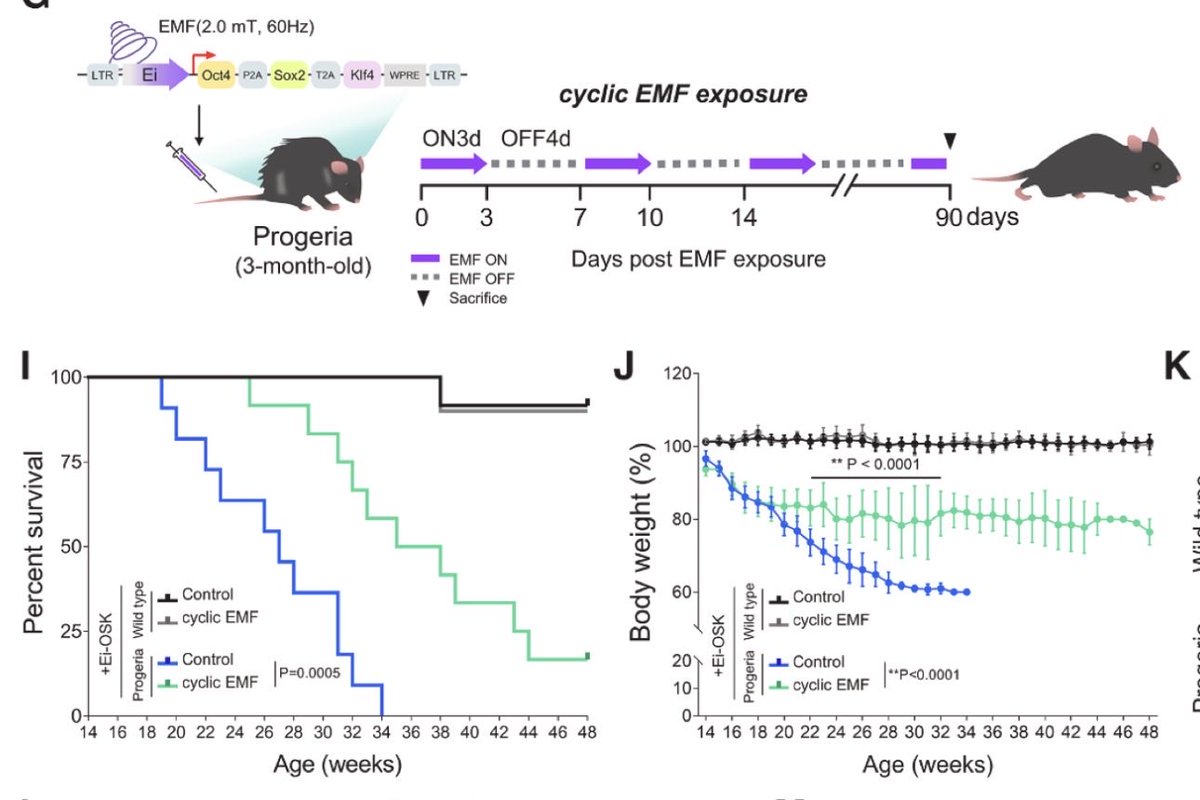
REMOTE CONTROL MICE! A group from Seoul has just published in Cell that they’ve discovered a crazy-weird protein (Cyb5b) that can be used to turn on any gene when exposed to EMFs!
They used it to turn on OSK and extend the lifespan of a progeroid mouse. More to come on this…
The wait is almost over. The story of Miami University’s legendary Cradle of Coaches is coming to life in a full documentary, premiering spring 2026. 🎥 Watch the newest trailer out now. https://t.co/EaCwo0Uf5H
#CradleOfCoaches | #LoveAndHonor | @MiamiOHFootball
The new OpenAI model announced today is quite wild. It is essentially Google's Deep Research idea with multistep reasoning, web search, *and* the o3 model underneath (as far as I know). It sometimes takes a half hour to answer. Let me show you an example. 1/x
The scientific publication industry is the biggest source of inefficiency & waste in science! As scientists, we have been forced into the “publish or perish” policies imposed by institutions. Now, with AI reviews, this parasitic industry must either be abolished or made obsolete!
On reflection, I think this paper actually burys the lede about association studies. A more pointed conclusion might be that many tens or hundreds of millions of dollars in functional follow-up on disease-variant associations [1] have been essentially wasted, and are continuing to be wasted, chasing biological noise. Oops.
The lines of reasoning is about as follows. If we assume:
1. Most traits are highly polygenic, such that in the limit approximately every gene is associated (via a regulatory association) to every trait
2. Ranking single-variant associations by 'significance' is effectively arbitrary because the ranking is dominated by allele frequencies/drift
Then:
3. Any gene prioritization that comes from a single-variant association study (as currently analyzed) is uninformative about trait biology [2].
4. Functional studies looking to understand the impact of the 'top' GWAS hits for traits are not in fact studying the most 'important' genes for those traits, but rather an effectively random subset of genes
5. The amount of money spent on the functional studies in point 4 measures at least in the tens or hundreds of millions of dollars over the past decade, and probably billions [3]
Am I missing something @spence_jeffrey_ @Hakha_Most@jkpritch ?
---
[1] E.g. https://t.co/OVyzoM32aT and many others like it
[2] But note the single-variant ranking is of course extremely important for trait prediction and applications where 'realized heritability' is what matters
[3] NHGRI budget alone is ~$700M/year https://t.co/9rsueR0zQF
KOMPUTE: imputing summary statistics of missing phenotypes in high-throughput model organism data
by Coby Warkentin, Michael J O’Connell & Donghyung Lee @statslee in https://t.co/4Xd4F1Rn22
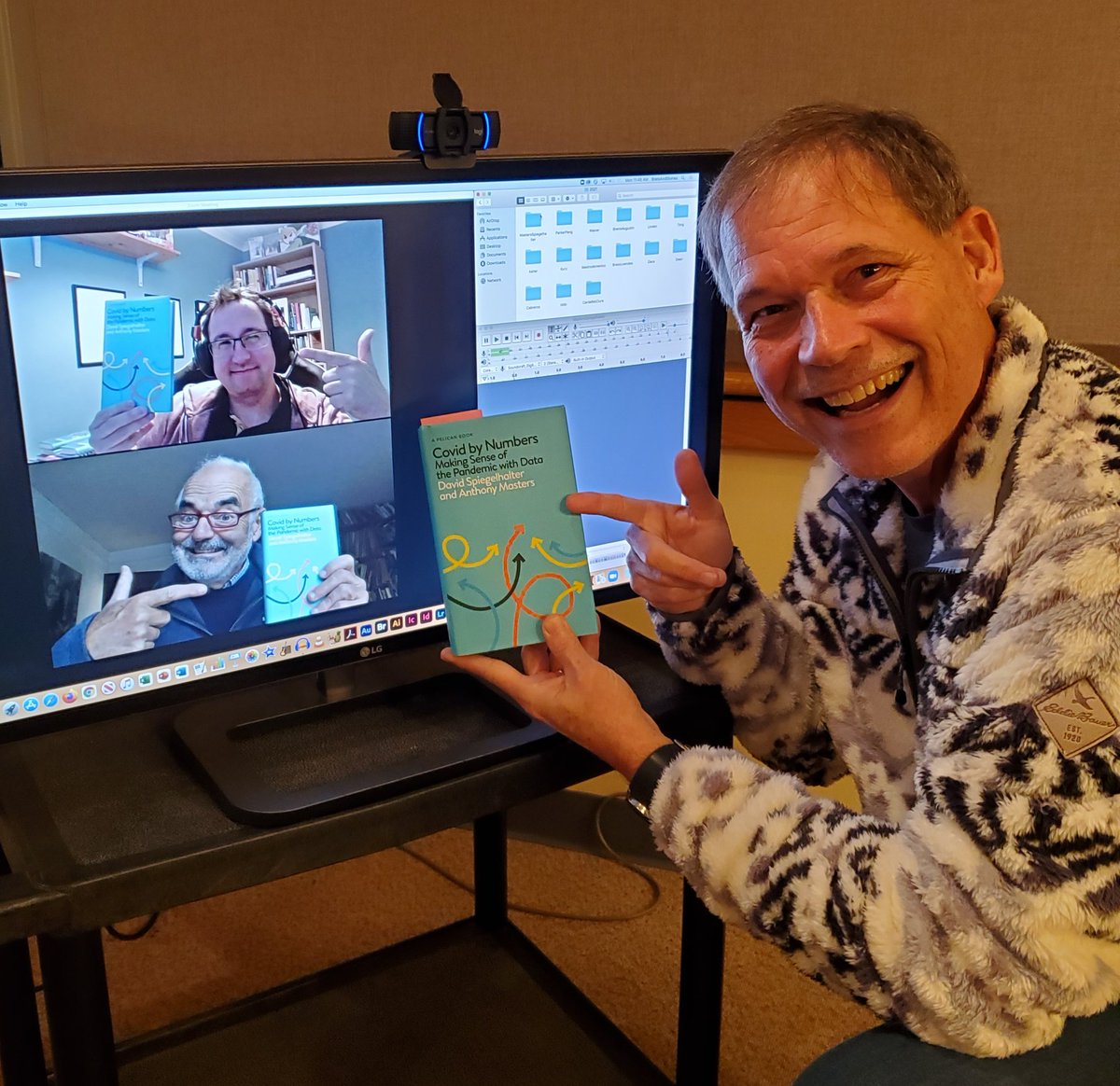
Great fun to record @statsandstories episode with @d_spiegel and @anthonybmasters - this episode will drop in early December. In the meantime, check out their new *Covid by Numbers* book.
To learn more about social, hazard and built-environment vulnerability, check out @statsandstories today with guest Walter Piegorsch. He discusses his @signmagazine article "From hurricanes to terrorism: how vulnerable is your city?" @IntStat @TIES_isi@AmstatNews@IBSstats
Thanks @_Rob_Santos for joining us for a @statsandstories recording today. Stay tuned for an upcoming episode featuring Rob's insights about the Census and polling. Bonus points if you identify the location on a screen background. @AmstatNews
Provocative podcast by @Gladwell. Suggests that @NIH might consider switching to a hybrid peer review/lottery for funding grants. Peer review would weed out the lower half of proposals, then the rest would be put into a lottery for funding. Interesting...
https://t.co/Fv9cgmGtR7
Very excited to share SHARE-seq - single-cell ATAC+RNA in the same cell - with you! Using the paired data we find that chromatin change can predict future gene expression states! Enabling opportunities to define cell trajectories and their regulation (1/2) https://t.co/yXuBw3juVw
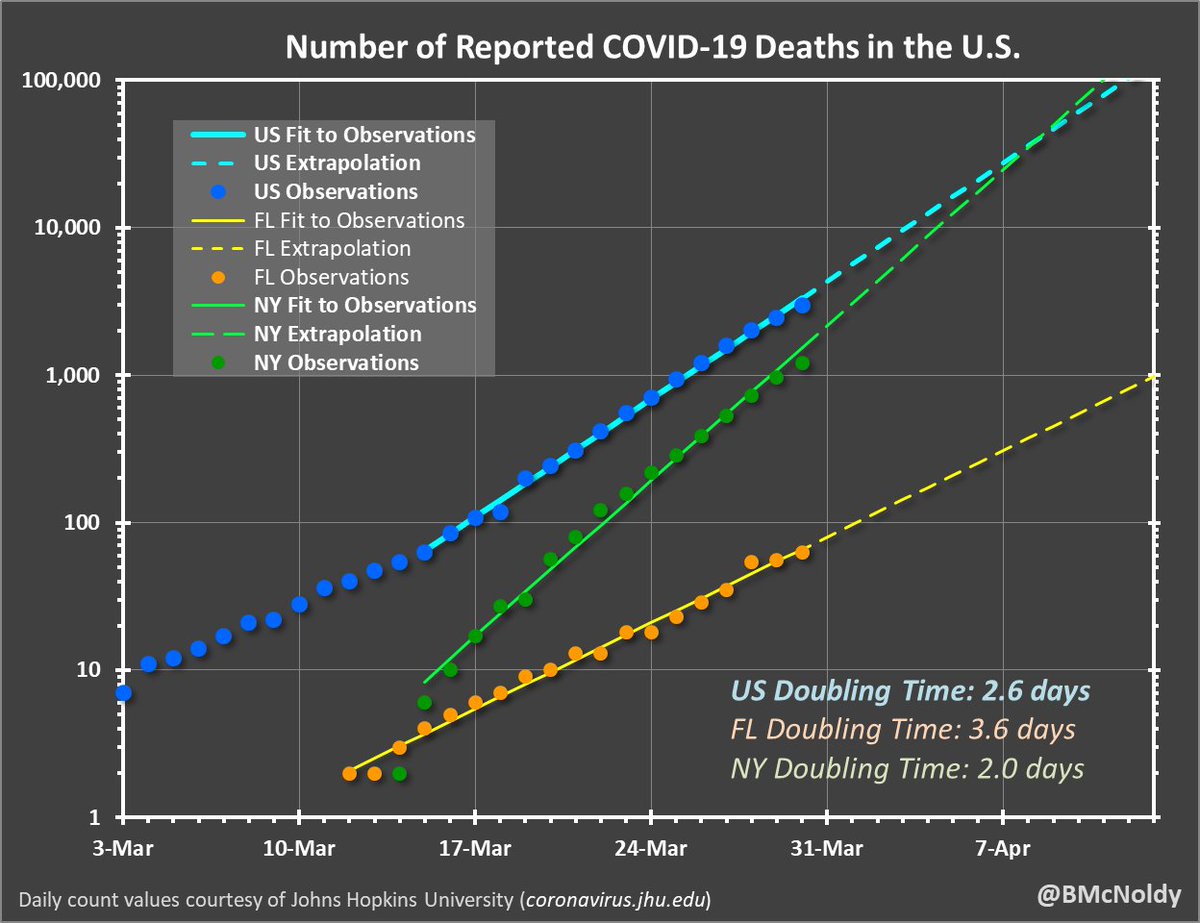
The US deaths doubling time is 2.6 days.
Which = 100,000 deaths by April 11th
and 200,000 by April 14th (you're hearing underestimates)
Unless something gives via flattening.
Here's @BMcNoldy's updated best-fit. We all need to hope this shifts downward. Soon.
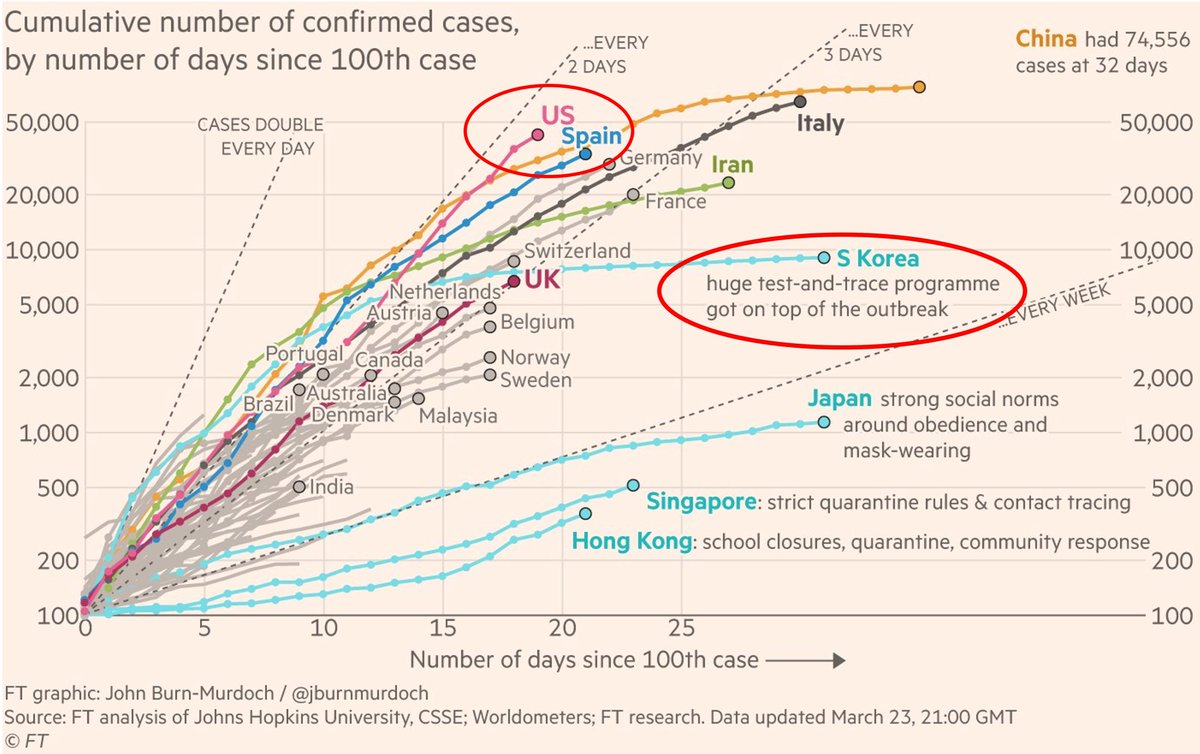
The US will reach 100,000 #COVID19 cases & > 900 deaths by Friday, March 27, w/ doubling rates of 2.4 & 3.5 d, respectively. -> #1 in the world.
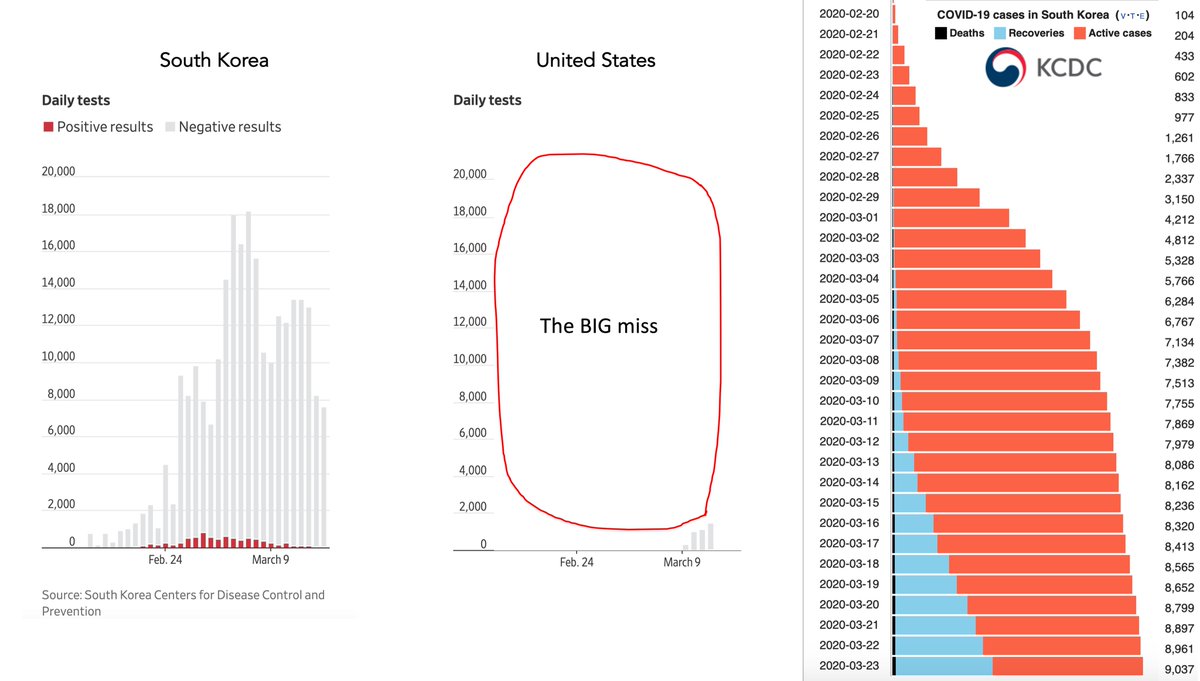
Recall that South Korea & US had their 1st patient diagnosed on Jan 21/22 (within 24 hrs). The Δ for SK vs US was testing + tracing
I’ve been recovering and starting to feel better. I’ve been thinking a lot about the emotions that I experienced during my time in the ICU and after. Major caveat: I know people have had it worse and people have lost loved ones, but I want to share some of what I experienced. 1/