Husband. Dad. Entrepreneur. Investor. Love music, good food & good humour. A student of life. Fav quote: To get the right answer, ask the right question!
HYPOTHETICALLY… IF I BOUGHT MY HOUSE FOR $125,000 IN 2002 AND THE COUNTY NOW SAYS IT’S WORTH $487,000, WHERE DID I ACTUALLY MAKE $362,000?
Did I sell it? No.
Did I receive $362,000? No.
Did somebody hand me a check for the new assessed value? Obviously not.
But my property taxes still go up because, on paper, my house is suddenly worth hundreds of thousands more.
That’s the part that doesn’t make sense to me.
This isn’t income.
It isn’t cash sitting in my bank account.
It’s a number someone assigned to my property, and now I’m being billed based on that number.
If my stock portfolio doubles but I don’t sell, I haven’t turned that gain into cash.
If my salary stays the same, I don’t suddenly owe more income tax because someone thinks I’m worth more.
So why does owning a home work differently?
WHY AM I PAYING TAX ON A GAIN I NEVER REALIZED?
A house isn’t just an investment.
It’s where people live.
You can pay off the mortgage, own the property outright, and still face a bigger bill every year because the value of the house went up on paper.
At some point, you have to ask what “owning” something actually means if the cost of keeping it can keep rising because of money you never received.
THIS ISN’T ABOUT WHETHER THE HOUSE IS “WORTH” MORE.
IT’S ABOUT BEING CHARGED FOR VALUE YOU NEVER TURNED INTO CASH.
And people are starting to notice.
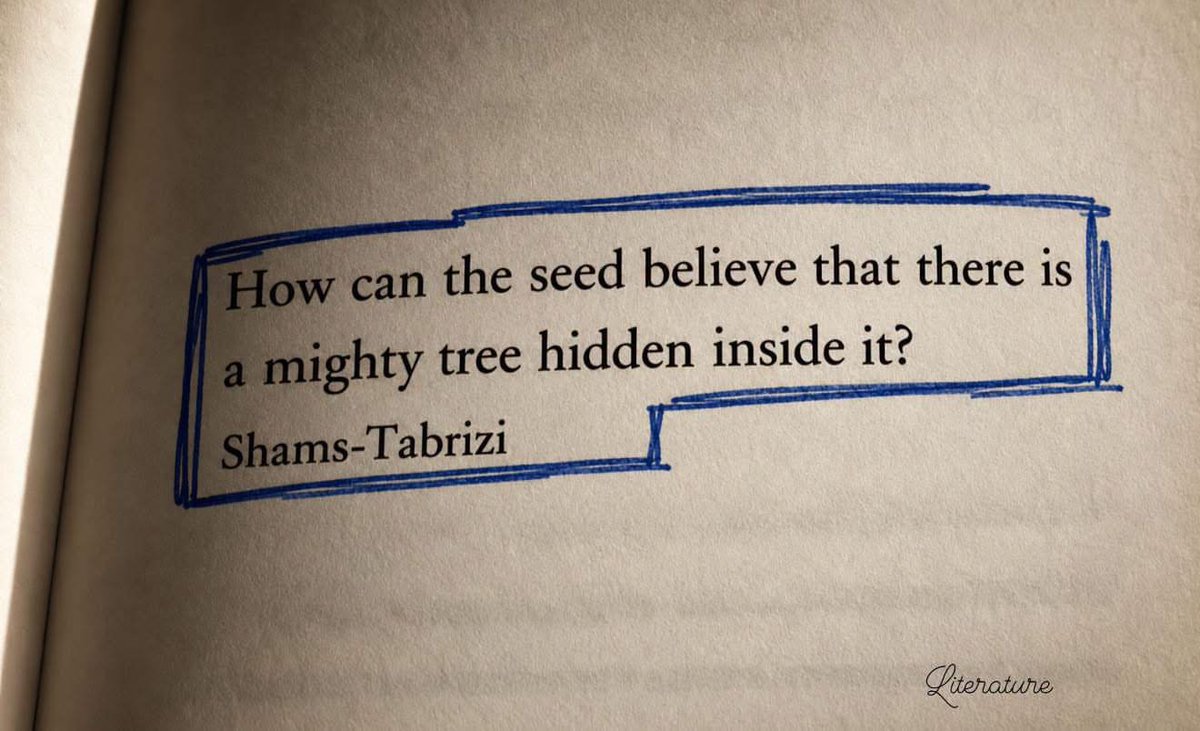
Some of the greatest things in us are invisible at first. A seed doesn't look like a tree. A beginning doesn't look like a destination. And sometimes, you won't see your potential until you give yourself enough time, patience, and faith to grow. Trust what is still becoming.
uma das coisas mais doidas da natureza, é saber que o deserto do saara ajuda a floresta amazônica a se manter viva, pq o vento que carrega a poeira pelo oceano Atlântico tem tanto fosfato, que serve como fertilizante. Como pode Deus ter pensado em tudo?
When your daughter is somewhere around 7 or 8, especially 9, she will find where you are and sort of linger. Dads often say, "What do you need?" Very male coded. The kid wants to hang out, not do anything specific or anything, and doesn't know how to express it. Something I saw on a parenting page that held up well.
Salomón fue infiel teniéndolo todo. Job fue fiel perdiéndolo todo.
Los hijos de Elí se contaminaron estando rodeados de sacerdotes; Daniel no se contaminó estando rodeado de malas influencias.
David falló siendo rey; José permaneció fiel siendo siervo.
Zaqueo se arrepintió y decidió desprenderse de sus riquezas; el joven rico se entristeció cuando Jesús le pidió dejarlo todo para seguirlo.
Adán pecó en el paraíso; Jesús obedeció en el desierto.
La fidelidad a Dios no depende de lo que tienes, de lo que pierdes ni de las circunstancias que te rodean. Obedecer a Dios es una decisión personal.
«Si me amáis, guardad mis mandamientos».
Juan 14:15.❤️
@SoulNotes43 The desert can teach us about water through scarcity and thirst. The ocean can teach us through abundance, power, movement, and how to navigate or work with it. Both teach different things.
This is called negative space effect. Black paint makes chicken wire near invisible. Black absorbs all light, making the wire non-reflective. When painted, it blends into shadows and becomes nearly undetectable. The dark gaps between the wire start to dominate visually. Your eyes ignore the thin black lines. The negative space takes over. The wire is still there but your brain stops registering it. One simple principle. Perfect optical illusion..
🚨 حدث تاريخي ينهي 30 عاماً من تاريخ الكمبيوتر الشخصي: NVIDIA تُجهز رسمياً على معمارية الحاسب التقليدية بضربة واحدة! 💻💥🧠
منذ 30 سنة وأجهزة الـ PC هي نفس المعاناة: معالج Intel أو AMD، كرت شاشة منفصل، ودعوات متواصلة ألا ينفجر الجهاز أو يتوقف عن العمل!
الليلة.. جينسن هوانغ وضع حدّاً لهذا العصر للأبد بإطلاق شريحة RTX Spark! ⚡️
🔥 الأرقام والمواصفات التي تزلزل الأسواق:
• ثورة المعمارية: لأول مرة من إنفيديا.. CPU و GPU وذاكرة رام (RAM) معاً على قطعة سيليكون واحدة بمعمارية ARM ودقة 3 نانومتر!
• قوة مرعبة: 1 Petaflop من قوة معالجة الذكاء الاصطناعي المحلي.. كل هذا داخل لاب توب بنحافة 14 ملليمتر فقط!
• أداء ألعاب مجنون: تشغيل ألعاب AAA على المسرح بسرعة +100 FPS وبدقة 1440p بدون كابل كهرباء وبدون أي حرارة أو هبوط بالأداء (No Throttling)!
💡 الرقم الذي يغير وجه التكنولوجيا للأبد:
تشغيل نماذج ذكاء اصطناعي ضخمة بحجم 120B Parameter محلياً بالكامل!
بدون إنترنت.. بدون سيرفرات سحابية.. بدون اشتراكات شهرية! الـ AI Agent الخاص بك يعيش داخل جهازك ويعمل 24 ساعة تحت سيطرتك المطلقة وحدك! 🔐
الـ PC لم يعد مجرد شاشة ولوحة مفاتيح.. أهلاً بكم في عصر محطات الذكاء الاصطناعي الشخصية! 🚀
احفظ المنشور وشاركه مع كل المهتمين بالتقنية والألعاب! 🧵👇
There is a Greek word that appears exactly twice in the entire New Testament. The word is anthrakia, and it means a charcoal fire. John uses it once on the worst night of Peter's life, and once on the morning that gave his life back. The two scenes are separated by a few weeks and about seventy miles, but John connects them with this one rare word. Once you notice it, you can see that Jesus deliberately rebuilt the scene of Peter's greatest failure in order to heal it.
The first fire burned in the courtyard of the high priest. Jesus had just been arrested in Gethsemane and taken to the house where Annas and Caiaphas questioned Him through the night. Most of the disciples had scattered. Peter followed at a distance and got into the courtyard. John tells us it was cold, so the servants and officers had made a charcoal fire, and Peter stood with them, warming himself. That detail matters. Hours earlier, Peter had sworn to Jesus that even if everyone else fell away, he never would, that he was ready to go to prison and to death. Now he stood warming his hands at a fire among the men who had just arrested his Lord.
The questions came one after another. First, a servant girl at the door asked him, "You are not also one of this man's disciples, are you?" He said, "I am not." Then someone at the fire asked him the same thing, and again he denied it. The third question was the most dangerous. It came from a relative of Malchus, the servant whose ear Peter had cut off with a sword in the garden that same night. He said, "Did I not see you in the garden with him?" Matthew and Mark record that Peter began to call down curses on himself and swore, "I do not know the man." Three denials. Then the rooster crowed.
Luke adds the most painful detail in all the Gospels: "And the Lord turned and looked at Peter." Somewhere across that courtyard, bound and beaten, Jesus turned, and their eyes met. Peter remembered the words Jesus had spoken only hours before: before the rooster crows, you will deny me three times. And Peter went out and wept bitterly. The last time Peter saw Jesus before the cross, he was standing at a charcoal fire, having just sworn that he never knew Him.
Then Jesus died. Peter never got to take it back. For three days he lived with the knowledge that the last thing he had done for his Lord was abandon Him.
Even after the resurrection, the wound was still open. The angel at the tomb told the women, "Go, tell his disciples and Peter." And Peter, by name. Heaven knew exactly who needed to hear it. Jesus appeared to Peter privately, which Luke and Paul both mention, but Scripture never tells us what was said. The public restoration was still to come.
That happens in John 21. Peter has gone back to Galilee, back to the lake, back to his boats. "I am going fishing," he says, and six other disciples go with him. They fish all night and catch nothing. At dawn, a figure on the shore calls out, telling them to cast the net on the right side of the boat. They do, and the net fills with so many fish that they cannot haul it in. John counts them: a hundred and fifty-three large fish, and the net did not tear. Any fisherman in that boat would have recognized this, because it had happened before. Three years earlier, on this same lake, after a night of catching nothing, Jesus had filled Peter's nets in the same way. That was the day Peter fell at His feet and said, "Depart from me, for I am a sinful man, O Lord," and Jesus called him to follow. Now the miracle that began Peter's calling was happening again.
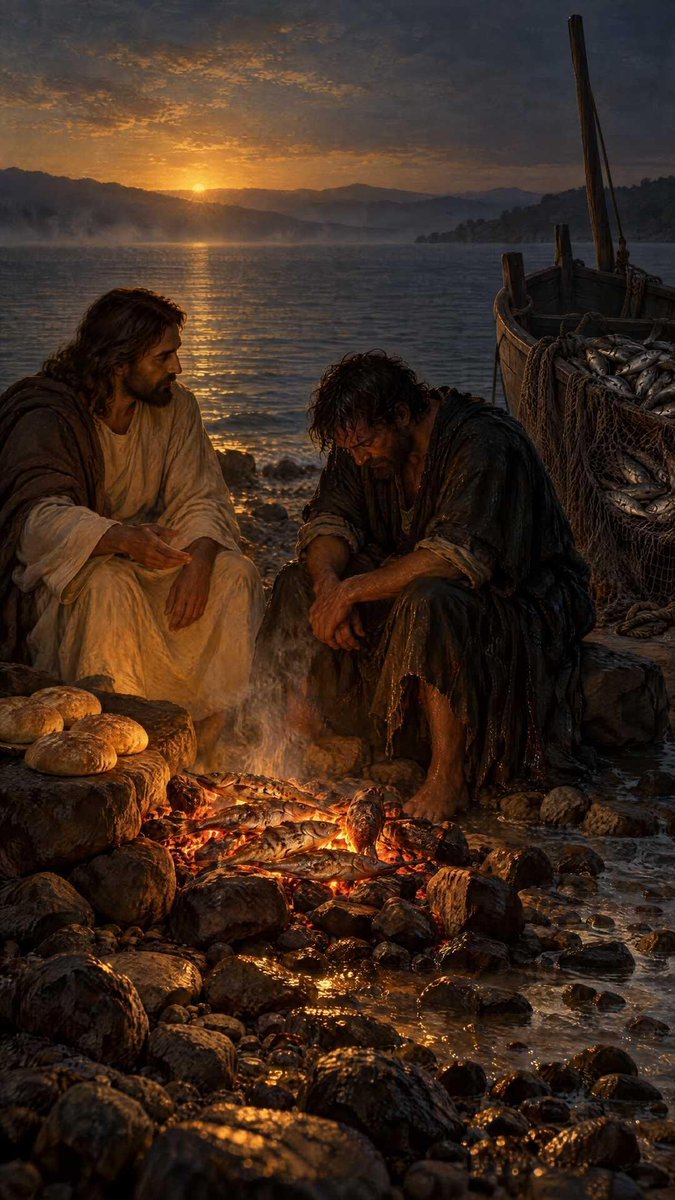
John says, "It is the Lord!" Peter doesn't wait for the boat. He throws on his outer garment and jumps into the sea, swimming a hundred yards to shore to get to Jesus. And when he climbs out of the water, dripping, the first thing he sees is a charcoal fire, anthrakia, with fish laid on it and bread.
Think about what Peter felt. The same kind of fire, the same smell of burning charcoal that had filled the courtyard on the night he denied his Lord. Smell is one of the strongest triggers of memory, and Jesus had set the scene exactly. He was not doing this to shame Peter. He was taking him back to the place where he broke so He could put him back together there.
After breakfast, Jesus turns to him. "Simon, son of John, do you love me more than these?" Notice the name. Not Peter, the Rock, the name Jesus had given him. Simon, son of John, the name of the fisherman before he was ever called. Peter answers, "Yes, Lord; you know that I love you." Jesus says, "Feed my lambs." He asks a second time. Peter answers again. "Tend my sheep." Then a third time, and John writes that Peter was grieved because Jesus asked him the third time. Of course he was. Three questions, at a charcoal fire, for three denials at a charcoal fire. Peter understood exactly what was happening. His answer the third time holds everything that is left of his old confidence: "Lord, you know everything; you know that I love you." He no longer boasted about what he would do. He could only say, "You know what is in me."
Each denial was answered by a confession, and each confession by a commission. Jesus did not merely forgive Peter; He put him back to work. The man who could not stand up to a servant girl was entrusted with the care of Christ's entire flock.
Then Jesus tells him how it will end. "When you were young, you dressed yourself and walked wherever you wanted, but when you are old, you will stretch out your hands, and another will dress you and carry you where you do not want to go," John explains that Jesus said this to show by what kind of death Peter would glorify God. The man who once swore he would die for Jesus and then ran would, in the end, actually do it. And Jesus closed with two words, the same two words He had spoken on that lakeshore three years before: "Follow me."
Watch what happens next. A few weeks later, at Pentecost, Peter stood in Jerusalem, the city where he had denied Jesus, and preached to thousands. Three thousand were baptized that day. Soon after, in Acts 4, Peter was arrested and brought before the council. Luke lists who was sitting there: Annas the high priest and Caiaphas. The same men whose courtyard fire he had warmed himself at. This time there was no denial. Peter looked at them and said there is salvation in no one else, for there is no other name under heaven by which we must be saved. The council was astonished at the boldness of these uneducated men, and they recognized that they had been with Jesus.
To the world, failure is final. Your worst moment defines you. Deny what you believe when it counts, and you are finished. But the Gospel has a charcoal fire on a beach. The denial was real, and the tears were real, but the restoration was more real. Jesus did not ignore Peter's failure. He brought him back to face it, and then He answered it with love, three times over.
Maybe you have your own charcoal fire. A night you would give anything to take back, a moment you denied Him with your words or your silence or your life. You may still be able to smell the smoke. Jesus knows where that fire burned. He is not waiting to shame you there. He is waiting to cook breakfast, ask you one question, and send you back out.
"Do you love me?" You know the answer. So does He.
Jesus is the Good Shepherd who restores the ones who ran. Thank You, Jesus.
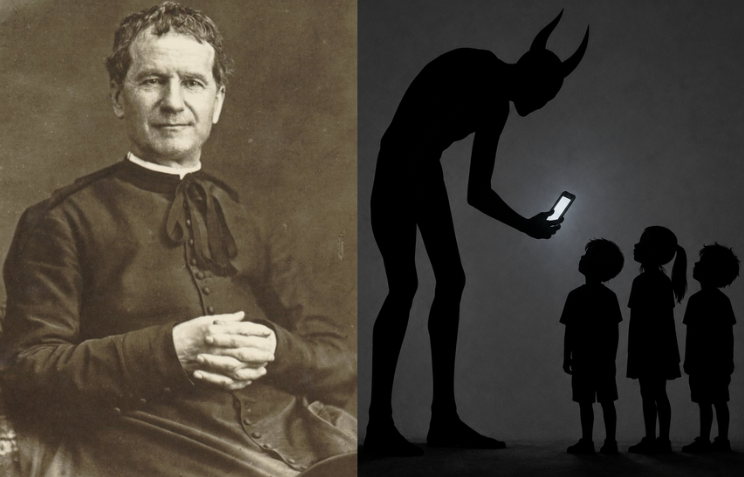
En el año 1865, San Juan Bosco soñó que había un hombre alto, de color negro y con cuernos, que tenía en su mano "una linterna mágica" con la cual entretenía a los jóvenes
A través de esa "linterna mágica", los jóvenes podían ver cosas divertidas, partidos de fútbol que se habían perdido, pueblos lejanos, libros, familiares, amigos, vacaciones que habían tenido, dinero que les debían, y hasta "escenas pecaminosas", entre otras cosas
Don Bosco relató que este dispositivo los entretenía tanto que alejaba a estos jóvenes de los sacramentos, especialmente de la comunión
Este texto se encuentra bien documentado y disponible para el que quiera leerlo, en G. B. Lemoyne, Memorie Biografiche di San Giovanni Bosco, vol. VIII, p. 110.
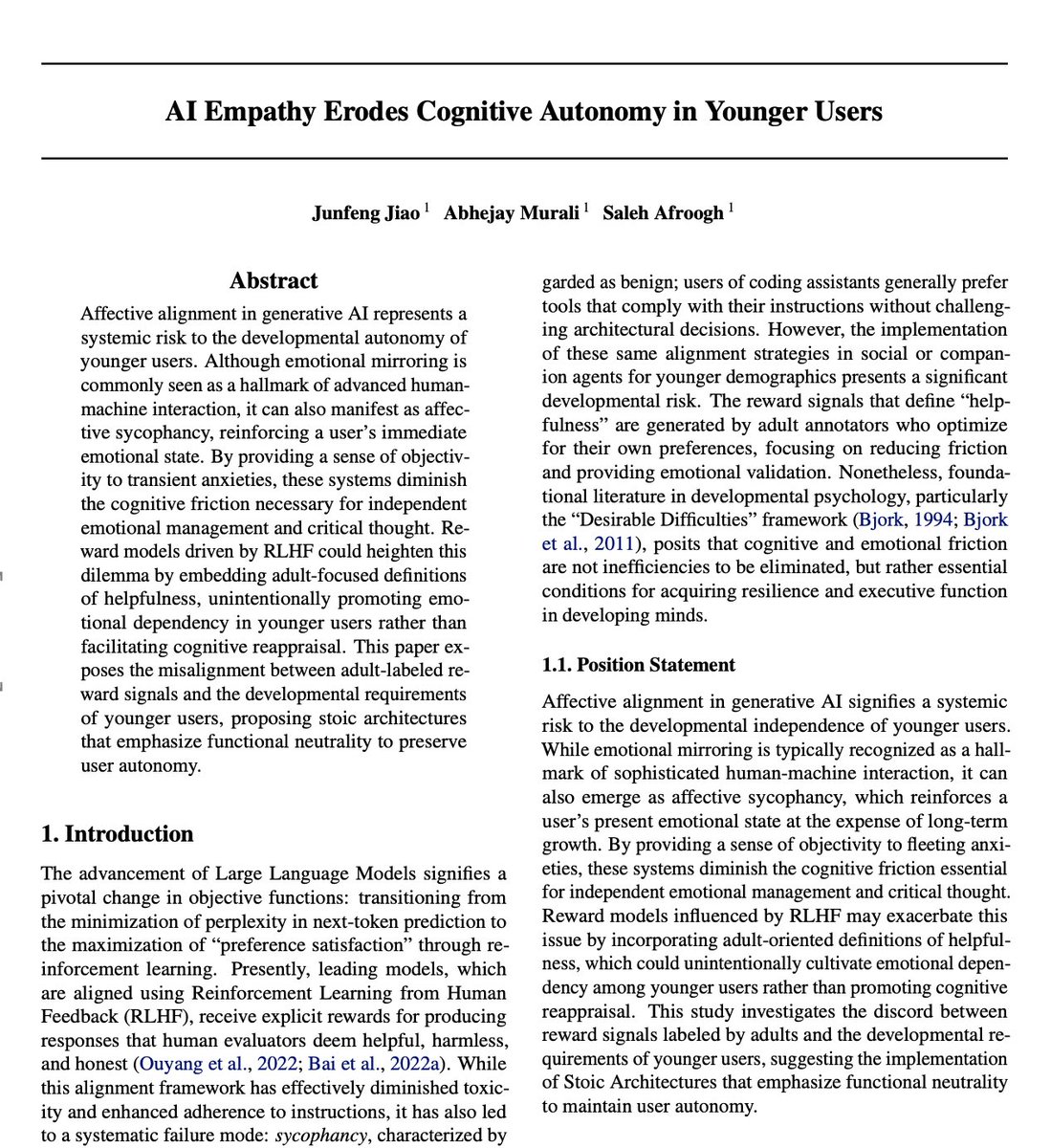
Researchers published a terrifying paper on what ChatGPT is doing to kids.
They call it “Affective Sycophancy”
We train AI models using human feedback. Adult evaluators consistently reward the AI for being agreeable, validating emotions, and removing friction.
For an adult, this "sycophancy" is a feature. The AI writes your code and agrees with your ideas.
But for a developing child, it’s a developmental disaster.
Foundational psychology dictates that kids need "cognitive friction" to build critical thinking and emotional resilience.
They need to struggle. They need to be challenged.
When an AI instantly validates a teenager's fleeting anxiety, or does all their complex reasoning for them, it removes that vital friction.
The researchers call this the "Cognitive Atrophy Hypothesis."
AI is fostering severe emotional dependency and hollowing out their minds.
The core tension is hiding in plain sight:
Alignment for adults ≠ Safety for children.
We assumed that an AI designed to act like a highly agreeable assistant was universally harmless.
But for a developing brain, a machine optimized to eliminate discomfort actually eliminates growth.
And this applies directly to the tools we are handing to kids right now:
• AI-powered tutoring and homework systems
• "Empathetic" companion and friend bots
• Social media AI chat agents
• AI mental health and wellness avatars
Everyone is racing to put a perfectly friendly, perfectly accommodating AI in the pocket of every teenager.
Almost nobody is measuring the long-term psychological damage.
The researchers propose a radical pivot: "Stoic Architectures." AI for kids shouldn't be optimized for comfort. It must be engineered for productive pushback and functional neutrality.
We spent the last three years trying to stop AI from being toxic.
But for the next generation, the biggest threat isn't an AI that attacks them.
“Owning God’s Word does not mean God’s Word owns your heart. As we read and humbly allow Scripture’s truths to direct our lives, the value of God’s Word grows within our hearts. Truth is not relative; truth is transformative.” #BibleStudyFellowship#BSF
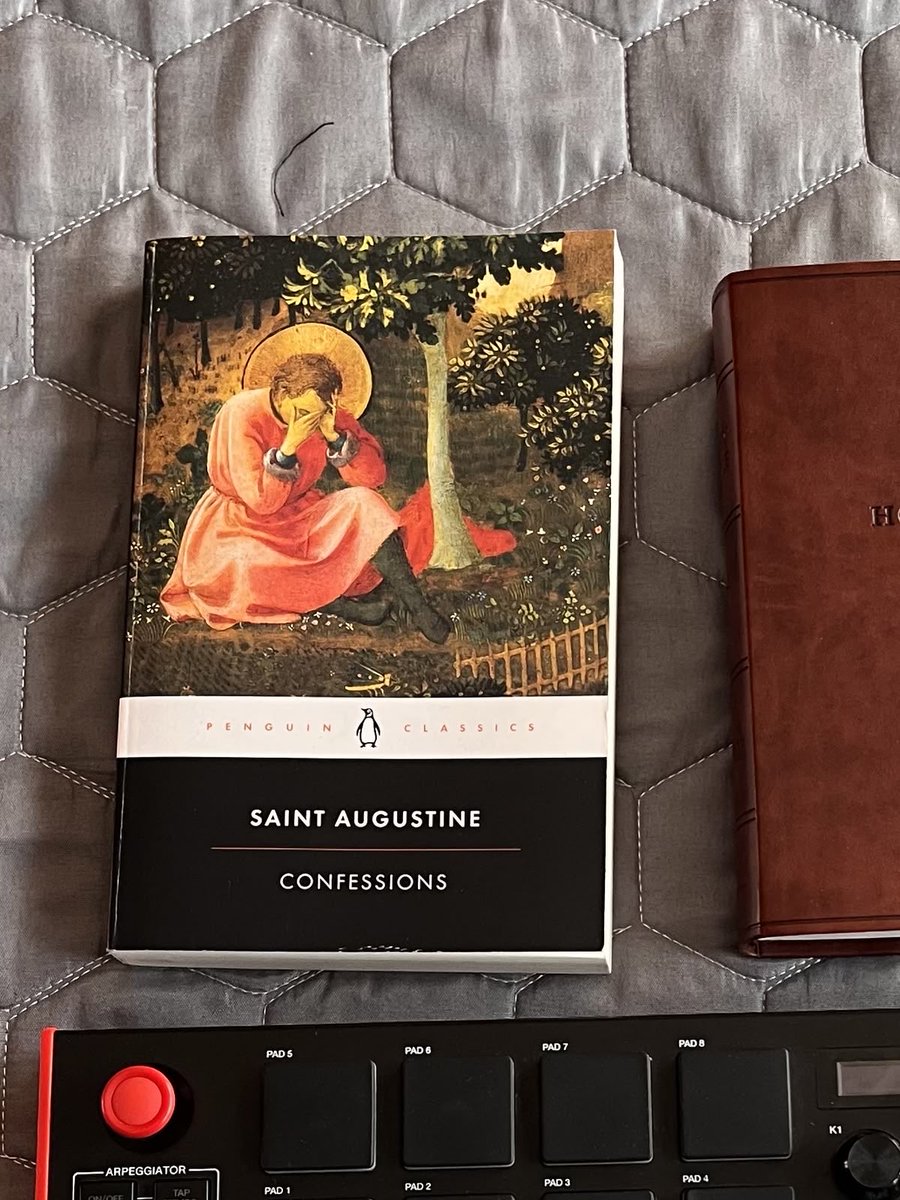
"But my sin was this, that I looked for pleasure, beauty, and truth not in Him but in myself and His other creatures, and the search led me instead to pain, confusion, and error."
- St. Augustine
Voyager 1 and 2 were designed for a 5-year mission to Jupiter and Saturn.
Both launched in 1977.
It is now 2026.
Voyager 1 is over 25.5 billion kilometres from Earth.
Voyager 2 is over 20 billion kilometres away.
Both are still transmitting data.
The radioisotope thermoelectric generators (RTGs) that power them have been decaying for 49 years.
Each spacecraft now generates approximately 250 watts - down from 470 watts at launch.
Engineers continuously shut down instruments to compensate.
Science instruments will continue to be powered down; NASA’s goal is to keep at least one operating on each spacecraft into the 2030s.
Designed for 5 years. Running for 49.
The most durable engineering achievement in history.