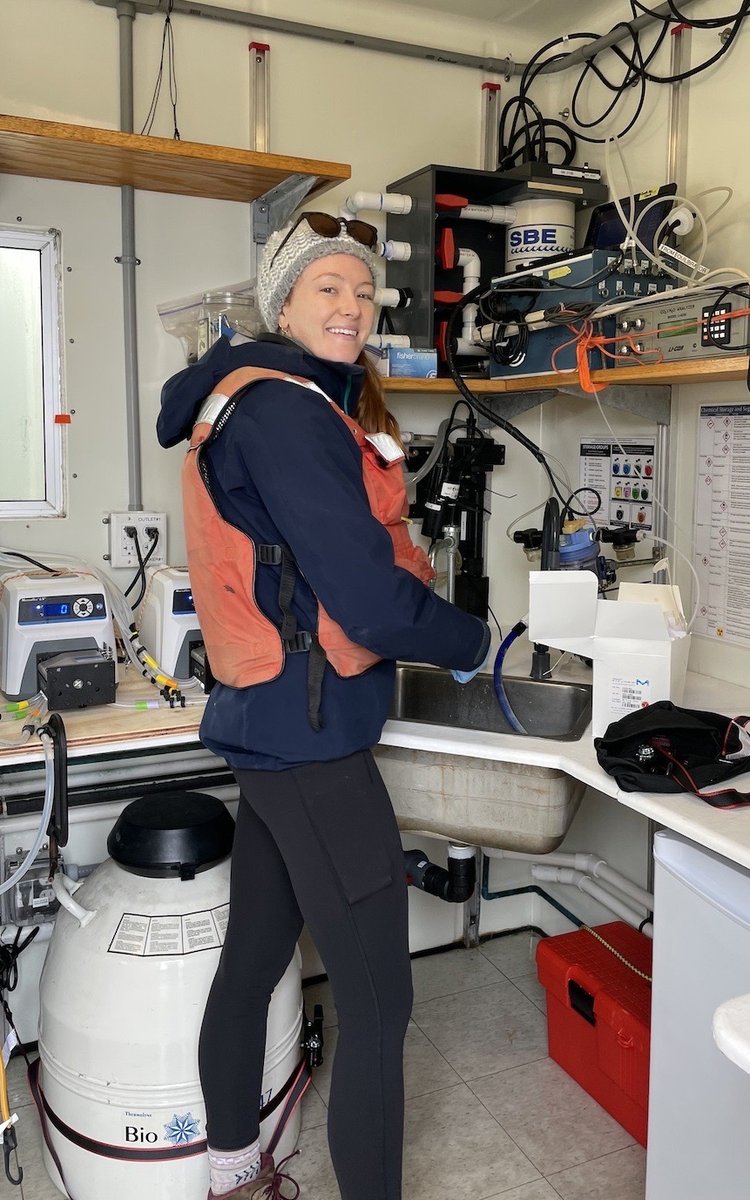
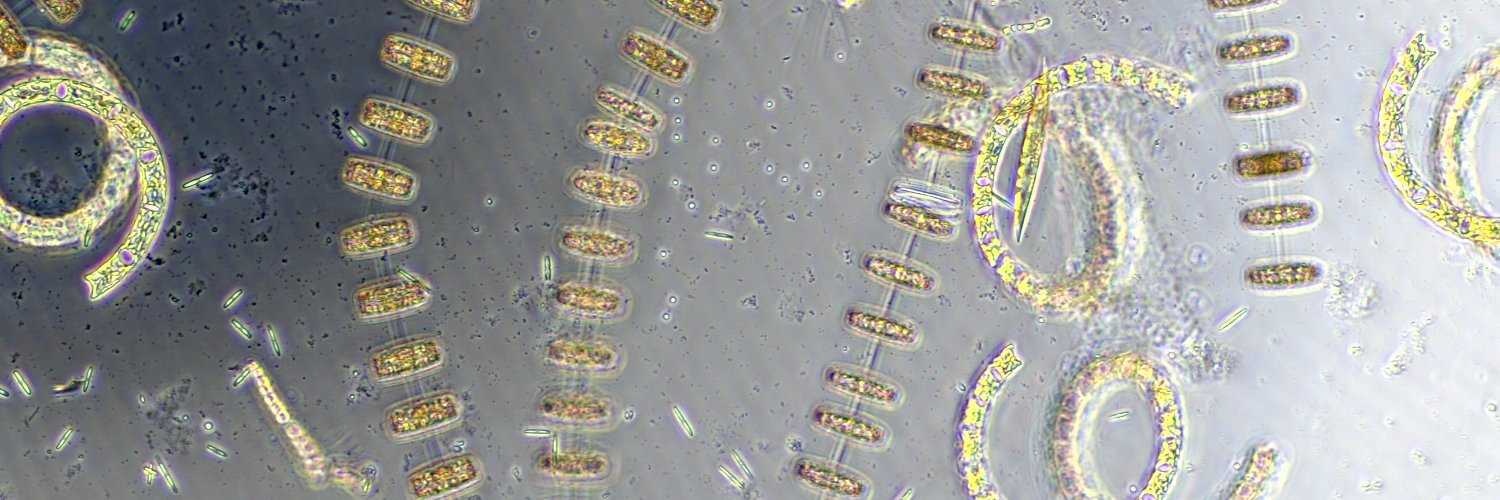
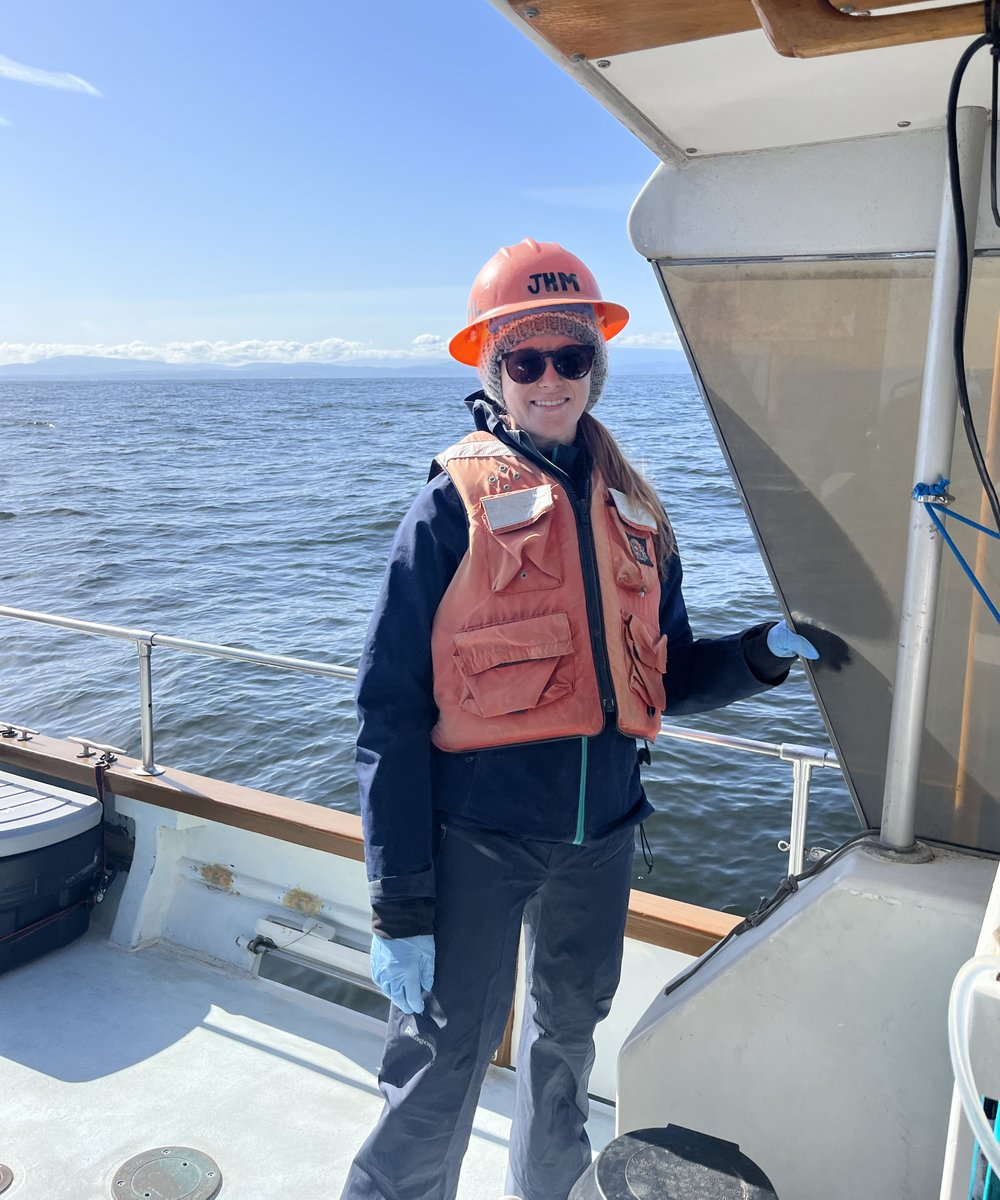
Meet Scripps PhD student @steffwould! This marine chemical biologist works with @MoorelabSIO & @andreweallen to study #HarmfulAlgalBlooms, which sometimes produce acids that contaminate seafood, poison marine mammals & threaten human health. Read our Q&A: https://t.co/zgm9Vr06hk
First paper from my PhD is officially out! We uncovered how benthic diatom Nitzschia navis-varingica makes the neurotoxin domoic acid. Grateful to all our collaborators in the @BradMoore_SIO, Todd Michael, @andreweallen, and Mari Yotsu-Yamashita labs! https://t.co/tZPDjYXOc3
🔬 Cuts to federal research funding put our family, friends, communities and planet at risk. Scripps Oceanography scientists Paul Jensen and @BradMoore_SIO spoke with NBC News on how cutting and freezing research dollars impacts crucial breakthroughs. ⬇️
https://t.co/WPOBXJGPOn
🌊 ⚠️ If you're curious to learn more about the harmful algal bloom currently impacting Southern California waters, @SCCOOS_org director and Scripps Oceanography biological oceanographer Clarissa Anderson shares more about the event with @ocregister. ⬇️
https://t.co/p1PsH12uLk
A #HarmfulAlgalBloom is affecting #SoCal marine life, and Scripps Oceanography scientists like @SCCOOS_org's Clarissa Anderson are on the frontlines to better understand its impact. She shares more on the importance of this work for @RandomLengths. ⬇️
https://t.co/piSOEjX5vD
With the support of @NOAA funding, Scripps PhD candidate Steffaney Wood (@steffwould) is working to better understand and predict a neurotoxin called domoic acid—a toxin directly affecting marine life along our shores. Learn more from @SpecNews1SoCal. ⬇️
https://t.co/ZlURIQe3n0
Check out this news story about our research and the ongoing domoic acid event. None of this work would be possible without NOAA funding. Thank you @jo_kwon and @SpecNews1SoCal for the feature! @Scripps_Ocean@BradMoore_SIO@andreweallen https://t.co/Ad8sYSS8Zg
Standing-room only as Professor Bradley Moore (@BradMoore_SIO) accepts @UCSanDiego’s prestigious Distinguished Research Award. The award is a sign of respect from his peers for his groundbreaking research mining the ocean for new medicines.
A team of researchers from JCVI, @Scripps_Ocean, and collaborators published a groundbreaking study on predicting harmful algal blooms (HABs) that contain high levels of the neurotoxin domoic acid.
https://t.co/AKmFIjcnsW
New pub today in @PNASNews that extends our @noaacoastalsci ECOHAB work at @Scripps_Ocean on domoic acid biosynthesis with @Andreweallen to support toxin forecasting during an oceanic diatom bloom https://t.co/aKsBmlqdlb
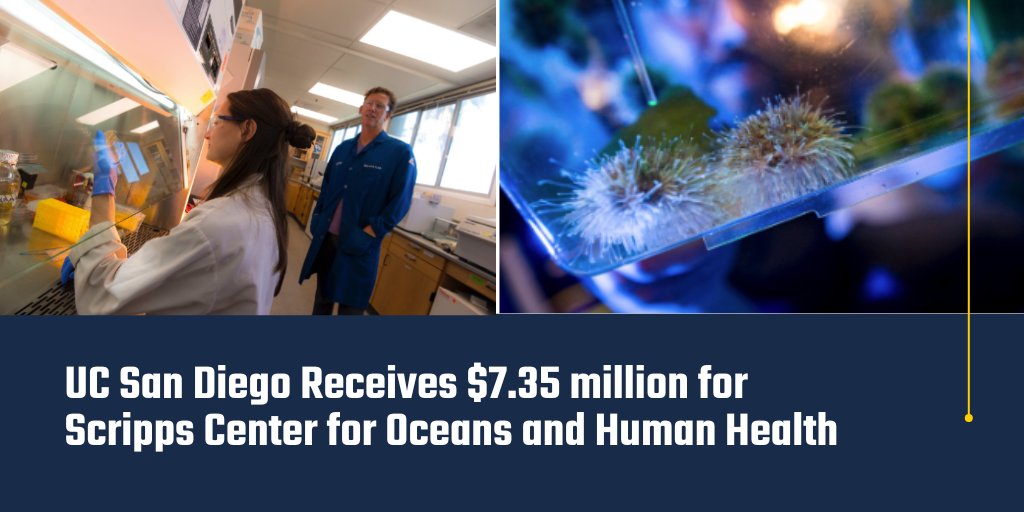
.@UCSanDiego has been awarded $7.35 million in @NSF and @NIH funding for the Scripps Center for Oceans and Human Health, led by faculty member Bradley Moore. The program seeks to understand marine contaminants and nutrients in a changing climate: https://t.co/jIPeT7m1Rl
Move over titin... introducing PKZILLA as the largest protein in life that makes one the largest nonpolymeric compounds in biology, the marine polyether toxin prymnesin. Congrats to @photocyte & @VikShende and rest of team! https://t.co/MxPldVS9xx
Excited to share my research on harmful algal blooms (#HABs) and their impact on marine ecosystems!🌊🔬 Thanks for featuring my work @Scripps_Ocean! Check out the video to learn about fieldwork exploring Pseudo-nitzschia HABs. #PhDResearch#MarineScience#ScienceCommunication
Scripps PhD candidate Steffaney Wood (@steffwould) studies harmful algal blooms or HABs, which is when microscopic algae grow in overabundance & produce toxins that pose a threat to marine mammals. Learn more about her fieldwork in Monterey Bay looking at Pseudo-nitzschia HABs.⬇️
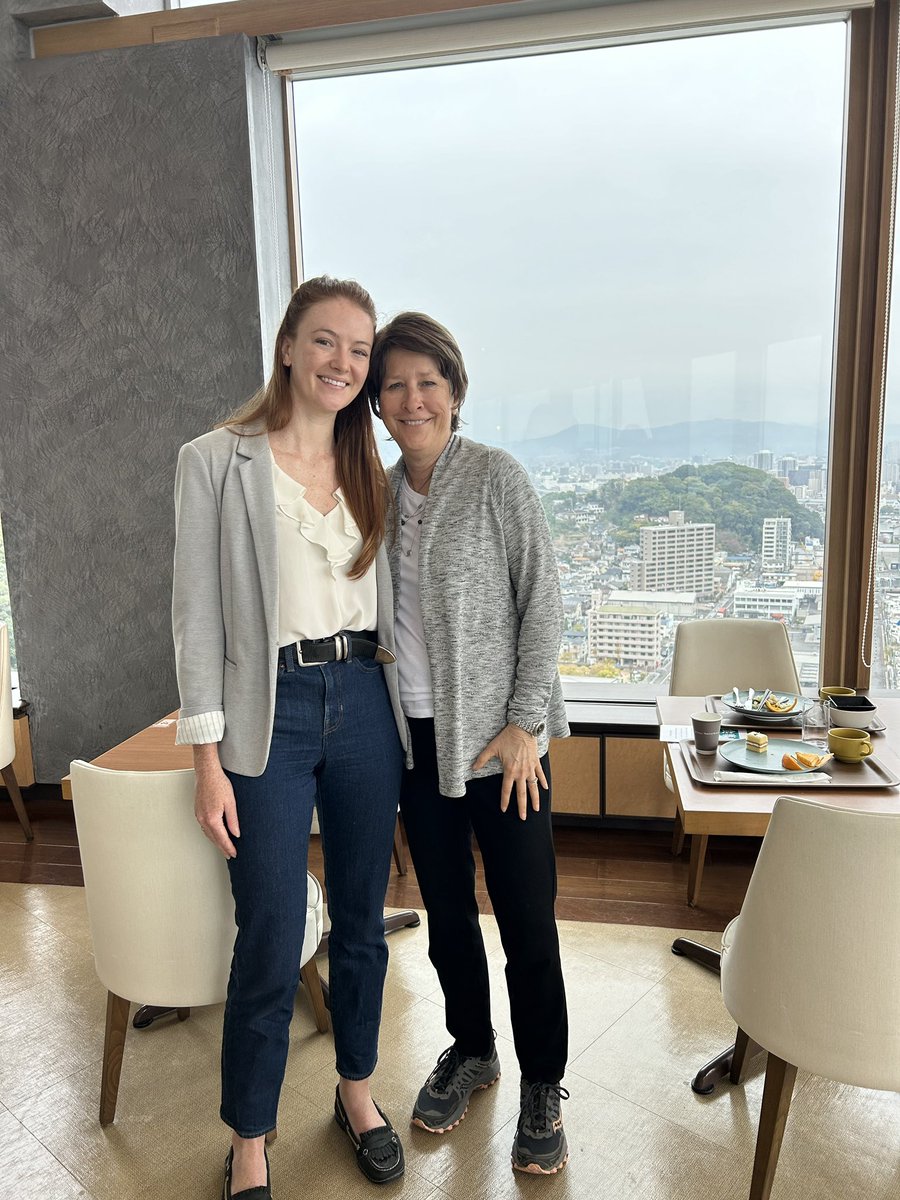
Grateful to have presented my work at the International Conference of Harmful Algae this week in Hiroshima, Japan! What a great week learning more about HABs and biotoxins🔬 #ICHA2023@ISSHarmfulAlgae