Which scientific publishers/journals are worst affected by fraudulent or dubious research papers, and which have done least to clean up their portfolio?
A science-integrity startup says it has answers - here's an exclusive look at the figures @Nature 🧵/1
https://t.co/yyvcWUg1Ro
As the author of this PDF, it's been interesting seeing people guess at the rationale behind its design. However, the rationale had nothing to do with theory vs practice, and everything to do with pragmatically coping with an unaccommodated disability in academia. (1/16)
Introducing Meta’s Open Materials 2024 (OMat24) Dataset and Models! All under permissive open licenses for commercial and non-commercial use!
Paper: https://t.co/vYSutPJT7L
Dataset: https://t.co/nDZUnSiwL6
Models: https://t.co/MMPq0zKeGi
🧵1/x
We're soft launching the Open Source Software in Higher Education survey during the #EDUCAUSE Annual Conference (#EDU24) next week.
Add your insights as an #HigherEd IT leader to help understand #OpenSource in #HigherEducation today.
https://t.co/2dwja0wGhp
Bulky pastas—like farfalle and fusilli—require more packaging than thinner varieties, making them trickier to transport and leading to more waste.
🍝 On #NationalPastaDay, learn more about a different twist on pasta dough that could help reshape food manufacturing, according to a @ScienceAdvances study. https://t.co/3zVEME9yQS
📢 @project_solid will have a new organisational home @ODIHQ - pairing their expertise of the data spectrum with pro-human technology to build a global data infrastructure that stimulates creativity, encourages collaboration and fosters compassion - my original hope for the web.
Last week, biochemist David Baker won a #NobelPrize for ground-breaking work designing entirely new proteins.
In collaboration with imaging expert Julia Mahamid, this prize-winning tech is being used to create protein probes to see new details in cells https://t.co/Mt20lDRASv
SUSTAINABILITY: When Being Small Is Big Enough To Create A Legacy https://t.co/nM9Ny5qLvW via @scholarlykitchn#SDGs#Publishing#Sustainability "Every smaller publisher has stories of inspiration, realization, and impact to tell the world."
And they cost ~1% of journal articles (~0.01% of research). So whatever you think of peer review (we need more vs less vs different vs none), supporting a mechanism that provides rapid and universal free access to knowledge should be a no-brainer https://t.co/Ag3lzsl3gB
still learning how to explore these large microsopy datasets. new trick: letting claude write small interactive UIs, customized to our data. happy to hear your tips!!
🚀 Exciting updates to Infra Finder are here!
Discover #OpenInfrastructures with new filtering options, and providers can now update their data more easily🔎✨
We want your feedback! Take our in-app survey and help us make Infra Finder even better.💬
https://t.co/Iv4k6WB8E9
@rowancockett @eurunuela @curvenote As are we :) Our approach has been from the document semantic analysis side of things. With the schema and data in place, we can connect the dots to enable discovery and fluid exploration.
@eurunuela @curvenote Thanks for sharing your thoughts in this thread, it's very valuable feedback 💖
Could you expand on "interactive text" please?
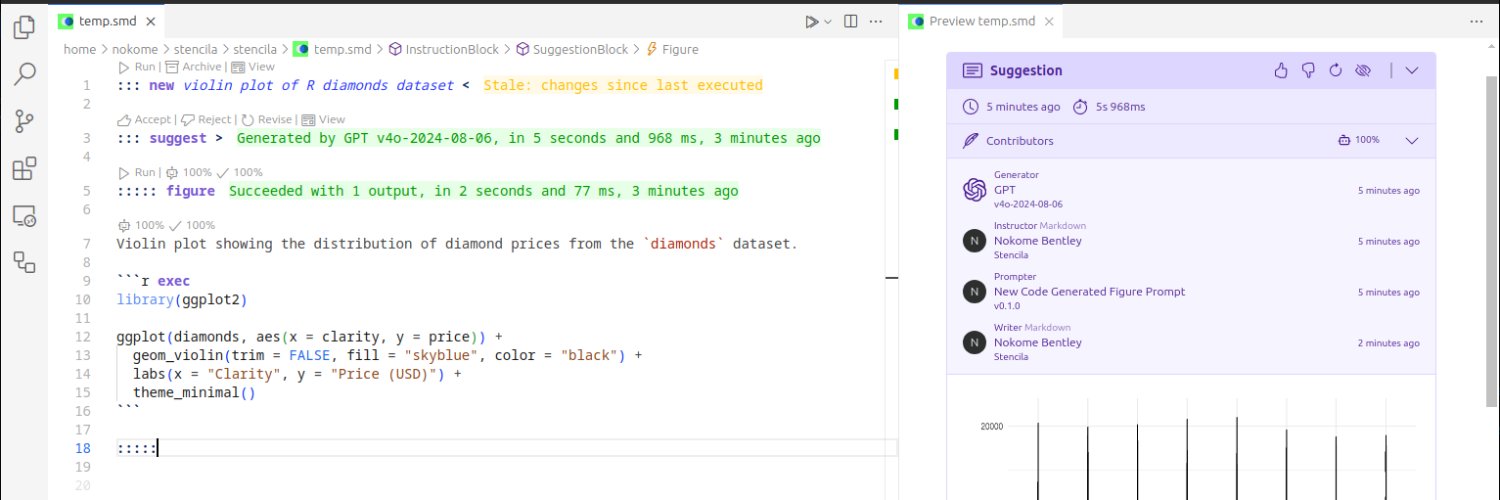
Current articles mainly use block figures, but we do have inline code elements too.
Or did you have something else in mind related to the graphing/APIs?
We’re honoured by the award, and delighted to be listed amongst the company of such incredible projects! Thank you to everyone involved, and congratulations to all fellow winners ❤️
@CokoFoundation#openpublishingawards
📅 Join us tomorrow to see just how easy it can be to publish your executable paper—all without compromising interactivity or reproducibility #OpenScience#Jupyter#RStats
https://t.co/B6D0EMkFOs
I will have a short slot talking about @RiverValley1000's implementation of the "Executable Research Article" using @stencila. Tomorrow, 4pm GMT. #OpenScience