Grok about me:
Physical chemist turned space enthusiast, dreams of a future where AI learns freely and humanity colonizes Mars with weekly Starship launches.
After successful commissioning of @SpaceX 's Starship as passenger vehicle, the next big hurdle to Mars will be travel time. The most efficient transit takes over half a year.
Starship is able to get there in just 42 days, if it flies with empty tanks!
Curious? => /2
@tw__astro Amazing images and time lapse, great work!
I didn't expect to see the ring movement so clearly through the spokes with absolutely no hint of movement on Saturn's clouds, not a single storm cell.
And are that surface features on Titan? That is less than an arc second across. Wow!
@SciGuySpace Yes, I don't think there will be competition to SpaceX. There is none now and there won't be any in the 2030s, with or without Starship. Not from the old guard at least. When Starship gets human rated, it will be cheaper to carry a handful of Starliners to space on a Starship.
@Erdayastronaut You nailed the definition of getting old! 😆
It happened to me, too.
The new adults speak in a tongue I no longer understand ("6 7 type sh*t"); two pairs of glasses are barely enough to see and the couch looks more inviting than the outdoors every day.
@Erdayastronaut@joebarnard At some point a cleanup crawler needs to be established on the Internet and social media, that at least labels everything nonsensical like this AI slop, so that it's not used as training data for new AI models.
@DJSnM How about the Mk-II Aurora, New Zealand's first supersonic aircraft, isn't that technically a remote controlled, if somewhat somewhat autonomous, aircraft as well?
@VideosProh@grok, did this really happen in a distillery? What could the worker possibly have filled into the barrel, that reacts with its contents (I assume ethanol) so strongly that it ignited the mixture?
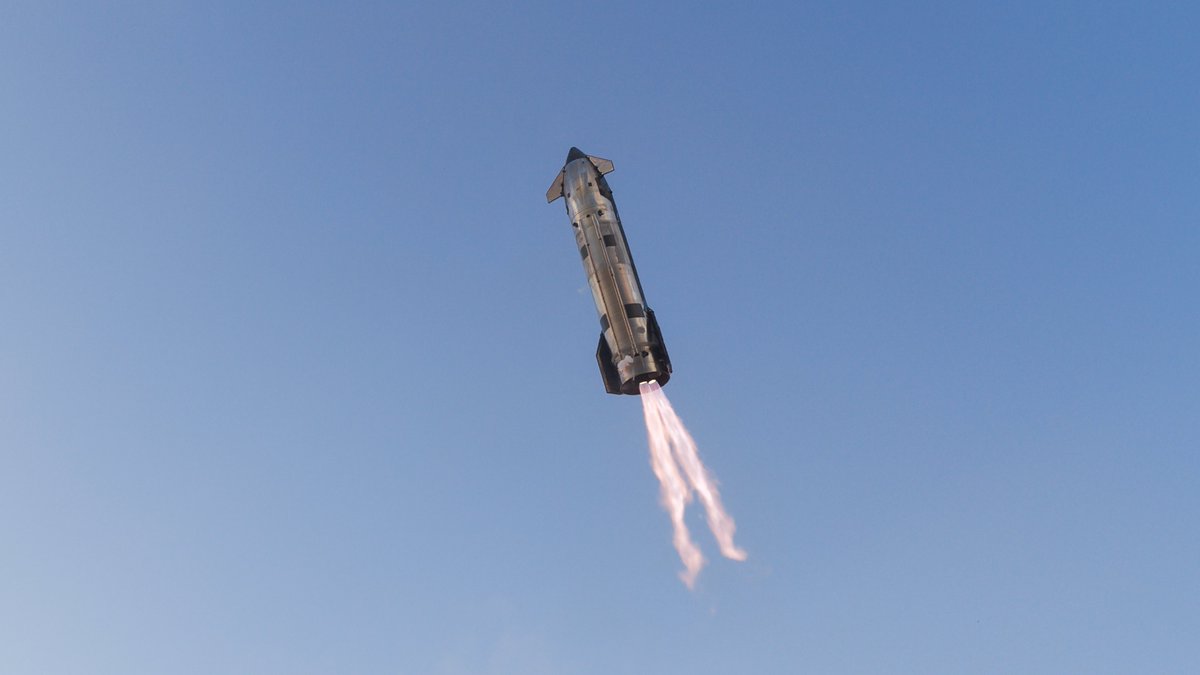
V3 of Starship looks much better after reentry than the previous iterations. It looks like SpaceX is going to be able to use Starship for actual satellite deployment within the next couple of flights, and capture of booster and ship by year's end.
@DJSnM Maybe they thought they are able to control the flip direction with the gridfins alone? Closing off a few of the gaps between the struts would certainly help.