One of the biggest dilemmas for local contractors is that we need capital, but capital alone will not save us.
Many Ugandan construction companies are capable, hardworking and technically experienced. But the construction industry has reached a stage where survival now depends on more than site experience. It depends on records, systems, cashflow discipline, contract administration, quality documentation, claims management, equipment records, tax compliance, safety systems and proper company governance.
This is not a weakness to hide. It is a sector gap to fix.
Just as we demand affordable financing for local contractors, we must also demand structured support to help local companies become bankable, auditable and institutionally strong. A contractor who receives financing without these systems may only inherit a bigger problem: more debt, more exposure and faster failure.
This is where industry associations such as @UNABSEC_UG and related bodies must lead. Their role should not be limited to speaking for contractors when there is a crisis. They must also develop templates, training tools, standard procedures, mentorship systems and practical governance resources that help member companies reach the standard required by financiers, clients, regulators and serious projects.
That is an act of institutional parenting. It is not enough to shout that local contractors need work and money. We must also build the systems that help them absorb work, manage money, deliver quality and survive growth.
Industry leadership should therefore begin requiring meaningful membership returns based on clear capacity indicators: financial records, project documentation, quality systems, safety compliance, contract-management practices, equipment records, staffing structures and training progress.
Capital is a problem. But governance is also a problem. If we fix only financing and ignore management systems, we shall keep rescuing companies from the same hole.
The future of local contracting will not be built by money alone. It will be built by disciplined firms, strong associations and industry institutions willing to raise the standard from within.
BUDGET 2026/27: WHAT IT MEANS FOR CONTRACTORS.
=======
The FY 2026/27 Budget contains good news for the construction sector. Significant investments continue in roads, bridges, railways, airports, energy infrastructure, industrial parks, public buildings and urban development. On the surface, this suggests a healthy pipeline of work for contractors across the country.
Yet before contractors celebrate the opportunities contained in the budget, there is a more important question to ask: will this budget grow Uganda's construction industry, or will it merely grow construction activity?
The distinction is important.
For more than three decades, Uganda has invested heavily in infrastructure. Roads have been built, power generation has expanded, airports have been modernised, industrial parks have been established and public buildings have been constructed across the country. Yet many local contractors continue to face the same structural challenges they faced twenty years ago.
Access to affordable finance remains limited. Delayed payments continue to undermine cash flow. Performance securities and bid security requirements remain difficult for many firms to satisfy. Access to modern equipment remains constrained, while technical capacity continues to be fragmented across the industry. Large projects remain concentrated among a relatively small number of firms, many of them foreign-owned.
As a result, the paradox persists. Uganda's construction market has grown significantly, yet many indigenous contractors have not grown at the same pace.
The question therefore is no longer whether infrastructure is being built. The question is whether the process of building infrastructure is simultaneously building local construction capacity. A country can spend billions of shillings on roads, bridges and public facilities and still fail to develop strong local contractors capable of competing at scale.
The budget's emphasis on industrialisation, manufacturing and value addition creates an opportunity for contractors to rethink their role. Contractors should not merely be consumers of cement, steel, fuel and imported equipment. They should increasingly become participants in industrial development itself.
The future contractor may need to operate block plants, precast facilities, material laboratories, equipment workshops, asphalt plants, crushing plants and manufacturing operations. The future of contracting may be less about labour mobilisation and more about industrial capability. Firms that remain dependent solely on labour and project acquisition may find themselves increasingly vulnerable in a market that rewards productivity, quality and technical sophistication.
The budget also highlights another challenge for the industry. As Uganda's infrastructure stock expands, maintenance will become a larger and more predictable market than new construction in some sectors. Yet the industry remains overwhelmingly organised around project acquisition rather than asset management. Many contractors are still pursuing one-off projects when the emerging opportunity may lie in long-term maintenance, rehabilitation and infrastructure performance management.
The budget further reinforces the growing importance of standards, certification and accountability. The recent public discussions surrounding building collapses, infrastructure failures and construction quality should remind us that the future competitiveness of local contractors will depend not only on price but also on quality, reliability, safety and technical competence. In a more mature construction market, quality becomes a competitive advantage rather than merely a compliance requirement.
For local contractors, therefore, the most important question arising from the budget is not how much money has been allocated to infrastructure. The more important question is how much of that investment will strengthen indigenous contracting capacity and create firms capable of surviving beyond a single project cycle.
A country can build roads without building contractors. It can construct bridges without developing an engineering industry. It can spend billions on infrastructure and still remain dependent on foreign expertise, foreign equipment and foreign capital. The true measure of success will not be the kilometres of road constructed or the number of projects commissioned. The true measure will be whether Uganda emerges with stronger local contractors, stronger local suppliers, stronger local manufacturers and stronger local engineering enterprises.
The budget has provided resources for infrastructure. The challenge before contractors is to ensure that infrastructure investment becomes a vehicle for building the industry itself. If this opportunity is seized, contractors will become more than builders of projects. They will become builders of industrial capacity, employment, technological capability and national wealth.
“You cannot say that you have Shs158 billion to purchase cars for MPs and then claim that you do not have Shs 28 billion to pay medical interns’ allowances, with the excuse that it would crush the economy. By the way, doctors are rarely in the hospitals. It is the medical interns who are everywhere doing the donkey work,” Archbishop Stephen Kaziimba Mugalu
READ:👉https://t.co/D8WKodSg45
#MonitorUpdates
Dear friends: I have been following efforts to drag @NWSCMD into certain things! I would like to point to the following facts:
I) I have been at @nwsc_ug since for about 32yrs and we have tried to do things administratively right, albeit some gaps.
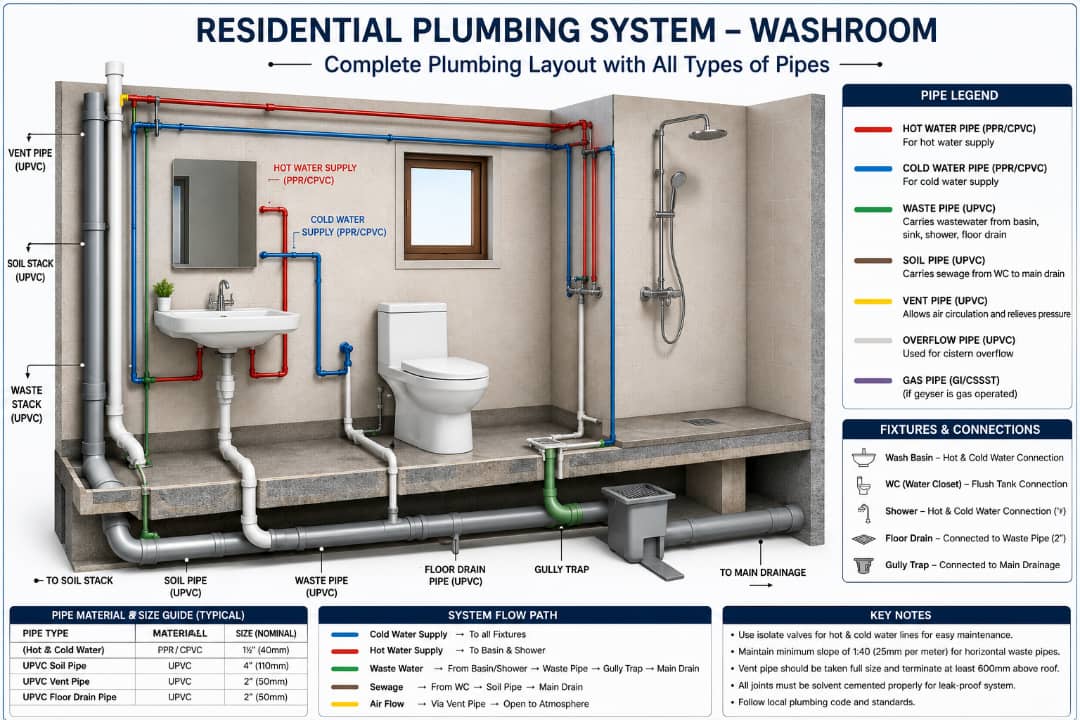
Mechanical and Electrical drawings show provisions for building services like power, water, liquid waste, fire protection, and many more to ensure the building functions safely, efficiently, and in compliance with standards.
Don't take risks that might end your property and life
This is how the Artemis II crew with get back to Earth, hurtling through the atmosphere in a fiery ball.
🎧 Follow the mission as the astronauts splashdown on 13 Minutes Presents: Artemis II https://t.co/XsOnKK9Af1
ENGINEERS IN COMMAND:
Why Uganda’s Vision 2040 Demands Technical Leadership
By Joel Aita
There is a question that rarely gets asked in Uganda’s political conversations, yet it may be the most consequential one of our times: Who should govern a nation that has chosen to transform itself through infrastructure, industrialization, and technology?
Uganda Vision 2040 sets out an audacious ambition to lift the country from a low-income, peasant economy to an upper-middle-income nation with a per capita income of $9,500 within a single generation. The roadmap is technical in its very bones. Its six priority pillars infrastructure (energy, transport, water, oil and gas, and ICT), science and innovation, land use, urbanization, human resource development, and security are, at their core, engineering problems. They demand not just political will, but technical comprehension at the highest levels of decision-making.
Yet the people most responsible for delivering this vision, cabinet ministers, permanent secretaries, local government chairpersons and mayors, district technical staff are overwhelmingly trained in law, political science, public administration, some District and City Councilors hardly completed Secondary Education, Majority MPs are Senior Six leavers some who performed so badly that they could proceed for higher education. We are asking career politicians to make trillion-shilling decisions about standard gauge railways, nuclear power plants, irrigation schemes, and smart cities. This is the structural contradiction at the heart of Uganda’s development challenge.
China’s experience offers a compelling mirror.
The Precedence: How China Engineered its Miracle
When Deng Xiaoping launched China’s Reform and Opening in 1978, he made a deliberate and consequential decision: he moved engineers into critical government positions. His philosophy was direct — “science and technology are the primary productive forces.” Over the following two decades, technically trained professionals dominated the Communist Party’s leadership at every level. By the 15th and 16th Party Congresses in 1997 and 2002, all members of the Politburo Standing Committee the apex of Chinese power were engineers by training. Presidents Jiang Zemin, Hu Jintao and Xi Jinping all studied engineering at elite universities.
The result was not accidental. China built the world’s largest high-speed rail network, lifted 800 million people out of poverty, and became the world’s second-largest economy all within the span of one generation. When engineers sat at the policy table, decisions about infrastructure financing, industrial zones, and technology investment were made with technical rigor, not just political expediency.
Singapore, South Korea, and Taiwan pursued similar paths. Their political leadership combined ideological direction with technical education, producing governance systems that could read engineering feasibility studies, interrogate cost-benefit analyses, and hold contractors accountable. Uganda wants the same outcome. It has not yet made the same institutional decision.
What Vision 2040 Actually Demands
Let us be precise about what Uganda has committed to. Vision 2040 identifies flagship projects including: a hi-tech ICT city; large irrigation schemes across the country; five regional cities Gulu, Mbale, Jinja, Mbarara, and Arua to be developed to world-class standards; a standard gauge railway connecting Kampala to regional capitals and the sea at Mombasa; industrial Parks across Uganda; a 400kV electricity transmission network; a national fibre optic backbone; international referral hospitals in every regional city; and nuclear power connected to the national grid by 2031.
Not one of these projects can be adequately designed, procured, supervised, or evaluated without deep engineering knowledge at the point of political authority. A minister who cannot read a geotechnical report cannot meaningfully interrogate why a road is failing. A district chairperson who does not understand hydrology cannot hold a water supply contractor accountable. A parliament that collectively lacks structural engineering literacy will continue to approve projects that collapse literally and financially.
The gap between Vision 2040’s ambitions and Uganda’s current governance architecture is not primarily a funding gap. It is a technical comprehension gap.
The Case for Engineer-Politicians for Uganda
Placing engineers and technically trained professionals in political leadership does not mean replacing democracy with technocracy. It means enriching democratic governance with technical intelligence. The argument has several layers.
First, infrastructure is Uganda’s primary development lever. An estimated 70% of Uganda’s Vision 2040 capital expenditure will flow into physical infrastructure. Every shilling of that investment passes through specifications, designs, bills of quantities, procurement processes, construction supervision, and asset management all of which are engineering functions. Political leaders who understand these functions are less susceptible to contractor capture, inflated variation orders, and the quiet corruption of technical ignorance.
Second, Uganda’s resource endowments require technical stewardship. The Albertine Graben oil and gas reserves, the mineral wealth of Karamoja, the water resources of the Nile basin, the industrial development, the agricultural potential of the fertile crescent these are all technical assets. Their monetization requires leaders who understand petroleum engineering, mineral processing, hydraulic design, and agronomy.
Third, the private sector demands technical interlocutors. As Uganda works to attract foreign direct investment into its energy, transport, and industrial sectors, investors increasingly expect governments whose technical ministries can hold intelligent conversations about bankability, engineering risk, and environmental compliance. Countries whose ministers can engage at that level close deals faster and on better terms.
Fourth, Uganda’s local government system is hemorrhaging technical capacity. Under the decentralization framework, district and municipal governments are responsible for road maintenance, water systems, physical planning, and building regulation all technical mandates. Yet most elected local leaders have no technical background, and the technical staff they supervise are chronically underpaid, demoralized, and often bypassed.
What This Looks Like in Practice
The proposal is not utopian. It is operational and actionable. Uganda should consider a deliberate policy similar to China’s 1983 cadre recruitment reforms requiring that a defined percentage of appointed positions in technical ministries be held by professionals with relevant engineering or scientific qualifications. The Ministry of Works and Transport, the Ministry of Energy and Mineral Development, the Ministry of Water and Environment, the Ministry of Housing and Urban Development, and Minister of ICT should be led by people who understand what they are managing.
At the parliamentary level, the Committee on Physical Infrastructure, the Committee on Natural Resources, and the Science and Technology Committee should be chaired by members with relevant technical backgrounds. Parliamentary scrutiny of infrastructure budgets, environmental impact assessments, and technology procurement would be fundamentally stronger.
At the district level, the District Engineer currently a technical officer buried under a layer of elected officials with no technical mandate should be elevated in authority and salary, with clear lines of accountability that protect technical decisions from political interference. Uganda should pilot a system in which engineering professionals can run for technical leadership positions at district level on platforms anchored in infrastructure delivery, as has been done with partial success in Rwanda.
The Uganda Institution of Professional Engineers (UIPE) and the Engineers Registration Board (ERB) already provide a credentialing infrastructure. What is missing is the political will to connect professional credentials to political and administrative authority.
The Objection and the Answer
The inevitable objection to this argument is that engineering training does not guarantee good governance. This is true. China itself has produced engineer-politicians who were corrupt, authoritarian, and catastrophically wrong. An engineering degree does not confer wisdom, integrity, or political accountability.
But the argument is not that engineers are inherently better people. The argument is that Uganda’s specific development challenges — building $40 billion worth of infrastructure over 15 years, managing petroleum revenues, developing five regional cities, connecting rural Uganda to global markets require political leaders who can understand the technical dimensions of those challenges. The combination of technical competence and political accountability, not one at the expense of the other, is the ideal.
Uganda has produced exceptional engineers. Many of them quietly, without recognition are doing the country’s most critical work: designing hospitals, supervising bridges, managing water systems, planning urban expansions. They are technically brilliant and politically invisible. Vision 2040 will not be built by invisible people.
A Call to the Engineering Profession
Uganda’s engineers must also reflect on their own role. For too long, the profession has accepted a subordinate political status executing decisions made by others, accepting underfunding without public challenge, and retreating into technical silos while politicians make consequential decisions above their heads.
The engineering profession must claim its rightful place in Uganda’s public square. This means more engineers running for office. It means professional bodies like UIPE engaging louder and more consistently on infrastructure policy. It means engineering firms building thought leadership publishing, speaking, advocating not just building roads and waiting for the next tender.
The Pearl of Africa is not short of gold. It is short of people in power who know how to mine it.
Conclusion
Uganda Vision 2040 declares the ambition to transform the country from a peasant economy to a modern, prosperous nation within 30 years. That transformation is, at its core, a technical project. It will be built in concrete, steel, fibre optic cable, industrial parks, irrigation channels, and power transmission lines. It will be financed through instruments that require technical due diligence. It will be evaluated through metrics that demand engineering accountability.
China’s most productive decades of development were led by engineers. Singapore was built by a Prime Minister who understood urban systems. Rwanda’s infrastructure renaissance is driven by a government that reads engineering reports before it approves budgets.
Uganda does not need to copy any of these models wholesale. But it must learn from their central insight: the quality of a nation’s infrastructure is ultimately a reflection of the technical intelligence of its governance.
Vision 2040 is the map. Engineers must help drive the vehicle.
Joel Aita is the CEO and Chairman of the Joadah Group, a multidisciplinary engineering and technology consultancy headquartered in Entebbe, Uganda.
Are Kampala’s Flooded Basements About to Collapse?
=======
For three days now, photos and videos of flooded basements in Kampala’s commercial buildings have been circulating online. People are asking a fair question: are these buildings about to collapse?
As a structural engineer, my answer is simple but not short:
Most properly designed buildings will not suddenly collapse just because their basements have been submerged for a few days.
However, that does not mean there is no danger. The real risk is deeper and more long term.
1. This is not just rainwater.
===
In design textbooks, flood water is often treated as clean rain. Kampala’s reality is very different.
Our city’s drains carry a mixture of storm water, sewage from on-site sanitation, oil and fuel from garages, detergents, industrial effluent, plastics, and decomposing organic waste. When this cocktail settles in the basement of a building, it brings with it:
1.1. Salts such as chlorides and sulphates
1.2. Acids from decaying waste
1.3. Oils and hydrocarbons
1.4. Fine clays and silts that keep structures damp
Concrete itself can live under water for a very long time. We build offshore platforms, harbour structures and submerged tunnels with reinforced concrete. The problem is not simply “water.” It is what that water carries into the pores and cracks of the concrete and down to the steel reinforcement.
2. Immediate versus long term risk.
===
In the short term, three main structural concerns arise when a basement is flooded.
First is lateral water pressure on basement walls. Water is heavy. One metre of water outside a wall is roughly one tonne per square metre pushing sideways. If water remains outside but is pumped out quickly inside, that unbalanced pressure can overstress a wall that was never designed for it.
Second is uplift, or flotation. A basement is like a boat. Flood water and rising groundwater try to push the floor slab up. If the designer did not check “anti-floatation” properly, the slab can crack or lift, especially in areas built on former wetlands.
Third is softening and erosion of soil. Moving flood water can wash away soil supporting foundations, just as scouring around a bridge pier can cause failure. Repeated flooding and poor drainage gradually undermine the ground that carries the building.
If the building was well designed for these conditions, three days of standing water is unlikely to cause an instant collapse. If the basement was an afterthought on marginal land, with thin walls and poor detailing, the safety margin is much smaller.
The bigger danger, however, is long term deterioration.
3. Corrosion, cracking and the wet–dry cycles.
===
Concrete protects steel reinforcement bars by keeping them in an alkaline environment. Chlorides and other aggressive ions in dirty flood water break down this protective layer and start corrosion (rusting) of the steel bars.
As steel corrodes, the rust occupies more volume than the original metal. This expansion creates internal pressure, leading to cracking and spalling of the concrete cover. Over time, the steel bars that are supposed to carry the load become thinner and weaker.
After the flood is pumped out, basements rarely dry uniformly. Parts remain damp, others dry quickly. The structure enters a cycle of wetting and drying. Ironically, corrosion is often most aggressive in these intermediate moisture conditions, not when concrete is fully soaked or fully dry.
In a city where some basements flood several times a year, the pattern becomes predictable: flood, pump, crack, rust, repeat. The building may stand for years, but its remaining life quietly shrinks.
4. What should we do now?
===
For the current situation, three immediate actions are important.
4.1. Treat flooded basements as structural incidents, not just cleaning jobs.
Pump water out in stages, not violently, to avoid creating large, unbalanced pressures on walls.
4.2 Require professional structural inspections.
Owners should engage competent structural engineers to inspect walls, slabs, columns and foundation areas for new cracks, tilting, soil loss, exposed steel or spalling concrete. Findings should be documented and, where necessary, repairs done promptly.
4.3 Issue clear city-wide guidance.
Kampala Capital City Authority (@KCCAUG ) and the National Building Review Board (@NBRBug ) should publish a simple post-flood inspection and repair protocol: what to check, when to restrict use, how to pump, and minimum repair standards for affected basements.
In the medium term, planning authorities must ask a harder question: why do we keep approving deep basements in known flood plains and former wetlands, without insisting on strict durability and anti-floatation design?
5. Beyond the basements.
===
The real story is not that “all these buildings will collapse tomorrow.” Most will not.
The real story is that floods have exposed our urban culture: our neglect of wetlands, our casual approach to drainage, our tolerance of construction in risky zones, and our weak enforcement of standards.
Kampala’s flooded basements are a warning light on the dashboard. If we respond with science, enforcement and honest planning, we can still correct course. If we simply drain, mop and move on, the next generation will inherit a city with buildings whose decay started quietly, in three days of dirty water we chose to ignore.
National Housing and Construction Company Limited (NHCC) has officially taken charge of the UGX 180 billion upcoming @MbararaUST College of Health Sciences project in Mbarara City.
With the capacity and commitment to deliver, NHCC is set to build a modern, world-class facility that will strengthen health training and research in Uganda and Africa as a whole.
Thank You @NHCC_UG for making our lives simpler and sweeter
More than buildings, more homes creating jobs, safe communities, and a better quality of life, contributing to Uganda’s Vision 2040.
#QualityHomesForABoldFuture #VisitNHCCL #EquatorPosts #WorketConnect