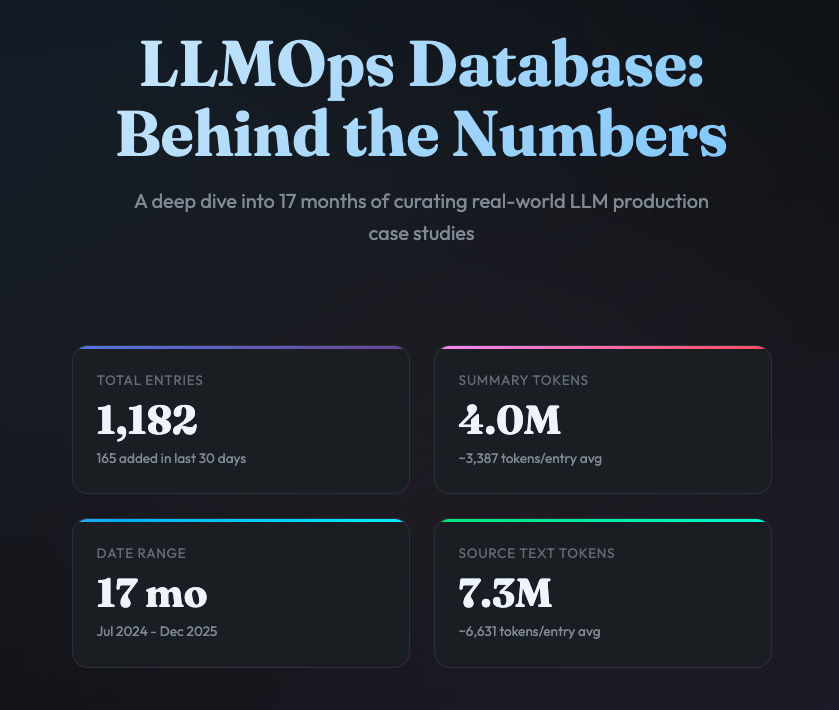
🎉 The @zenml_io LLMOps Database just crossed 1,000+ case studies!
17 months of curating real-world LLM production stories.
Here's how the collection grew over time 📈
What started as a side project in July 2024 is now the largest open collection of production LLM case studies.
OpenAI Agents SDK is a great harness. When you move your agent to production, you're probably going to need and want more. That's where Kitaru comes in... We build an adapter so you can keep your OpenAI Agents SDK code, but throw in some durability and other goodies on top.
I wrote how @kitaru_ai wraps it without changing what the agent does underneath. So you get to keep all your durable approval waits, replay boundaries and inspectable execution history etc. (Link in the thread below)
@OpenAIDevs@seratch@stevendcoffey
The design goal: keep the OpenAI agent OpenAI-shaped.
Agents, tools, handoffs, approvals, traces, and resume behaviour stay in the SDK. Kitaru only adds the runtime boundary around waits, replay, and inspection.
Curious for feedback: @_rohanmehta@jamesmhills@ilanbigio
https://t.co/Z6PbZClhZJ
OpenAI Agents SDK is a great harness. When you move your agent to production, you're probably going to need and want more. That's where Kitaru comes in... We build an adapter so you can keep your OpenAI Agents SDK code, but throw in some durability and other goodies on top.
I wrote how @kitaru_ai wraps it without changing what the agent does underneath. So you get to keep all your durable approval waits, replay boundaries and inspectable execution history etc. (Link in the thread below)
@OpenAIDevs@seratch@stevendcoffey
Had fun chatting with @htahir111 for this CNCF webinar last week, all about Kitaru, durable agent harnesses + agent runtimes. The video is embedded in the link in the thread.
If you have agents in production and are experiencing growing pains around the runtime layer of the stack, we'd love to talk to you!
Had fun chatting with @htahir111 for this CNCF webinar last week, all about Kitaru, durable agent harnesses + agent runtimes. The video is embedded in the link in the thread.
If you have agents in production and are experiencing growing pains around the runtime layer of the stack, we'd love to talk to you!
@simonw now please let's also get them to finally fix markdown exports of chatgpt deep research reports which have been borked for so long. seems like either nobody cares or they are actively are preventing
@trq212 is there a reason all the videos from code with claude all have transcripts disabled https://t.co/IRm3hBXYfF they've been disabled explicitly. not quite sure why.
Yesterday was my first day at @OpenAI working under the amazing @romainhuet.
I've spent the better part of two years pushing the frontier of having models write code for you, shipping updates week after week for @RepoPrompt.
Transitioning from being a founder is never easy, especially when you have a community of amazing developers who invested so much in your tool.
Thankfully Romain worked hard to ensure that all those users would be taken care in the process, and if you're one such user, you should have an email waiting in your inbox with the details!
I'm very excited to be joining this talented team and work alongside everyone at OpenAI contributing to codex.
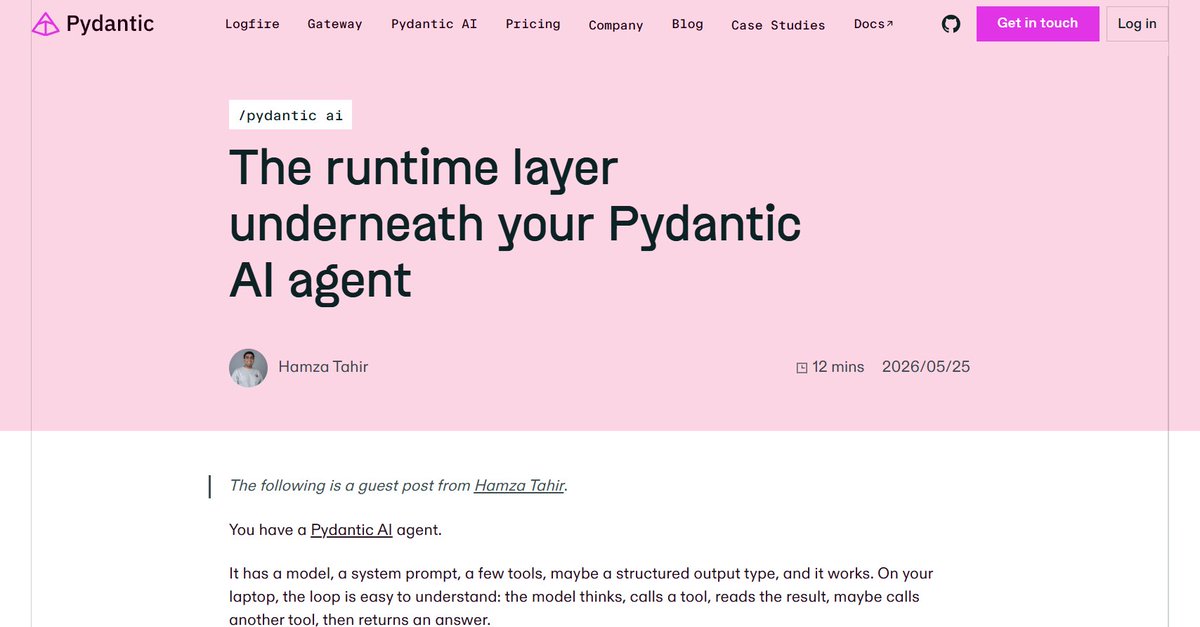
Stoked to be featured in the @pydantic AI blog yesterday.
In a world where all AI frameworks are pulled to every corner of the stack, it's great to see @samuelcolvin's team have the discipline to separate the stack's layers in a smart way. In this case, we both believe the runtime layer is distinct from the AI framework layer.
That's why we've shipped our first deep integration with Pydantic AI. It works seamlessly, you just wrap your Pydantic AI agent and get checkpoints, replay, resume, wait states, artifacts, logs, execution history, and operational control. That gives the agent somewhere to land when production does ordinary production things: a URL times out, a process dies, a human approval arrives later than expected, or someone needs to understand a failed run without reconstructing it from pasted tracebacks.
Read more here: https://t.co/smni8pGIT9
Thank you @lais_bsc for the support in this collab!
A Pydantic AI agent on your laptop is easy to reason about. Production is less forgiving: a pod dies, a tool times out, a human's offline for approval.
New guest post from @htahir1 on Kitaru, a new runtime layer underneath Pydantic AI 👇
https://t.co/dSFqy3rgG0