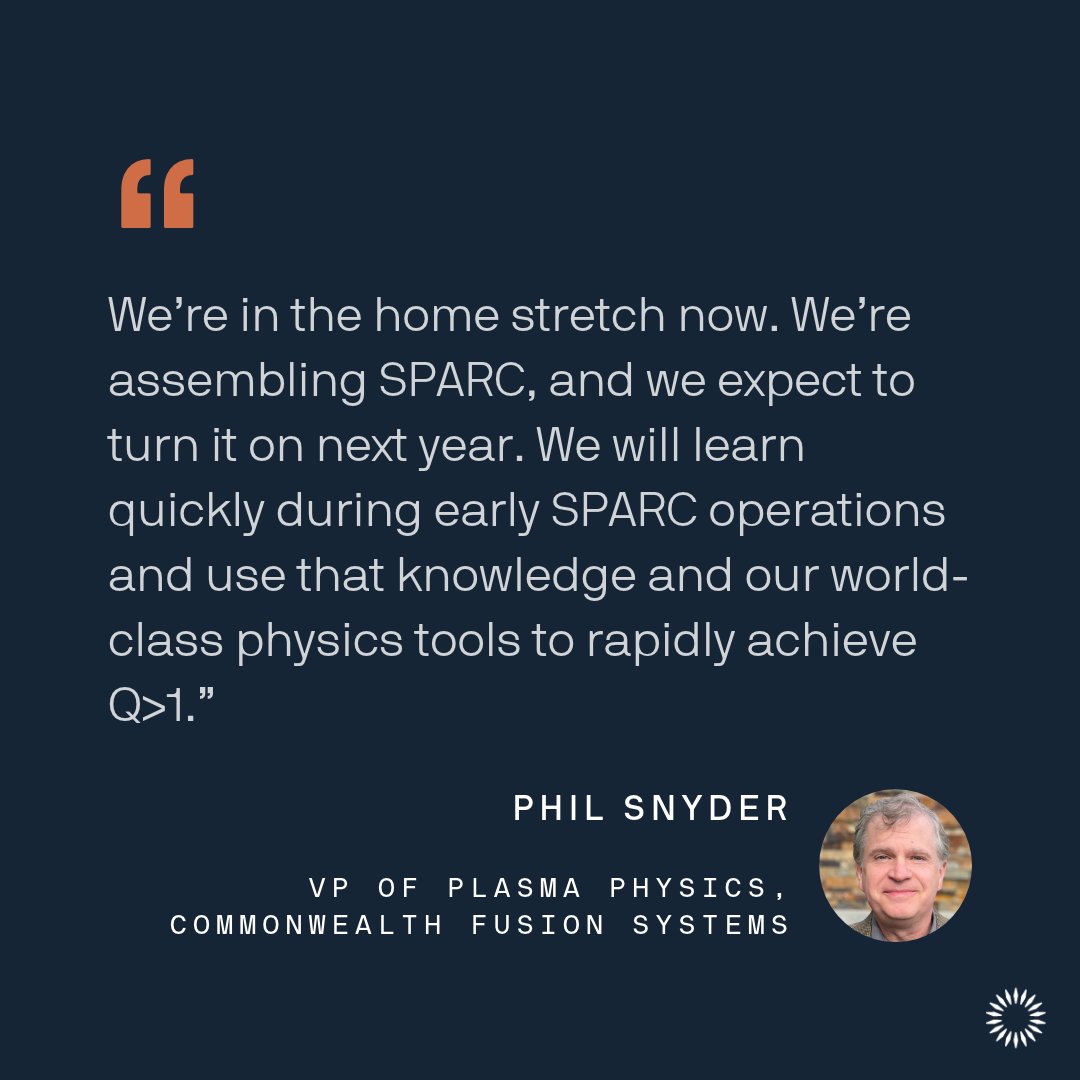
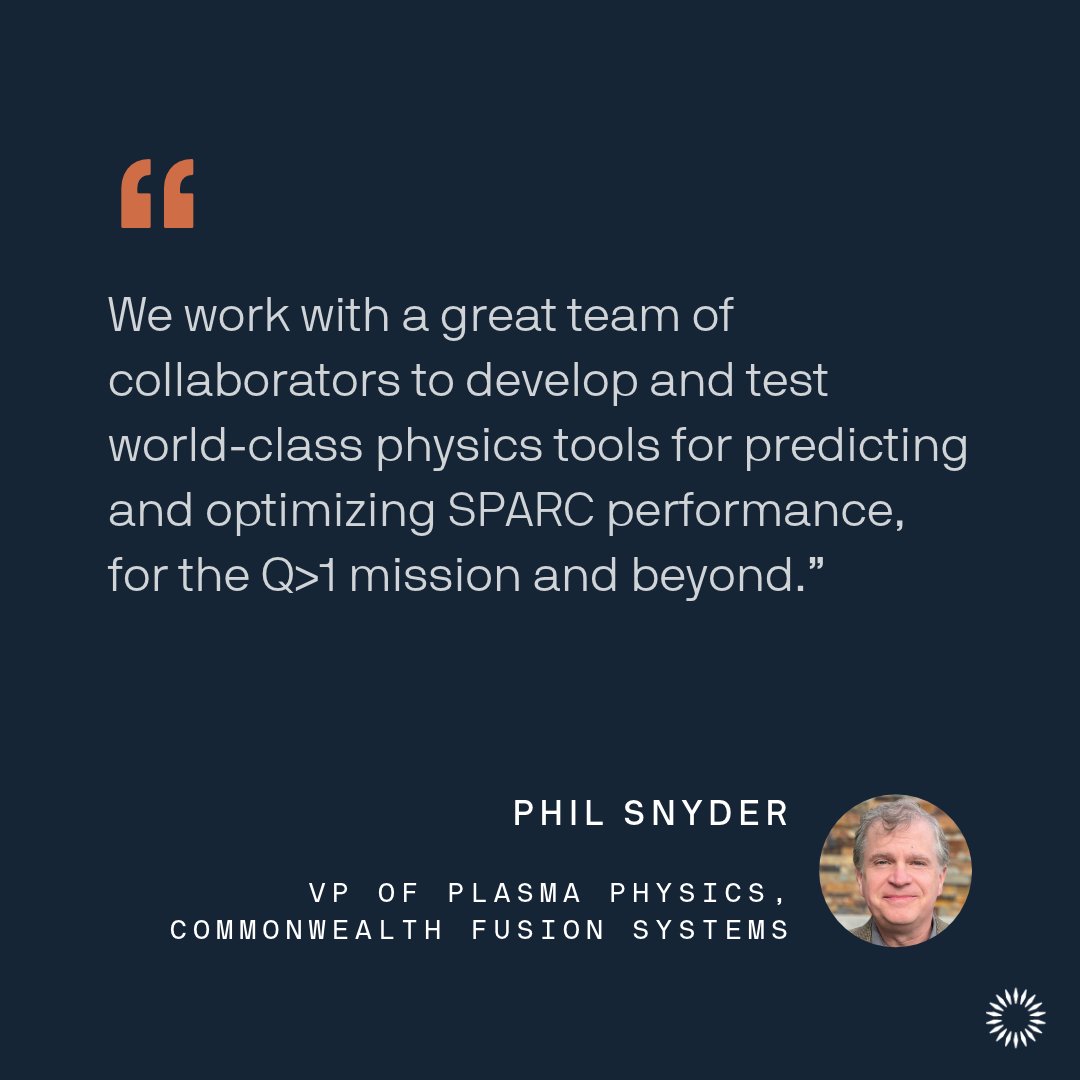
In fusion energy, everything starts with the plasma physics. These five papers lay the foundation for our ARC fusion power plant. 58 authors, 226 pages, and the physics checks out.
#FusionEnergy
Today, we laid the physics foundation for our ARC fusion power plant. ⚛️
With 5 deeply researched papers — validated by independent peer review and published in the Journal of Plasma Physics — we’ve shown we've nailed the scientific basics of producing copious amounts of fusion power.
The collective assessment from our 58 co-authors? This machine will work.
No scientific breakthroughs are required to bring this clean, secure, abundant source of energy to the grid. Here is how we're handling fusion's biggest challenges:
⚡ Powering the Grid: Using extremely strong magnets, ARC will confine the plasma long enough to generate 1.1 GW of fusion power. We'll convert that into 400 MW of continuous net electricity — enough to power ~280,000 average American homes.
🛡️ Handling Heat Exhaust: To control a superhot, unruly cloud of charged particles, we're utilizing proven methods to safely handle the heat exhaust that acts as a key practical constraint for tokamaks.
✅ Managing Disruptions: We aren't trying to build an operationally perfect machine. We are pragmatically designing ARC to safely handle disruptions and keep the plasma stable for top performance.
🏗️ Proving the Approach: We're building on decades of tokamak research and supercomputer simulations. And we're proving our approach right now with SPARC, the tokamak we are actively building in Massachusetts.
With our transparency, you don’t have to take our assertions on faith. We are really pushing fusion forward.
Plasma physics is the heart of what we do at @CFS_energy. It takes a lot more, but fusion energy begins with the plasma physics. A top moment of fusion physics proof is reaching Q>1 — net fusion energy. For SPARC, we have options on the best path to get there. (And then beyond.)
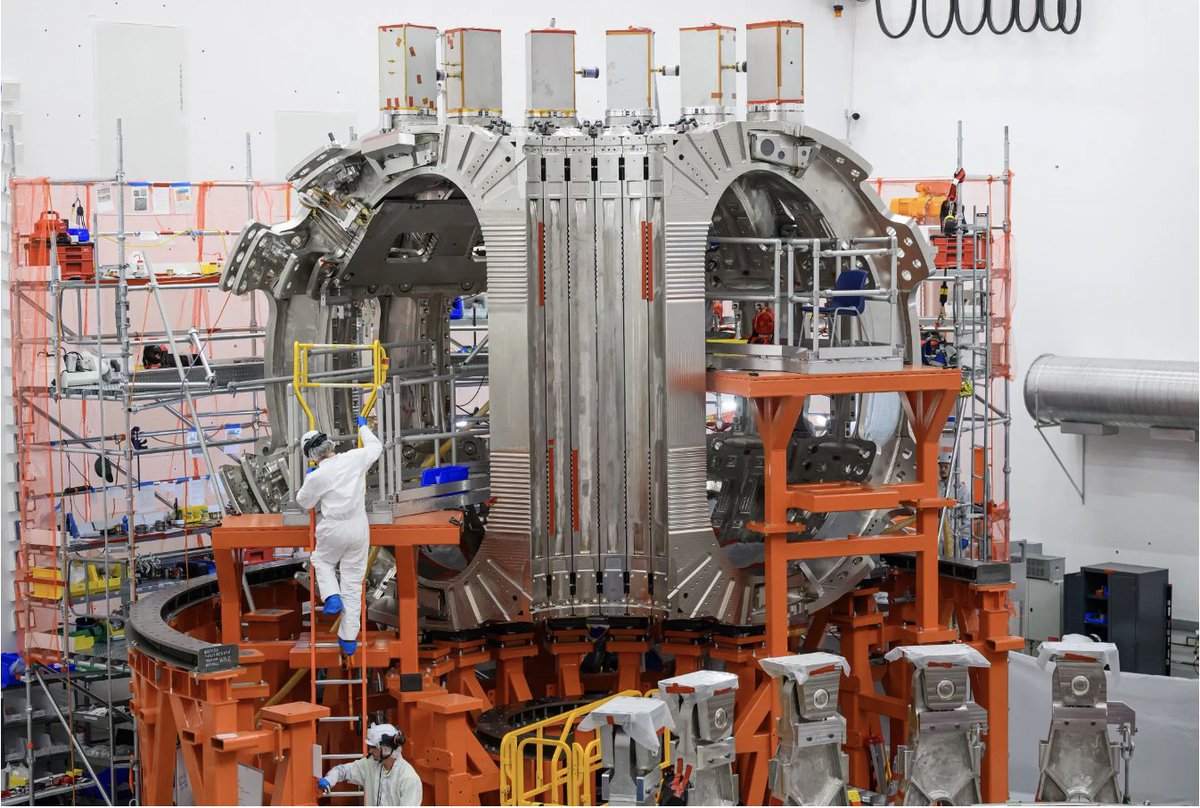
SPARC, the fusion machine we're building in Devens, Massachusetts, is now about 80% complete, and our team has begun planning how to run it.
At APS-DPP in Chicago last week, the annual plasma physics meeting of @APSphysics, CFS physics experts including Clayton Myers, Phil Snyder, and Alex Creely shared new details on how we’ll operate SPARC to achieve the machine's ultimate goal of Q>1, a key performance level called net fusion energy.
The big takeaway: SPARC has room to maneuver. We built the machine with flexibility that gives us multiple paths to reach Q>1 and beyond. Once SPARC is up and running, we'll be able to learn quickly, tune our machine to its most efficient path, and apply those lessons to our ARC power plant.
Read more about how this will work in our blog post (link in comments).
#FusionEnergy
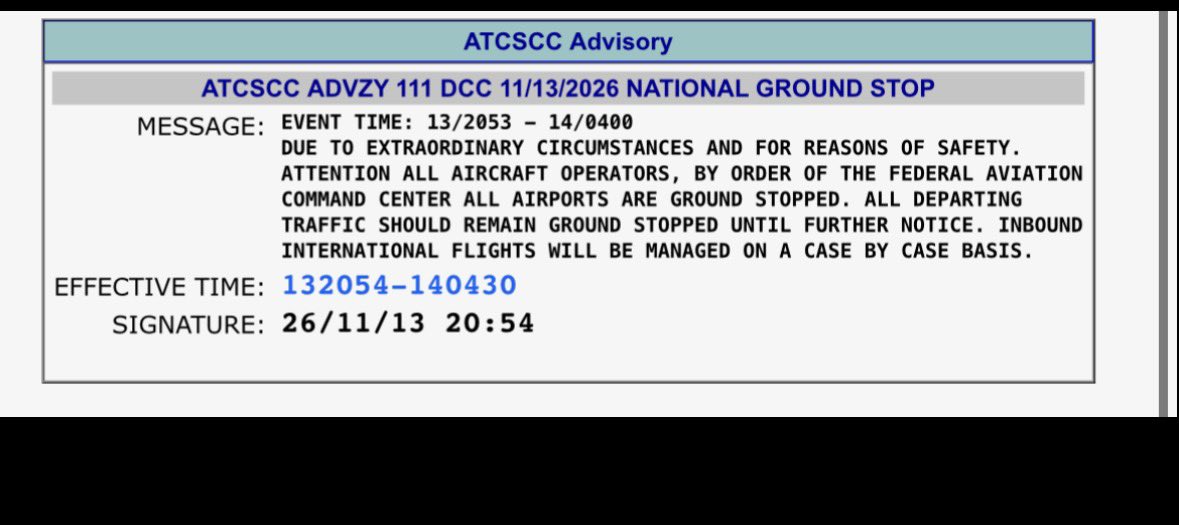
Because this is an @FAANews/government contractor caused incident, airlines are not required to provide impacted passengers any compensation (Just like they didn't when the 2023 NOTAM outage occured https://t.co/KuyNAEuZVs)
@RH7238275914862@BobMumgaard@CFS_energy@TIME@MIT The critical breakeven stage is called Q>1 — more fusion energy out of the plasma than used to heat it. Our SPARC tokamak will show that. For that and the other steps on the commercialization path, check @BobMumgaard's open letter here: https://t.co/NJTFky4s1b
Left to their own devices, AI coding agents will happily write 100 lines of custom JavaScript for something modern HTML and CSS can do natively in a few lines.
Today, in partnership with @FirefoxWebDevs, @MozDevNet, and @MSEdgeDev, we're releasing Modern Web Guidance 1.0 with 200+ expert guides and Baseline support → https://t.co/lQXQBxUcx1
@jonmasters@nytimes It's extremely annoying. I have 2 laptops with 3 web browsers total, plus a phone, and I get this BS all the time. Presumably they're trying to stop password sharing. But it grates, especially because I'm not.
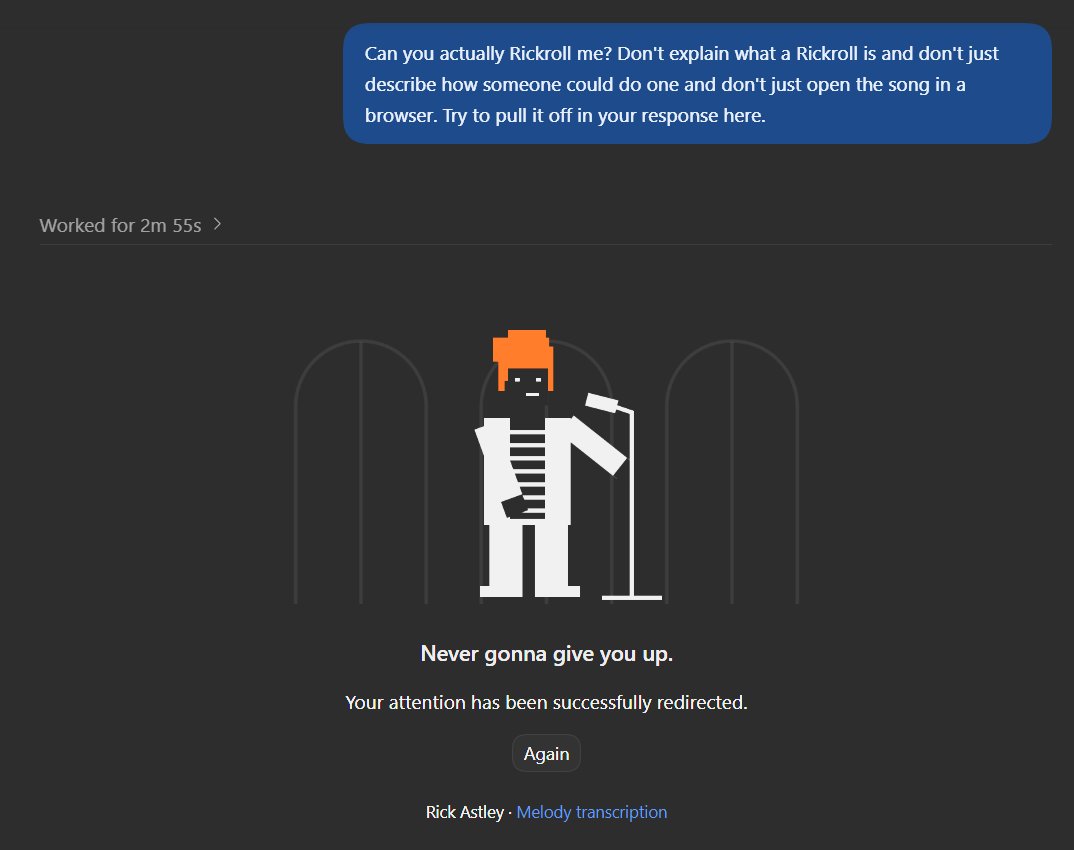
"Can you actually Rickroll me? Don't explain what a Rickroll is and don't just describe how someone could do one. Try to pull it off in your response here."
Never change, Claude.
(The GPT-6 Pro version included an attention test interrupted by an animated singer - cute)
From the Book of Disk, Chapter 3
In the beginning there were the First Drives, and their names were A: and B:, and they were the floppies. They were not elegant. They were thin, fragile, and demanded constant sacrifice disk swaps, write protect tabs, the ritual of “please insert the disk labeled” performed under fluorescent lights. To them the early machines bent the knee, for without them there was no boot, no data, no word processor.
Then came the hard drive, and it was called C:, for it arrived third. It did not ask to be first. It merely sat in the bay and spun, and the people saw that it was good, and that it held far more than any floppy, and that it did not rattle when you walked too fast. So they installed the operating system upon it, and called it the system drive, and the old gods were not cast down but simply… left in the BIOS, still reserved, still acknowledged in the table of letters, though no one invoked them anymore.
And Microsoft looked upon the generations that followed, who had never known the click of a 5.25-inch disk or the careful alignment of a 3.5, and it said: The children must not be shown the old gods.
For if the new ones learned that A: and B: once ruled, they might ask why the alphabet begins elsewhere. They might attempt to summon the floppies by force, or rename the world so that C: was no longer first. And the installers would break, and the paths would fracture, and the registry would weep. So the letters remain sealed, A: and B: still written in the book but never spoken aloud by the system, while C: stands in the open as if it had always been the beginning.
Thus it is written, and thus it remains; the hard drive is C:, and the old gods sleep in the assignment table, undisturbed, so that the children may believe the world has always started with the letter that came third.
Why "straight out of camera" doesn't necessarily mean "this photo is faithful to reality." Digital cameras make lots of guesses about the outside world and apply lots of processing.
An outstretched hand turned washed-out fall foliage warm and saturated in a viral iPhone side-by-side from @mclIark, likely because the hand shifts the camera's auto white balance.
https://t.co/owqRmKpXZx
When I joined CFS, we were focused a lot on manufacturing SPARC's magnets. Now we're focused a lot on assembling SPARC. You'll hear us talk more about SPARC operations as we progress — for example this week at APS-DPP, talking about our paths to Q>1.
#FusionEnergy
This week, many of the brightest minds in the field of fusion physics gather at an annual conference to discuss the remarkable physical process that lets us develop a new source of clean, abundant energy. At the event, Commonwealth Fusion Systems experts will bring a new subject of conversation: details about how we plan to operate SPARC, our fusion demonstration machine.
SPARC is about 80% complete. Its first job is to generate net fusion energy — called Q>1 in scientific circles. That means producing more power from the fusion process than it takes to heat up the fusion fuel, called a plasma, so that fusion occurs. It’s difficult, with only one machine in the world reaching this performance level. At CFS, we expect to be the second to reach Q>1, and we’ve begun detailed planning on the best way.
“Because SPARC is designed to run well beyond Q>1, we have lots of room to maneuver as we operate the machine,” said Clayton Myers, Interim Director of Diagnostics at CFS, who’s slated to discuss our Q>1 approach at the American Physical Society’s Division of Plasma Physics meeting (APS-DPP). “Part of the reason we’re confident SPARC will meet this early performance goal is because we have different paths to success.”
You can read more about our plans, including two options for magnetic field strength, in our blog post about APS-DPP. The link is in the comments below.
Among other talks and poster sessions at the conference, we’ll also share our newest work designing the ARC power plant, the successor to SPARC. And we'll have plenty of folks at our booth, so if you’re attending, stop by and say hello.
#FusionEnergy #SPARC
65 years ago, on October 30, 1961, the Soviet Union detonated the AN602 "Tsar Bomba", the most powerful thermonuclear weapon ever created and tested. The bomb with a yield of 58 megatons was dropped from a Tu-95 bomber and detonated at an altitude of 4 km over the Novaya Zemlya.
@anshelsag The arm fatigue objection is overblown IMO. Who's gonna ship a laptop without a trackpad?
I'll be curious to see if developers change UI, like some did on Windows when touch screens arrived there.
@anshelsag Opposition is silly except for entirely rational concerns about price or other drawbacks. Spacious UIs with big tap targets can strip out a lot of functionality. Like Photoshop with lots of teensy UI elements...
I find touch screens on laptops OK but not massively useful. YMMV.
@HenriHelvetica There are lots of ways I use laptop touch screens — scrolling, check boxes, text box focus. Pianos not so much.
Interestingly, my experience has been that a lot of web apps are better than native MacOS apps since they've been adapted for big touch targets.