Here's my review of the @romolabutalia-edited 𝑳𝒊𝒗𝒊𝒏𝒈 𝑾𝒂𝒕𝒆𝒓𝒔: 𝑷𝒖𝒍𝒔𝒆 𝒐𝒇 𝒕𝒉𝒆 𝑷𝒍𝒂𝒏𝒆𝒕 (2025), an anthology that throws light on the water crisis, what we can do about it, and how we can reconnect with water. https://t.co/FEwiYC1zdZ
On April 12, 2026 at 5 pm, the air quality at the Vile Parle West government monitoring station in Mumbai was twice as bad as what it should be as per @WHO standards. (Correction: The video says it was six times dirtier, which is an error.)
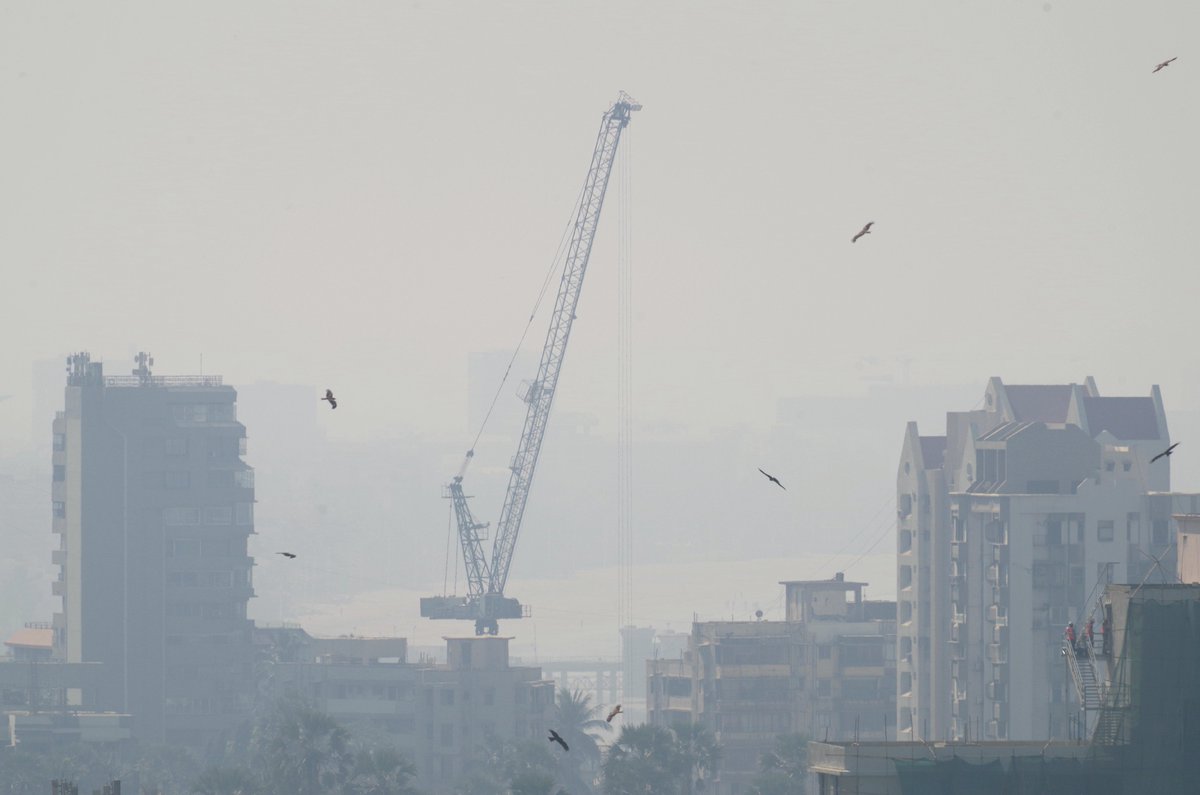
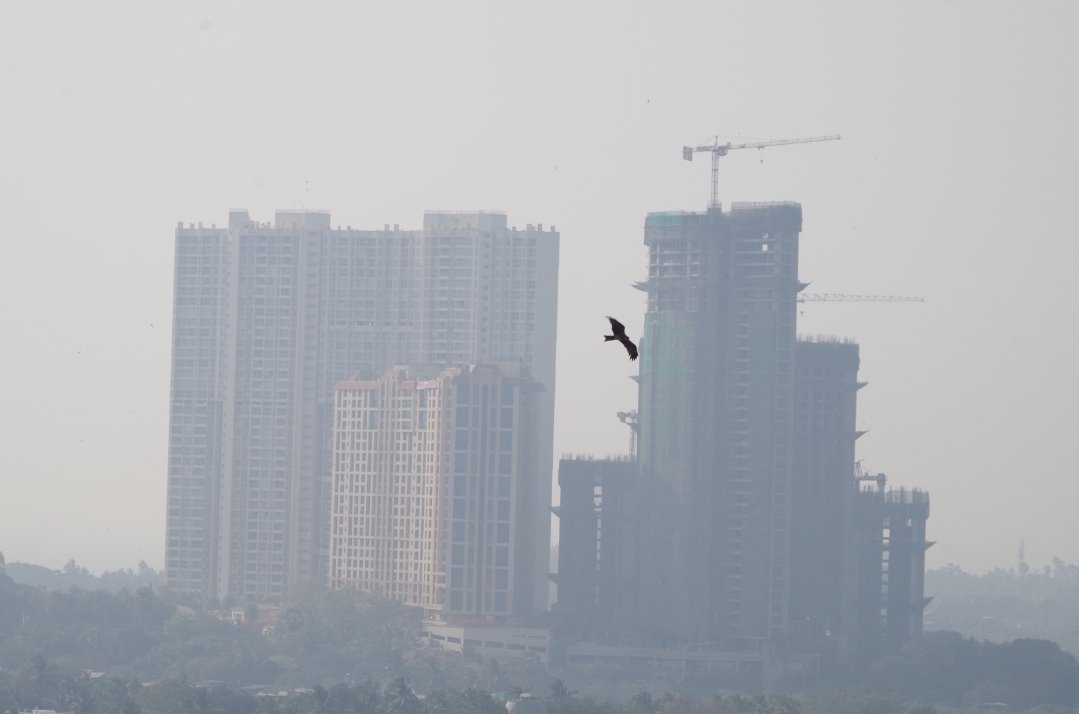
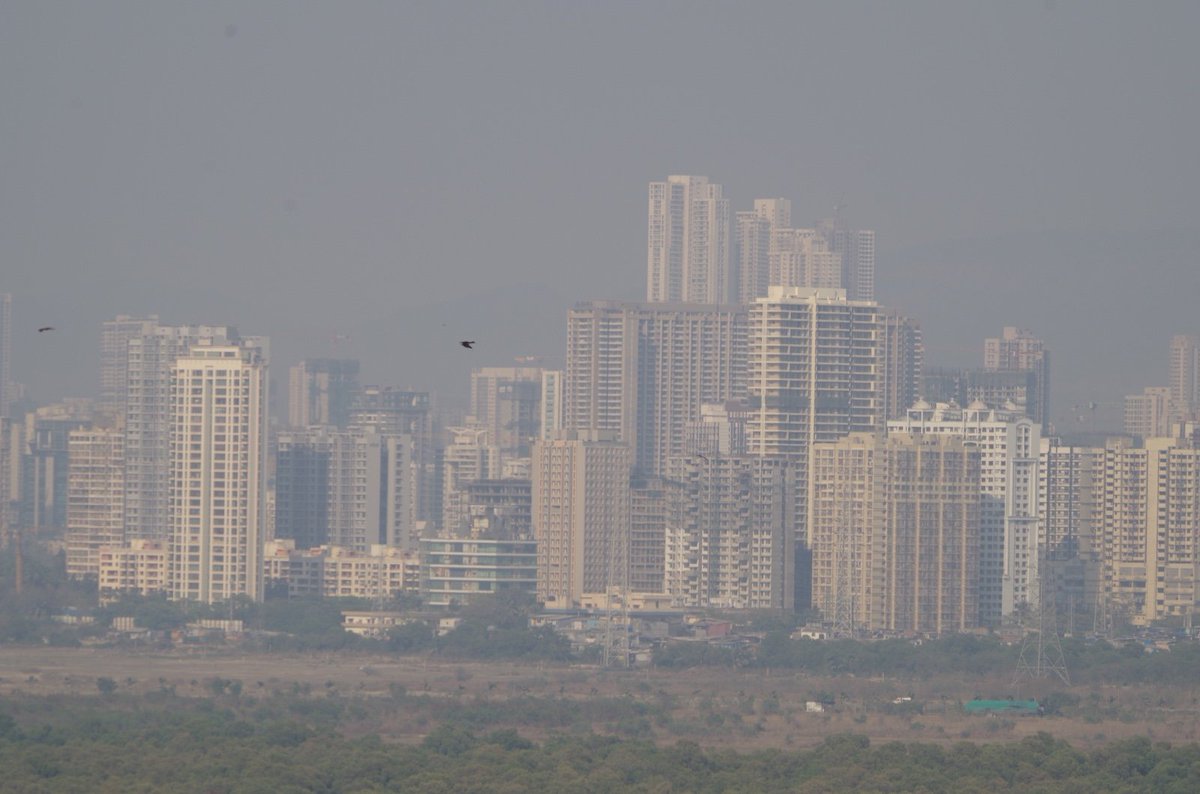
What you’re seeing is fine particulate haze (PM2.5/PM10) trapped near the surface.
In Mumbai, even “good/satisfactory” AQI can look hazy due to⬇️ • High humidity & sea salt aerosols/particles grow & scatter light. • Weak winds / temperature inversion, so pollutants don’t disperse. • Construction dust & traffic emissions adding to background load.
Would you agree? @manoj_kumar_nr@BhavreenMK
I am suffering so much in Mumbai even though the AQI has been in the "good/satisfactory" range, according to @CPCB_OFFICIAL data. I can't imagine what people in NCR and other parts of the Indo-Gangetic plains airshed must be going through!
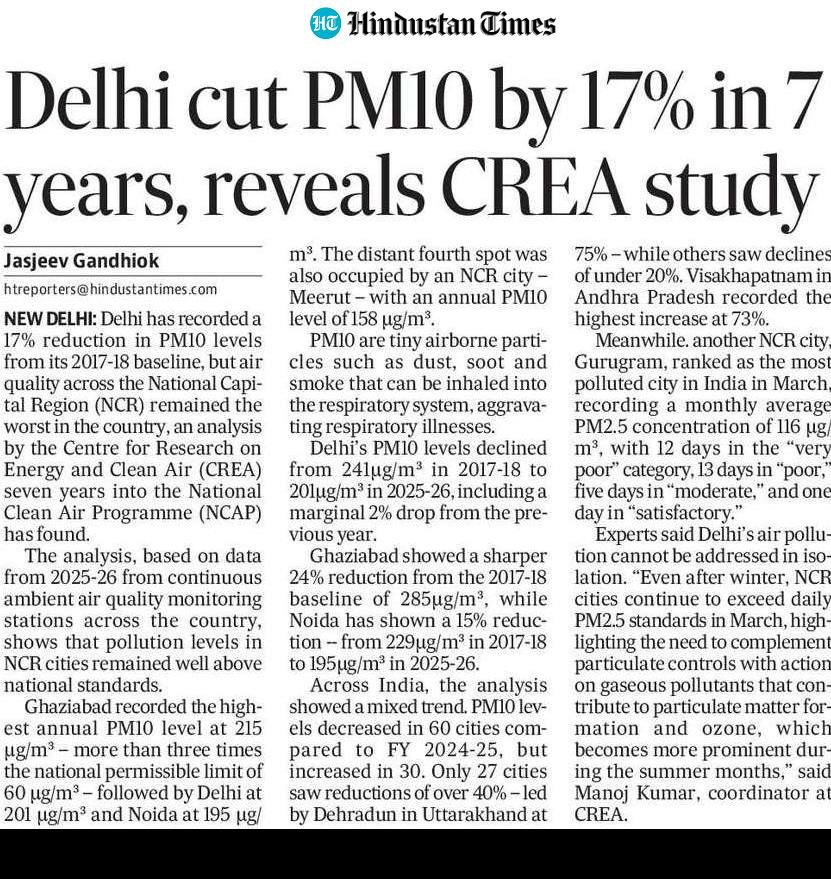
Delhi’s PM 10 fell 17%, but the bigger story is this⬇️
• Still 3x above safe limits. • NCR cities among the most polluted. • 89/96 cities breaching standards.
This isn’t just a Delhi problem, it’s a regional airshed failure.
Until transport, dust, industry & regional coordination are fixed, gains will remain rather cosmetic.
https://t.co/6om95YKTW6 via @JasjeevGandhiok@htTweets
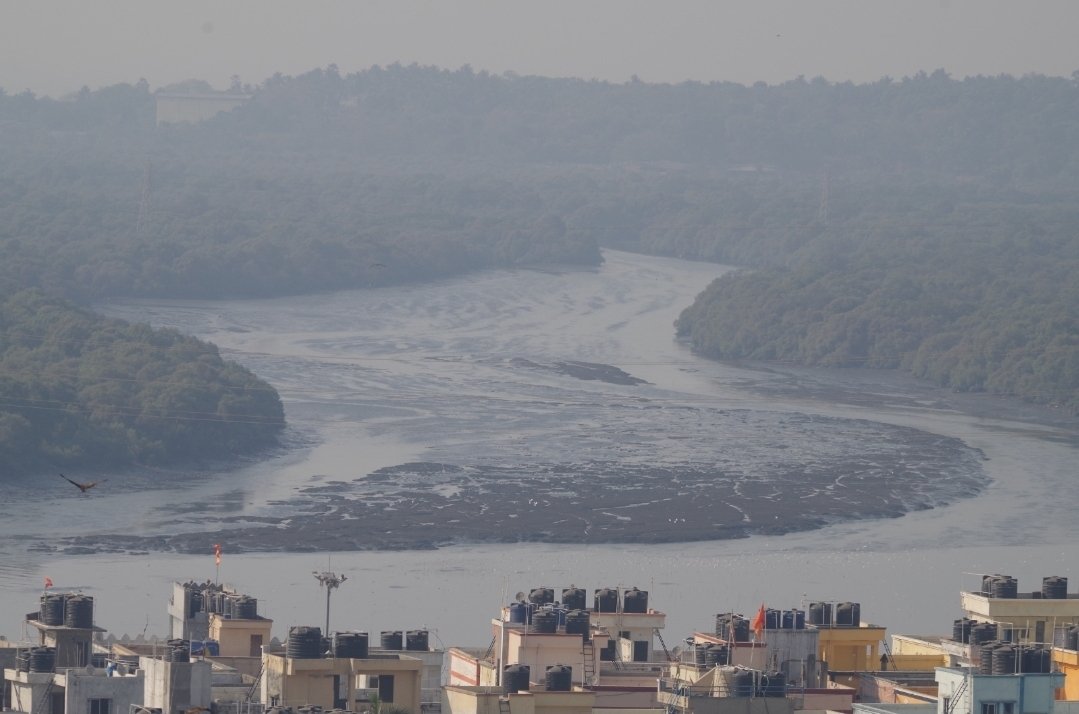
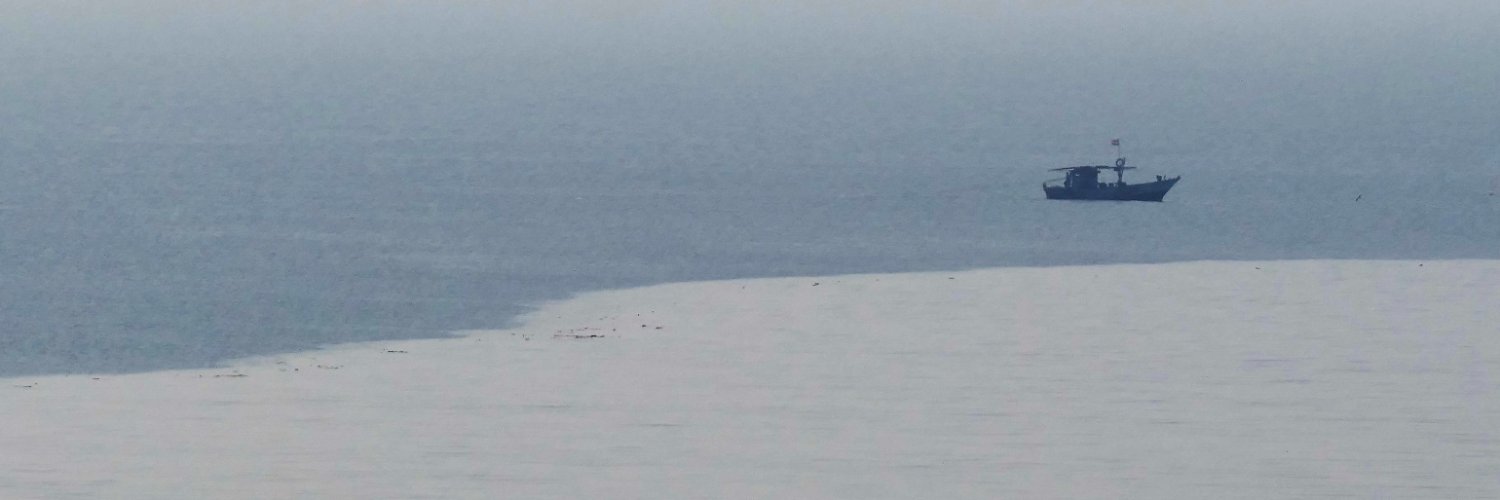
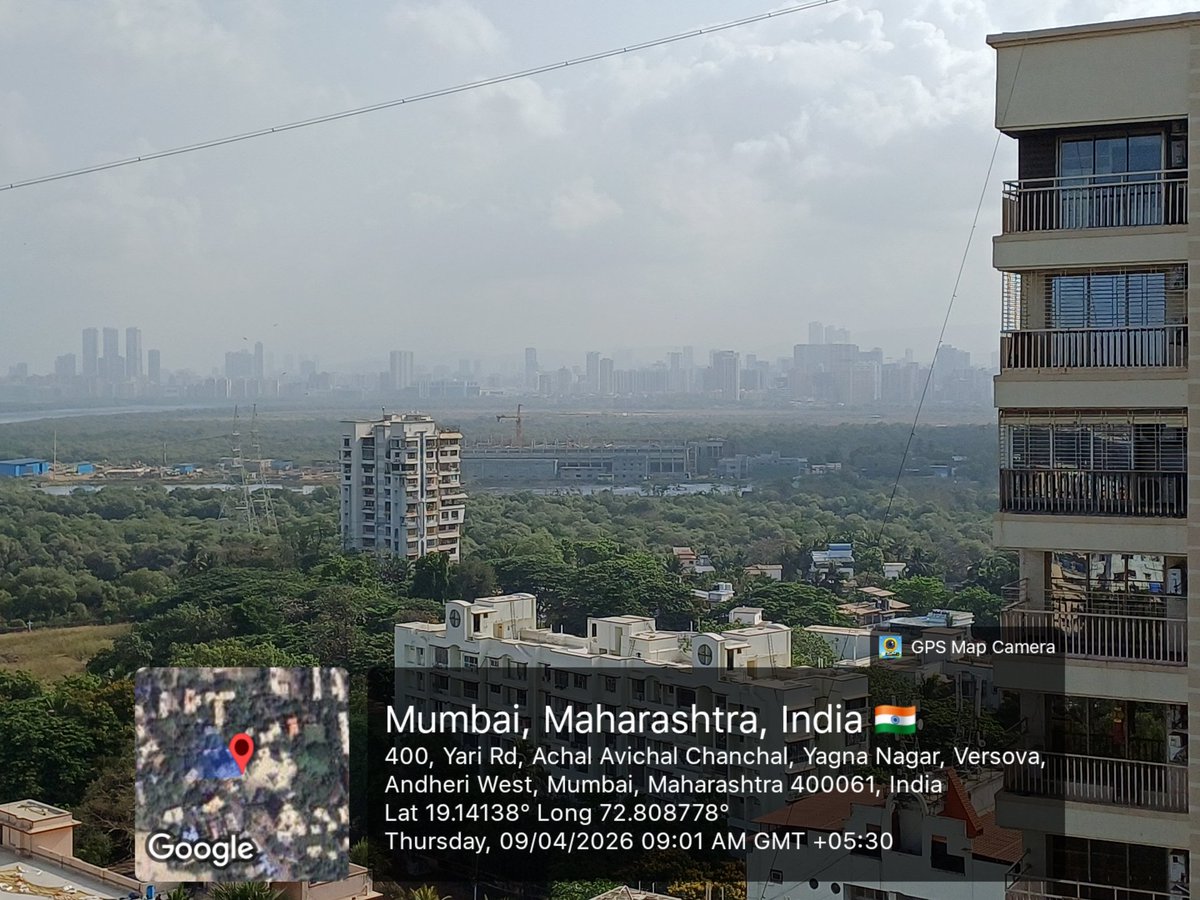
On April 9th morning, when the air quality at the state monitoring station closest to me was 49, the horizon where I am looked like this. Both PM2.5 and PM10 were above the daily @WHO safe limit while SO2 was hovering close to. The question is: What is making the horizon so hazy?
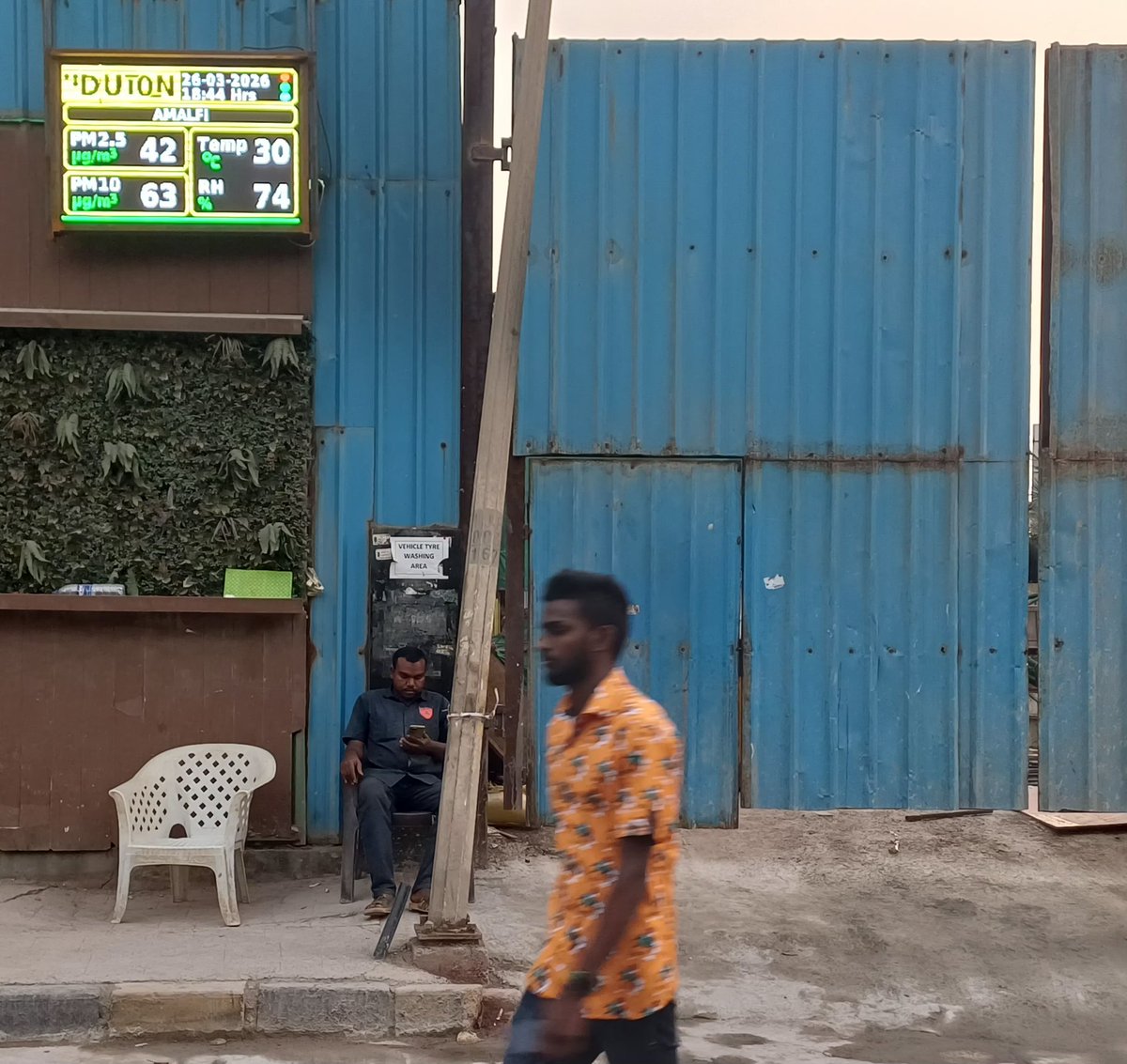
Yesterday, on J. P. Road, Versova, #Mumbai, #PM10 was more than 6 times the safe guidelines set by the @who and #PM25 was more than 3 times what the WHO has said it should be. And Versova isn't even the most polluted of Mumbai's neighbourhoods because of its proximity to the sea.
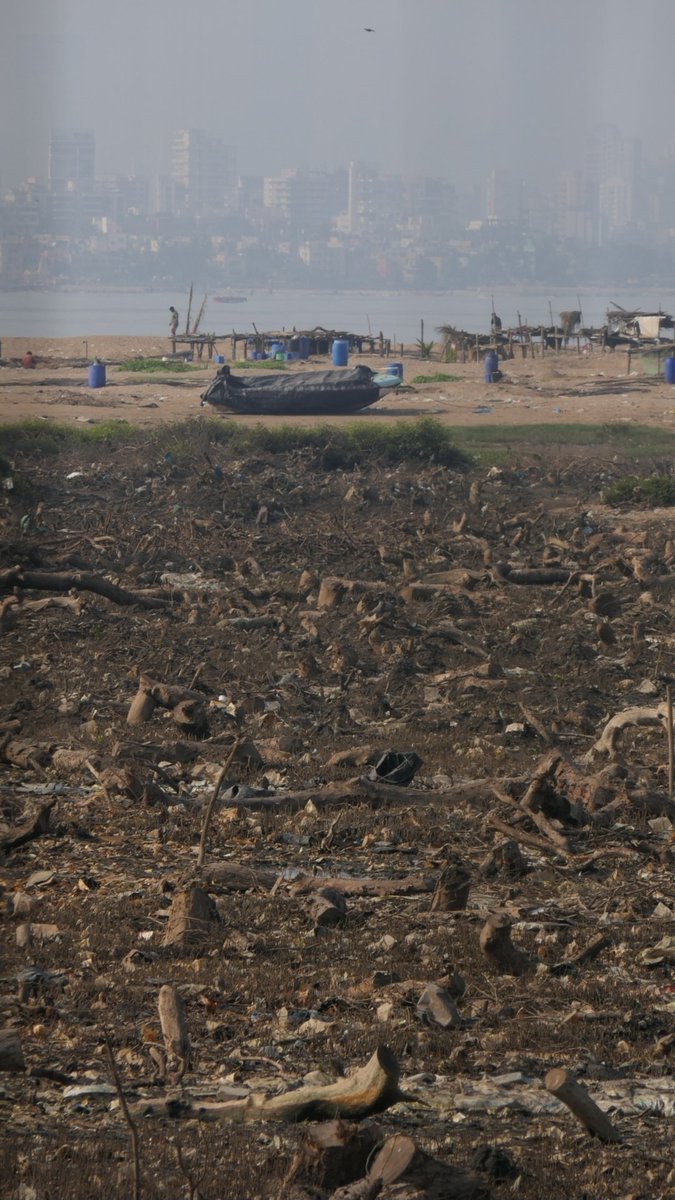
Excerpt from a nukkad natak or street play at today's protest in Versova to save the mangroves that will be cut to build the Versova-Bhayandar Coastal Road. As the players rightly ask, what can we really do to stop this?
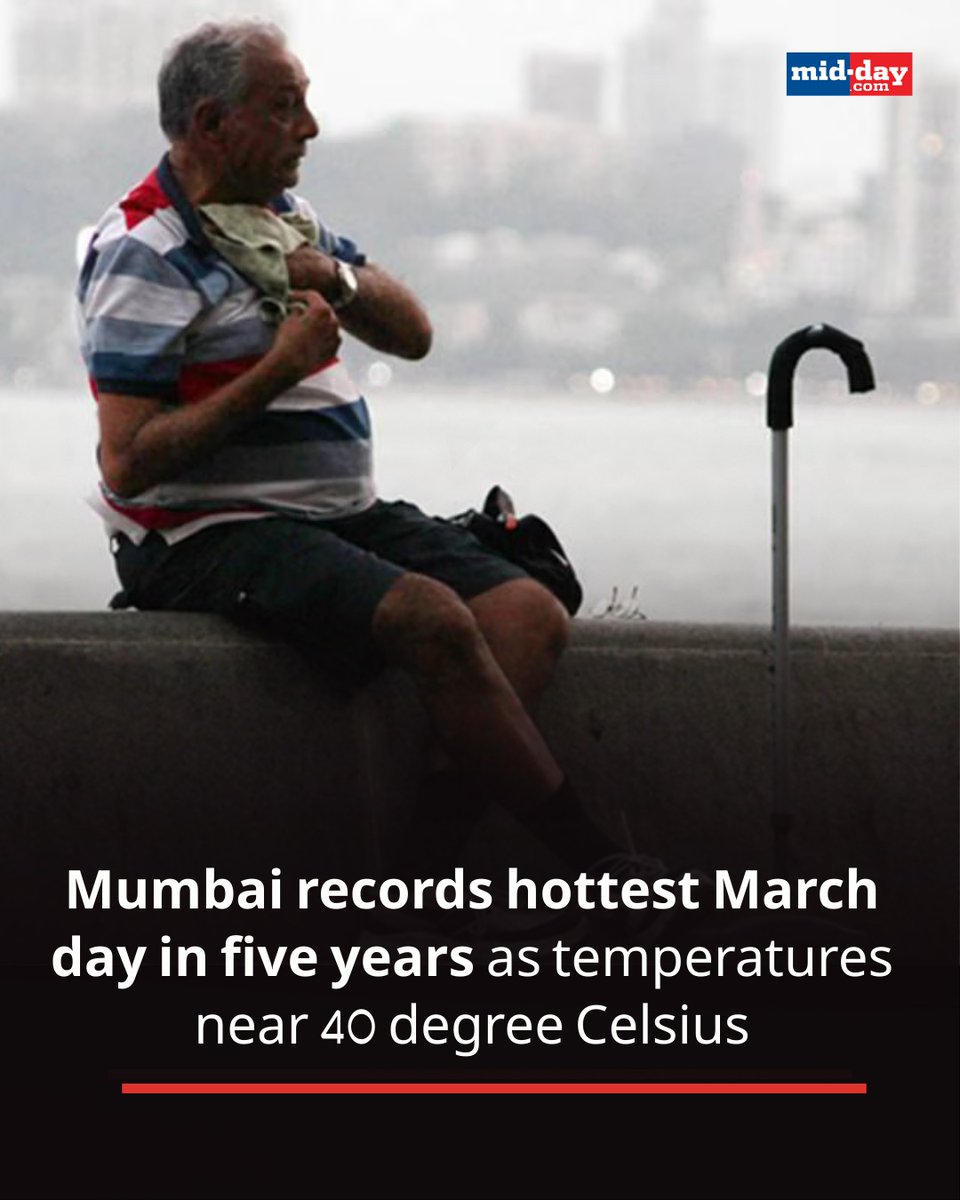
Mumbai is experiencing intense heat as temperatures touched 40°C, the first time the city has reached this mark in March since 2021. The mercury at the Santacruz observatory was recorded around 7.6°C above normal, triggering severe heatwave conditions.
The sudden spike has been linked to dry easterly winds and delayed sea breeze, which usually cool the coastal city. Weather experts warn that hot and humid conditions may continue, urging residents to stay hydrated and avoid long exposure to the afternoon sun.
By🖋️: Eeshanpriya MS
@pervinsanghvi I agree, @pervinsanghvi. Our apathy and lack of collective action has brought us where we are today. Do you think approaching Ritu Tawde with these issues would help at all, even storming her office or the BMC's in large numbers?
And yet, the 24 functioning state monitors in Mumbai showed the average 24-hour AQI, between 4pm on March 11 and 4 pm on March 12, to be 97. Whatever the law of averages, how can there be such a vast difference in these two data sets, of the state and The Weather Channel?
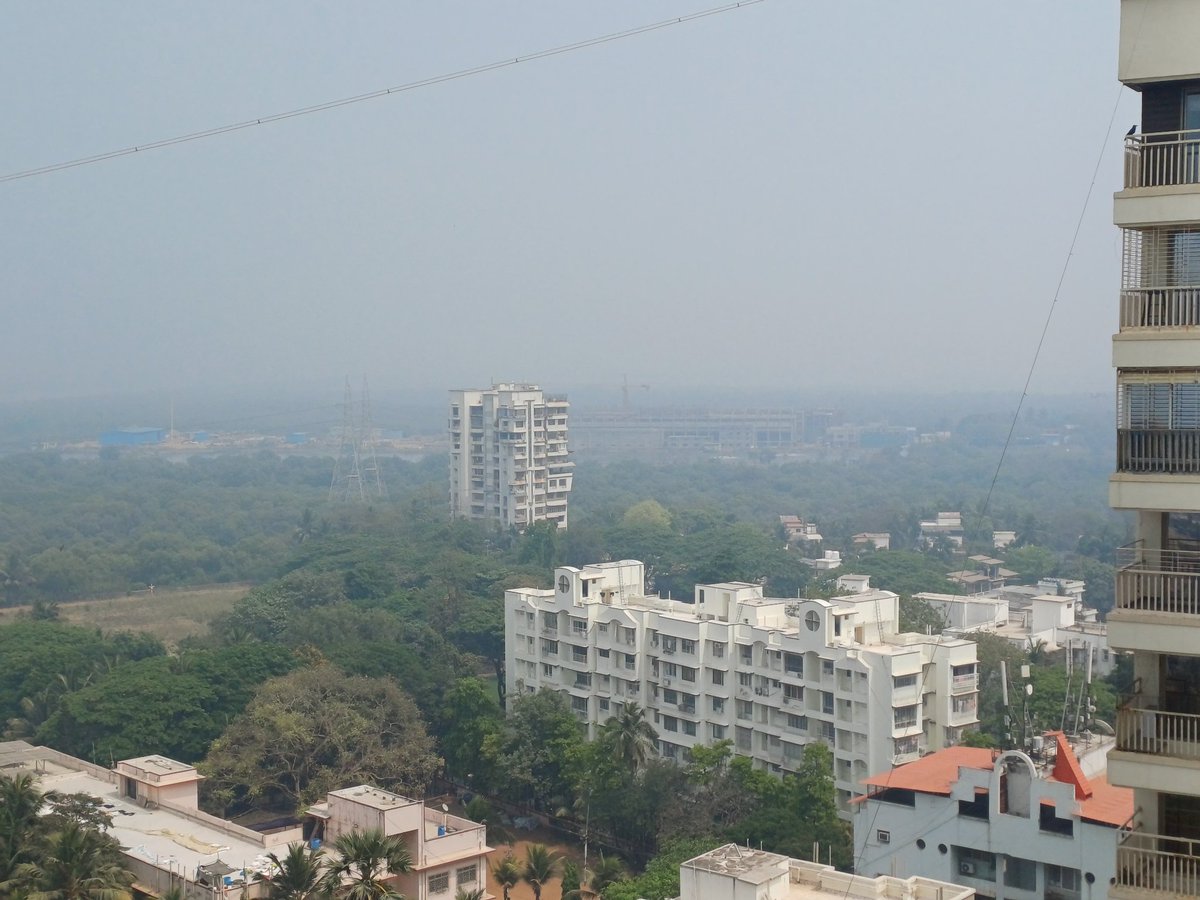
What it looks like outside when the AQI is 249!! Mumbai is just learning what Delhi has known for too long. The public health crisis is here and there is no denying it anymore! Location: Yari Road, Versova, Mumbai #publichealthcrisis#mumbai
And he combination of extreme heat, humidity and air pollution will create their own toxic cocktail! But let's begin with heat first. Check out @CEEWIndia's study below.
In the first half of March, the @Indiametdept recorded:
👉 Delhi crossing the 35°C threshold earlier than it has in the last 15 years
👉 Mumbai and Pune seeing the season’s first heatwave warning
👉 Coastal Andhra Pradesh experiencing heatwave conditions, and hot-humid weather
👉 Vidarbha nearing 40–41°C, parts of Tamil Nadu approaching 40°C unusually early in the season
India’s growing #heat crisis isn’t just about hotter summers — it’s about how early heat arrives, where it concentrates, and who is most exposed.
Here's what data from our first-of-its-kind district-level heat risk assessment, covering 734 districts and 35 indicators, reveals about changing summers in India👇
📘 Full study: https://t.co/3wKCN8OCne
March 5, 2022, when the mangroves behind Nana-Nani Park, #Versova, had just been cut, to make way for the Bandra-Versova Sea Link. Today, we are still waiting to hear about what happened at the meeting with @my_bmc , about whether the trees in the park can still be saved #Mumbai
There was a time rural women used kerosene to help firewood catch fire in chullah. Now, they burn plastic.
Almost 80% of rural households in India rely on firewood, crop residues & cow dung as their primary source of energy for cooking. Women daily inhale toxins
📹 @ramji3789
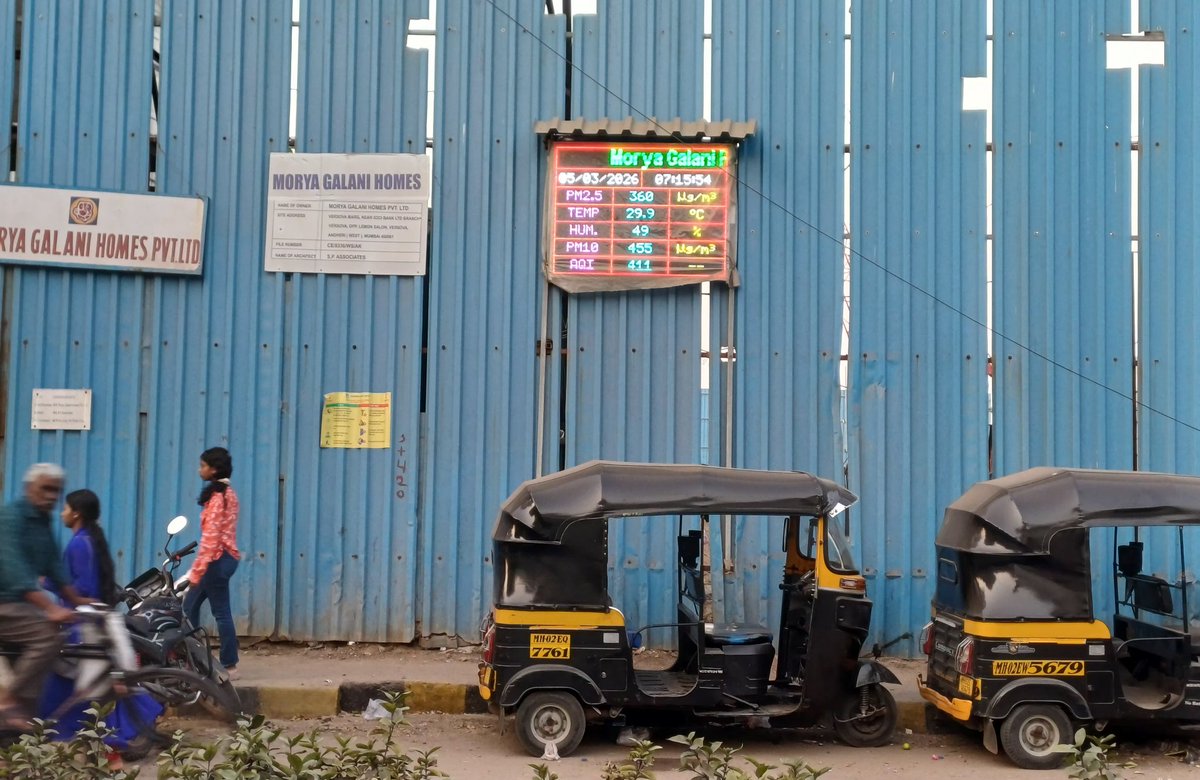
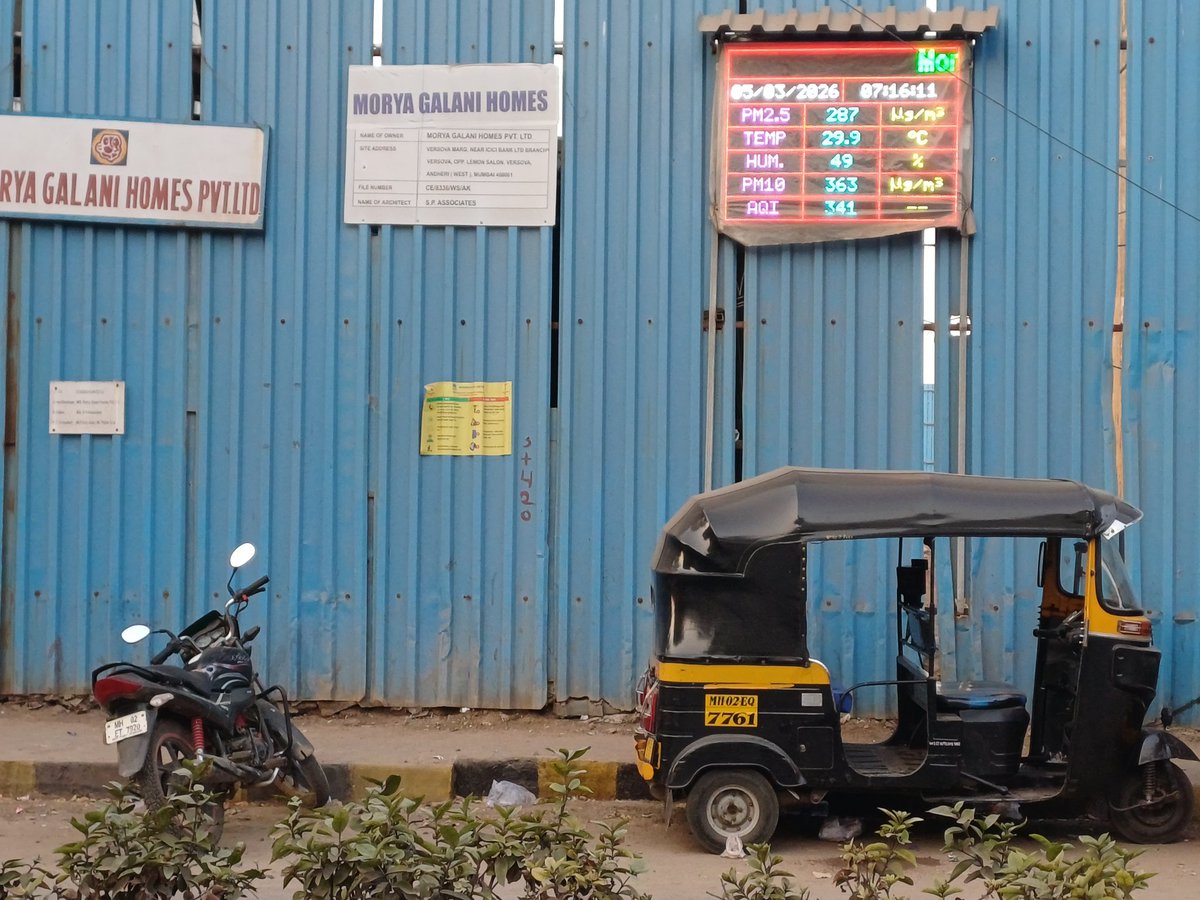
@CPCB_OFFICIAL Evidence from a Morya Galani Homes Pvt Ltd construction site on J. P. Road, Versova, Mumbai, which shows that PM2.5 was between 360 & 287! This is the real picture of how polluted the air is! Levels above 300 mean that one can get respiratory illnesses on prolonged exposure.
Mumbai's haze is back. Yesterday's AQI at the Vile Parle West station as per @CPCB_OFFICIAL data was 112, in the moderate category. Breathing discomfort for people with ashtma & lung disease. @Pankajamunde What can we do to ensure that air quality remains good in the long term?
More evidence from March 4 of the 'moderate' air quality. Versova, Mumbai. AQI was 112 at the Vile Parle West station of the @CPCB_OFFICIAL. Major pollutant, PM10. Breathing discomfort for people with asthma & lung and heart disease.