@ryandeiss I applied the same method. It worked till step 4. No one wants to be back to their old role. Either resigned or had to accept them for for my decision.
@WellBuiltStyle Anyone who takes your advice, would ultimately reach the "Style" level. Have been following you for a while and every now and then i get positive feedback about my style. Always grateful, Manny!
@morganhousel WOW! Absolute Banger! It's so pleasing to hear your thoughts that challenge the normal thinking process. You distill wisdom like no others, connect and present it in such a simple and yet profound way, it blows me. Highly recommended listening to this master story teller!
I know this is not the popular take on LinkedIn right now, but I genuinely do not understand why HR has become everyone’s favorite target.
Yes, bad HR exists. So do bad CEOs, bad managers, bad recruiters, bad employees....
But somehow, HR is the only function people want to burn down completely.
The Bolt CEO proudly said he got rid of the HR team because they were “creating problems that didn’t exist.”
But what many people do not know is that the company also cut roughly 30% of its employees, removed unlimited PTO, ended the four-day workweek, and brought in a smaller People Ops team to handle training and employee resources.
So not no HR. Just smaller HR with a better label.
And this is where the “HR is the villain” narrative gets dangerous. It feels good to mock HR. Until you need HR.
One unfair performance review.
One toxic manager who will not stop.
One retaliation case after someone speaks up.
One unfair termination.
One discrimination claim.
One expensive lawsuit.
Suddenly that “unnecessary bureaucracy” becomes the only internal process you have left.
Most HR professionals do a difficult, thankless job well. And yes, HR is not perfect, but HR protects the company and employees from managers who confuse authority with ownership.
They help companies comply with labor laws, document issues properly, investigate complaints, manage employee relations, and reduce legal risk.
The “problems” some leaders complain about are often the only guardrails keeping power in check. So they remove oversight, allowing the next round of aggressive cuts to happen faster and with less friction.
Without a strong HR function, the protections do not disappear on paper.
They just become much harder to access inside the company.
Before we cheer when someone burns the whole department down, let’s remember what (and who) gets left unprotected and that there is always something else behind the viral headlines.
Anthropic just showed a 24-minute workshop on how to actually prompt Claude.
Taught by the people who built it.
Free. No signup. No paywall.
I've watched $300 courses that don't cover what they teach in the first 8 minutes.
This 1 hour lecture on "Startups" from Paul Graham will teach you more about building companies than a 2 year MBA from Harvard Business School.
Bookmark this & give it 1 hour today, no matter what. It's the most productive start you can give your week.
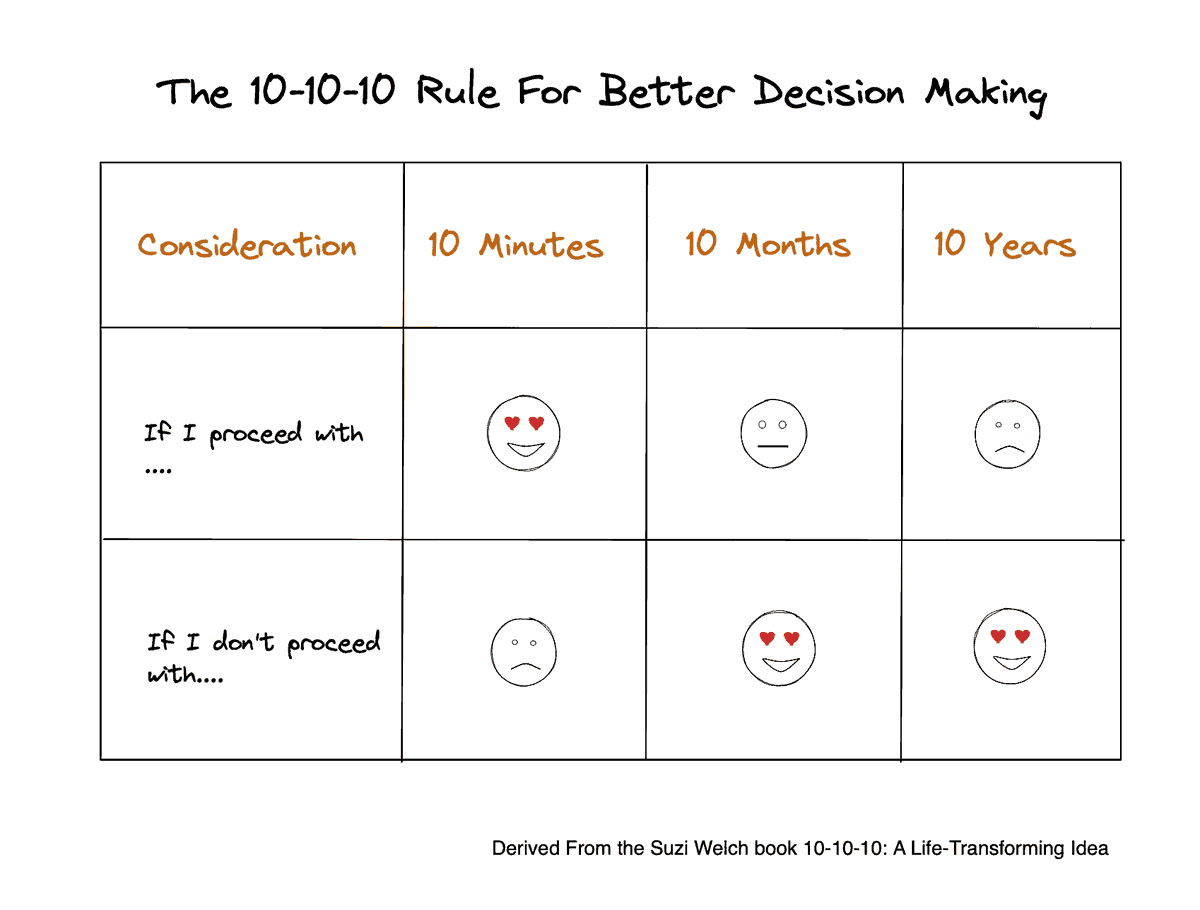
A Harvard Business Review editor came up with a 3-question framework for any decision: how will I feel about this in 10 minutes, 10 months, 10 years? It has been cited in more business books than almost any other decision tool in the last 20 years.
Her name is Suzy Welch, and she did not develop it in a boardroom or a research lab. She developed it at the lowest point of her personal life, sitting alone trying to make a decision that felt impossible, with no framework that could hold the weight of what she was facing.
What she built in that moment became the 10/10/10 Rule. And the reason it works has nothing to do with the numbers.
Here is the framework and why it changes every hard decision you will ever make.
Before any significant choice, you ask yourself three questions in sequence.
How will I feel about this decision in 10 minutes?
How will I feel about this decision in 10 months?
How will I feel about this decision in 10 years?
That is the entire system. 3 questions. 3 time horizons. It fits on a napkin and most people dismiss it immediately because it sounds too simple to be useful.
That dismissal is the mistake.
The reason the framework works is not the questions themselves. It is what the questions force your brain to do that it almost never does on its own.
Every significant decision you face arrives wrapped in emotion. The anger from the conversation that just happened. The excitement from the opportunity that just appeared. The fear from the consequence that just became real. Your brain, running on System 1, is making its recommendation based entirely on what is most emotionally vivid right now. The 10-minute horizon is that recommendation. It is what you want to do right now, in this state, with this feeling running through you.
Most people stop there. They call it intuition. They call it going with their gut. What they are actually doing is letting the loudest emotion in the room cast the only vote.
The 10-month question is where the framework starts doing real work. Ten months is far enough away that the acute emotion loses its grip but close enough that consequences are still concrete and personal. It forces you to ask what this decision looks like when the feeling that is driving it right now has faded, and only the results remain. Most of the decisions that people most regret in their lives would have been stopped cold by an honest answer to this question.
The 10-year question is the one that separates this framework from every other decision tool available.
Ten years is long enough that almost nothing that feels urgent right now will still matter. The awkward conversation you are avoiding. The approval you are chasing. The short-term cost you are refusing to pay. The 10-year question has a way of making most urgency evaporate and most fear look small. But it also does something more powerful than that. It surfaces what actually matters. The things that will still be true about your life a decade from now are the things worth optimizing for. Almost everything else is noise dressed up as signal.
Welch described the framework's deepest function as a perspective machine. The problem with every hard decision is not that you lack information. It is that you are standing too close to it. The emotion is too loud, the stakes feel too immediate, and the present moment is consuming your entire field of vision. The 10/10/10 Rule forces you to physically step back in time until you can see the shape of the thing rather than just the heat of it.
The most important insight she ever shared about it was this: all three answers matter, but they do not carry equal weight. For decisions involving your health, your most important relationships, and your long-term trajectory, the 10-year answer should dominate almost every time. For decisions that are genuinely reversible and low-stakes, the 10-minute answer has more legitimate claim. The framework does not make the decision for you. It shows you which version of yourself should be making it.
The decisions that have broken the most careers, ended the most relationships, and produced the most sustained regret in human life share a common structure. They were made entirely from the 10-minute position by someone who never stopped to ask what the decision would look like from further away.
Ten minutes of clarity feels like wisdom in the moment.
Ten years of consequences is what actually has to be lived.
The gap between those two things is where almost every serious mistake in human judgment is made. Welch found a way to close it with three questions that take four minutes to answer.
Most people will read this and find it obvious.
The obvious tools are almost always the ones nobody uses.