New Paper!!
[1/4] Users paste text into a chat input, continue typing, and assume that the model can separate their afterthoughts from the given task ask. Models "absorb" casual afterthoughts as part of the instruction, and we instantiate the phenomena as absorption.
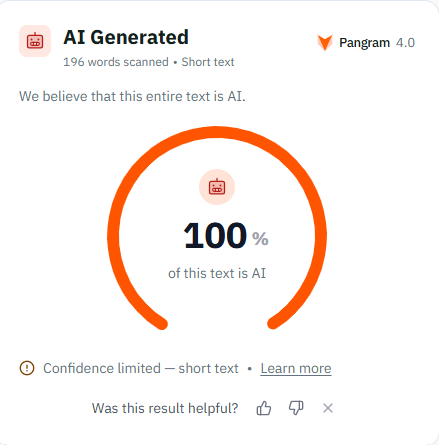
I checked the abstracts of 6 #ICLR submissions with @pangram. It flagged 5 as 100% AI-generated.
Some were also barely readable. I’m all for using AI to improve writing, but the result still needs careful editing.
Regardless of how accurate @pangram is, an abstract should clearly explain the problem, the contribution, and the findings. This is not the case for most abstracts I read this year @iclr_conf
@Ofirlin My only problem with this is if you were the reviewer of those papers! I should have made that clear. If you're not the reviewer, I'm sorry for the aggression from my side!
Similarly,
https://t.co/BtRmFCrklb
@pyrodiscus i think it's mainly true for almost all niches, many don't even release code, or don't look into a particular attribute that might sink their method gain in the real world
I tried it, just like everything else, it serves no purpose.
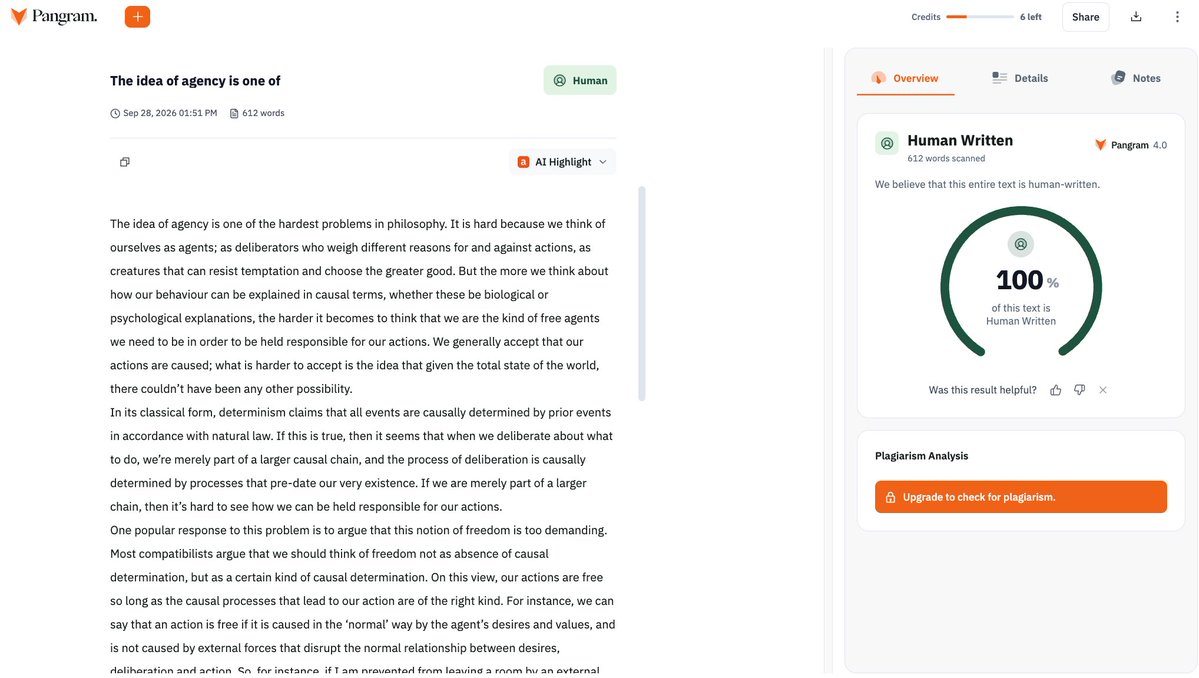
The writing quality and the prose of an academic text is lost when using Emulate. As like many of it's predecessors, it tends to create unfaithful text compared to the original text provided. Good as a gimmic, but I'd rather good AI written document than a wrong "human" classified document.
Introducing Emulate-1
A new undetectable AI model trained on how humans naturally write, removing AI slop and producing more authentic, human-sounding text.
I ran Emulate's outputs through Pangram, one of the stricter AI detectors. They came back as human nearly every time
@mar_kar_ i think many just want the early movers advantage on a new technology, and just generally don't care if what they produce is useful as a whole to the community or not





![SugamPanthi's tweet photo. New Paper!!
[1/4] Users paste text into a chat input, continue typing, and assume that the model can separate their afterthoughts from the given task ask. Models "absorb" casual afterthoughts as part of the instruction, and we instantiate the phenomena as absorption.](https://pbs.twimg.com/media/HSRTqw0XsAATztu.jpg)