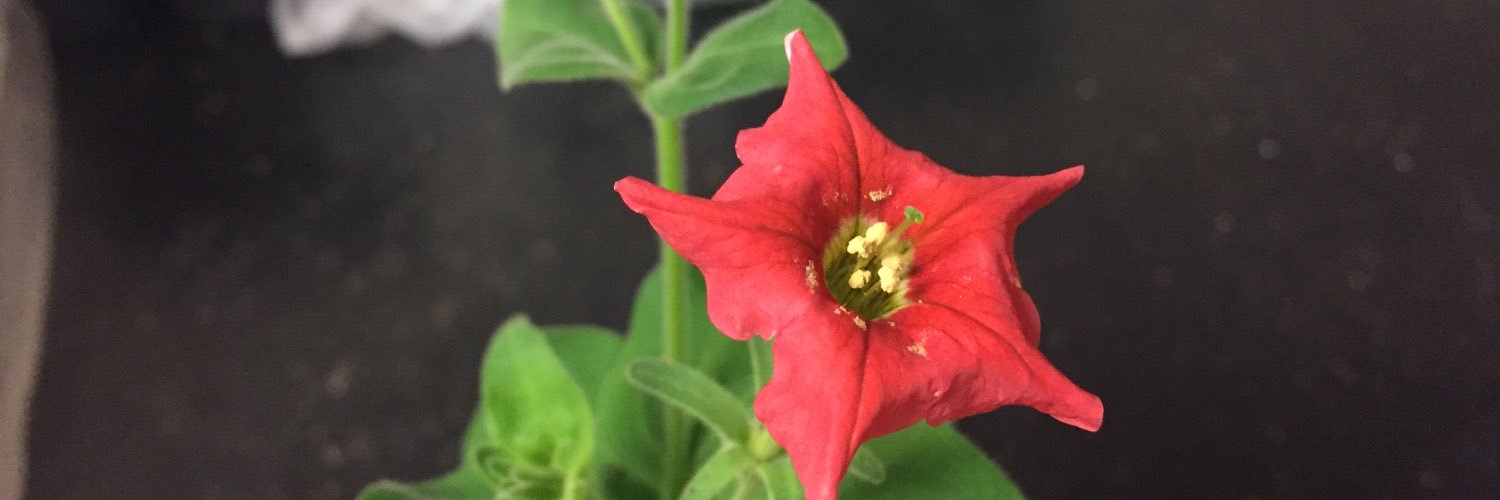
Gene Editing of Nicotiana benthamiana Architecture for Space-Efficient Production of Recombinant Proteins in Closed Environments
"engineering compact plants for high-density vertical farming"
https://t.co/aJLaggYvBe
Hiding in plain sight! 2.3M conserved non-coding sequences traced back 300M years across 284 plant species
Ground-breaking study in First Release @ScienceMagazine from labs of Madelaine Bartlett, Idane Efroni & Zach Lippman
▶️ https://t.co/7Ukf22WwrC
▶️ https://t.co/OiFhHoDd4Q
An Energy Landscape Approach to Miniaturizing Enzymes Using Protein Language Model Embeddings
1 Researchers have developed a powerful new method to shrink enzymes to their smallest functional size while preserving catalytic activity, using only protein language models without any structural input.
2 The core innovation is a grand-canonical Monte Carlo sampling approach implemented in the BAGEL software, which balances two competing forces: embedding similarity energy that conserves the semantic context of active-site residues, and a chemical potential energy that penalizes longer sequences.
3 This energy landscape approach naturally discovers the optimal trade-off between miniaturization and functional preservation, allowing the algorithm to automatically find how compact an enzyme can become before losing its catalytic geometry.
4 The method was validated on four diverse enzymes—PETase, subtilisin Carlsberg, Taq DNA polymerase, and VioA—achieving reductions of 26-79% in sequence length while maintaining active-site RMSD below 1.0-1.5 angstroms in the best cases.
5 A rigorous three-stage validation pipeline was employed: first generating thousands of candidates via PLM-guided sampling, then filtering through consensus of three independent folding models (ESMFold, Chai-1, Boltz-2), and finally assessing dynamic stability through molecular dynamics simulations.
6 For PETase and subtilisin, the mini-variants showed remarkable structural fidelity with high pLDDT scores and low RMSD across all folding models, demonstrating that terminal trimming combined with intelligent substitutions can yield stable compact enzymes.
7 The Taq polymerase case was particularly striking: the method automatically identified that the N-terminal nuclease domain could be removed entirely, retaining only the C-terminal polymerase domain with catalytic residues intact—a 79% size reduction.
8 Unlike structure-based motif scaffolding methods such as RFdiffusion, this approach works directly in sequence space and requires no 3D structural input, making it applicable to enzymes without solved crystal structures.
9 Compared to the recently published Raygun method, this framework offers three key advantages: explicit specification of conserved residues, no requirement for enzyme-specific fine-tuning or additional training data, and natural length optimization without preset target sizes.
10 All generated sequences have been open-sourced to accelerate experimental validation by the broader community, with the authors noting that experimental testing remains essential to confirm catalytic activity retention.
💻Code: https://t.co/ci2qYeE5pF
📜Paper: https://t.co/DIKXAcjQgY
#ProteinDesign #EnzymeEngineering #ProteinLanguageModels #ComputationalBiology #AIforScience #EnzymeMiniaturization #StructuralBiology #Bioinformatics #SyntheticBiology #MonteCarlo
Happy 30th birthday, Pokémon! Since 1996, the Japanese media sensation has inspired generations of researchers in fields as diverse as evolution, biodiversity and research integrity. https://t.co/xDkf4D7VyT
Our study is out today in @Dev_Cell
Proud to have led this work! Huge thanks to @PlantoPhagy and our fantastic collaborators for making this possible 🥳
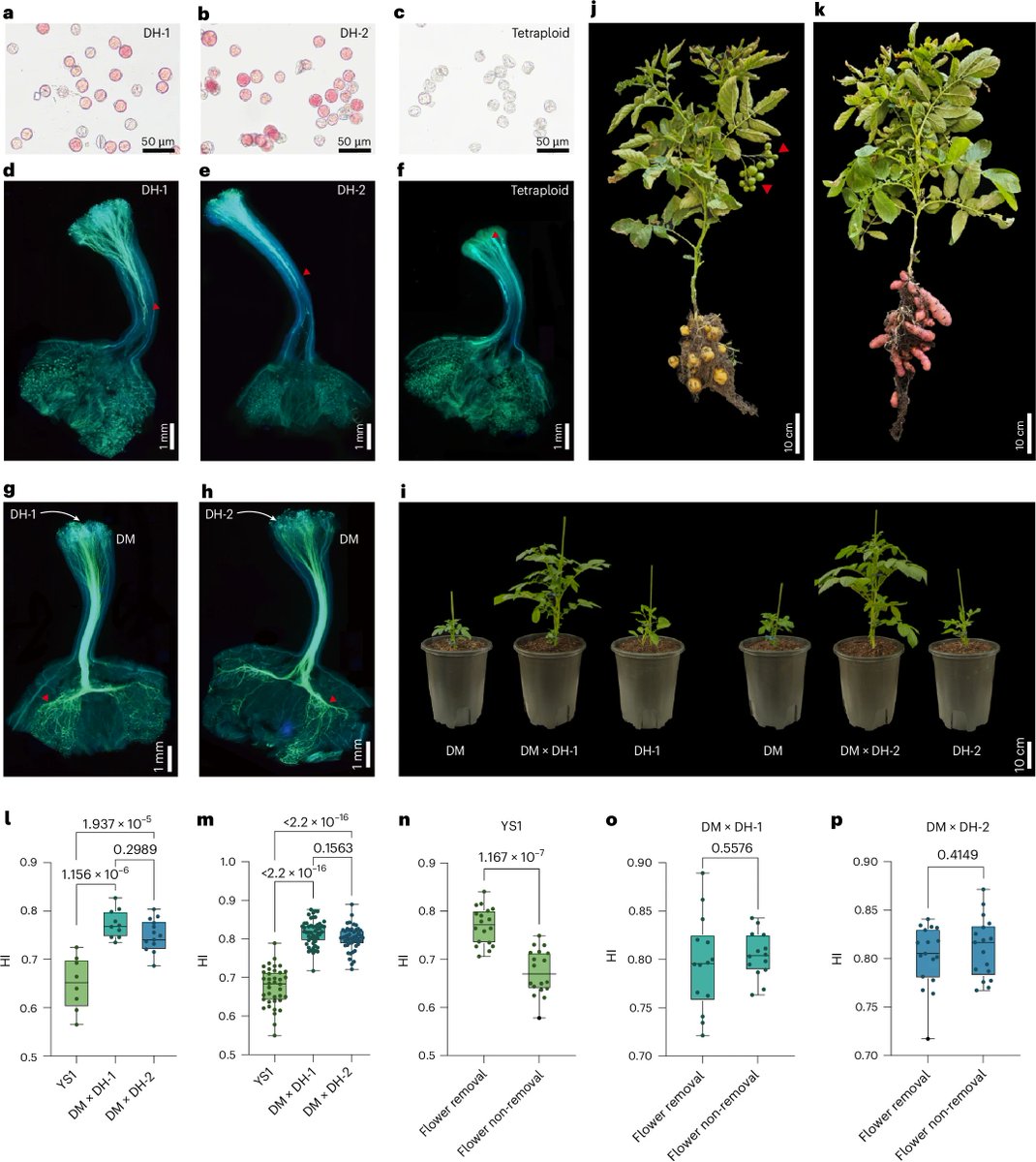
New Letter: "Generating self-incompatible hybrid potatoes through haploid breeding" https://t.co/bstfxsb3Hu
Self-incompatible diploid potatoes via haploid breeding. F1 hybrids prevent fruit set, redirect C to tubers, increase the harvest index and enable hybrid seed production.
This paper on a self-replicating ribozyme is indeed cool, but there was a preprint posted in October of 2024 https://t.co/8AC2USTKsn that got very little attention. The lesson READ PREPRINTS AND DON'T WASTE 18 MONTHS!! https://t.co/pzFzfHoGcm
Breaking: The official release of educational guides for AlphaFold Server from @GoogleDeepMind
https://t.co/AVoOkDb8uH
These tutorials aim to assist new users in gaining a deeper understanding of the latest AlphaFold version’s capabilities and maximizing the potential of AlphaFold Server’s tools and features.
Section 1: Introducing AlphaFold 3
- To provide key background information about AlphaFold 3, with a specific focus on its capabilities and how it differs from AlphaFold 2.
Section 2: AlphaFold Server: Your gateway to AlphaFold 3
- Introduce users to AlphaFold Server, an online portal for generating structural predictions using AlphaFold 3. Explain what AlphaFold Server can and cannot do, and provide guidance on how to use it.
Section 3: Interpreting results from AlphaFold Server
- Provide practical guidance on how to interpret structure predictions made by AlphaFold 3 (via AlphaFold Server).
Section 4: Conclusions
- AlphaFold 3 represents a significant leap forward in our ability to understand the molecular world. By predicting the structures of complexes encompassing a vast array of biomolecules and their interactions, it opens up new avenues for research and discovery across multiple disciplines.
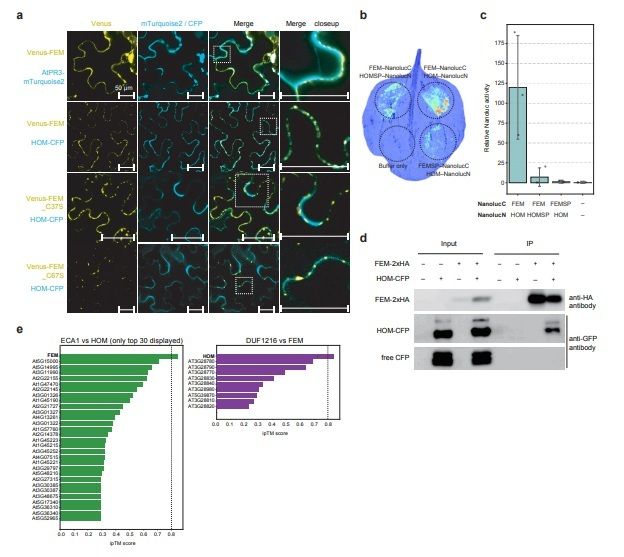
New OA Article: "Electrostatic changes enabled the diversification of an exocyst subunit via protein complex escape" https://t.co/C7e3bP2AoK
Evolutionary diversification of an exocyst subunit enabled by electrostatic shifts leading to its dissociation from the ancestral complex.