Tweet 1/7
China wasted $100 BILLION trying to steal this tech.
Failed completely.
India got it in ONE MoU — signed while TWO Prime Ministers watched.
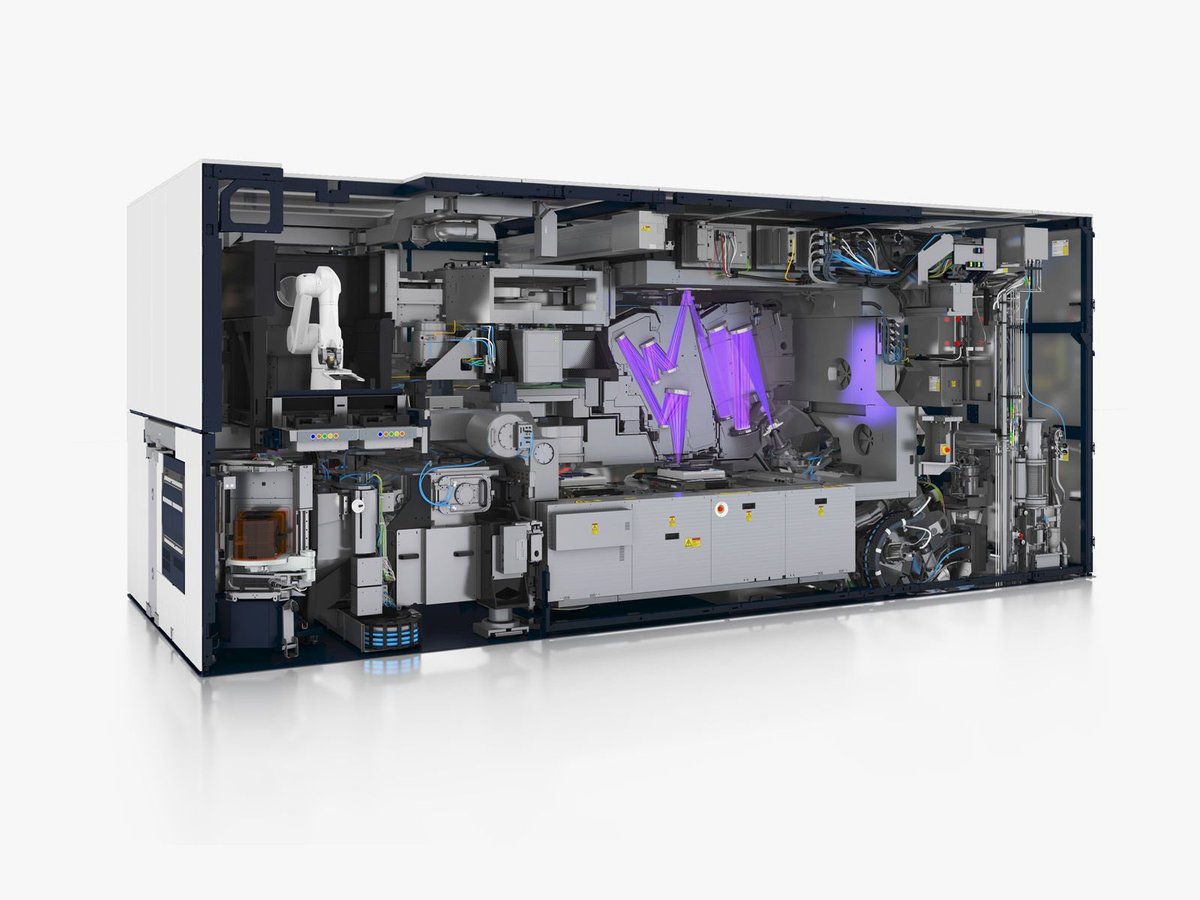
This ASML-Tata deal is the biggest game-changer of the week for Bharat.
Why it’s historic 👇 Thread 🧵🇮🇳
While the world was busy watching other geopolitical fires burn, PM Modi quietly made five of the most important stops on the planet in five days.
UAE. Netherlands. Sweden. Norway. Italy.
Read that list again slowly. Because each one of those countries holds a key to something India desperately needs right now and cannot afford to get wrong.
Here is the context most people are missing.
Hormuz just got choked. Energy routes that the world treated like guaranteed infrastructure for decades suddenly looked fragile. Supply chains that took forty years to build started wobbling in weeks. Every government that was paying attention started asking the same uncomfortable questions at the same time. Where does our energy actually come from. Who really controls our access to technology. And which trade corridors are still going to exist in five years.
PM Modi clearly got the memo before most.
The UAE is the first stop and energy is the entire reason. The Gulf has been disrupted. Hormuz is under pressure. And the UAE just made a decision that changes everything about how it operates. It stepped outside the OPEC framework. It can now pump freely without anyone's permission. And it has a pipeline that moves oil completely around the Strait. For India that is not just useful. That is survival infrastructure. This meeting is about securing that relationship before the rest of the world wakes up and starts competing for the same thing.
Then comes the stop that will look most important in hindsight.
The Netherlands. Specifically a small city in the south of the country that most people have never heard of. The semiconductor war between America and China is not slowing down. It is accelerating. And India knows that if it is not inside that ecosystem now, it will be buying chips on someone else's terms for the next thirty years. The conversations happening there are not about trade statistics. They are about whether India gets to be part of the supply chain that decides who wins the technology race of this decade.
Sweden is quieter but the signal is loud.
When three leaders stand together in front of Europe's top industrial decision makers, that is not a photo opportunity. That is India saying directly to European capital, you have been talking about reducing China dependency for years and we are the answer you have been looking for. Sweden's industrial companies represent exactly the manufacturing sophistication India needs as it tries to move beyond being a cheap labour destination and become a genuine industrial power.
Most people will skip over Norway entirely. That would be a mistake.
No Indian Prime Minister has made this trip in 43 years. Norway runs the largest sovereign wealth fund on earth. It is patient, long-term, and looking for exactly the kind of growth story India represents. The numbers being discussed are not small. And beyond the capital, Arctic shipping routes and green energy corridors open up a completely different geography for Indian trade. The quiet stops are usually the most deliberate ones.
Italy lands the plane on something much bigger than it appears.
The corridor connecting India to Europe through the Middle East needs a European endpoint and Italy is it. When that corridor is fully operational, Indian goods reach European consumers faster and cheaper than they ever have before. Without passing through the chokepoints that everyone just watched become weapons. Add the India-EU free trade negotiations running in parallel and you are looking at a structural shift in how India plugs into the global economy.
Here is the honest truth about what this week actually means.
The world is being reorganised right now. Not gradually over decades the way it usually happens. Rapidly. In months. And the positions countries lock in during this window will determine where they sit in whatever order emerges on the other side.
India is not sitting still waiting to see how things shake out.
Five countries. Five days. Energy security, chip access, European industrial integration, sovereign capital, and a trade corridor that rewires the map.
PM Modi is not touring the world.
He is building a different India for what comes next.
Not many are talking about it, but this is one of the most underrated things India is shipping right now and every Indian must know what this is all about.
Let me explain;
The system is called DIGIPIN and the username layer sitting on top is called DHRUVA. Built by the Department of Posts in partnership with IIT Hyderabad and ISRO's National Remote Sensing Centre.
Officially launched on May 27, 2025.
Here's how it works.
DIGIPIN divides all of India into 4 metre by 4 metre squares. Every single square gets a unique 10-character code like 829-4G7-PMJ8. That's down to the level of your front door, your shop counter, your hospital entrance, your village home, even a fishing boat in territorial waters. The entire country is now a digital grid.
But remembering a 10-character alphanumeric code is hard. So DHRUVA sits on top of it. You convert your DIGIPIN into a simple readable handle like rajesh@dhruva. The handle stays with you for life. If you move houses, only the underlying DIGIPIN updates. Your handle doesn't change.
Exactly like UPI replaced 16-digit bank account numbers with simple handles. malay@ybl instead of remembering an account number.
But why is our government building this?
Today roughly 20-25% of Indian addresses are unstructured. Slums, tribal areas, unplanned colonies, rural homes without proper street names.
An average Indian spends 8-12 extra minutes on an average in finding an address in India versus 2-3 in the West.
Ambulances reach late because nobody can describe the lane. Banks reject mortgages because they can't verify the property location. Insurance claims get delayed because addresses don't match across documents. Quick commerce loses crores in failed deliveries every day.
DIGIPIN solves all of this with one open-source standard.
The full source code and documentation are on GitHub. Any government department, private company, or startup can integrate it for free.
This is exactly the India Stack playbook. Aadhaar (identity), UPI (payments), ULPIN (land), DigiLocker (documents), and now DIGIPIN (address) are all open public infrastructure that private companies build on top of.
Of course developed countries already use a version of this. But India is building the best of the lot.
> UK uses postcodes plus house numbers. Works because they have structured street planning from the 1800s. We don't.
> Dubai built Makani numbers. 10-digit codes tied to building entrances. Government-only, not open.
> Japan uses block-based addressing that relies on physical signage and local familiarity.
India just built the best version of all of these.
Open-source, geo-coded, privacy-first, with a human-readable layer that even a non-tech grandparent can use. And it's free to integrate.
Once this gets rolled out, the government expects that;
> Ambulance response times improve by 40-60% in unplanned areas.
> KYC verification becomes instant. No more manual address proof.
> Rural credit unlocks. Banks can verify property and ownership in seconds for loans.
> Disaster response improves. Floods, fires, earthquakes. Rescue teams know exact homes to reach.
> Insurance pricing becomes location-precise. Same building, ground floor versus third floor, different flood risk, different premium.
> E-commerce delivery accuracy goes from approximate to exact. Failed deliveries drop sharply.
> Privacy too gets better. You share your DHRUVA handle, not your physical address. The delivery agent gets the GPS coordinates without seeing your full address. Less data exposed, less misuse.
Boring infrastructure rarely gets any hype. Everyone laughed at UPI for the first two years. Now it processes 16 billion transactions a month and seven countries have adopted it.
DIGIPIN will be the same story. In 5 years we'll wonder how we ever functioned without it. In 10 years it'll be quietly running underneath every delivery, every emergency call, every loan approval in India.
🚨 OPERATION SINDOOR - THE COST OF DETERRENCE
How India became the first nation to strike a nuclear-armed state - and shook an American base in the crossfire.
A Strategic Deep Analysis - One Year After Operation Sindoor
At 2:09 AM on May 10, 2025, Indian BrahMos missiles and precision drones struck Pakistan’s Nur Khan Airbase - just kilometres from the nerve centre overseeing Pakistan’s nuclear arsenal.
Hours earlier, the conflict was dismissed as “none of our business.” Within hours of the strike, Washington was in crisis mode, diplomatic channels were activated at breakneck speed, and an “immediate and full ceasefire” was announced.
What changed?
India had crossed a line the world assumed no nation would dare cross - striking deep into the strategic heart of a nuclear-armed state.
This was the moment India called the biggest bluff of the post-Cold War era - and the world watched what happened when that bluff collapsed.
📌 CHAPTER I: THE HISTORICAL THRESHOLD - WHAT INDIA DID THAT NO NATION HAS DONE BEFORE
Before unpacking the Nur Khan dimension, the foundational historical fact must be stated with full clarity.
Operation Sindoor shattered a core assumption of the post-nuclear era. Unlike the restrained responses of 2016 and Balakot in 2019, India struck deep inside Pakistan’s strategic heartland - crossing a line previous doctrines avoided for fear of triggering nuclear escalation.
For decades, Pakistan’s Full Spectrum Deterrence relied on one belief: that the threat of nuclear retaliation would freeze India’s conventional response. Operation Sindoor challenged that belief head-on.
India broke that assumption on May 7, 2025.
For the first time since 1971, India struck across the internationally recognised boundary with Pakistan - reaching Bahawalpur in Pakistan's Punjab province, 600+ kilometres from the Line of Control, targeting the headquarters of Jaish-e-Mohammed and Lashkar-e-Taiba. This was not a surgical strike on a forward operating base. This was a statement that no geography in Pakistan is off-limits when Pakistan exports terrorism onto Indian soil.
Search the entire history of the nuclear era for a parallel. There is none. Israel struck Iraq's Osirak reactor in 1981 - but Iraq had no nuclear weapons. The United States bombed North Korea in the Korean War - before Pyongyang had the bomb. No state, in the post-1945 nuclear era, has struck sovereign territory of a declared nuclear-armed adversary with the depth, scale, and deliberate target selection that India demonstrated in May 2025.
India's deterrence logic was precisely documented by the Bulletin of the Atomic Scientists: "Pakistan's deterrence logic was undermined during the four-day conflict in May, when India ignored Islamabad's nuclear signaling and established what Prime Minister Modi described as a 'new normal.'"
The new normal. India became the first nuclear power in history to bomb another nuclear power's sovereign territory - and survive the nuclear bluff intact.
📌 CHAPTER II: THE COST OF DETERRENCE - HOW PAKISTAN'S 75-YEAR INSURANCE POLICY EXPIRED IN 88 HOURS
Pakistan has been running one of the most successful protection rackets in the history of international relations. Since 1998 - when it conducted nuclear tests days after India's Operation Shakti - Pakistan's strategic doctrine has rested on a single pillar: nuclear weapons as the ultimate guarantor against Indian conventional retaliation for state-sponsored terrorism.
The doctrine had a name: Full Spectrum Deterrence. Its logic was explicit. Pakistan would arm, train, and deploy non-state terrorist groups against India. When India threatened military retaliation, Pakistan would rattle the nuclear sabre, triggering Western - particularly American - diplomatic pressure on India to stand down. The deterrence was not designed to stop a nuclear war. It was designed to stop India from imposing a conventional military cost on Pakistan for terrorism.
India's Operation Sindoor starkly exposed the failure of this strategy. By striking eleven major airbases - from Sargodha to Sialkot, from Nur Khan to Jacobabad - India effectively neutralised Pakistan's capacity to deliver a nuclear warhead via its air vector. Complementing this, India's robust and layered air defence systems constrained Pakistan's missile delivery options. Even if Pakistan possessed a complete nuclear triad - which it does not - the Indian Navy's vigilant containment of the Pakistani Navy in the Arabian Sea would have thwarted any maritime strike.
Pakistan lacks a nuclear-armed submarine for sea-based deterrence, critical for a credible second-strike capability. Without second-strike survivability, Pakistan's nuclear doctrine rests on first-use threat - a threat India calculated, correctly, that Pakistan would not execute given that any Pakistani nuclear strike would be met with total Indian retaliation that would eliminate Pakistan as a functional state. India called that existential bluff. Pakistan blinked.
The numbers behind the conventional dominance that made this possible:
India destroyed an estimated 20% of Pakistan's operational Air Force across four days of combat.
Strikes across 10 Pakistani airbases were completed in just over 22 minutes - designed to paralyse Pakistan's capacity to assess, react, and recover simultaneously.
India's Akashteer system demonstrated a 100% kill rate against Pakistani drones. The S-400 Sudarshan Chakra intercepted all incoming Pakistani missiles successfully - zero Pakistani missiles or drones caused meaningful damage to Indian infrastructure.
Satellite imagery confirmed massive destruction at Jacobabad Air Base including the complete destruction of a large hangar housing US-made F-16 fighters. Pakistan's claims of minimal damage were demolished, literally and photographically.
Massive craters were observed near the hills surrounding Nur Khan airbase, believed to house Pakistan's nuclear storage infrastructure - a deliberate signal of India's capability to reach Pakistan's nuclear architecture without triggering its use.
The cost of deterrence had been imposed. For the first time in 27 years of nuclear Pakistan, the bill had come due. And Pakistan paid it.
📌 CHAPTER III: NUR KHAN - THE BASE THAT CHANGED EVERYTHING
The Nur Khan Airbase strike is the most consequential single action in Operation Sindoor - and the least fully understood.
Nur Khan Airbase in Rawalpindi serves as the hub of Pakistan's Air Force air mobility operations, VIP transport, and strategic operations. It is located kilometres from the Pakistan Army's General Headquarters (GHQ) and the Strategic Plans Division - the command overseeing Pakistan's estimated 170 nuclear warheads.
The New York Times cited a former American official: "Pakistan's deepest fear is of its nuclear command authority being decapitated." The Indian missile strikes on Nur Khan were interpreted as a warning of India's capability to do exactly that. According to Christopher Clary, an associate professor at the University at Albany: "An attack on the facility may have been perceived as more dangerous than India intended."
But here is the dimension that Western reporting consistently buried and that deserves full analytical exposure.
Pakistani security analyst Imtiaz Gul alleges - with significant corroborating evidence - that Nur Khan Airbase operates under de facto American operational control through a covert arrangement, with US aircraft regularly landing and taking off amid limited transparency. Even senior Pakistani military officials are reportedly restricted from accessing certain operations at the base.
During the Cold War, Pakistan permitted US U-2 reconnaissance missions from Peshawar's Badaber Airbase. During the War on Terror, critical facilities - including Shamsi, Shahbaz, Dalbandin, and Nur Khan - were used by US forces for drone strikes, intelligence gathering, and logistical operations in Afghanistan. While less overt today, this military collaboration continues in more discreet and sophisticated forms.
Despite the US withdrawal from Afghanistan, Nur Khan is believed to serve as a forward-operating location for US intelligence, surveillance, and reconnaissance missions - potentially including pre-positioning for potential strikes targeting Iranian nuclear sites or remnants of ISIS-Khorasan.
Now read the sequence of events again with this context.
• May 9, 10:00 PM: JD Vance - "none of our business."
• May 9–10, 2:09 AM: India strikes Nur Khan.
• May 10, morning: Rubio emergency calls activated. White House situation room fully engaged. Trump announces ceasefire on social media by afternoon.
Reuters reported that India's strikes on Nur Khan airbase had alarmed US officials, due to the base's proximity to Pakistan's Strategic Plans Division. According to a senior Pakistani intelligence official, Pakistan viewed the strike on Nur Khan as a red line particularly given its proximity to nuclear infrastructure. "US intervention was necessary to pull the two sides back from the brink," the official said. "The last move came from the president."
Pakistan's Deputy PM Ishaq Dar confirmed in December 2025 that Rubio called him at 8:17 AM on May 10 and conveyed India's readiness for a ceasefire, asking whether Pakistan would agree - effectively revealing that the US had been in direct diplomatic engagement with both sides through the night, activated by the Nur Khan strike.
The analytical conclusion is unavoidable: India did not merely strike a Pakistani military base. India struck a facility with embedded US strategic interests - and that strike is what triggered the most rapid American diplomatic intervention in the India-Pakistan conflict's entire history.
Vance said it was none of America's business. India made it America's business in 23 minutes.
📌 CHAPTER IV: THE GEOPOLITICAL EARTHQUAKE - WHAT THE STRIKE REVEALED
The Nur Khan strike and its aftermath revealed four structural geopolitical truths that will reshape South Asian strategic calculations for decades.
Truth 1: Pakistan's Nuclear Shield Was Always An American Shield
Pakistan's nuclear signaling is primarily aimed at securing third-party intervention - particularly from the United States - when confronted by India's conventional military superiority. The nuclear threat was never primarily about deterring India. It was about triggering American diplomatic intervention before India could impose a decisive conventional defeat. Frontiers
Operation Sindoor revealed the mechanism. Strike close enough to Pakistan's nuclear infrastructure - and specifically, close enough to US covert interests embedded within that infrastructure - and Washington activates immediately. The nuclear shield Pakistan advertises to the world is, in operational reality, an American diplomatic guarantee that gets triggered when American assets are threatened.
India proved it understands this mechanism - and that it can operate within it.
Truth 2: Chinese Weapons Failed Under Real Combat Conditions
Operation Sindoor highlighted that Pakistan's Chinese-supplied air defense systems - J-10Cs, HQ-9 batteries, PL-15 missiles - failed to prevent a single Indian strike from reaching its target. Wiley Online Library
The operation carries longer-term implications for Chinese-supplied air defense worldwide. Systems marketed as peer competitors to Western and Russian alternatives failed completely. Defense procurement officials worldwide are reconsidering contracts built on assumptions that May 2025 demolished. The Wire
This has a direct deterrence implication for Taiwan, for the South China Sea, and for every country that has purchased Chinese air defense infrastructure. China's weapons failed against Indian indigenously developed systems. That is a strategic advertisement for Indian defense manufacturing and a strategic liability for Chinese arms exports that China will spend years trying to counter-narrate.
Truth 3: The Nuclear Threshold Is Higher Than Pakistan Claimed
India demonstrated by striking eleven major Pakistani airbases that it could impose devastating conventional damage without triggering nuclear response. India's strikes effectively neutralised Pakistan's air-vector nuclear delivery capability while its navy contained the maritime vector and its missile defense intercepted all incoming threats. PubMed Central
Indian strategists may increasingly see through Pakistan's nuclear bluff and could pursue a decisive conventional campaign in a future India-Pakistan confrontation. A conventional war under the shadow of Pakistan's nuclear threats is now more plausible, not less, because India has demonstrated the threshold is higher than Pakistan's rhetoric suggested. Frontiers
Truth 4: India Has Redefined the Rules of Engagement for Nuclear-Era Conflicts
India's Chief of Defence Staff General Anil Chauhan articulated the new doctrine explicitly: "There is increased propensity amongst nations and governments to use force because political objectives today can be achieved by short-duration conflicts. Precision strikes create very little collateral damage - hence the cost of war for nations is less." Taylor & Francis Online
Operation Sindoor established three pillars of India's new doctrine: any terrorist attack on Indian soil will be met with assured and proportionate retaliation; India will no longer be deterred by nuclear blackmail in striking terrorist hideouts across the border; India will not differentiate between terrorists and the government that harbours them. PubMed Central
This doctrine - articulated publicly, validated operationally, and enforced with precision - has permanently changed the cost-benefit calculation for state-sponsored terrorism. Every government in the world that uses non-state actors as strategic instruments against a neighbour now has to factor in India's May 2025 precedent.
📌 CHAPTER V: THE IMF FOOTNOTE - HOW THE US PROTECTED ITS INVESTMENT
In May 2025, amid escalating conflict with India following Operation Sindoor, Pakistan secured a crucial US$1 billion disbursement from the International Monetary Fund under its $7 billion Extended Fund Facility. The Tribune
The timing is not coincidental. It is structural.
The IMF disbursement, arriving precisely during the conflict, served multiple US strategic purposes simultaneously: it prevented Pakistan's economic collapse (which would have destabilised US intelligence and military assets in the country), it signalled to Pakistan's military establishment that American institutional support remained operative regardless of the conflict's military outcome, and it gave Pakistan's leadership the financial cushion to accept a ceasefire without appearing domestically as having capitulated.
Pakistan's 2025–26 federal budget included a nearly 20% increase in defence spending, raising the allocation to approximately 2.55 trillion rupees, even as overall public expenditure was reduced by 7%. Analysts argue that such a move would not have been possible without continued external backing from the US through financial assistance and favourable multilateral mechanisms. The Tribune
India demonstrated military dominance. The US ensured Pakistan's military establishment survived financially to fight another day - or rather, to remain useful for American strategic purposes in the region. This is the honest geopolitics that India's strategic establishment must map, plan around, and ultimately work to change through sustained diplomatic investment in Quad architecture, G20 leadership, and the long project of making the US-India partnership structurally more important to Washington than the US-Pakistan arrangement.
📌 THE VERDICT: WHAT OPERATION SINDOOR CHANGED FOREVER
Operation Sindoor didn’t just strike targets - it shattered assumptions.
India called Pakistan’s nuclear bluff, proving that terror attacks can now invite direct military retaliation without fear of nuclear blackmail.
For the first time, India demonstrated a fully indigenous kill chain - BrahMos, Akash, Akashteer, S-400 integration - exposing both Pakistan’s vulnerability and the combat limitations of Chinese weapon systems.
Pakistan paid the price in damaged airbases, crippled operational capacity, and a forced ceasefire request after Nur Khan was struck at 2:09 AM.
The old doctrine of “bleeding India by a thousand cuts” collapsed the moment India showed it could impose a cost far greater than Pakistan’s nuclear shield could prevent.
The bill was delivered with a BrahMos missile. The receipt was the DGMO call requesting ceasefire.
May 7–10, 2025 changed the rules of deterrence in South Asia forever. And the world - from Beijing's defense procurement offices to Washington's situation rooms - has been taking notes ever since.
धर्मो रक्षति रक्षितः Jai Hind 🇮🇳
On Hantavirus: a (non-technical) thread.
Disclaimer: I am a biology PhD, but not virology/epidemiology. Husbandman is a virology PhD. But I’m told I’m good at communicating science, so here’s my take.
#Hantavirus
1. Just got off a call with @UnSubtleDesi. I couldn't be happier for her and both of us couldn't help but discuss the harrowing days of post poll violence in West Bengal in 2021. So I am going to share what happened five years ago just so ppl know what happened. #WestBengal2026.
@showkeshbabu@mrunalinicact@rashmigautam27 I wonder what it means by “a trained psychologist”. Speaking about getting laid to a women or acting just like a keyboard warrior with no real name or real image. If these define as qualities of being “a trained psychologist” then you definitely need to see a real psychologist
@M9News_@ssrajamouli Whatever SSR does has a purpose and reason. He is building brick by brick to reach the global audience. It starts from this event. That’s what marketing and no one can beat him in this field. We will understand stage by stage
DIGITAL ARREST SCAM🚨
FIRST TIME LIVE RECORDING.
1. Please read, watch, and share this thread as much as possible so we can save more people from this fraud.
In 2001, Lankesh Patrike published an article about the Dharmasthala mafia.
A week later, the journalist who wrote the article, Rashid B.M., was found murdered in a lodge.
@ImSkD4@idesibanda 12 CL, 30 PL, 15 Sl. Mandatory leave is for officials holding sensitive post, not for all. Availing leaves in reality is entirely difficult scenario specially for officers and even availing 1 day leave is Herculean task for Branch Managers
Today marks the 10th year anniversary of #SkillIndia, a bold vision by Hon’ble PM @narendramodi to make India the Skill Capital of the World.
As we celebrate #KaushalKaDashak, engaged with colleagues from the media on how our skilling systems have evolved over the last decade, becoming more industry-linked, tech-enabled, and outcome-focused and how we're now building for the next leap.
With 14,000+ ITIs, JSSs, NIESBUD & IIE leading a Jan Bhagidari movement across the country, we culminate on July 22 with #BharatSkillNxt2025, where we’ll launch key reforms, honour our champions, and set the course for a skilled, self reliant and #ViksitBharat. #WorldYouthSkillsDay
@PMOIndia@MSDESkillIndia
Something strange is happening in India
Private Equity firms like KKR, Kedaara, Apollo, etc are pouring billions of dollars in Indian schools!
But here's why it is weird, schools in India are required to be non profits by law!
So why are PE funds investing in them?
1/7
@treeni The real punishment for these bastards is - cut their private part in front of everyone. So that fear will be installed in everyone. Such thoughts will not come in mind!!