@JohnStreicher1@AdrianoAguzzi@DMSabatini I feel for those trainees as well. I think David Sabatini’s tenure should not have been revoked and should be reinstated by MIT.
@bryan_johnson Sequencing your genome doesn’t really give you any useful info for your Biology other than you are predisposed for this or that, so if you are a healthy person with no disease-gene link, the genome sequence is not useful. Other than when you need to find your kin.
Hot take: I don’t care.
I work to treat Alzheimer’s and ALS, among other neurodegenerative diseases.
Any of these companies wants to do it for me?
I’ll take it. Heck, I’d pay them.
@navyadotbio@UrnovFyodor Academics are too proud, but they need to admit they are slow compared to young energetic and bold trainees. If we look across the tech field college dropouts have basically driven it. If rocket science can be done by someone without phd, why can’t gene editing.
The greatest trick science ever pulled was making miracles boring.
Clean water.
Antibiotics.
Vaccines.
Safe food.
Electricity.
Anaesthesia.
We stopped calling them miracles because they work.
@AdamRochussen Old people are not worse than young people unless you are calling 40-50 year olds young. Blatant statements like this creates a wrong message. Depth determines a great scientist that that comes from decades of reading, research and hard work.
Good to see AI discovering “one” of the “many” of interesting sequence motifs. A biologist wouldn’t oversell it, especially when they don’t know what it does. I thought @sama was the hypeman, but cute @DarioAmodei is nothing less 😂
Today we announced the Claude-led discovery of a molecular machine that we suspect could represent a new gene editing mechanism. Its precise function, biotechnological utility (if any), or level of significance is not yet clear, but at minimum it is work I would have been proud to do as a PhD student. The work was done mostly, though not entirely, by Claude: our life sciences team suggested a broad area of research, Claude read through the literature and a bunch of genome data and discovered something interesting, then Claude proposed experiments to verify the discovery and our team carried them out.
It’s easy to dismiss this as a one-off or curiosity, but we’ve repeatedly seen a pattern where AI performance in new intellectual domains goes from weak to superhuman in a matter of a few years. In 2023 models struggled to do math at the level of an average high-school student. In 2024 they started to do well on math competitions for the best high-schoolers in the country, in 2025 they started to solve minor open problems, in early 2026 more significant open problems, and in late 2026 they are beginning to solve the top few open problems in all of mathematics. We believe AI for biology is on a similar exponential trend.
The main difference between biology and mathematics, of course, is that math can be done purely theoretically, while biology requires experimentation. Some have used this to draw the conclusion that AI’s utility in biology will be limited. We think this is wrong. As we’ve demonstrated today, humans can collaborate with AI to perform the experiments, validate key results in a few weeks and, if necessary, work with the AI to iterate on what they find. Eventually it may even be possible for Claude itself to safely perform the experiments by autonomously controlling lab equipment, with appropriate safeguards in place, but we aren’t doing that today (our lab is also a BSL1/BSL2 facility that doesn't handle materials dangerous to humans).
More broadly, biomedical advancement has many stages — from fundamental biology discoveries, to translational research, to drug discovery, clinical trials, and finally the actual delivery of medicines and health care to patients. We are also interested in these later stages, but even simply accelerating the first stage of fundamental biological discoveries has the potential to speed up and broaden the entire pipeline. Improving our understanding of biology and sharpening biologists’ tools can drive forward all of the later stages, for example by identifying new drug targets, finding new therapeutic modalities, allowing for more precise measurement, and speeding up the experimental loop which itself further accelerates our understanding of biology. This will not in itself speed up clinical trial times, but if it succeeds it could greatly increase the number of promising candidates that go into the pipeline — an increase in throughput even though latency remains.
In Machines of Loving Grace, I wrote about AI’s potential to “cure most diseases in 5-10 years” — a goal that sounds impossible, but one I believe is just barely possible if AI is applied to every stage of the pipeline. The first step is showing that AI can first help with, and then drive, biological discoveries.
Claude’s discovery is the latest in a line of related prior work that goes back decades, beginning with systems like CRISPR, and continuing with discoveries like the bridge recombinase and VIPR in the past few years. Recently, there has been heightened interest in systems based on reverse transcriptase (RT) enzymes, the enzyme underlying the system Claude identified. And most recently, a Stanford team working independently described a novel RT system with an associated non-coding array that is in some ways similar to the one Claude found, though they are distinct systems that evolved independently from each other. I believe that we’re at the very beginning of finding such systems and developing them into powerful tools for biotechnology.
I’m proud of the resources Anthropic has invested in accelerating the public benefits of AI through the life sciences, and we’re aiming both to grow our life sciences team and to work with other scientists to extend this approach to a broad range of problems. If you have a proposal for a research collaboration or are interested in joining our life sciences team, please reach out.
I work in CRISPR discovery research. This is one of the most exaggerated nothing-burgers ever and would be laughed out of the room if a human scientist attempted to publish something like this. (cont.)
Excited to see AI agents being used to accelerate scientific discovery. There is so much biological diversity, with many beautiful and useful systems still to be discovered and harnessed. This is an exciting step forward. Given how quickly AI is advancing, can’t wait to see how many new discoveries it will enable in the next few years. Congrats to the @AnthropicAI team (@mgdurrant@ntperry13@eric_kabrams@DarioAmodei).
As someone who did this kind of genome mining work during my PhD, some thoughts on this Anthropic announcement:
First, the very simplified version of what they did is that they noticed two genes (one known, one new) sitting next to a weird repeating piece of DNA. More specifically, they described an unusual reverse transcriptase (RT) associated with a repetitive DNA array and an unknown accessory protein. This kind of process was used to understand CRISPR back in 2002 and was key to the gene editing tools we use today.
To put this into context, though, people have been finding RTs associated with CRISPR arrays since 2008, and this general kind of genome-neighborhood mining has been used to discover new biological systems for decades. The basic genome-mining strategy is well established, and there are now mature tools and published pipelines for doing much of this. There are papers that discover and experimentally validate dozens of new systems using this approach in a single study. Doing it in bacteriophage genomes is also nothing new (eg CasPhi).
Finding a weird cluster of genes and repeats is often the easy part. The hard part, and where the real discoveries come from, is figuring out what the system actually does. Eg for the bridge-RNA discovery in 2024 from @arcinstitute or the discovery of CasPhi in 2020 from @DoudnaJennifer they figured out the pieces of the system and the rules for what makes it work so it can be used.
Anthropic does not yet know what this does. They’ve shown that the repeat array produces RNAs, but not what those RNAs do, what the RT does with them, or whether the system has any of the programmable properties that make the CRISPR comparison justified.
I’m genuinely rooting for all of the frontier labs to seriously get into biological discovery, and I’m excited about what comes out of it. But announcing these very early, incremental findings with the framing of a major discovery doesn’t help. I’d much rather they set the bar high now, so that when an AI actually discovers a fundamentally new biological mechanism, everyone appreciates how big a deal it is.
In light of the progress in mathematics, we at Edison Scientific and FutureHouse have assembled a set of Millennium Problems for Biology. They are chosen to be very hard to solve but very easy to validate in a simple laboratory environment. Any of these, if solved, would mark a major advance in biotechnology, and most of them would contribute materially towards curing disease. These are, in some sense, the “last reasonable eval” for AI in biology. This was work primarily by @MichaelaThinks and myself, with contributions from many others.
Short descriptions below. The full descriptions of the problems with acceptance criteria are at the Bio Millennium Problems website, linked in the next post. Share more if you have ideas. If they meet our criteria, we’ll add them to our list (with attribution and permission).
Distinguished Columbia Univ. Prof. Jeff Sachs on Trump's 35-person cabinet:
“Not one of them is trained in technical skills. Not one research PhD, as opposed to China, where half the cabinet is science and technology PhDs. We're led by grifters and fools.”
People keep saying Trump term II is the most corrupt administration ever, so I built a model to find out if it was true.
I took the UN's definition of corruption, turned it into eight criteria and 100 points, and scored the leaders history remembers for looting their countries: Marcos, Suharto, Mobutu, Abacha, Obiang, Putin.
Then I put every president since Eisenhower on the same scale, both parties, with every exoneration counted right alongside the convictions.
Nixon scored 41 and no other American President scored over a 25.
Trump's second term scored a 91, which ties him with Suharto and Mobutu and puts him above Marcos and Abacha.
So he is not only the most corrupt president in American history. At this pace he finishes his term level with the most corrupt rulers of the last hundred years.
PSA: don't come in my comments arguing about the results if you haven't read the full article, because ignorance is a choice.
Full article is up now on my Substack (link in bio) and it's free.
Someone finally ran the control experiment that drug discovery has been skipping for the last fifty years, and the result is going to to make your weekly med chem meetings kind of awkward :)
https://t.co/EeYL8QCpdx
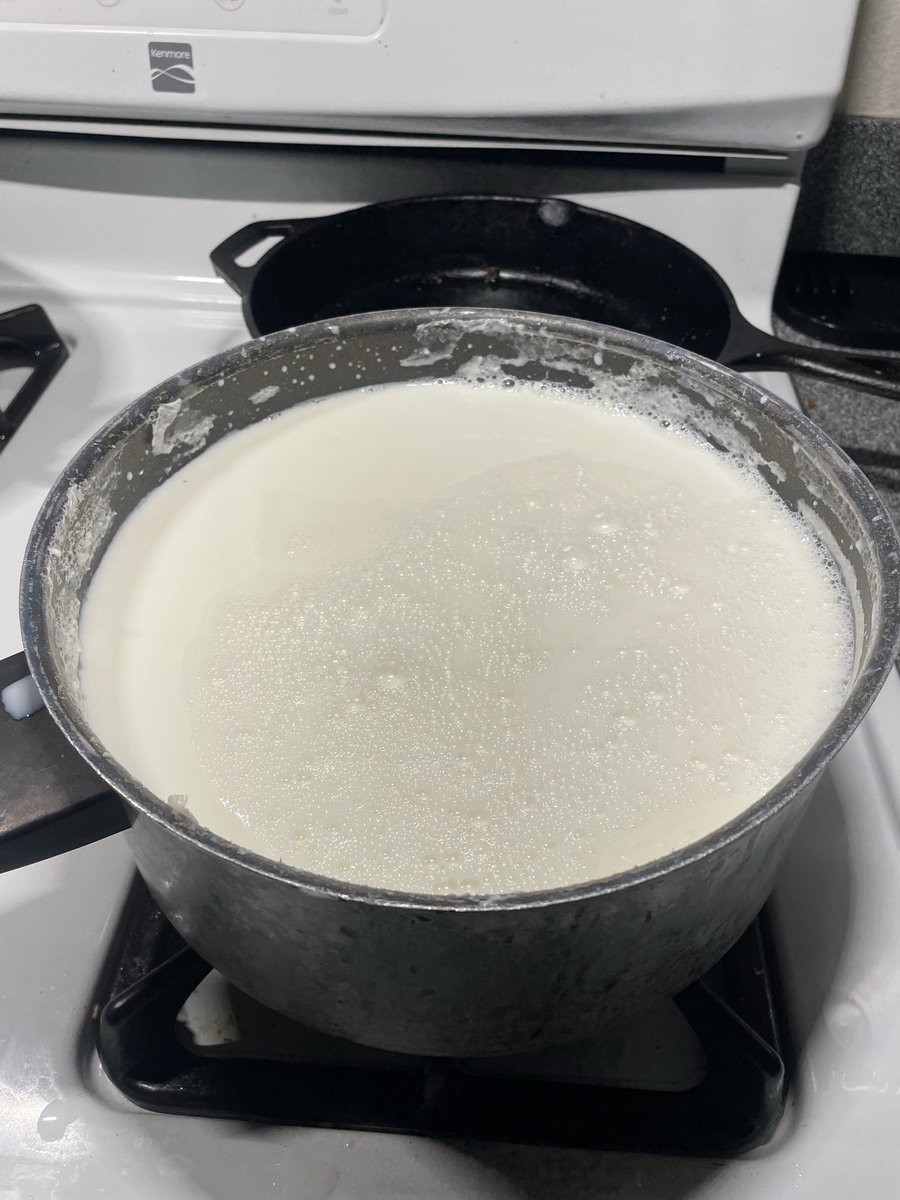
@Costco@kirkland vitamin D milk is not whole milk. I boiled 1 gallon (3.84 liters) and got less than a quarter cup of fat. I knew the corporate world fools humans. But Milk? You can do better. Maybe we should just buy whole milk directly from farmers and not from you!!!