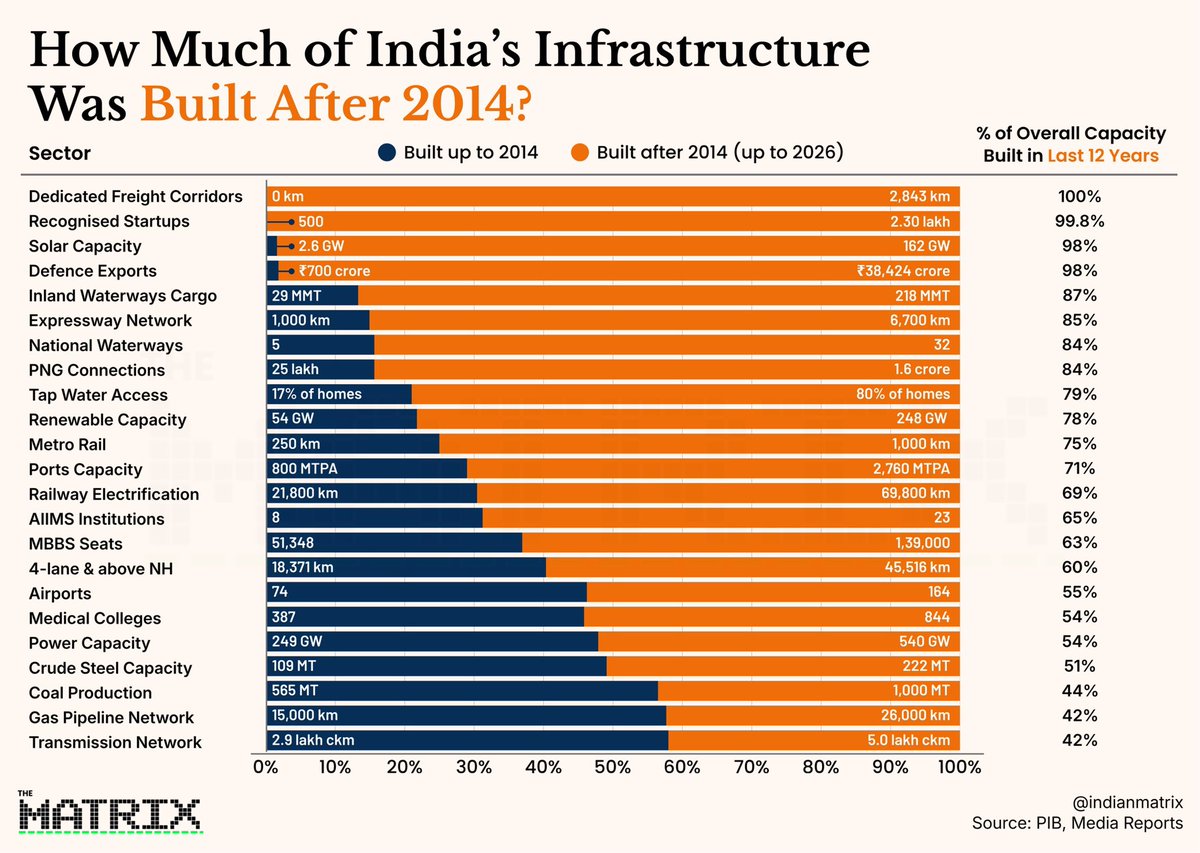
How much of India's infrastructure was built after 2014?
• 100% of Dedicated Freight Corridors
• 98% of Solar Capacity
• 85% of the Expressway Network
• 79% of Tap Water Access
• 75% of Metro Rail
• 71% of Port Capacity
• 69% of Railway Electrification
• 60% of 4-Lane National Highways
Infrastructure is built over decades.
But some decades build more than others.
“Spare the rod and spoil the child”
Veteran actor Anant Nag blames excessive pampering for today’s abusive Gen Z culture. He says this mindset is seen among urban youth, not village children.
“I don’t know how PM Modi forgave them. I wouldn’t have” 🔥
Thank you, @cursor_ai, for providing free credits to several FFmpeg developers. These credits will support their ongoing work on FFmpeg, including development and code review.
We greatly appreciate Cursor’s support for FFmpeg and its community.
And it’s finally here! My biggest research exercise ever. Took months, on and off, hundreds of references, and a nagging back pain to put it all together. Still far from comprehensive, but this is my personal best. Hope you enjoy reading as much as I enjoyed writing!
https://t.co/XbAkO1LNri
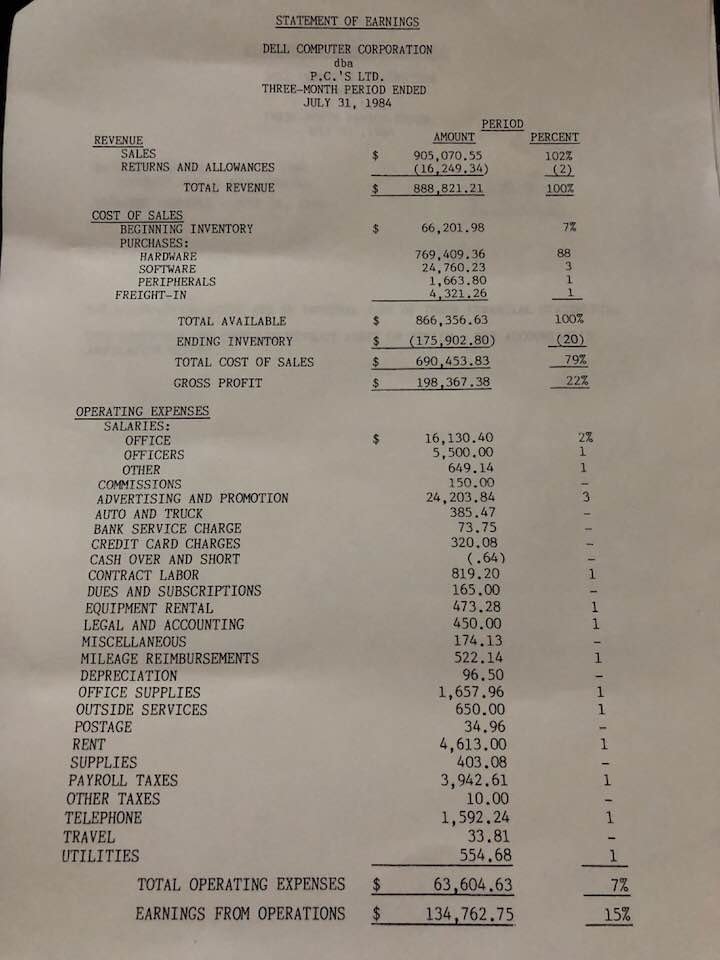
This one page changed my life.
42 years ago today, it convinced my parents I shouldn't go back to college.
I started by upgrading PCs from a dorm room.
Today @Dell is helping build the infrastructure that powers AI, from the edge to some of the world's largest AI factories.
You never know which small decision will change everything.
Keep building🚀🙏 #PlayNiceButWin
There must definitely be an Indian movie made of Alexander the Great Retreat. Because that's exactly what happened once he reached the borders of India.
I will forever be grateful to @claudeai, @AnthropicAI and @DarioAmodei for helping me bring my pet history project, a 15 year dream, to life.
For a guy with below average intellect, less than ok articulation and zero knowledge of code and programming, it was @claudeai's sheer awesomeness that transformed my sketchy vision, written in broken English, into actual, clickable, reality.
I had never even imagined there would be a day, where we could be given the power to create and get access to a domain that was the preserve of much more intelligent beings.
I will forever be grateful to them for this.
https://t.co/rkl9nW7XlG
Mesopotamia was never the cradle of civilisation. India was.
I spent forty years in international shipping, not academia. When I began researching the history of maritime trade, I had no orthodoxy to defend. I followed the evidence, and it kept arriving in the same place: the Indian subcontinent.
Nineteenth century archaeologists dug in Mesopotamia because the climate preserved artefacts, the biblical sources pointed them there, and the Ottomans allowed the excavations. That is the entire basis for the myth of Mesopotamia as "the cradle of civilisation."
Nobody applied the same rigour to India. Mohenjo-daro was not discovered until 1922. By then the narrative had already hardened.
What was actually there was the largest civilisation of the ancient world. Three hundred cities. Fifty thousand people in each, by 2600 BC. Two thirds of them stood on the banks of the Sarasvati, the central and greatest of the seven rivers described in the Rig Veda, flowing down from the Himalayas before the river vanished entirely by 1900 BC. The Vedic kings claimed territory stretching "sea to sea," from Afghanistan to Maharashtra, some 1.5 million square miles, against Egypt's 13,000. A dock at Lothal built to handle thirty ships of sixty tons, unmatched in Europe for four thousand years. When it was first excavated, it was recorded as a bathing pool.
When the scale became impossible to dismiss, the theory was not corrected. It was replaced with a story of pale-skinned nomads from the steppe who supposedly arrived around 1500 BC and brought civilisation with them. There is no evidence. The chronology doesn't work. The Vedas describe no invasion.
In 2019 a Harvard-led genetic study revived the claim, and the press reported it as confirmation. It was not. The same study found the builders of these cities were indigenous. The Sarasvati river that the Rig Veda described had already dried up before these newcomers arrived. What the study also found is that a small group of men, arriving after the Sarasvati had already dried up, interbred with the existing population and left a genetic signature. That is all.
So, where they chose to dig was mostly an accident of climate and access. The Aryan invasion theory was constructed because an Indian civilisation that owed nothing to Caucasians was a fact the late nineteenth century could not accommodate.
Link to full Substack essay with sources in the comments below.
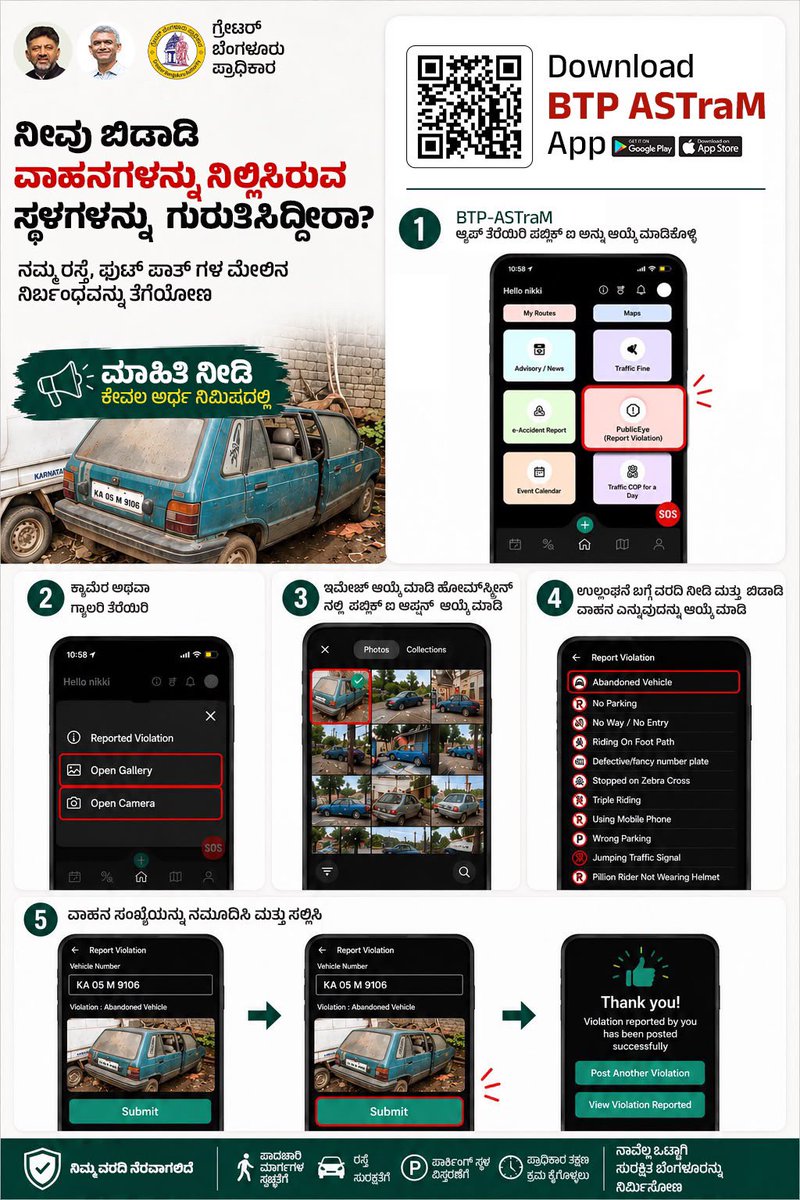
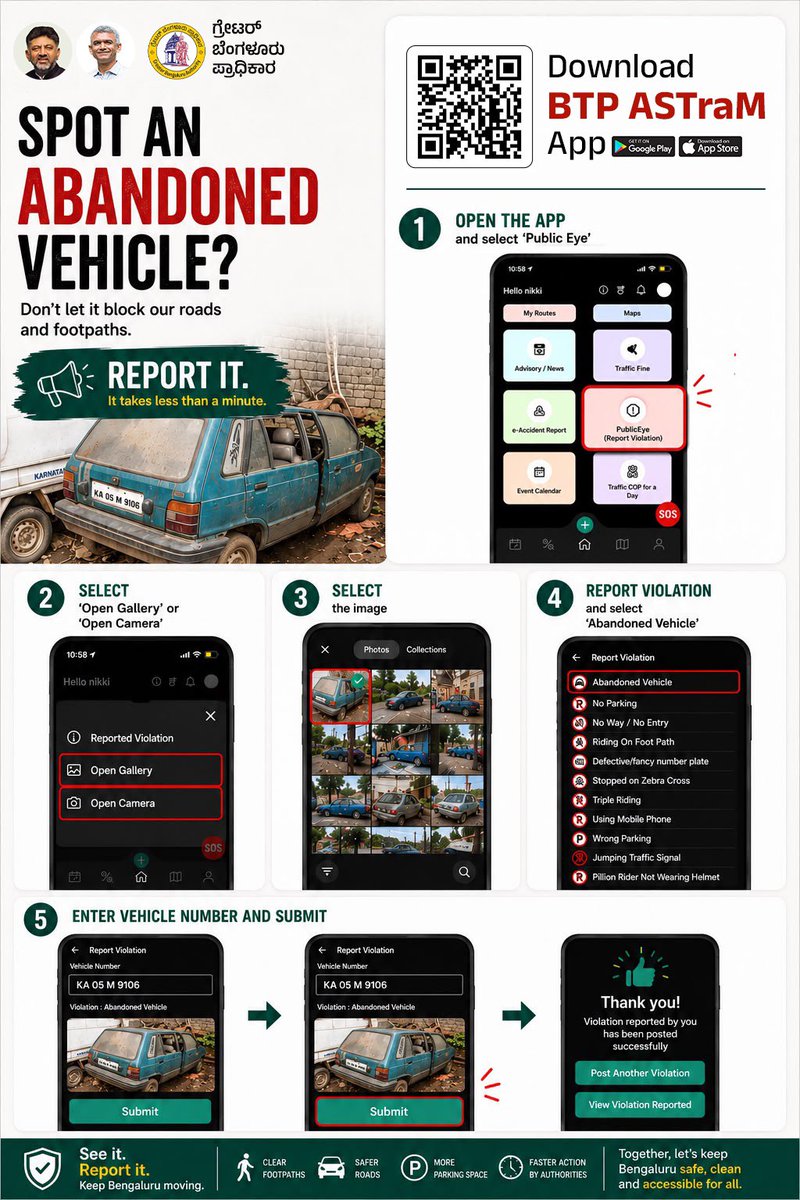
A better Bengaluru isn’t built by the government alone, it’s built together with its citizens.
If you notice an abandoned vehicle in your neighbourhood, we request you to report it instantly through the BTP ASTraM app.
#GBA#NammaBengaluru
ಸರ್ಕಾರ ಒಂದೇ ಸಮೃದ್ಧ ಬೆಂಗಳೂರನ್ನು ಏಕಾಂಗಿಯಾಗಿ ನಿರ್ಮಾಣ ಮಾಡಲು ಸಾಧ್ಯವಿಲ್ಲ. ಇದು ನಾಗರಿಕರೊಟ್ಟಿಗೆ ಸೇರಿ ಮಾಡಬೇಕಾದ ಮಹತ್ಕಾರ್ಯ.
ನಿಮ್ಮ ನೆರೆಹೊರೆಯಲ್ಲಿ ಮಾಲೀಕರಿಲ್ಲದ ಅನಾಥ ವಾಹನಗಳನ್ನು ಕಂಡರೆ ತಕ್ಷಣವೇ, ಈ BTP ASTraM app ಮೂಲಕ ಮಾಹಿತಿ ನೀಡುವಂತೆ ಈ ಮೂಲಕ ಮನವಿ ಮಾಡುತ್ತಿದ್ದೇವೆ.
Deeply saddened by the passing of Padma Shri Dr. Girish Bharadwaj, fondly known as the Bridge Man of India.
I join the people of Dakshina Kannada in grieving the loss of one of our finest sons. Dr. Bharadwaj built far more than bridges. He built hope, connected communities, and opened pathways to opportunity for countless people living in some of the country’s most remote regions.
Born and raised in Sullia, his pioneering work in constructing over 140 low-cost suspension bridges across India stands as a lasting testament to how innovation, driven by compassion and a spirit of service, can transform lives.
My heartfelt condolences to his family, friends and admirers. May the Almighty grant eternal peace to his noble soul.
Om Shanti. 🙏
(VC: History TV)
History is more than dates and dynasties - it is a dialogue across disciplines. 📚🔍
In this conversation with @PadmajaJoshi on @ndtv , @vikramsampath shares why historical research cannot be confined to a single lens. Drawing on insights from archaeology, epigraphy, numismatics, literature, linguistics, the expertise of language scholars, anthropology, and other disciplines, he explains how an interdisciplinary approach helps us build a more nuanced and evidence-based understanding of the past.
At #FIHCR, this interdisciplinary approach forms the foundation of our ongoing Buddhism in Bharat Project, where scholars from diverse fields are working together to deepen our understanding of Buddhism's history, philosophy, and enduring civilisational legacy through rigorous, evidence-based research.
Because the deeper we explore history, the more interconnected it becomes.
🎥 Courtesy: @ndtv@nalanda_univ
#interdisciplinaryresearch #HistoricalResearch #indianhistory #FIHCR #YUVA #Archaeology #Epigraphy #Numismatics #Linguistics #Anthropology #research
My grandfather told me this: "You’ll achieve much more by being consistently reliable than by being occasionally extraordinary." You can get pretty damn far in life by just being someone that people can count on to show up and do the work. I'll never forget that.
We need a bit more shame.
People used to avoid certain self-interested behaviors to avoid shame, private and public. Law and customs assumed this.
Now, 38% of Stanford students claim to be disabled. 40% of young women (under 35) claim mental illness, and SSI disability payments have gone up 400% in a single generation.
It isn't good for anyone, least of all people who are actually disabled, when everyone looks the other way as friends and family and peers con the system with a level of shamelessness no architect of our safety net ever imagined could be possible in America. When everyone is disabled, nobody is.