🚨 BREAKING:
Lathan: "It's 9/11, never forget. It's Pearl Harbor, never forget—it's a stain. Slavery and the treatment of Black people in this country? Let's try hard not to remember that."
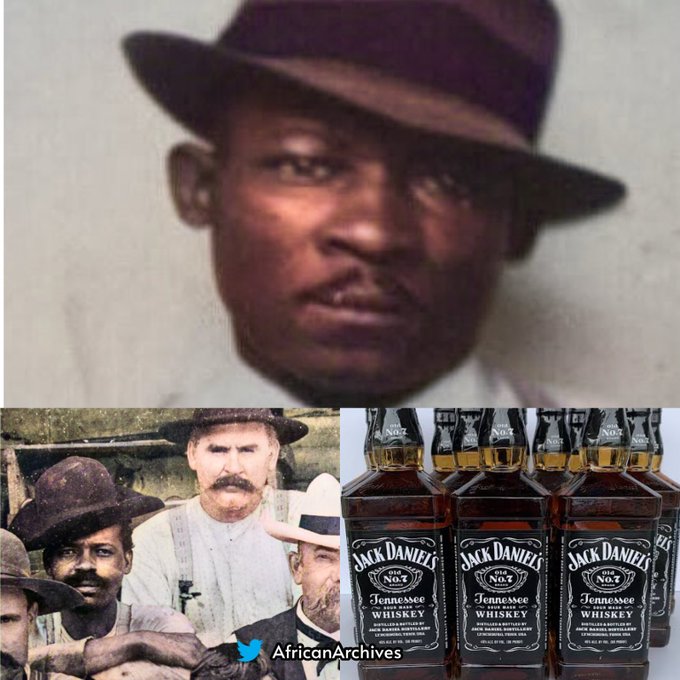
So who taught a young Jack Daniel how to distill what would become the world’s best-selling whiskey?
Nathan "Nearest" Green, an enslaved Black master distiller, taught distilling techniques to Jack Daniel, founder of the Jack Daniel Tennessee whiskey.
Uncle Nearest, as he was fondly called by family and friends grew up in Lynchburg, Tennessee, and began working on the farm of a country preacher and distiller in Lincoln County around the mid-1800s. It was there that he learned the skill of distilling and specialized in a process of distillation known as sugar maple charcoal filtering which was also called the Lincoln County Process.
Nearest was such a skilled distiller in the process he specialized in but he kept working with the preacher in the Lincoln County and fortunately it was there that Jack Daniels met him.
In the mid-1850s, Jack Daniels who was just a young white boy from a large family and who also lost his mother to a sudden illness at the age of four months began working as a chore boy for the preacher whom Uncle Nearest worked for.
It is said that Jack Daniels was a curious young boy who kept asking about the smoke coming up through the hollow on the 338-acre property and why men kept hurrying back and forth from that area which he was never allowed to go with mules and wagons.
He never stopped asking, until the preacher whim he worked for decided to give in to his curiosity took him to the area on the property where the smoke came from.
As later described in the boy’s biography, it is said that the preacher introduced the young boy to a “coal-black negro” which was uncle Nearest.
He introduced Uncle Nearest by saying “This is Uncle Nearest. He’s the best whiskey maker I know of”. The preacher went further to ask Nearest to teach the young (Jack Daniels) everything he knew about distilling and also the process of sugar maple charcoal filtering. A request Nearest obliged and taught the young boy the special filtration process of the Tennessee whiskey.
53 years ago, hip-hop was born at a back-to-school party in the Bronx. Now, the Bronx School of Hip Hop is preparing a new generation of artists that will shape what comes next.
I sat down with @Nas to talk about the past, present, and future of hip-hop in NYC — from the turntables to our classrooms.
JAŸ-Z breaks down the lyrics for songs like “Can’t Knock the Hustle” and the “Intro” from The Dynasty: Roc La Familia album as well as his thoughts on why the East Coast vs. West Coast beef between The Notorious B.I.G. and Tupac Shakur ignited in the JAŸ-Z in 8 docuseries.
The eight-part documentary series debuted on Sept. 18 on HBO Max. Hov sits with respected producer Rick Rubin to speak on the rapper’s creative process, lyrics and more during his 30-year career.
On Tupac and Biggie’s beef at the time:
“I don’t know what was going on with Tupac at the time. I don’t know if it was embarrassment or what he felt. He knew that Biggie told him and warned him about these guys… and he blamed Biggie, which is why Biggie never fueled the flame.”
On why he included the murder of Bill Cosby’s son Ennis in the lyrics on the "Intro" of The Dynasty: Roc La Familia album in 2000:
“Knowing how fragile life was. Ennis [Cosby] got murdered. He pulled over the side of the road. He was switching his tire. These are the things that were happening at the time… ‘Knowing I can go just switching a spare.’”
On what inspired his 1996 track “Can’t Knock the Hustle”:
“There became a thing where hustlers was making so much money that rappers was corny. So I almost had to hide the fact that I wanted to be a rapper.”
The next episodes air this Friday, leading up to the finale on Oct. 9. JAŸ-Z in 8 is directed by Rick Rubin and executive produced by Hov and actor Daniel Kaluuya.
Faces of 9/11: Orio Palmer
“Orio.”
Deputy Chief Peter Hayden called Orio Palmer over and gave him his final assignment.
The mission was the South Tower.
They quickly worked out which radio channel they would use to stay in contact, then Palmer, Fire Marshal Ronald Bucca, and firefighters from Ladder 15 headed up.
Orio was brave. You can see it in his demeanor and in the look on his face . Fierce … ready to go.
They got an elevator working and rode it to the 41st floor, then climbed the rest of the way to the 78th in record time.
You can hear the bravery in Palmer’s final radio transmissions. He believed the pockets of fire could be knocked down and that more people could still be rescued.
They just did not have enough time.
Their father, FDNY Firefighter Carl Asaro, was killed on 9/11.
25 years later, four of his children- Carl, Jr., Matthew, Rebecca, and Marc - are serving in the FDNY and are carrying his legacy forward.
🙏🇺🇲🙏🇺🇲🙏🇺🇲🙏🇺🇲🙏