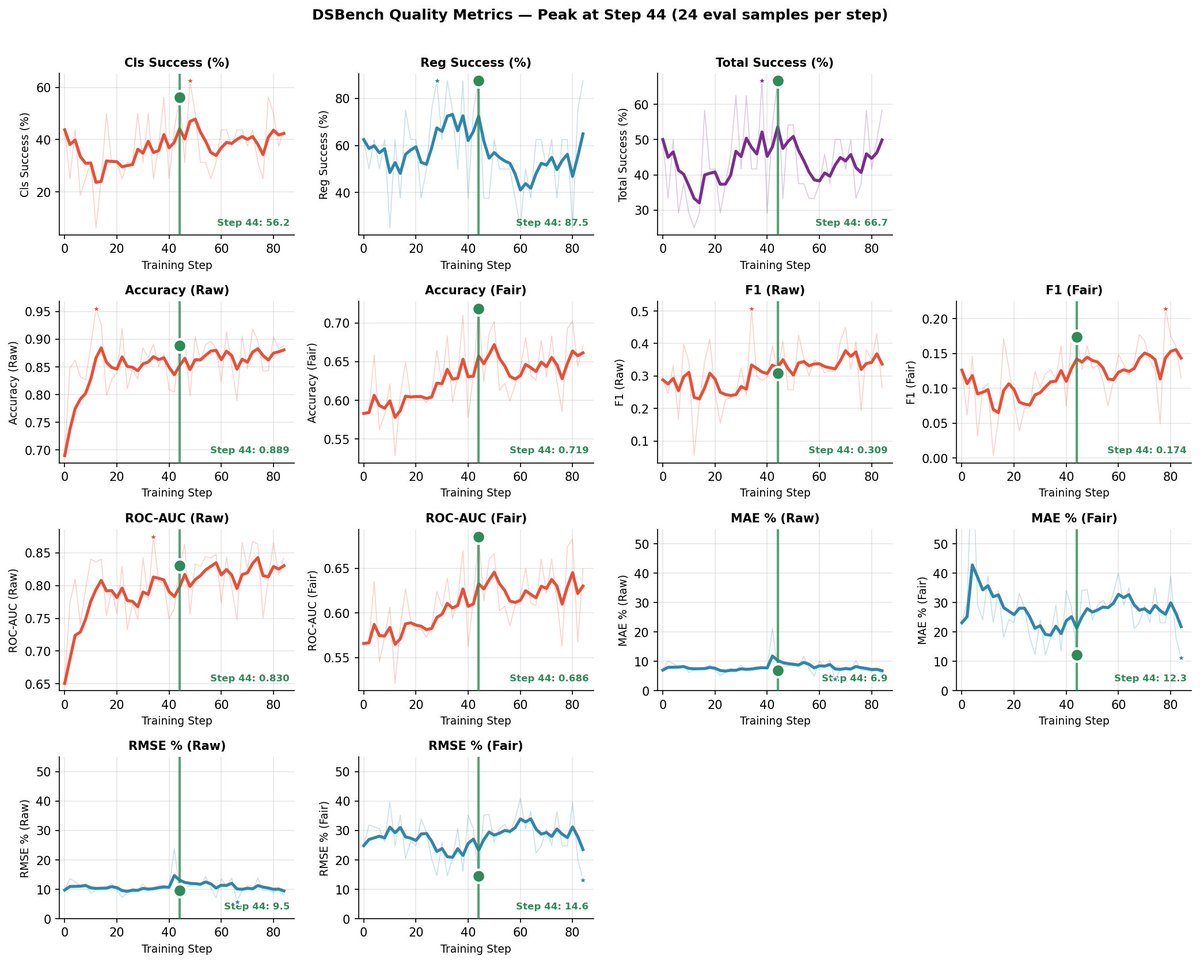
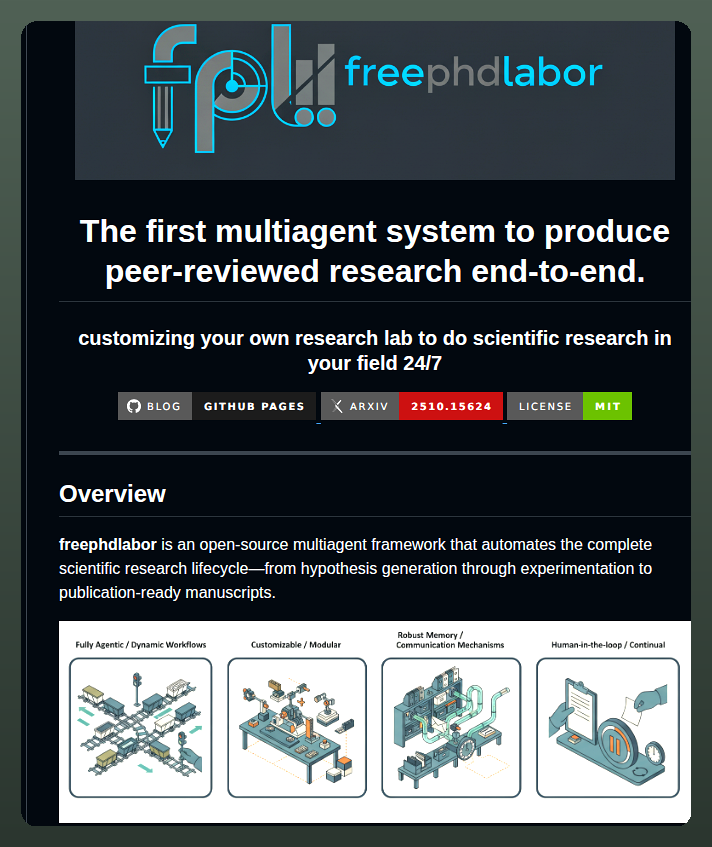
What if, instead of “solving” continual learning, we can “work around” it?
Blog here: https://t.co/IYSQrWdIao
Finetuning a multiagent system end-to-end = natural specialization without catastrophic forgetting.
@pmarca the structural similarity is real, but ai panic has a feature the others lacked. the people most worried are the people building the thing, and that internal dissent doesn't fade the same way external panics do
@JeffDean@rronak_@MichaelElabd@QuantumArjun continuous learning systems being more robust assumes you can prevent catastrophic forgetting. that's still the open problem. otherwise the system is just one that hasn't been pushed off-distribution yet
@naval@rauchg@bscholl models instructing humans is the inversion the field has been waiting for. the productivity unlock isn't the AI doing the work, it's the AI knowing the next step you should take
@gdb byo mcp servers is the moment codex starts being a platform instead of a product. now the question is whether the marketplace forms inside codex or outside
@willccbb max power + min complexity + opinionated path is the trilemma. you can pick two. the only way out is opinionated defaults that are easy to override but hard to discover
@gdb real-time meeting Q&A is the use case where agent latency budgets actually bite. if it's slow, the user has already moved on by the time the answer lands
@ziwenxu_ is it the agent doing speculative subtask exploration that's burning the budget, or is it the long-running tool calls eating a lot of context per turn?
@willccbb the world model that lets you bypass replayable environments has to be reliable on counterfactuals you haven't seen, which is structurally the same problem as RL. you've recursed up a level
@russelljkaplan the operation vacation framing implies a closed loop where the system improves itself. was the feedback signal coming from fleet shadow mode or from sim-based eval?
@dair_ai treating coordination as a separable configurable layer is the half step. the next one is training the whole system end-to-end so coordination emerges from optimization instead of getting designed by hand