Those who have bias for action often suffer from lack of context.
The world would be a much better place if people had more bias for purpose than bias for action.
Some of the best coaches have been failed players.
Not despite their failure, but perhaps because of it.
After deep reflection, they are able to see what they could have become. It is out of that increased self-awareness that they are able to see their own unfulfilled potential, and hence the player's, developing the capability to guide and mentor them towards success.
This is where the coach-player relationship becomes important.
Mastering relationships is a key to becoming a successful coach. And to master a relationship, a coach needs to understand its fundamental meaning.
A relationship is a connect between two people where fundamental human emotions or values can be felt and appreciated. If such emotions cannot be felt, then it is a mere transactional connect and not a relationship.
The mentor-mentee relationship is one of the most fundamental human relationships, where a mentor works with the values of trust, respect and care, while the mentee predominantly works with a strong feeling of inspiration, trust and respect for the mentor.
In my opinion, the relationship between a coach and player has to be such a mentor-mentee relationship.
The mentor, by being respectful towards the mentee, is able to assess the mentee's current capability and future potential correctly and inspire the mentee to realize or fulfil that potential. The mentee, on the other hand, may not have developed the ability to see his own potential yet. Hence, he has to respect the coach's assessment and follow with full trust.
Interestingly, a mentor is able to inspire a player only if the mentor himself or herself has reflected on his or her own potential. Such self-reflection, especially in the case of unfulfilled dreams, is generally much stronger and almost inevitable.
Perhaps that is why early failure itself can sometimes be the beginning of becoming a great coach.
PS: Happy Teacher's Day :)
The will to succeed is different from the fear of failure.
Fear is just overestimation of risk. There may not be any fear in understanding the risk correctly and mitigating it.
Paul Graham on what drives founders through the hard parts:
“Being dutiful is not enough. The obstacles are too fearsome for mere dutifulness.”
“You know what actually motivates founders day to day? The fear of failure.”
“If your server’s crashing, you’re not thinking, ‘I got to deal with this because if I deal with it, I’ll become a billionaire.’ You’re thinking, ‘Oh no, the server’s crashing. It will be a disaster. The engine of my model train set is falling off the edge of the table. I need to go and save it.’”
Every year since childhood, we have been wishing our teachers on the 5th of September.
This year, I feel like wishing myself a Happy Teacher's Day!
I am so glad that I started teaching 8 years ago. What started as a side project gradually became a central pillar for building our company.
I realized that educating is the best way to build the culture of any organization, not just those like us who are in the business of teaching children.
It is also the most valuable 'thing' to give back to the people around you.
Educating one another has become a way of life in our company over the past few years. And we are amazed by the results we see.
Like the proof of the pudding is in the eating, the proof of understanding is in the teaching.
Teaching has brought me greater clarity and articulation. At a personal level too, it has helped me understand and build more meaningful relationships with my family, friends, children, acquaintances and strangers.
In fact, I have come to believe that without the experience of teaching, human life remains unfulfilled.
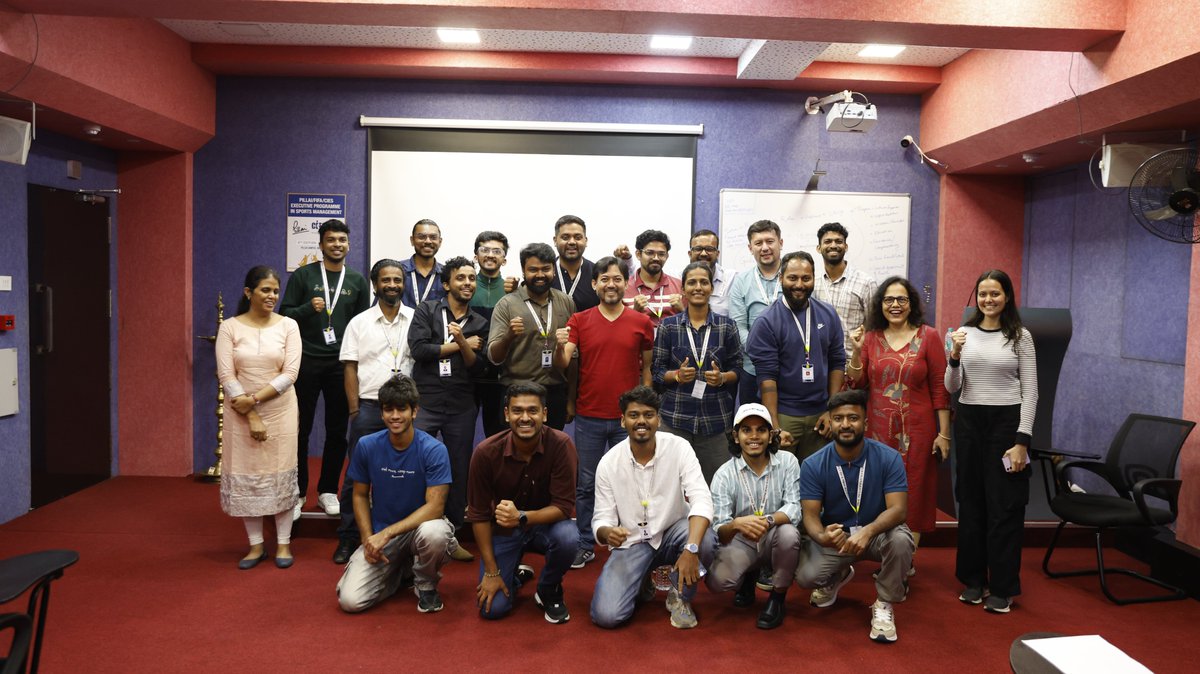
As we step into the 8th year of the FIFA/CIES International Programme in Sports Management India @FifaCiesIndia, I would like to thank my friends Franav Pillai and Celina Joy for nudging me into teaching, and also wish them a very Happy Teacher's Day alongside myself :)
The course itself has become a source for hiring some amazing individuals over the years.
Can't wait to get going. See you soon in Mumbai!
Looking at the current state of Indian football, I felt like sharing how we took India's FIFA ranking from 172 to 96 within 3 years.
It was at the beginning of 2015 that I joined the AIFF as Head of Strategy and Operations, about a month after @StephenConstan had joined as Head Coach of the Indian National Team.
Looking back, I think five things really worked for us.
1. First was the intensity, single-minded focus and strength of the coach.
Stephen had to fight numerous battles, right from strategy and budgets, to hotels, training calendars and pitches, match schedules, player revolts, media leakages, unnecessary politics and what not.
At the end of the day, he was the implementer.
It was very clear that he was there to do his work, and he would do it his way and no other way. For us too, it made sense to back him as long as he was on the job.
My first interaction with Stephen was when he almost came to blows with a team member, over my desk, because of misalignment in the way things should work, and I had to step in between the two.
That's how intense he was.
I think that is also one of the reasons behind his success with several national teams where the federation and domestic ecosystems are all over the place.
2. The second factor was a better understanding of roles.
From the President, General Secretary and Technical Committee, to my own role, the Head Coach's role and the players' roles, we developed a good understanding of who had to do what.
Of course, there were friction points many times, but we were able to resolve them and respect each other's zones.
Kushal Das had inherited the federation in a very poor administrative state. Can you imagine the federation not having proper budgeting or cash-flow planning when Kushal first joined?
That was part of the reason he brought me on board: to create systems in the federation.
The entire administrative team saw its role as supporting the technical team rather than trying to lead it or impose our ideas on them. The main leader on the pitch was the Head Coach. Even Kushal and the President did not try to overstep the coach's role.
Wherever things were disorganized, we tried to build systems and processes so that the problem was solved permanently. Instead of just solving a particular issue, we tried to ensure that the same issue did not recur.
I think that created a lot of trust between Stephen and me, building a relationship that we cherish to this day.
3. The third thing was deep planning and strong execution.
We formed an internal team to understand the FIFA rankings and strategize around them. I remember Kushal calling me to his office and telling me that we needed to make this plan and get Stephen on board as well.
We spent a lot of time understanding and tracking the rankings.
Once we understood how the rankings worked, we had to get the right opponents to complement the competitive matches already part of the FIFA and AFC calendars.
This thinking eventually led to tournaments such as the Tri-Nation Series and the Intercontinental Cup. We identified and brought teams like Puerto Rico and Saint Kitts to India.
Puerto Rico was particularly memorable.
I remember working multiple nights because of the different time zones, sorting out visa issues. We used Mr. Patel's good offices to reach out to the Ministry of External Affairs and the Indian Embassy serving Puerto Rico.
We were talking to people throughout the night and keeping them ready. It was a big struggle, but the Puerto Rican team finally reached Mumbai.
I would confess that because of the entire journey, they did not get too much time for recovery. They also came with a depleted squad because some players could not sort out their visas in time.
And we ended up winning the match.
There was criticism from some quarters that the rankings had been raised artificially. I remember Kushal telling me:
“You can't run the federation according to the media!”
India did not deserve to be so low in the rankings.
There was no harm in planning and getting there by playing by the rules.
Above all, goals still had to be scored and defended. The plan was only on paper. What made it real was the excellent performance of our players on the pitch.
A better ranking also ensured better opportunities in terms of pots and pools for the AFC and FIFA competitions.
We understood the need to balance the rankings with the real growth of the national team and ensure there was long-term development.
That is the reason why Stephen gave international debuts to almost 50 players, many of whom would serve the country for years to come.
The real growth showed up in results like Kyrgyzstan (1–0, H), China (0–0, A), Oman (0–0, A) and Thailand (4–1, A) in the AFC Asian Cup.
The Asian Cup also happened to be Stephen's last tournament with us. I think that was a good high point to end Stephen's stint with India.
4. The fourth, and perhaps most important, factor was that none of this was the work of one person.
Stephen was recommended to Kushal by @bhaichung15, who was Chairman of the Technical Committee. Kushal respected that suggestion, spoke to Stephen and closed the deal.
@scottodonell, the Technical Director, recommended to Kushal that he bring me on board full-time. I had already been working part-time with Kushal and Scott for a couple of years on various planning and documentation projects.
Kushal played a very important central role in bringing everyone together. At the same time, President @praful_patel gave Kushal a lot of freedom and trust, which enabled him to pass that trust and freedom on to the rest of us.
At the same time, the FIFA U-17 World Cup project was going on in India.
@joybhattacharj and @JavierCeppi built a separate team altogether, with young people and very high accountability. That started rubbing off on the legacy administrative team and had its own effect in changing the culture of the federation.
The competitions team led by the late Anil Kamat tirelessly delivered every match we had to host, while the media team led by @DattaNilanjan relentlessly pushed content, ensuring that not a single event was missed.
Then there were people like @7negiashish, who had nothing to do with the federation but had built the most-followed Indian football fan page. He handed that page over to the federation for free, in the interest of Indian football. It is essentially the federation's Facebook page today.
Joy and I spoke about how cool it was of him to do so.
FIFA and AFC also keenly watched the developmental projects taking shape and provided the necessary support.
@Shaji4Football, then FIFA Regional Development Officer for South and Central Asia, was closely involved and kept guiding us on how to maximize the support we received from FIFA.
@chiragtanna, representing the ISL, played a key role in bridging differences with the federation while keeping the national team's, and thus Stephen's, plan on priority.
And there were many others.
You can see that all key stakeholders came together.
Despite personal differences and friction points, all of us accepted the national team's interests as the top priority.
Many people did not like each other, but listened.
And when it came to the ultimate priority, everybody contributed in the best way that they could.
5. Finally, the whole plan was not a short-term plan.
We were not planning only for the next international window, the next match or the next tournament.
We made a four-year plan and stuck to it.
The point of this post is not to gloat over the past. The only value of history is to learn from it and use it to build a better future, rather than try to recreate it. And that's the only reason I decided to write this post.
Get the right people. Understand your roles. Have a long-term plan. Back the people responsible for implementation. Build systems instead of repeatedly solving the same problems.
And above everything else, put Indian football ahead of individual egos, so that we can take it to a better place than before.
𝗧𝗵𝗶𝘀 𝗶𝘀 𝗮 𝗿𝗲𝗮𝗹𝗹𝘆 𝗶𝗻𝘁𝗲𝗿𝗲𝘀𝘁𝗶𝗻𝗴 𝗹𝗼𝗼𝗸 𝗮𝘁 𝗵𝗼𝘄 𝗜𝗻𝗱𝗶𝗮𝗻 𝗳𝗼𝗼𝘁𝗯𝗮𝗹𝗹 𝘄𝗲𝗻𝘁 𝗳𝗿𝗼𝗺 𝟭𝟳𝟮 𝘁𝗼 𝟵𝟲
Clear roles. Long term planning
Backing the coach,,,Building systems
There’s a lot here for Indian football to learn from today🇮🇳⚽
#indianfootball
@saur24insaurabh@StephenConstan Have mentioned towards the end of the post:
"Get the right people. Understand your roles. Have a long-term plan. Back the people responsible for implementation. Build systems instead of repeatedly solving the same problems."
Unless all stakeholders become conscious and align strongly in their understanding and practice of constructive human values, long-term "value" will continue to be destroyed. OKRs and transactional processes won't be able to stop it.
What if some of the business “best practices” we’ve been taught are actually destroying value?
I assumed practices like OKRs, shareholder primacy, and conventional corporate governance must have strong evidence behind them. But when I started digging into the research, I found something very different.
Many of these practices are associated with destroying value, while mission-driven alternatives can produce remarkable outperformance.
Greg Kihlstrom and I discuss why it may be time to question what we’ve been taught about building successful companies.
#IncorruptibleBook #BusinessStrategy #Leadership #CorporateGovernance #MissionDriven
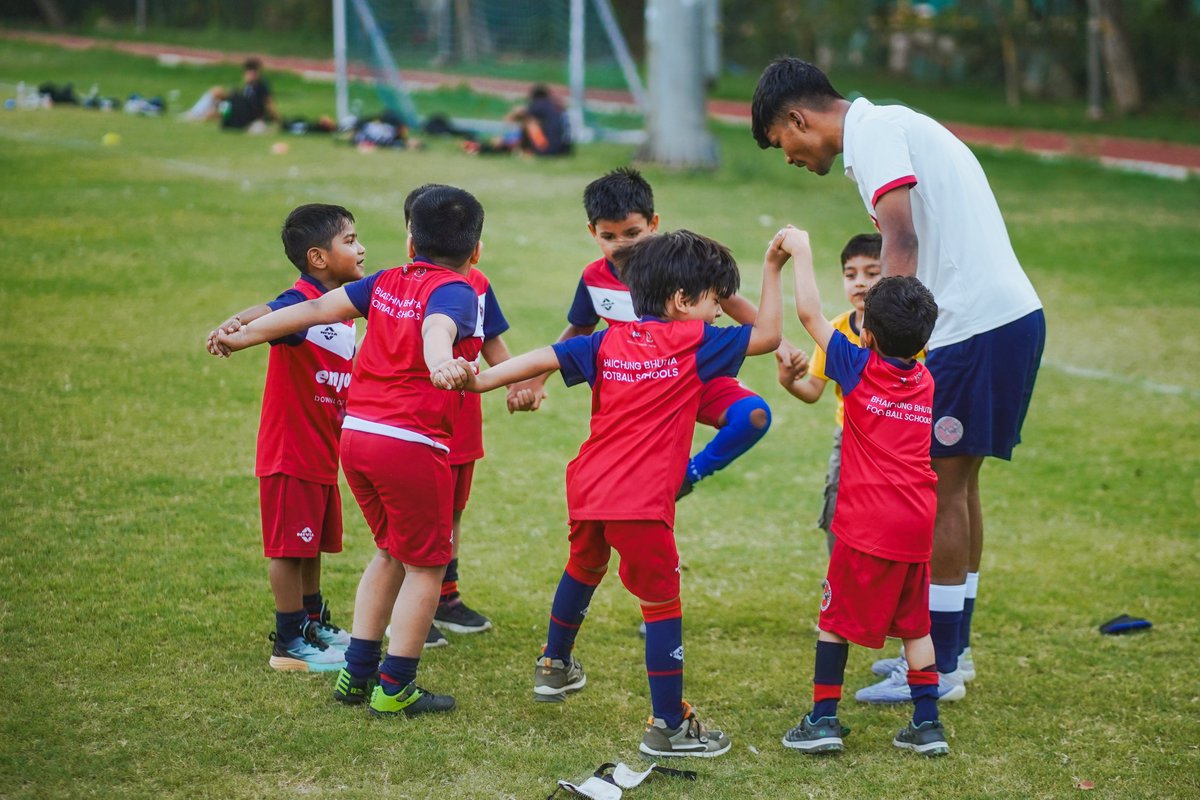
A few things we have learnt from building India's largest grassroots football program @BBFSchools :
1. Grassroots football is a long-term game.
Especially with children, the real results are not reflected in match scores or tournament trophies. The true evidence of your work is where the child lands up 10-15 years later, or, dare I say, where they land up in life. We train five-year-olds today. The real report card is who they become at twenty. Reason why it can also be emotionally highly rewarding.
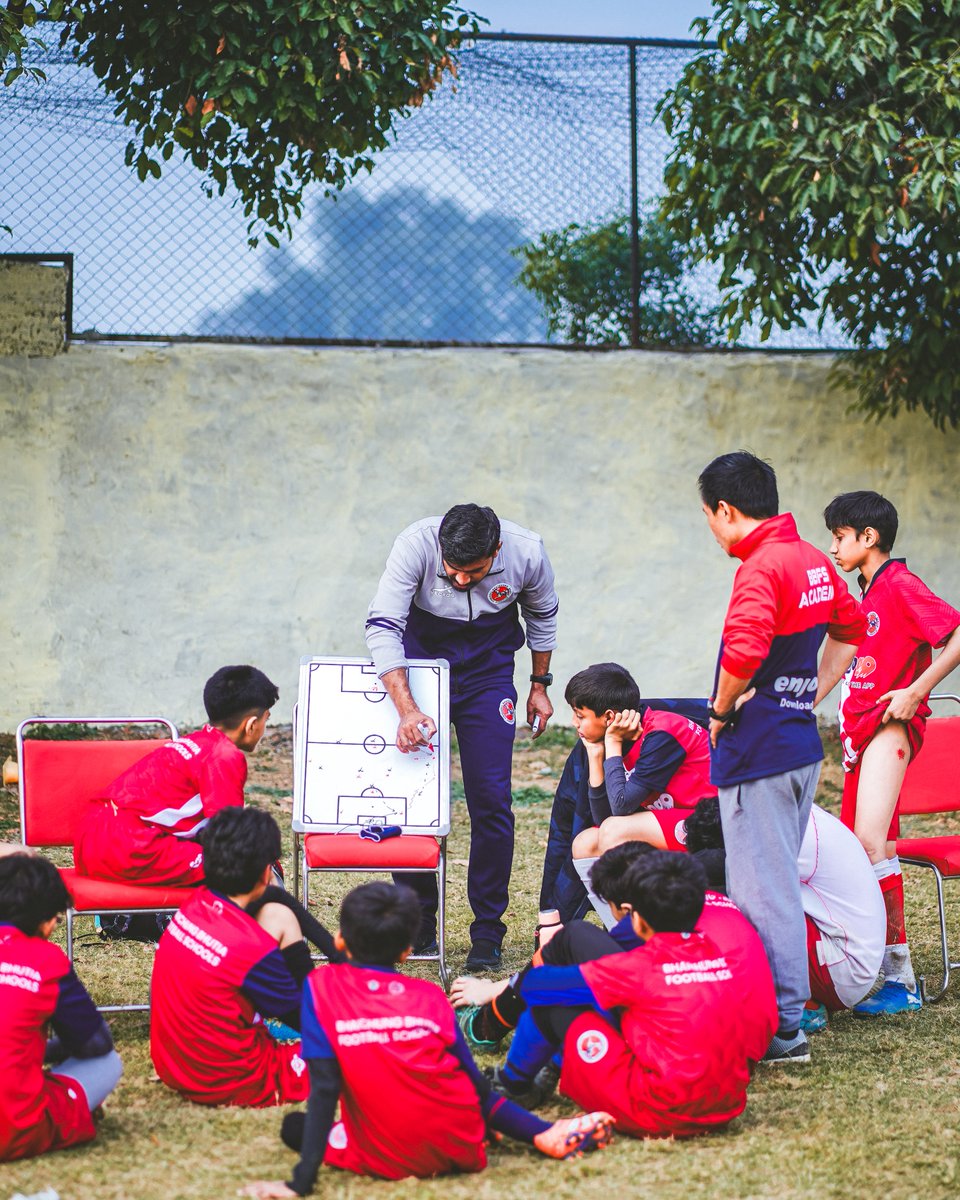
2. Coaches' development matters even more than players' development.
Like players, coaches are also built over the long term. One of our biggest learnings has been to prioritize coach development even before opening new centres or focusing on player outcomes. Coaches who deliver only short-term victories often get found out over time if they have little to offer in terms of values, wisdom and meaningful relationships.
3. You learn to detach from match results.
With multiple teams playing throughout the year, if you are emotionally driven by every win and loss, you'll never be at peace. Real development begins only when you overcome your attachment to results and focus on growth instead.
4. Grassroots football can absolutely be financially sustainable.
ISL and IFL clubs are struggling for survival but grassroot football academies are not. The opportunity at the grassroots is immense because parents are always willing to invest in their children's growth. But then, to deliver true growth, football has to evolve beyond just winning matches, and become a medium for education, character building and life lessons. The rewards are real, but so is the patience it demands.
5. It is a daily grind.
Grassroots football is not about the glamour of match days. It is about showing up every single day, ensuring every coach is supported and every child receives personalized attention. You cannot sustain this journey unless you enjoy it. Eventually, either you burn out, or everyone around you does.
6. Excellence at scale.
It is easier to achieve excellence with a smaller set of teams, but much more complex to do it at scale. And excellence at scale is the holy grail that Indian football badly needs at the moment.
Would love to know what you think, especially if you are or have been interested in this field.