Everyone that featured this week
130 names across stablecoins, funds, stocks, DeFi and TradFi and general crypto.
From @solana and @base to @BlackRock, @RobinhoodApp and @Uniswap.
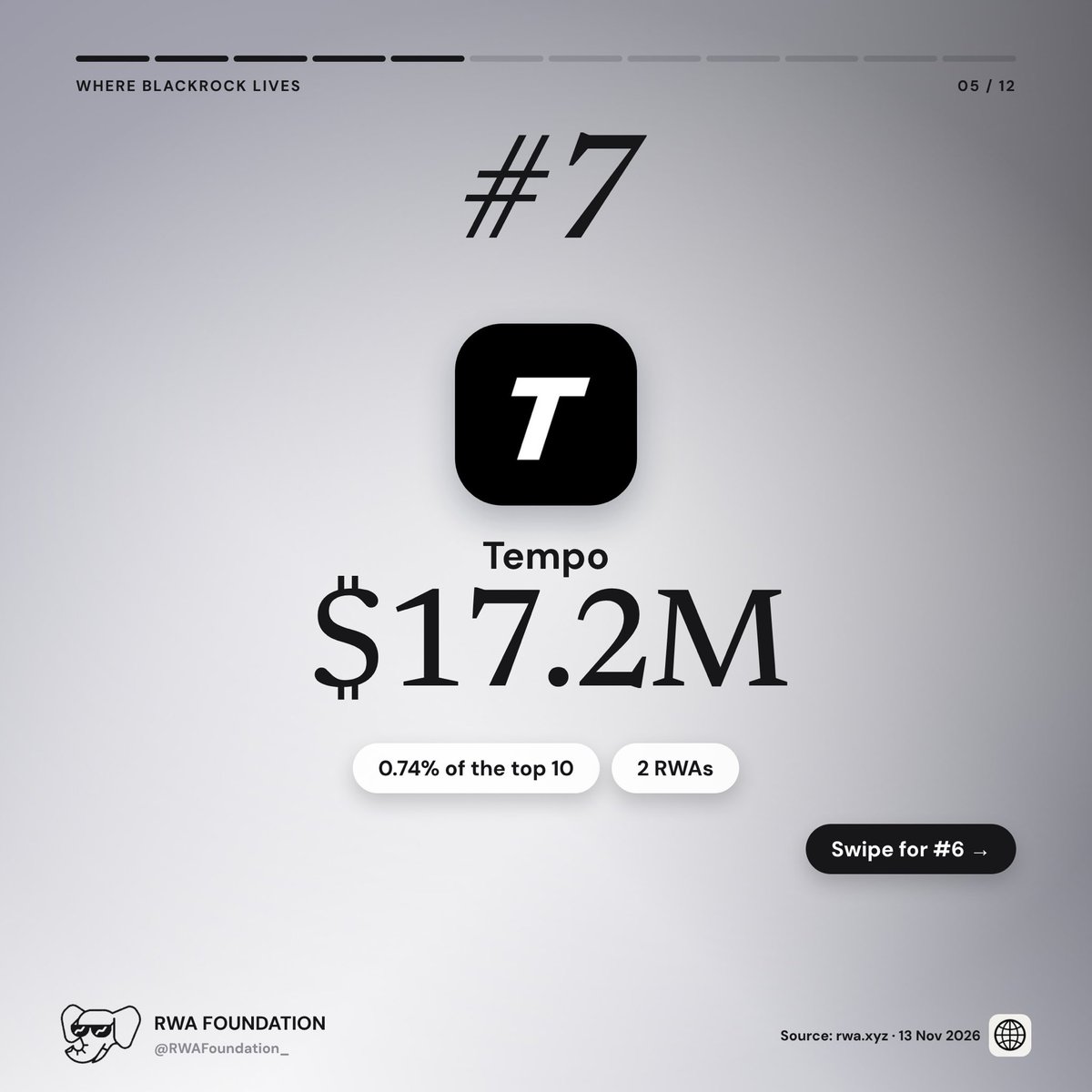
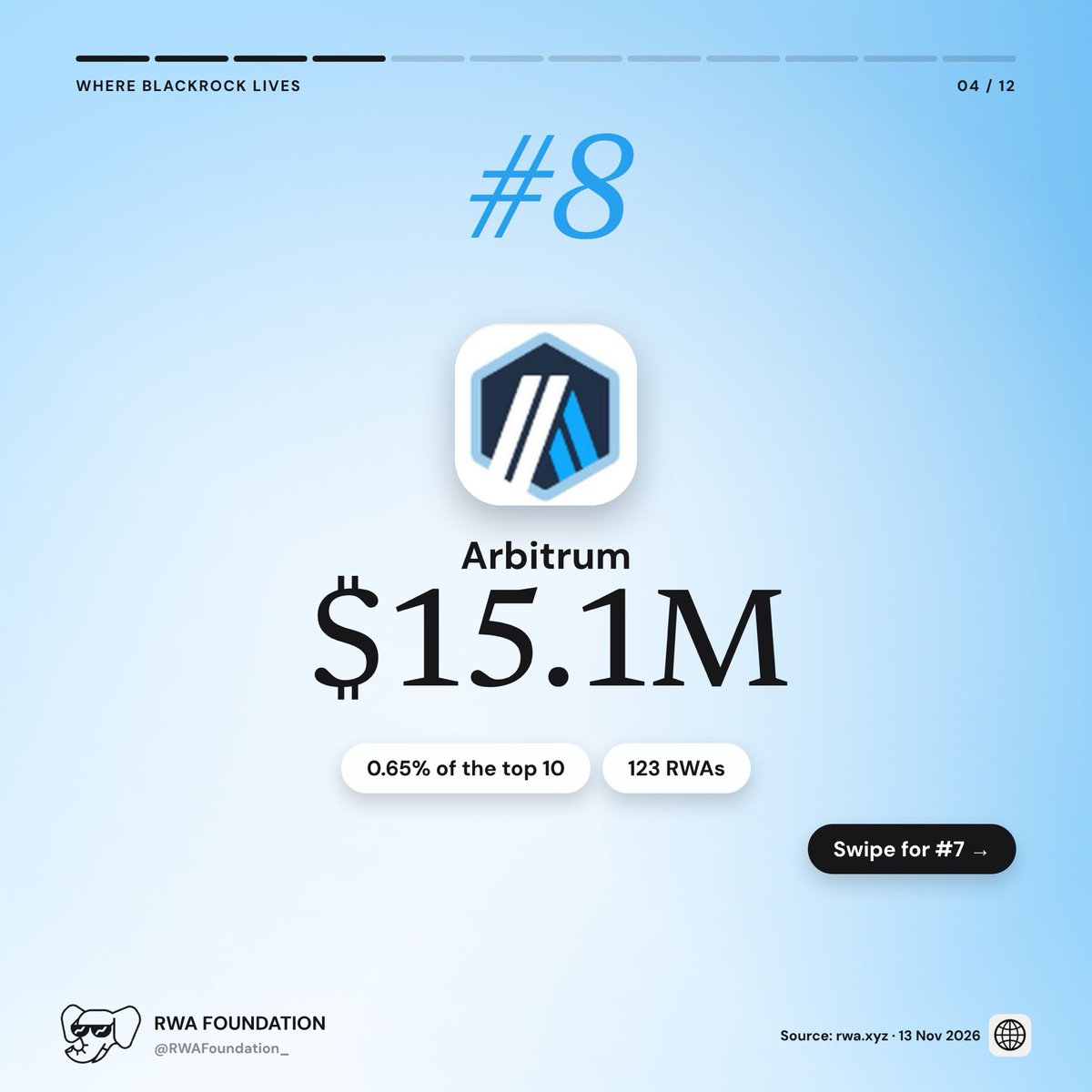
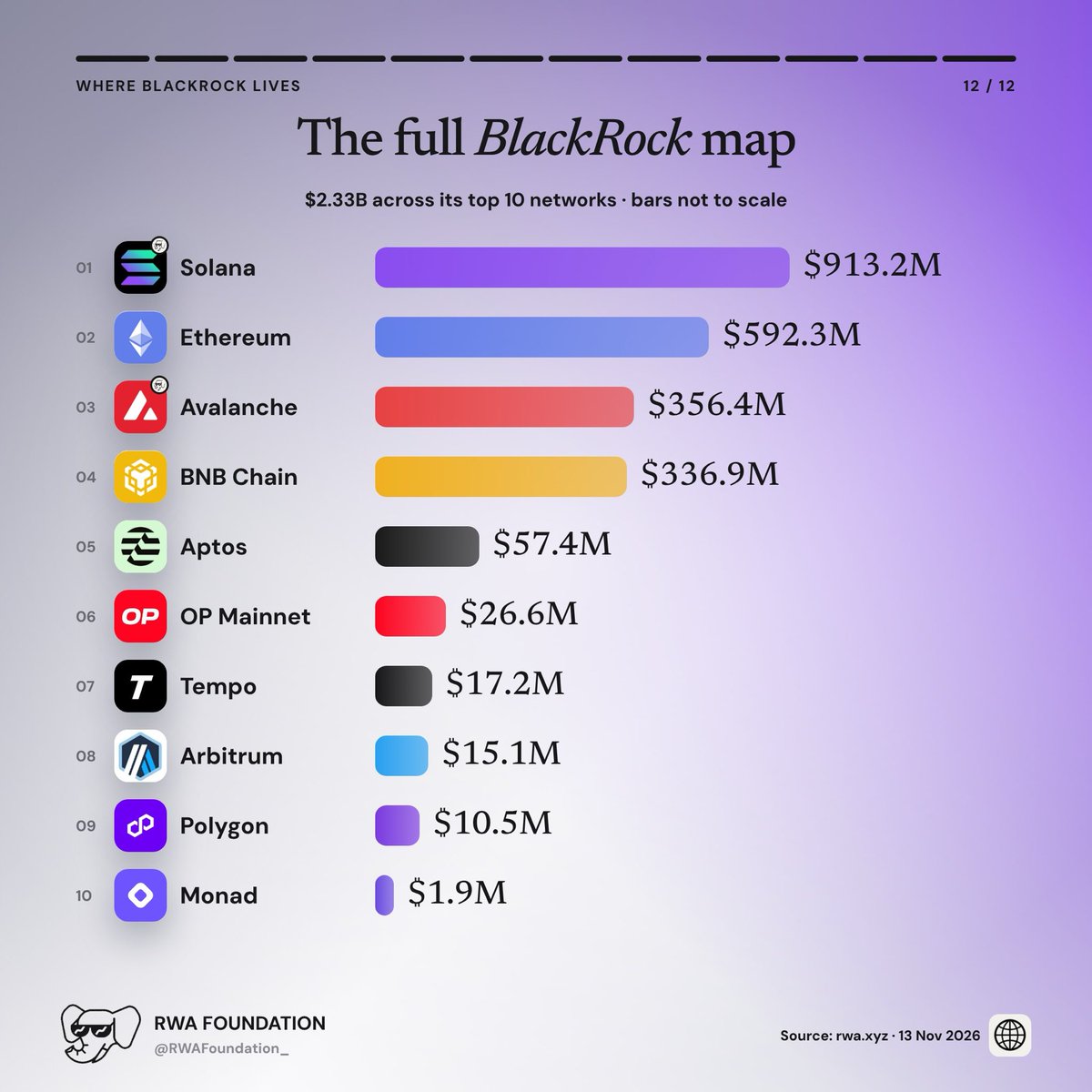
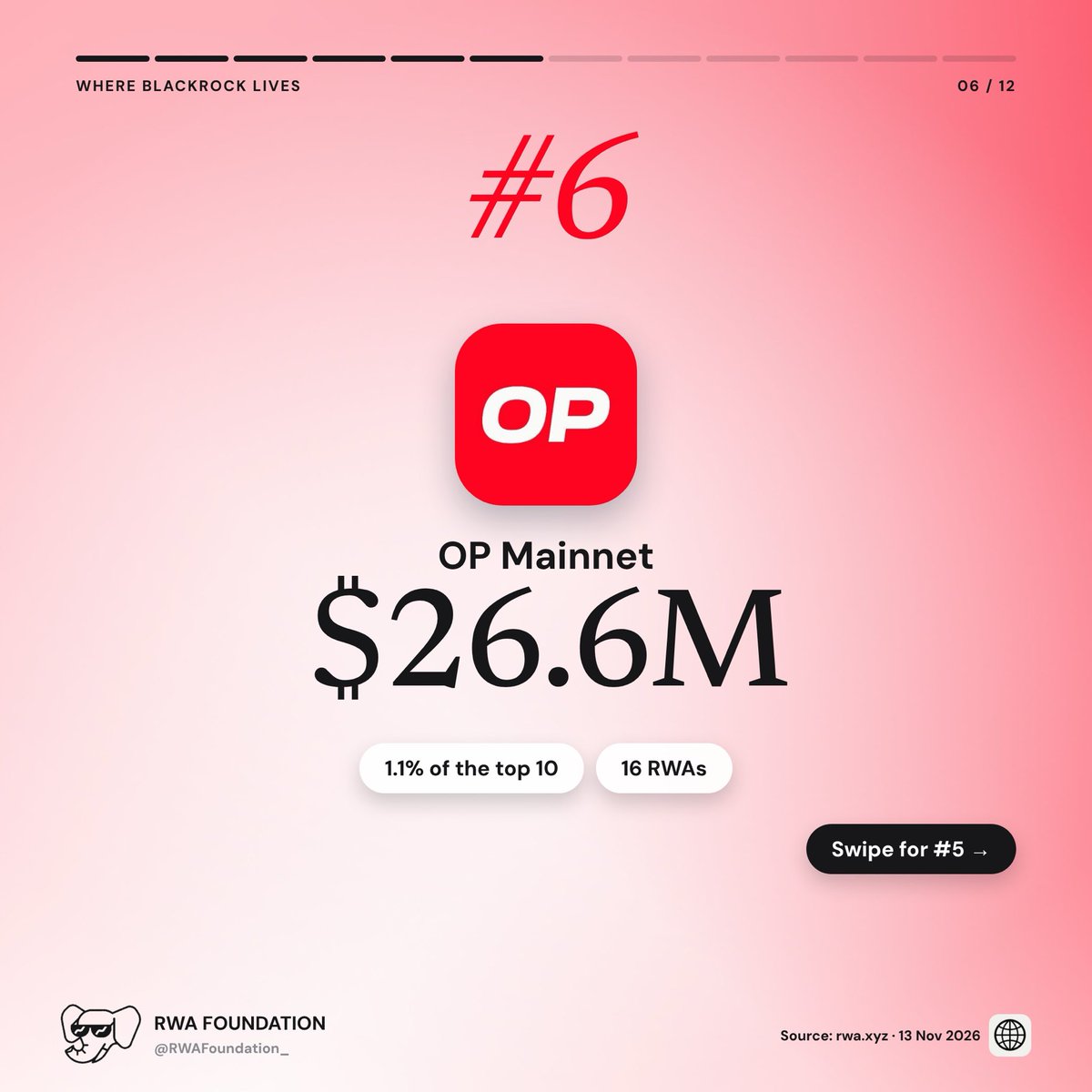
Which chain holds the most @BlackRock?
$2.33B of tokenized BlackRock assets across its top 10 networks, counted down to #1
Swipe to the end 👉
Data: @RWA_xyz
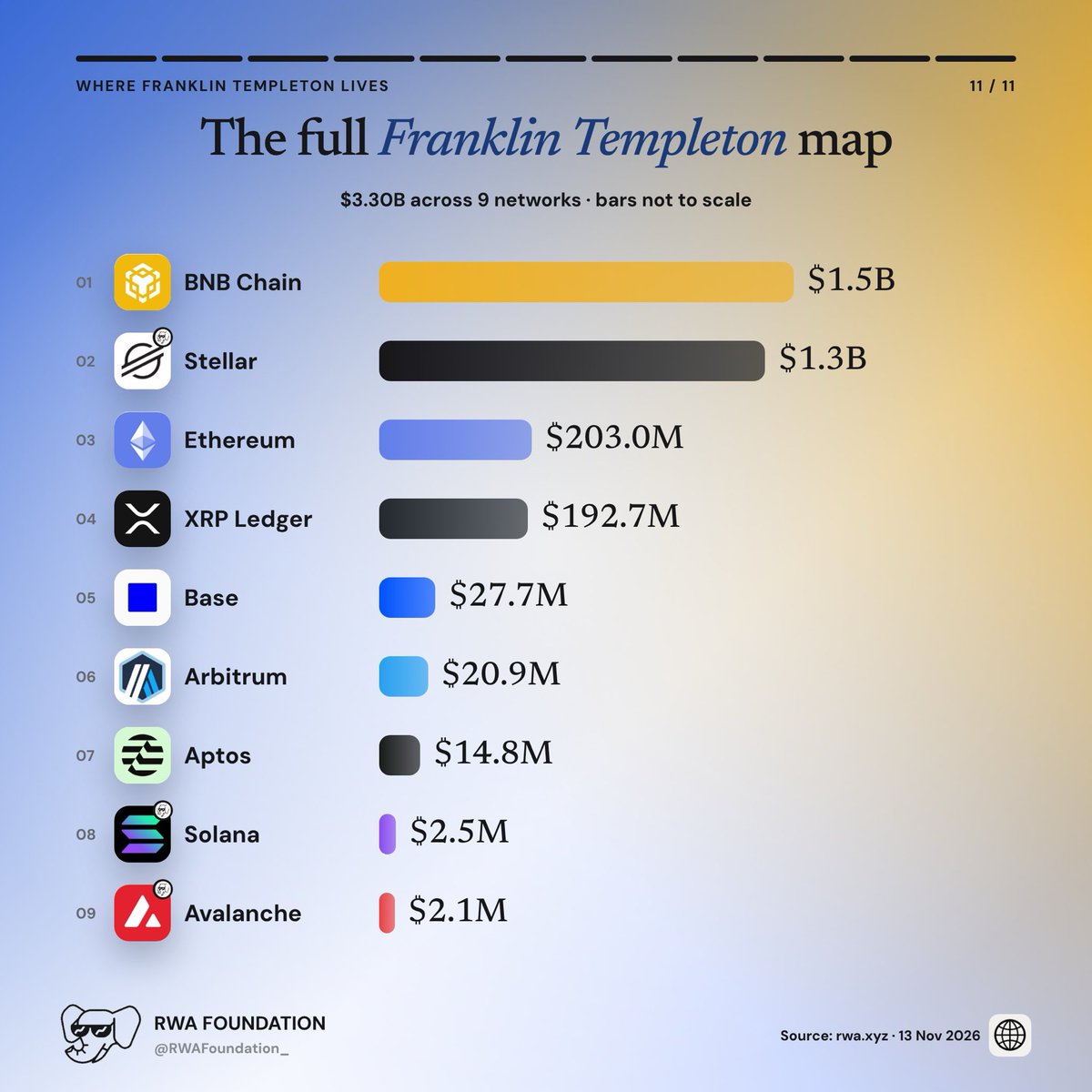
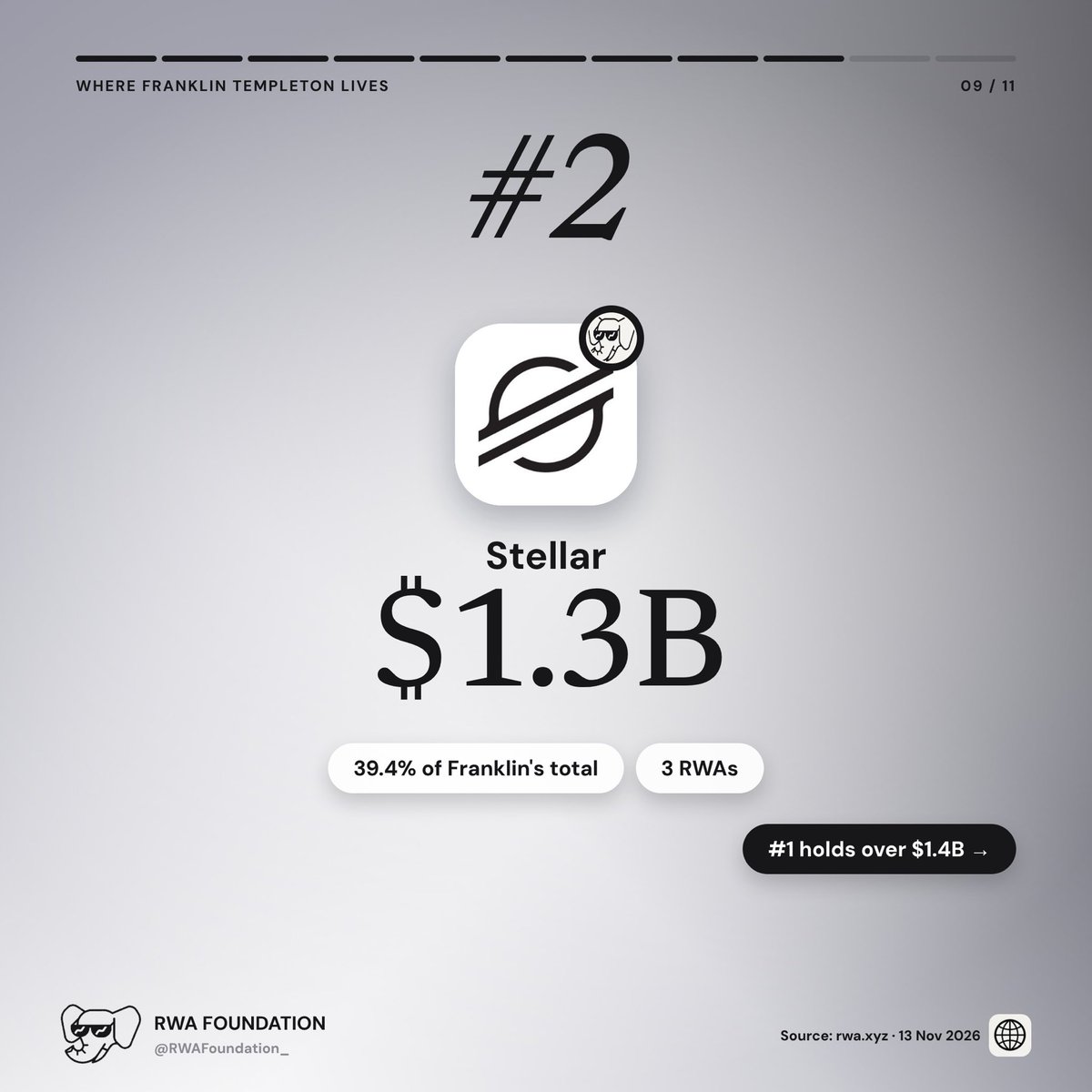
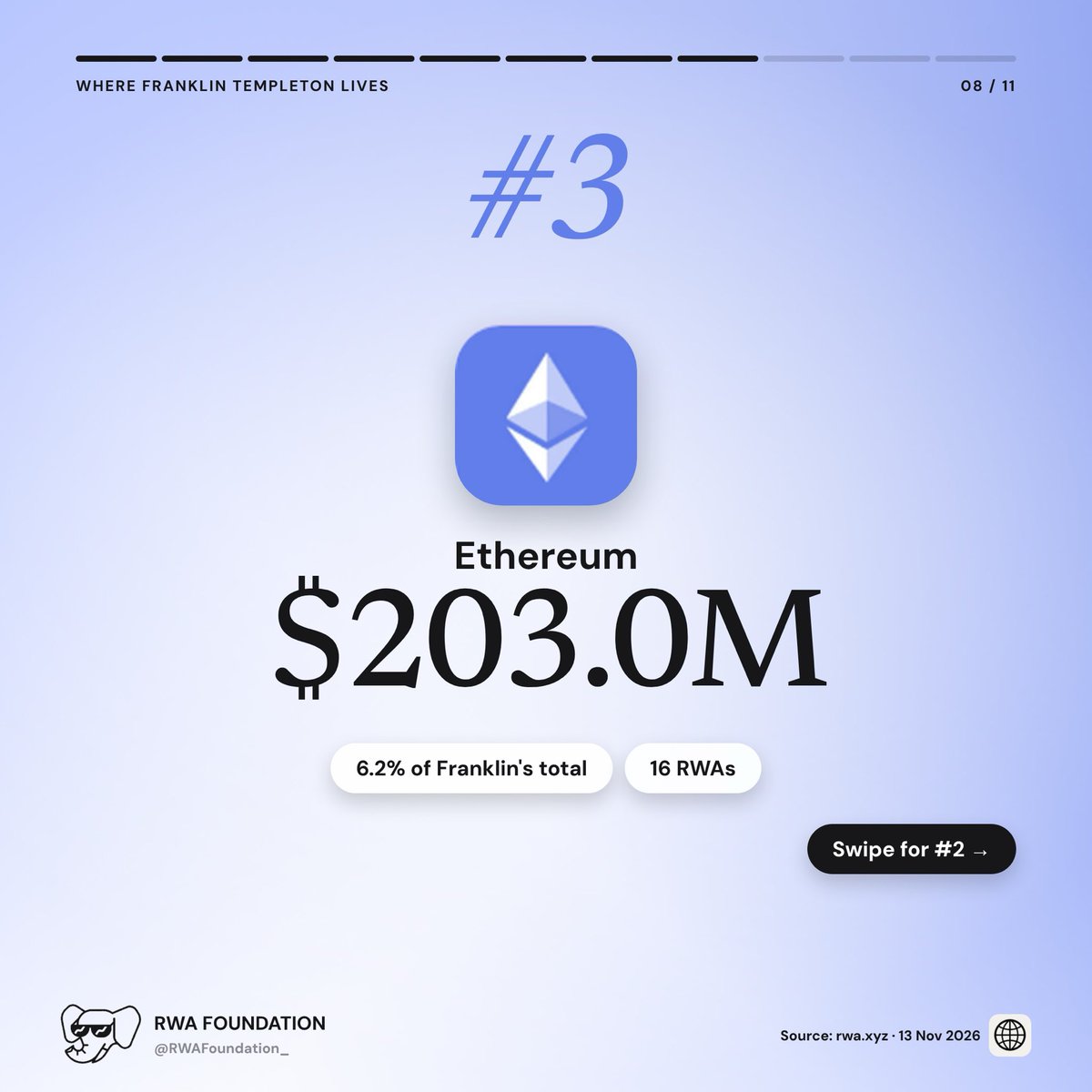
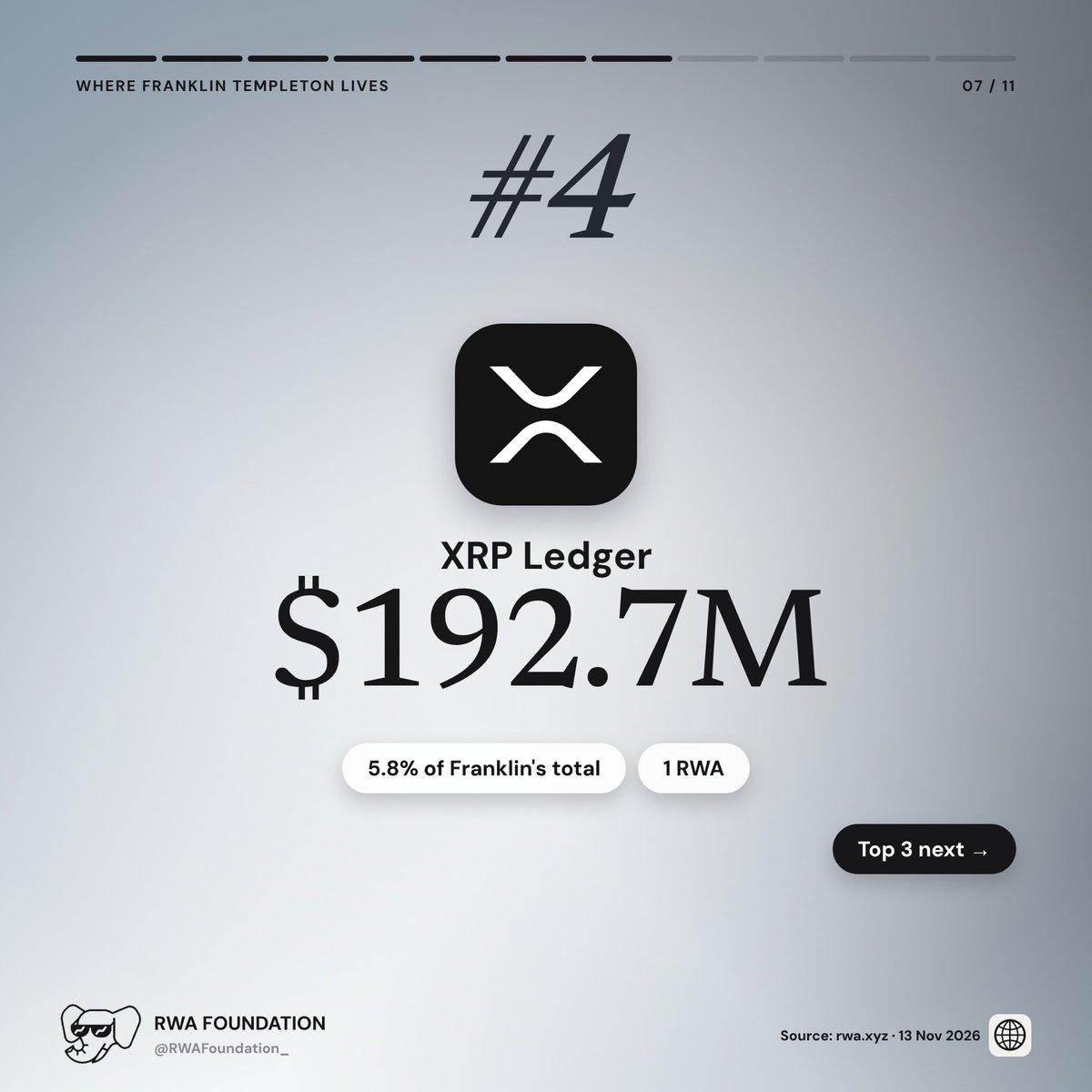
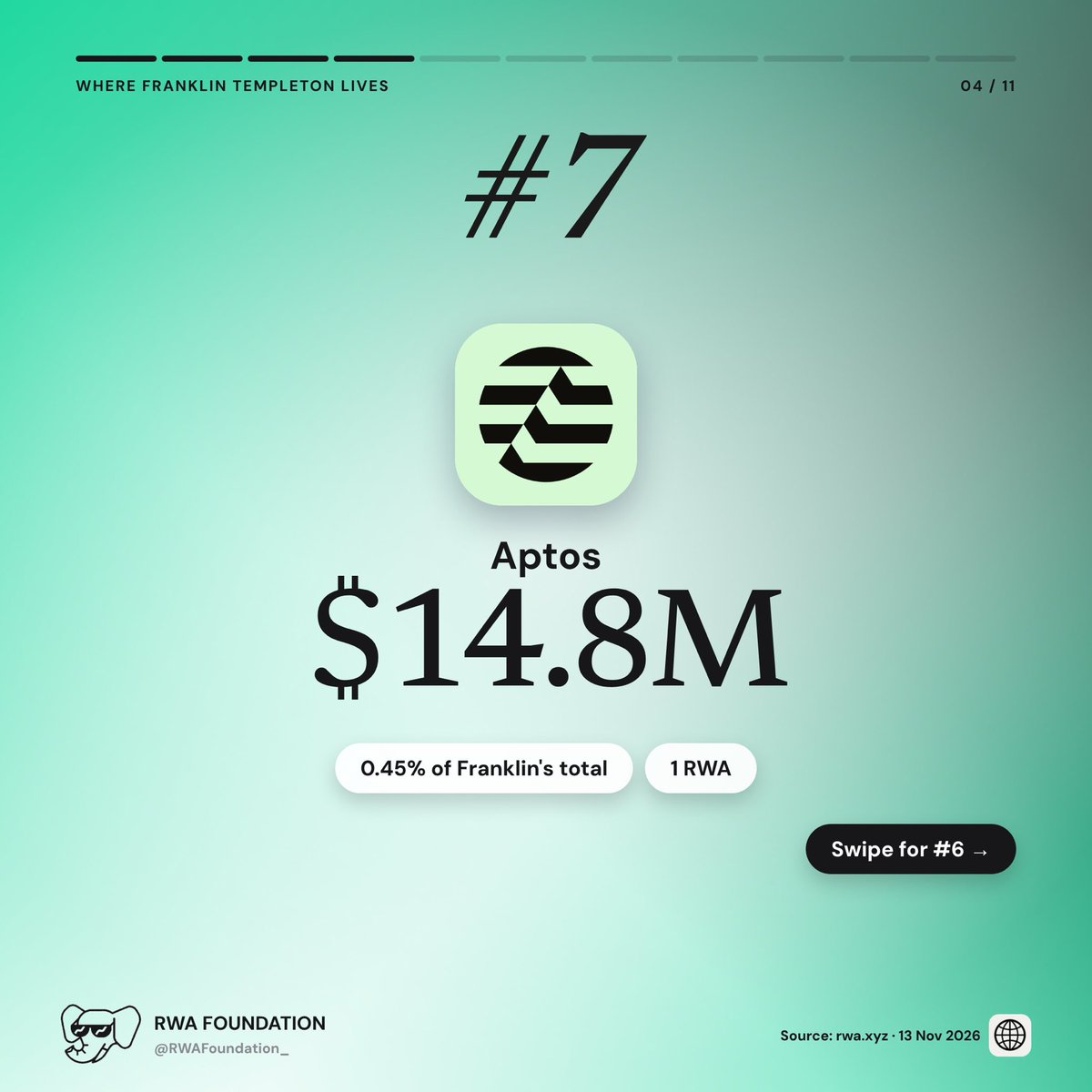
Which chain holds the most @FTDA_US?
$3.30B of tokenized Franklin Templeton assets across 9 networks, counted down to #1
Swipe to the end 👉
Data: @RWA_xyz
How does a real share become a token?
Think of Alpaca as one big building with many drawers.
1. A trading firm puts real Nvidia shares in its drawer at Alpaca.
2. It asks Alpaca to turn them into tokens.
3. Alpaca slides the shares into the issuer’s drawer, in the same building.
4. he issuer creates one token per share, sends them to the firm’s wallet, and the firm sells them to you.
Going back works the same in reverse. The tokens are destroyed and the shares slide back into the drawer.
Both drawers sit in the same building, so nothing has to travel. That’s a big reason 9 in 10 tokenized stocks sit at Alpaca.
h/t @steinRWA
People are going to look back at tokenization and realise the biggest opportunity wasn’t the token.
It was everything that became possible because the asset was onchain. Now, what the fuck does that actually mean?
Let’s break it down.
In traditional finance, if you own an asset, your options are generally straightforward.
You buy it, hold it or sell it.
Now imagine that same asset exists on a blockchain. Suddenly, it has the potential to interact with an entirely new financial ecosystem.
1. Borrowing against assets
Imagine holding $10,000 worth of tokenised stocks.
Rather than selling them when you need liquidity, you could potentially use them as collateral to borrow funds.
You retain exposure to the asset while accessing liquidity.
2. Lending
You could supply eligible assets to lending protocols, allowing others to borrow against the liquidity you’ve provided.
Your asset is no longer just sitting in your portfolio. It can potentially generate a return.
3. Leverage and looping
Deposit an asset as collateral, borrow against it, use those funds to acquire more assets and repeat.
This is known as looping. It allows you to increase exposure, but also increases risk.
4. Long and short exposure
Through compatible trading and derivatives protocols, tokenised assets could be used to take long positions, betting on prices increasing, or short positions, betting on them falling.
5. Composability
This is one of the most important concepts.
Composability means different applications and protocols can interact with and build upon one another.
Think of financial building blocks.
An asset could be deposited into one protocol, used as collateral in another or incorporated into an entirely different financial product.
This is where DeFi comes in.
DeFi stands for decentralised finance. Essentially, it’s financial services built using blockchain technology and smart contracts, enabling activities like lending, borrowing and trading without necessarily relying on traditional intermediaries.
The bigger picture
Now apply this to stocks, bonds, funds, commodities, private credit and other real-world assets.
The opportunity isn’t simply bringing these assets onchain so people can buy and sell them.
It’s making them usable across an entirely new financial ecosystem.
More ways to access liquidity, put capital to work and build financial products.
The token is the representation.
The ecosystem built around the asset is where the true potential is.
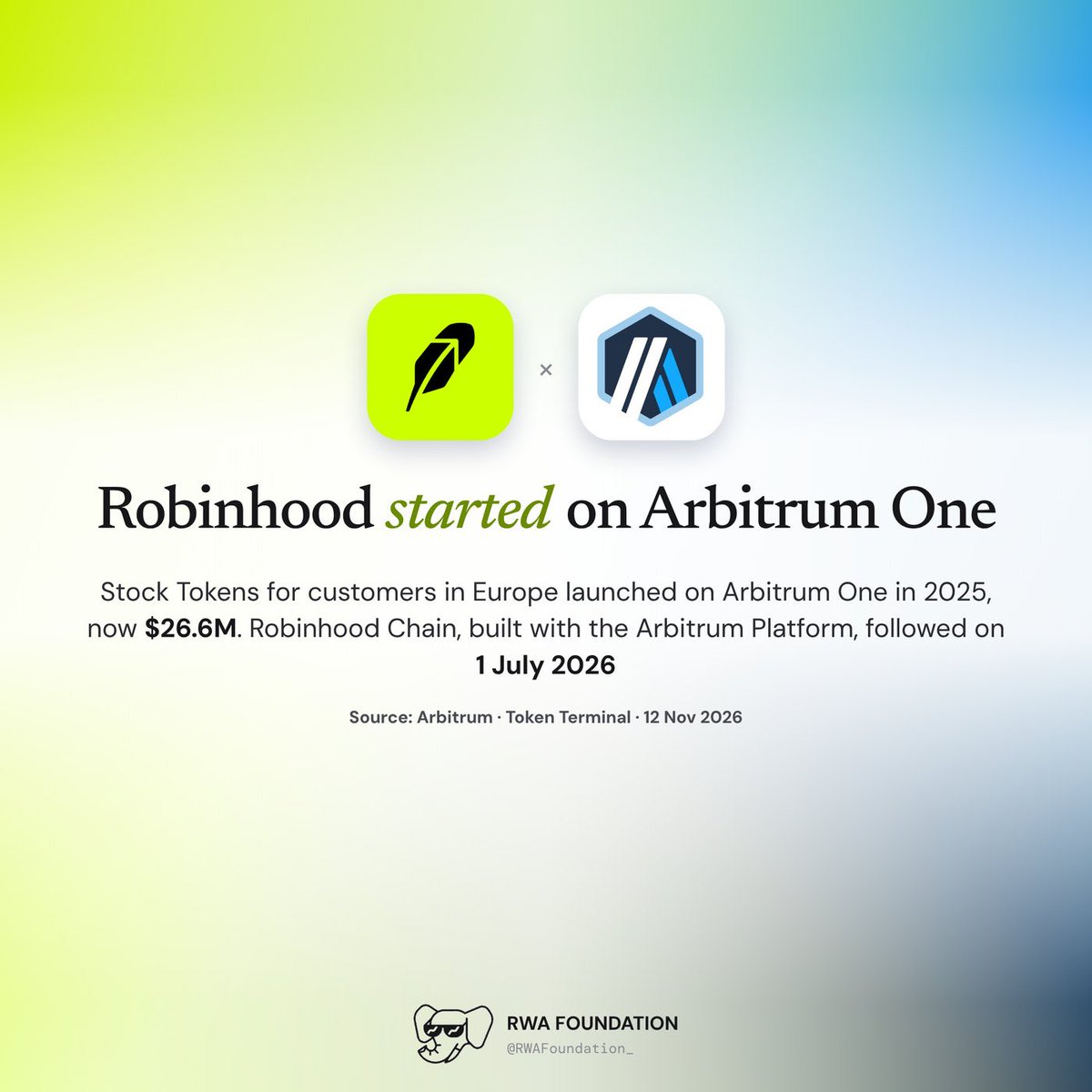
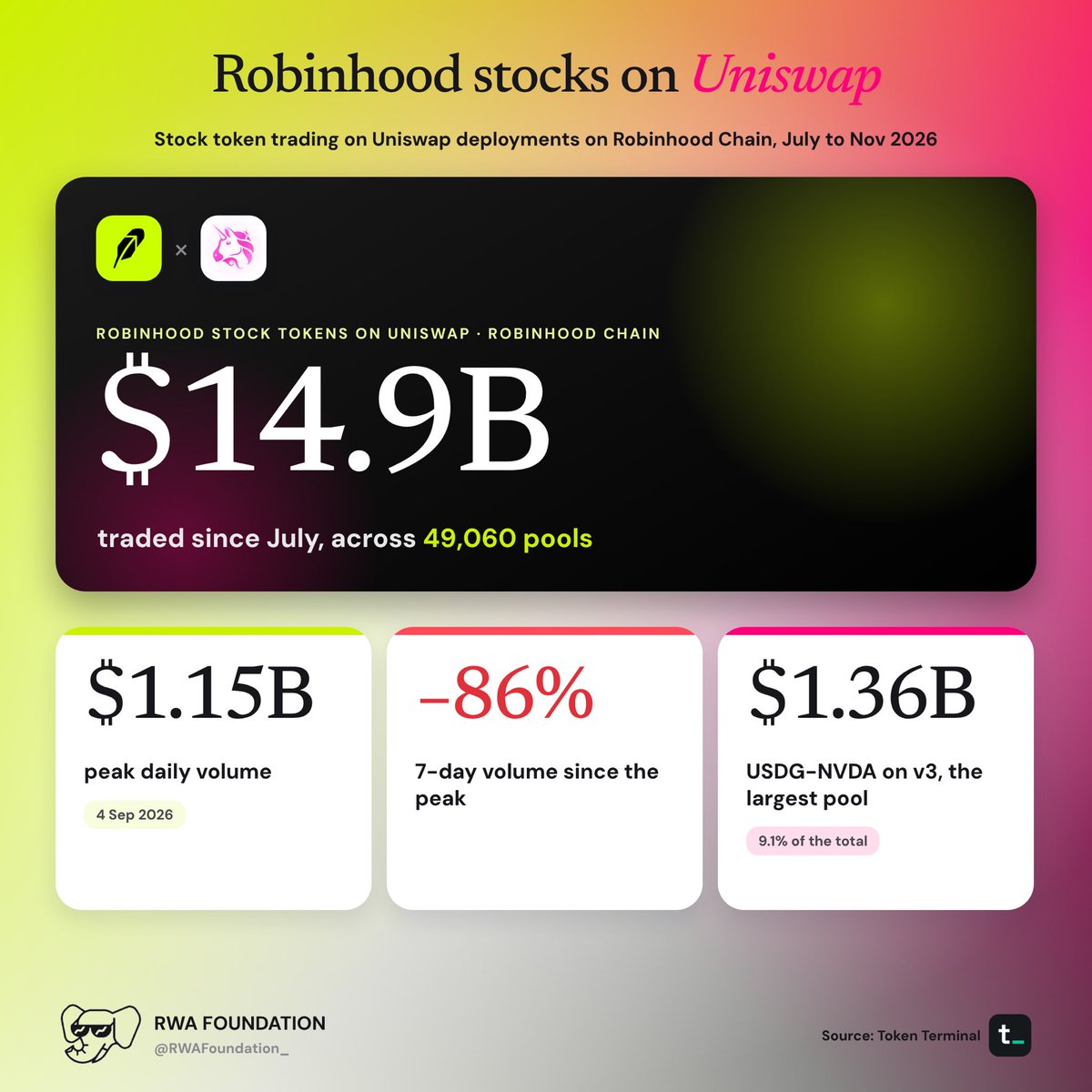
.@RobinhoodApp stock tokens have traded $14.9B on @Uniswap's deployments on Robinhood Chain since July, across 49,060 pools.
Trading peaked at $1.15B on Sep 4, and 7-day volume is down 86% since then.
The largest pool, USDG-NVDA on v3, has traded $1.36B, 9.1% of the total.
4 tokenized securities venues have now filed notices with the SEC.
Here is where each one stands:
TSV LLC: live since Nov 4 on @CantonNetwork, trading $CNTN through Tradecraft AMM, issuer-sponsored via @fairmint
OKXICE: can operate from Nov 3, @okx × @ICE_Markets on @XLayerOfficial, 6 stocks in @Uniswap v4 pools
https://t.co/FazdLx6vvZ: can operate from Nov 13 on Kronos X, its own L2, with no stocks named yet
@formation_so: early 2027 on @solana with @orca_so, issuer-sponsored via @Securitize and @SuperstateInc.
Credit @HarryTran_RWA.