Mark Cuban on the next big job students should focus on:
Most companies don’t know how to implement AI, especially small businesses.
“Companies don’t understand how to implement AI right now to get a competitive advantage… learn to customize a model, walk into a company, show the benefits. That is every single job that’s going to be available for kids coming out of school.”
Don’t just study AI. Make it work inside a business.
From our August 2025 interview with @mcuban.
The invention of modern writing instruments like the typewriter made writing easier, but they also led to the rise of writer’s block, where deciding what to write became the bottleneck. Similarly, the invention of agentic coding assistants has led to a new builder’s block, where the holdup is deciding what to build. I call this the Product Management Bottleneck.
Product management is the art and science of deciding what to build. Because highly agentic coding accelerates the writing of software to a given product specification, deciding what to build is the new bottleneck, especially in early-stage projects. As the teams I work with take advantage of agentic coders, I increasingly value product managers (PMs) who have very high user empathy and can make product decisions quickly, so the speed of product decision-making matches the speed of coding.
PMs with high user empathy can make decisions by gut and get them right a lot of the time. As new information comes in, they can keep refining their mental models of what users like or do not like — and thereby refine their gut — and keep making fast decisions of increasing quality.
Many tactics are available to get user feedback and other forms of data that shape our beliefs about users. They include conversations with a handful of users, focus groups, surveys, and A/B tests on scaled products. But to drive progress at GenAI speed, I find that synthesizing all these sources of data in a PM's gut helps us move faster.
Let me illustrate with an example. Recently, my team debated which of 4 features users would prefer. I had my instincts, but none of us were sure, so we surveyed about 1,000 users. The results contradicted my initial beliefs — I was wrong! So what was the right thing to do at this point?
- Option 1: Go by the survey and build what users told us clearly they prefer.
- Option 2: Examine the survey data in detail to see how it changes my beliefs about what users want. That is, refine my mental model of users. Then use my revised mental model to decide what to do.
Even though some would consider Option 1 the “data-driven” way to make decisions, I consider this an inferior approach for most projects. Surveys may be flawed. Further, taking time to run a survey before making a decision results in slow decision-making.
In contrast, using Option 2, the survey results give much more generalizable information that can help me shape not just this decision, but many others as well. And it lets me process this one piece of data alongside all the user conversations, surveys, market reports, and observations of user behavior when they’re engaging with our product to form a much fuller view on how to serve users. Ultimately, that mental model drives my product decisions.
Of course, this technique does not always scale. For example, with programmatic online advertising in which AI might try to optimize the number of clicks on ads shown, an automated system conducts far more experiments in parallel and gathers data on what users do and do not click on, to filter through a PM's mental model of users. When a system needs to make a huge number of decisions, such as what ads to show (or products to recommend) on a huge number of pages, PM review and human intuition do not scale.
But in products where a team is making a small number of critical decisions such as what key features to prioritize, I find that data — used to help build a good mental model of the user, which is then applied to make decisions very quickly — is still the best way to drive rapid progress and relieve the Product Management Bottleneck.
[Original text: https://t.co/1tulDs3k7U ]
@kevinlu625 hi @kevinlu625 Looks awesome, I'd love to try it out and see how it compares to my current Lovable and Bolt projects. How can I get onto it with your credits offer? Thanx! :)
Back again with an AI short film made in less than 48 hours.
From concept to script within a few hours. The bulk of the process this time around was generating consistent imagery as well as good old editing.
The future is here. #aicinema
AI Tools used: @runwayml@midjourney@elevenlabs@D_ID_
A few OEMs are playing around with dual screen laptops lately and this one really looks neat! Finally some real hardware innovation :) https://t.co/YkbQu35CgF
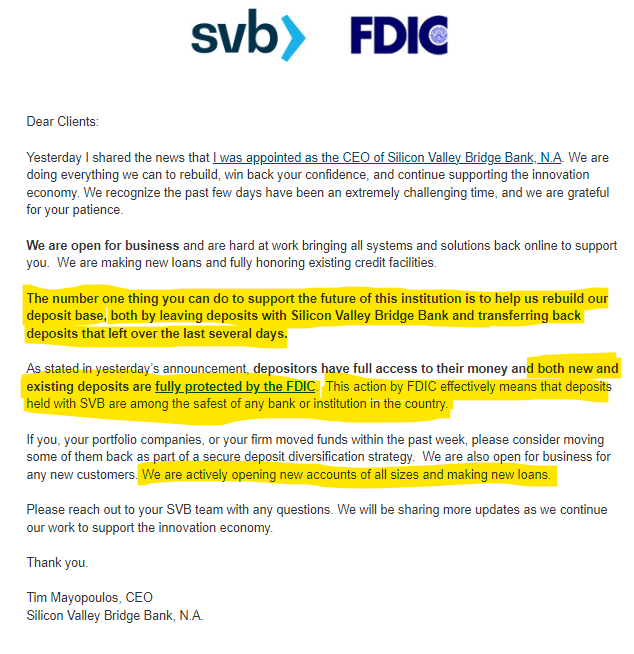
What's the safest bank/institution in the country?
Plot twist...
"This action by FDIC effectively means that deposits held with SVB are among the safest of any bank or institution in the country. We are actively opening new accounts of all sizes and making new loans." - SVB CEO
@nntaleb Reputation is a byproduct of character, not a pursuit in and of itself. True integrity is demonstrated in the choices we make and the actions we take, not in the image we attempt to project to the world
This is the full image. The field of view of capture was quite narrow, so the rest of the moon was assembled as a mosaic. That creates a super detailed image without sacrificing the composition. You can pick this up in print here: https://t.co/TTxDOzHxWL