If you run growth, ops, or sit in the CMO chair at a GLP-1, TRT, HRT, peptide, or longevity clinic, this is for you.
I put together the 2027 Telehealth Growth Playbook — the same framework I run before I touch a single ad account. Free, no pitch inside.
https://t.co/WvQ2bw7aEG
Your ad pixel is still firing on your intake pages.
So the URLs and event names that say what a patient is being treated for land in ad platform data and feed retargeting.
Pull the pixel off intake and post-signup pages. Send conversions server-side with generic names and no health details. Then audit what each page sends.
@Finsee_main 85% choosing multi-month is a vanity stat if those are discounted intro deals. Track cash collected per new patient and month-4 renewals instead. And CAC falling 32% after a big spend cut is the real tell: test cutting your worst spend before you scale again.
@himshouse No view on the stock. The operator test this week: when a class-wide label update hits the news, do your patients hear from you first? A short note on what changed, that their clinician can talk it through, and how to reach care holds trust. Silence lets headlines decide.
@SFBusinessTimes@Stanford@hubermanlab Smaller telehealth brands can't buy a name like that, but the trust mechanism is the same: a named, credentialed clinician on camera explaining how the program works, in ads and onboarding. And disclose the paid relationship. Health ad scrutiny only goes up.
@TheValueTrade Agree on the mechanism, not the stock. The add-on stays cheap only if it shows up after a win, like a good first result or first delivery, not at checkout. Watch add-on churn vs core churn at month three. If it nudges core cancels up, that growth wasn't free.
@NeilFlochMD A lot of GLP-1 cancellations aren't clinical, they're logistics. Operators skip the month-two price jump, refill timing, and the "what happens if I stop" question. Answer those three before checkout and retention follows.
@Capitol_Forum GLP-1 ad fix starts before copy: separate compounded from branded in every claim, put risk info in the same font size as benefit, and run every ad through a claims-review checklist before launch, not after FDA flags it.
One health brand webinar campaign: ~4,300 leads and ~700 live attendees off a single funnel.
I put the mechanics in the free 2027 Telehealth Growth Playbook.
Show-up gets engineered between signup and the event, not on show day:
Confirm the instant they register.
Remind on a fixed schedule: right away, day before, hour before, go-time.
Give one reason to join live, not wait for the replay.
Make joining one tap. No app, no second login.
Full breakdown plus CAC and compliance-safe paid: https://t.co/glzdzjjoH5
Your ad leads with the intro price. Patients never clock that month two bills full rate.
That's when cancellations and chargebacks spike, right after the second charge posts. The ad looks fine while retention quietly bleeds.
Show the ongoing price next to the intro price, warn before charge two, and offer a pause or downgrade, not just cancel.
@fwpharma Operator angle: weekly dosing gives telemed GLP-1 programs a built-in reason to check in. Monthly takes that away. Plan your own touchpoints, like clinician check-ins and progress reviews, before that shift lands, not after.
@notdwd Solid structure. In health ads that "why they fall short" beat is where scripts usually get flagged or overclaim. Win it on experience instead: no waiting room, a clinician who follows up, clear pricing. Have a clinician read the script before it runs.
@MohammedAlo Good reframe. Most GLP-1 programs still sell one number on the scale, so patients judge the whole thing by it and leave once it stalls. Set expectations at intake around labs, follow-ups, and habits, so there's a reason to stay past the plateau.
@danieldwalton Agreed. That add-on only works as a one-tap offer right after the first good delivery, not tucked in account settings. Prefill address and payment from the account so adding someone takes seconds, not a whole new signup.
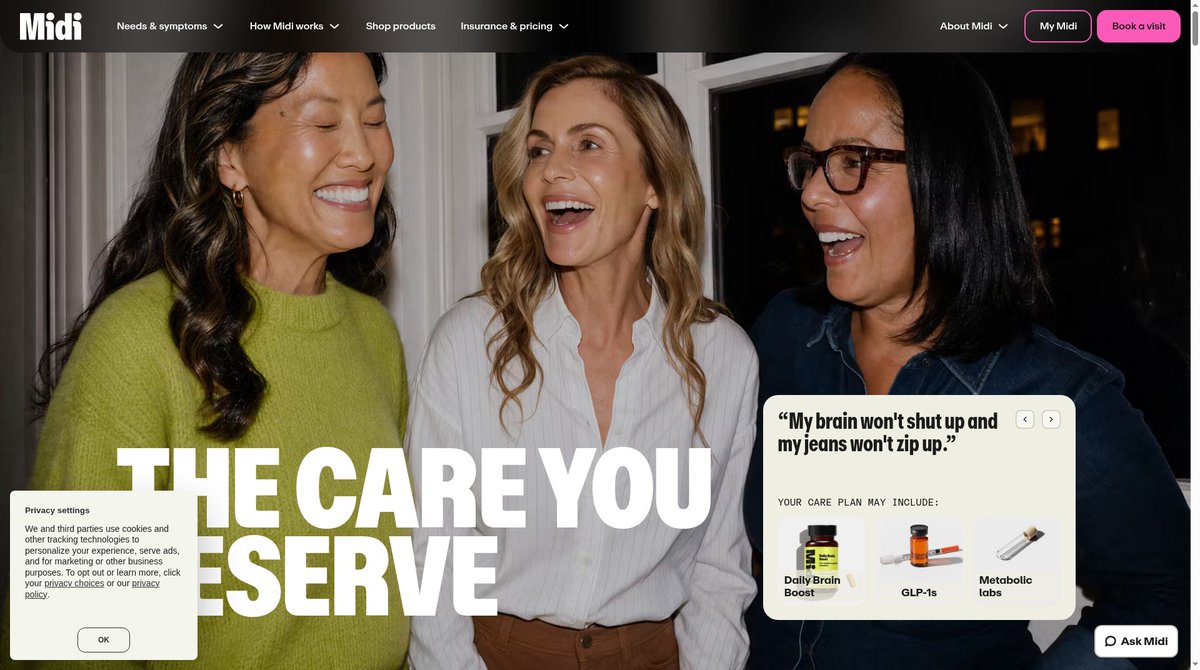
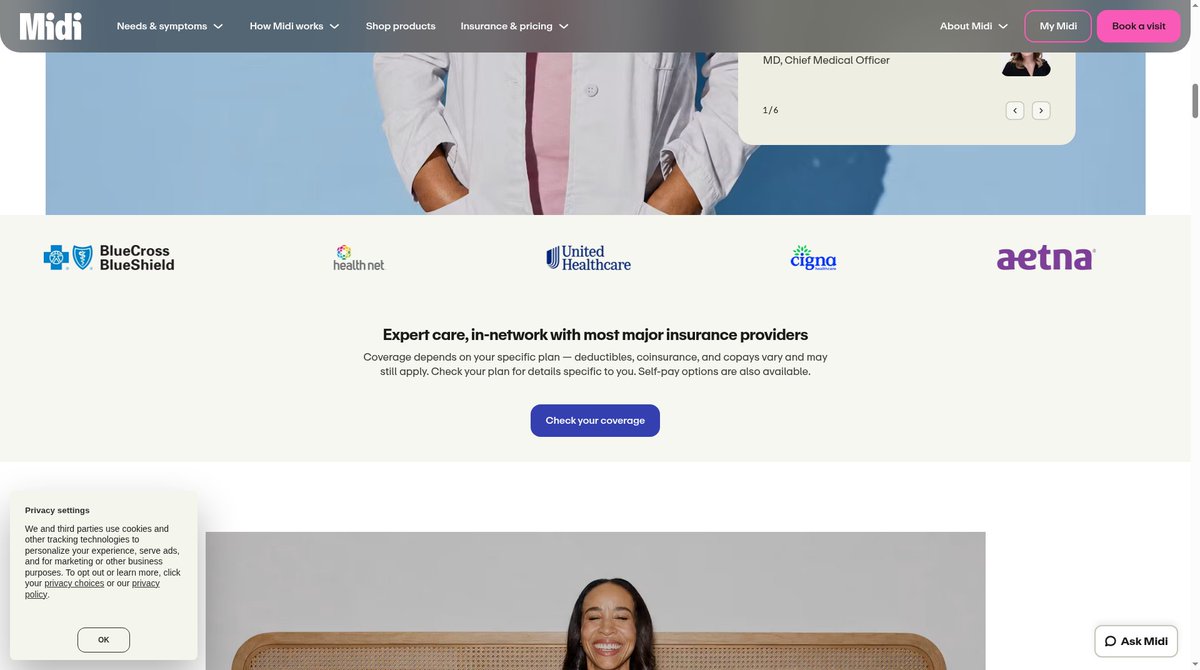
Teardown: Midi Health's homepage.
Insurance-covered menopause and perimenopause care.
The lesson every telemed operator should steal: write the hero in the patient's words, not the clinic's.