In 1980, a man named Richard turned on his television and saw a female player from Romania receiving a check for $40,000 after winning a major tennis tournament. The scene shocked Richard; it was far more than his annual salary.
Within a few years, he decided that his young
daughters would also play tennis. After turning off the television, he sat down and wrote a 78-page document outlining a plan for his two daughters to escape their hometown of Compton, California, an area known for notorious gang violence. However, there were significant obstacles: Richard knew nothing about tennis, he couldn’t afford to pay for their training, and astonishingly, his daughters weren’t even born at that time.
What began as an ambitious private housing project on Nairobi’s northern edge evolved into a Sh3.2 billion compensation claim that drew in constitutional commissions, anti-corruption investigators and the courts, as officials struggled to answer a single question: Who really owned the land beneath two public schools?
Also drawn into the saga was then Education Cabinet Secretary Fred Matiang’i after his ministry accepted advice from the National Land Commission (NLC) and paid a first tranche of Sh1.5 billion for the acquisition of the land, leaving an outstanding balance of Sh1.7 billion.
Read more: https://t.co/UVE08YTlvg
We appreciate public interest in the matter. Review of investigation files is a legal and evidence-based process that may take time depending on the complexity of each case. Notably, the file in question was received in January 2026. All files submitted to the Office are reviewed and appropriate action taken, including approving charges, returning files for further investigations, or closing them where legal thresholds are not met. Each case is determined on its merits.
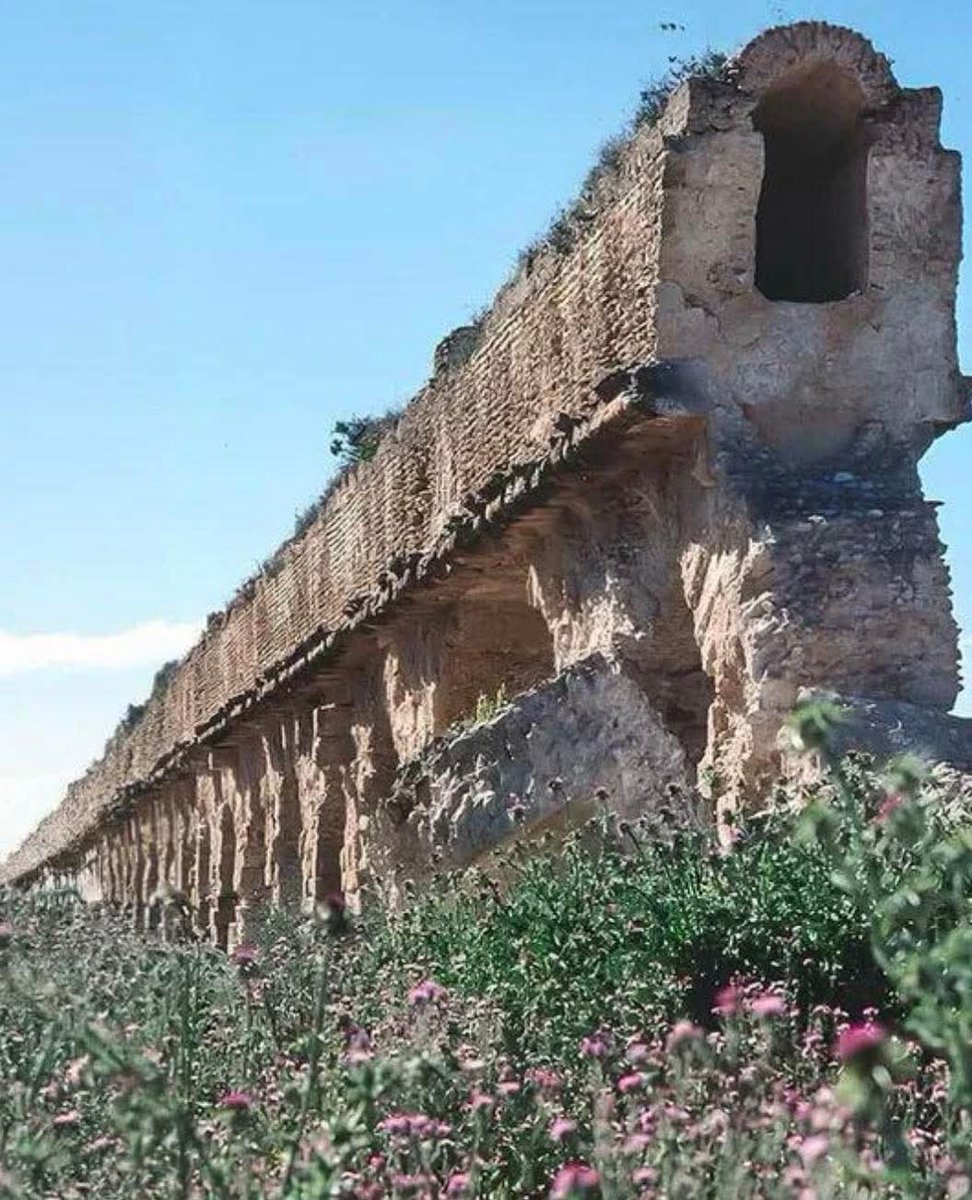
Almost 2,000 years in age, the Roman aqueduct located in Zaghouan, Tunisia 🇹🇳, an example of ancient engineering. Spanning 132km, this aqueduct supplied water to Carthage, a city that was once Romes greatest rival.
The Roman aqueduct of Zaghouan, located in modern-day Tunisia, is one of the most remarkable feats of Roman engineering in North Africa. Built during the reign of Emperor Hadrian in 2nd Century AD, it was constructed to supply fresh water from the springs at Zaghouan to the city of Carthage, which had grown into one of the most important urban centers of the Roman Empire.
Stretching an impressive 132km, the aqueduct is among the longest built by the Romans. It carried water through valleys and across open plains, using a combination of underground channels, bridges, and towering arches like the ones still visible today. This system provided a steady supply of clean water for Carthage’s population, supporting not only everyday life but also public baths, fountains, and agricultural estates.
The aqueduct highlights the sophistication of Roman hydraulic engineering. Its slight, precise gradient ensured that water could flow smoothly across great distances without modern pumps. Even after centuries of decline, parts of the structure remain standing, a testament to Roman craftsmanship. Today, the ruins serve as both an archaeological treasure and a reminder of how Rome’s infrastructure helped sustain its vast empire.
#archaeohistories
Holy matrimony happens in your parents' home, not in any church. Before you insult me, get Scripture and read it from cover to cover. If you see anywhere a marriage was conducted in a church or synagogue, return and collect $10,000 from me!
Scriptural marriage involves a man and a woman, and if she is a virgin, then her father or guardian's consent must be sought and a bride price paid—Exodus 22:17.
If she is not a virgin and the man still wants to marry her, then all he needs is her father's or guardian's consent. No bride price is necessary. But if she has been married before and widowed or divorced, only her consent is required. She just packs into your house and automatically becomes your wife—1 Samuel 25:42.
There is no biblical account of priests, pastors, prophets, or apostles officiating at a wedding.
Yeshua Himself did not perform any marriages or weddings. He was a guest at a wedding feast, not an officiating minister. And at the time He arrived at the feast, the wedding had already taken place.
Now, there is also no such thing as a Registry Marriage. As the name implies, a Marriage Registry is a place where you go to register a marriage that has already occurred. The civil servant at the registry is not marrying you and your spouse. They are either recording your decision to marry or performing legally binding civil ceremonies, so that in future, you both can take advantage of the legal protections that the law affords married couples.
One of the shortest verses in the Bible teaches us about how easy God made marriage. Genesis 24:67 says:
"Isaac brought her into the tent of his mother, Sarah, and he married Rebekah. So she became his wife."
Look at that. Only one sentence, and it captured Isaac and Rebekah's marriage ceremony.
The only reason some churches insist on a church wedding is to make money. That church is just a business, the same way a shopping mall is a business, and will try to convince you to buy what you do not need.
A church marriage is a European cultural marriage equivalent to your traditional marriage. It is not better or holier than anything you do in sub-Saharan Africa in the name of marriage.
Follow Scripture, not your pastor or his church dogma!
Reno Omokri
Gospeller. Deep Thinker. #TableShaker. Ruffler of the Feathers of Obidents. #1 Bestselling author of Facts Versus Fiction: The True Story of the Jonathan Years. Hodophile. Hollywood Magazine Humanitarian of the Year, 2019. Business Insider Influencer of the Year, 2022. 21st Most Talked About Person in Africa, 2024.About Person in Africa, 2024.
Henry Moseley, the inventor of the modern periodic table, was killed at the age of 27 by a sniper in the Gallipoli battle in 1915.
Moseley was a brilliant physicist who worked at the University of Manchester under Ernest Rutherford, the father of nuclear physics. He was interested in the properties of X-rays and how they could be used to study the structure of atoms. He used a device called a spectrometer to measure the wavelengths of X-rays emitted by different elements when they were bombarded by electrons. He found that there was a regular pattern in the X-ray spectra, and that each element had a characteristic set of lines that could be used to identify it. He also found that the frequency of the most intense line in each spectrum was proportional to the square of a number that he assigned to each element. This number, which he called the atomic number, was later found to be equal to the number of protons in the nucleus of an atom.
Moseley’s discovery was very important for chemistry and physics, as it provided a clear and logical way to organize the elements in the periodic table. It also explained why some elements had similar chemical properties, as they had the same number of electrons in their outer shells. Moseley’s work also supported Niels Bohr’s theory of the atom, which proposed that electrons orbit around the nucleus in discrete energy levels. Moseley’s law also predicted the existence of some missing elements that had not been discovered yet, such as technetium, promethium, and rhenium.
Unfortunately, Moseley’s life and career were cut short by World War I. He volunteered for the British Army as a telecommunications officer, and was sent to Gallipoli, Turkey, where he participated in a campaign against the Ottoman Empire. He was killed by a sniper on August 10, 1915, at the age of 27. His death was mourned by many scientists and scholars, who regarded him as one of the most promising physicists of his generation. Some even speculated that he would have won the Nobel Prize in Physics if he had survived.
Niels Bohr once said that,
Rutherford's work "was not taken seriously at all" and that the "great change came from Moseley."
His death also prompted the British government to ban other prominent scientists from serving in front-line roles, as they realized the value and importance of scientific research for society
[Photograph: Balliol-Trinity College Laboratory, 1910]
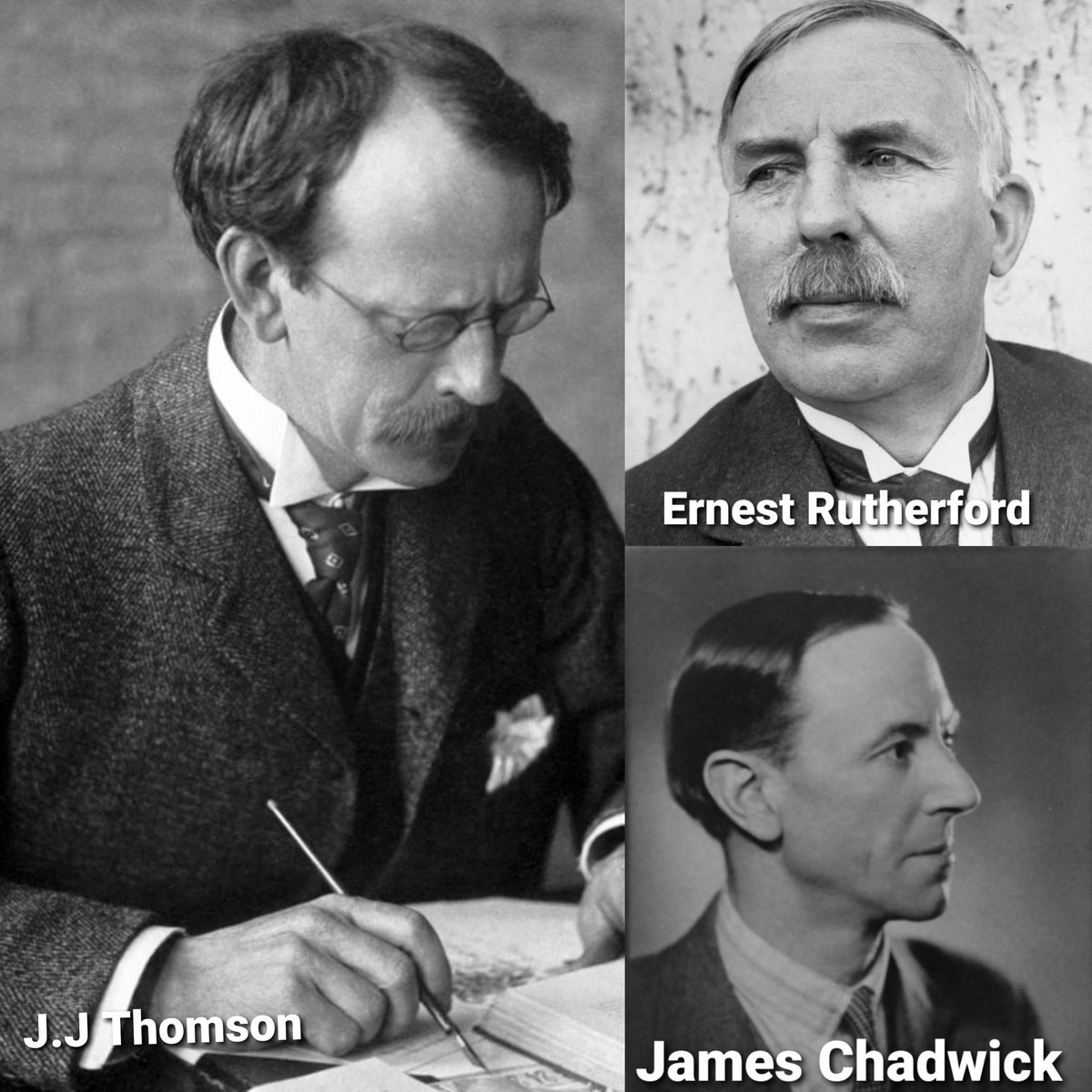
James Chadwick discovered the neutron under the leadership of Ernest Rutherford in 1932. Rutherford, who in 1911 discovered the proton, was the student of Joseph John Thomson. Thomson discovered the electron in 1897. ✍️
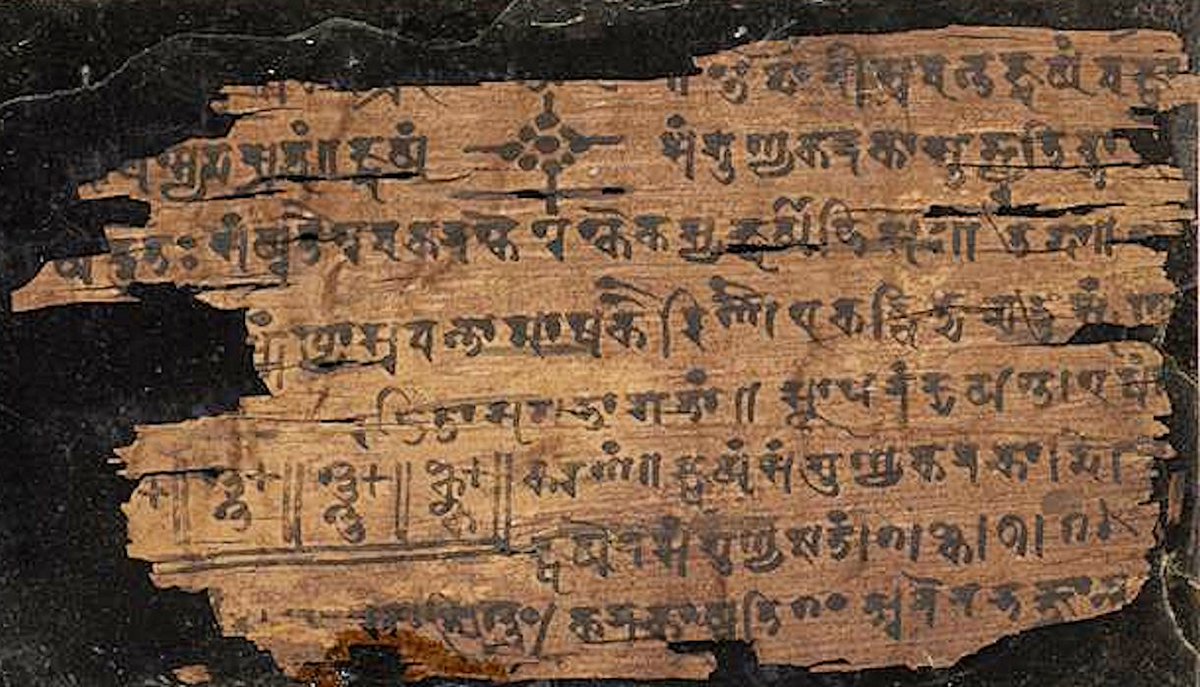
In the 7th century, negative numbers were used in calculations in India which was innovative because Europeans dismissed these numbers as absurd until the 17th century, when they gained widespread acceptance due to their practical use in accounting and bookkeeping.






![PhysInHistory's tweet photo. Henry Moseley, the inventor of the modern periodic table, was killed at the age of 27 by a sniper in the Gallipoli battle in 1915.
Moseley was a brilliant physicist who worked at the University of Manchester under Ernest Rutherford, the father of nuclear physics. He was interested in the properties of X-rays and how they could be used to study the structure of atoms. He used a device called a spectrometer to measure the wavelengths of X-rays emitted by different elements when they were bombarded by electrons. He found that there was a regular pattern in the X-ray spectra, and that each element had a characteristic set of lines that could be used to identify it. He also found that the frequency of the most intense line in each spectrum was proportional to the square of a number that he assigned to each element. This number, which he called the atomic number, was later found to be equal to the number of protons in the nucleus of an atom.
Moseley’s discovery was very important for chemistry and physics, as it provided a clear and logical way to organize the elements in the periodic table. It also explained why some elements had similar chemical properties, as they had the same number of electrons in their outer shells. Moseley’s work also supported Niels Bohr’s theory of the atom, which proposed that electrons orbit around the nucleus in discrete energy levels. Moseley’s law also predicted the existence of some missing elements that had not been discovered yet, such as technetium, promethium, and rhenium.
Unfortunately, Moseley’s life and career were cut short by World War I. He volunteered for the British Army as a telecommunications officer, and was sent to Gallipoli, Turkey, where he participated in a campaign against the Ottoman Empire. He was killed by a sniper on August 10, 1915, at the age of 27. His death was mourned by many scientists and scholars, who regarded him as one of the most promising physicists of his generation. Some even speculated that he would have won the Nobel Prize in Physics if he had survived.
Niels Bohr once said that,
Rutherford's work "was not taken seriously at all" and that the "great change came from Moseley."
His death also prompted the British government to ban other prominent scientists from serving in front-line roles, as they realized the value and importance of scientific research for society
[Photograph: Balliol-Trinity College Laboratory, 1910]](https://pbs.twimg.com/media/G6g7h6LaEAADM_y.jpg)