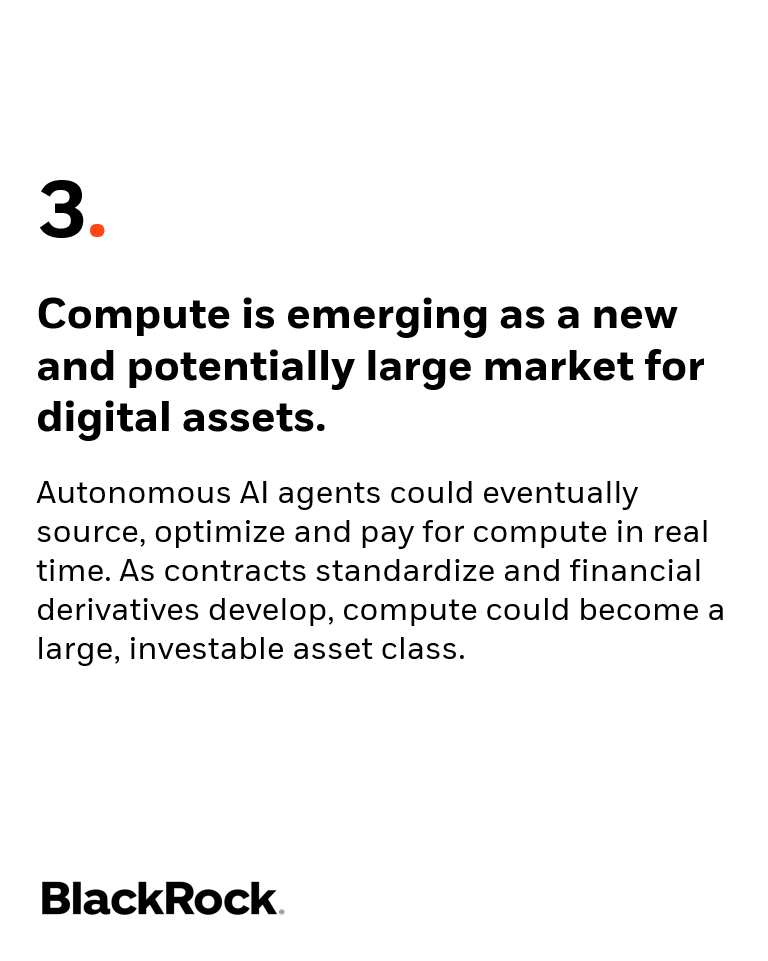
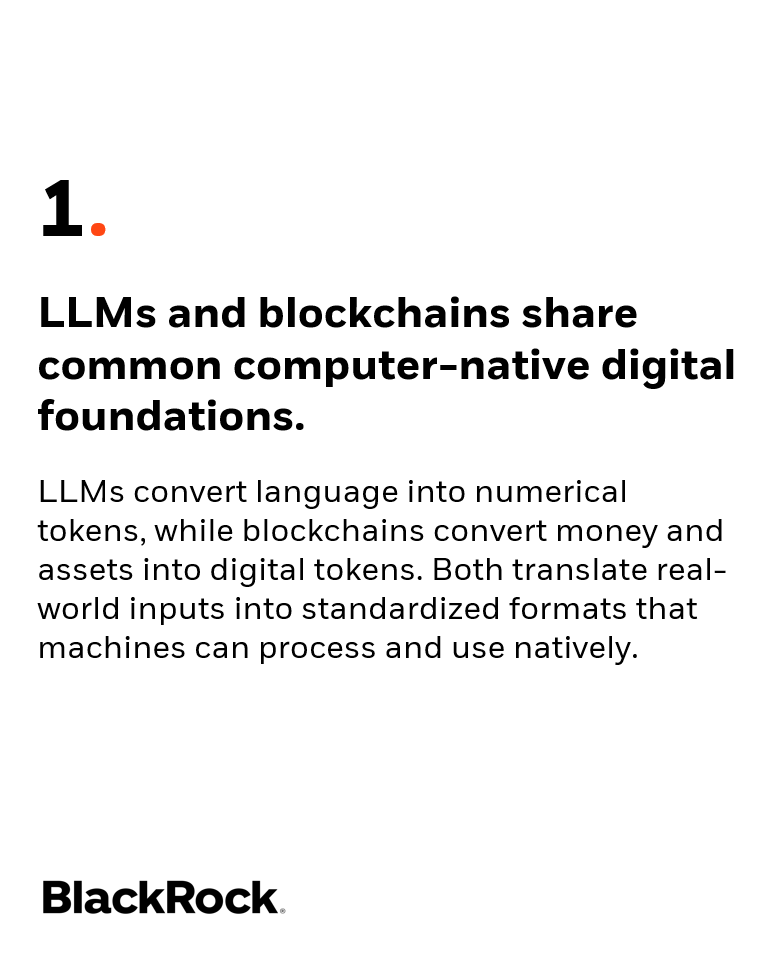
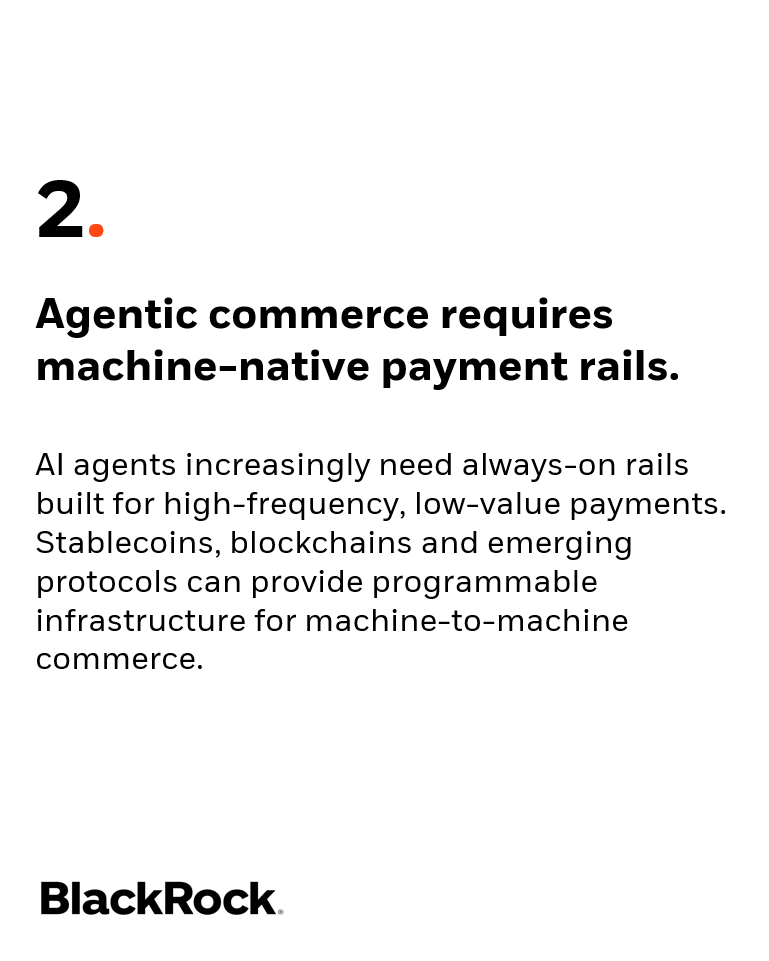
Our latest research paper explores the growing connection between AI and digital assets and explains why broad AI adoption may drive new demand, utility and applications across the digital asset economy. https://t.co/z5T88Orble
Arc Mainnet is live.
Arc launches as the Economic OS for the internet: an open platform for global markets, real-time value movement, tokenized assets, and agentic economic activity.
Arc is more than a blockchain.
It launches as a full-stack financial platform with assets, applications, interoperability, developer infrastructure, and Circle platform services live from day one.
Arc delivers USDC as native gas, deterministic sub-second finality, EVM compatibility, and institutional validators.
It integrates with Arc Studio, App Kits, Arc Portal, Circle Agent Stack, CCTP, Gateway, CPN, and StableFX.
A complete economic platform at genesis.
Arc launches with infrastructure for:
→ Agentic economic workflows
→ Lending and borrowing
→ Trading and liquidity
→ Onchain FX
→ Payments and settlement
→ Tokenized assets
→ Exchanges, wallets, custody, compliance, data, and developer tooling
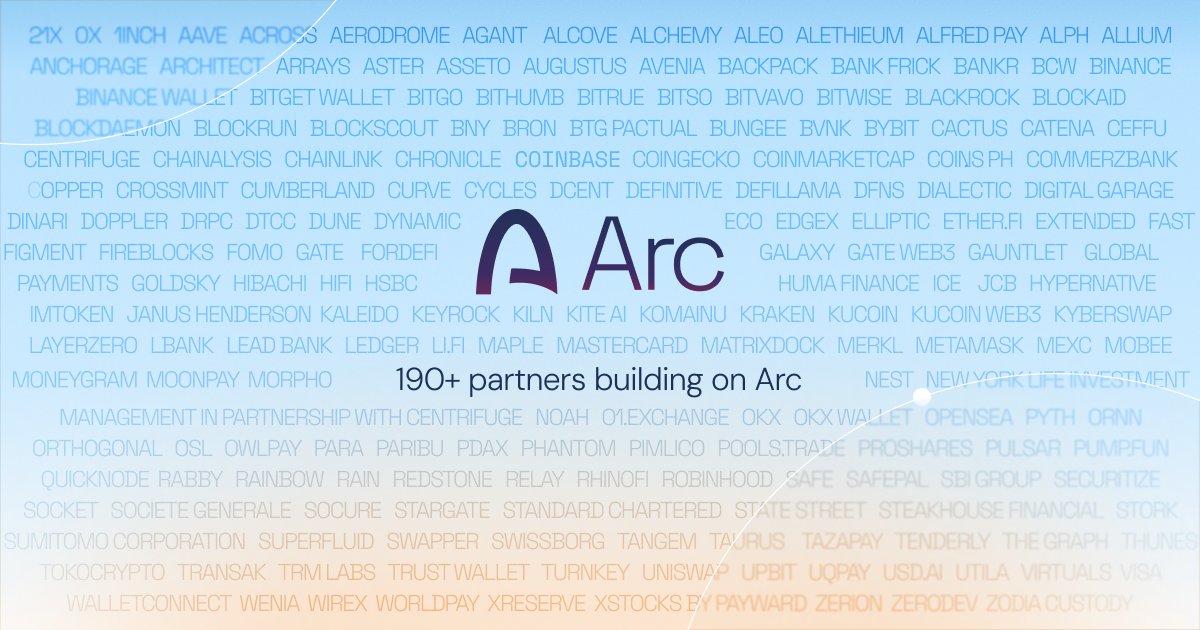
190+ institutional and ecosystem builders are building across Arc.
I resigned from Anthropic today. I spent the last three years doing pretraining research at both OpenAI and Anthropic. Neither company is acting responsibly. They are racing straight to self-improving superintelligence and gambling with our lives. More thoughts below.
We’re sharing a solution to the Navier-Stokes Millennium Prize Problem, one of the deepest problems at the frontier of mathematics.
The proof was produced by a group of agents, using an OpenAI next-generation model significantly more capable than GPT-6 Astra.
The problem concerns whether the description of smooth three-dimensional fluid motion modeled by the Navier-Stokes equations can break down. It has remained unresolved for roughly 90 years.
New in Claude Code: your sessions can now message each other.
Instead of having to re-explain yourself in another session, you can now tell Claude to do it. It sends a summary (not your history or files), and the other session picks it up mid-task.
NEW: Chinese DRAM maker CXMT, now one of China's most valuable publicly traded companies following its recent blockbuster IPO, has been added to the Roundhill Memory ETF (DRAM).
Tokenized $DRAM is live on Solana, issued by @Backpack Securities via @sunrise.
every Claude and ChatGPT user now has the power to trade anything on @solana by having a conversation
welcome to PayBox, the payment vault and non-custodial wallet that lets AI Agents securely transact across the open internet
prompt, approve, pay: https://t.co/isCEzCNoC6
Introducing Cosmos 3 Edge: our open frontier world model built to run on-device.
Cosmos 3 Edge helps robots learn and act, autonomous vehicles understand road scenes and predict intent, and vision AI agents reason across live video for smart infrastructure.
With 4B parameters and a 2B Nemotron-based reasoner, you can run it on DGX Spark, NVIDIA Jetson, and more.
YC and Together AI are partnering to bring the first dedicated YC GPU cluster online, giving YC startups easier access to the compute they need to build and scale.
In this Founder Fireside, YC's @agupta and @togethercompute co-founder & CEO @vipulved dig into why compute has become one of the biggest bottlenecks for modern AI companies, how Together AI is helping more than 8,000 customers—from early-stage research teams to companies like Cursor, Cognition, and ElevenLabs—train, fine-tune, and serve AI models, and why flexible access to GPUs is becoming a competitive advantage for the next generation of founders.
00:00 — Partnering on a GPU Cluster
00:26 — What Together AI Does
01:22 — From Research Labs to Cursor: Together's 8,000 Customers
01:58 — The Landscape of AI Native Startups
03:24 — How Building an AI Company Has Changed Since 2018
04:56 — Why the Cost of Compute Keeps Going Up
05:29 — YC as the Biggest Seed Funder of Research Companies
08:47 — Flash Attention, Mamba, and the Science of Production AI
10:43 — Compute Planning Advice for Early Stage Companies
12:39 — When Your Compute Bill Is Bigger Than Your Cash Balance
13:31 — How Companies Are Using the Cluster Today
14:24 — What's Next
Assez d'accord, et je parle d'expérience.
Quand j'ai lancé mon compte 150 000 abonnés aujourd'hui je me suis dit : l'IA sera mon levier. J'ai commencé par bâtir des systèmes sophistiqués, du RAG, des orchestrations d'agents dans tous les sens. Ça ne marchait pas.
J'en ai tiré une conviction que je garde : les agents finiront par très bien fonctionner. Mais on a encore énormément à apprendre sur la couche modèle elle-même. Tout empiler aujourd'hui, c'est vouloir sortir l'iPhone en 1995 : la brique de base n'est pas prête, notre compréhension de la techno est encore trop superficielle pour en tirer quelque chose de significatif.
Je modère : il y a des domaines où ça marche déjà très bien. Le code, typiquement. Mais regardez pourquoi. Le dev passe par des couches intermédiaires un plan, une décomposition, il se comporte en engineering manager qui orchestre et garde en tête l'ensemble des systèmes qu'il fait produire. Et il y a un biais : les ingénieurs sont aussi les plus curieux, les plus fluents sur les LLM. Autrement dit, ce n'est pas l'agent qui marche tout seul c'est que l'opérateur maîtrise déjà l'instrument. Dans énormément d'autres domaines, ça ne se transpose pas. Et ça passera, là aussi, par une vraie maîtrise du modèle.
On a inventé un instrument il y a trois ans et demi. Une nouvelle guitare. Devenir maître, c'est quinze, vingt ans et on veut déjà monter un orchestre philharmonique quand on ne sait pas jouer trois accords en solo.
Maîtrisez l'instrument. Le reste suivra.
French first, English below 👇
🇪🇺 Staan, la première API de recherche européenne est désormais disponible en libre-service 🇪🇺
Staan est l'API de recherche 100% européenne co-construite avec @ecosia à travers la joint-venture européenne European Search Perspective. Staan connecte les applications d'IA au web en les alimentant avec des millions de documents et de contenus web dans un cadre juridique respectueux des données et des utilisateurs.
À partir d'aujourd'hui, Staan permet à n'importe quel développeur d'obtenir sa clé API et de commencer à alimenter ses assistants, copilotes et agents IA en quelques minutes.
Pendant que les solutions américaines restreignent leurs API de recherche et leurs modèles de LLM, une seconde voie européenne et souveraine s'organise. ✊
Switch to Europe. Now.
⸻
🇪🇺 Staan, the first European search API, is now available as a self-service 🇪🇺
Staan is the 100% European search API co-built with Ecosia through the European joint venture European Search Perspective. Staan connects AI applications to the web by feeding them with millions of web documents and content within a legal framework that respects data and users.
Starting today, Staan allows any developer to get their API key and start powering their assistants, copilots and AI agents in minutes.
While American solutions are restricting their search APIs and LLM models, a second European and sovereign path is taking shape. ✊
Switch to Europe. Now.
Le gouvernement américain interdit Fable 5 et Mythos 5 à tout non-américain dans le monde. Trois jours après leur sortie.
Anthropic coupe tout dans la nuit.
Le Pentagone : trop dangereux pour usage gouvernemental US.
Le Commerce : trop dangereux pour usage étranger.
Conclusion : trop dangereux pour eux-mêmes, trop dangereux pour les autres. Mais bien assez bon pour qu'on s'enchaîne dessus en prod.
Vous avez basé votre stack IA sur des outils américains ? Bienvenue dans le monde où votre brique critique disparaît un vendredi soir parce qu'un cabinet ministériel à Washington a signé une lettre.
Pas de préavis. Pas de recours. Pas d'alternative équivalente.
NVIDIA JUST FEATURED HERMES AGENT
AT COMPUTEX 2026.
Hermes is integrating with NVIDIA OpenShell
and Microsoft security primitives
for secure on-device agents on Windows.
Dillon Rolnick, CEO of Nous Research:
"RTX Spark and NVIDIA OpenShell give Hermes users
a powerful and secure environment for agents
to run and work alongside you.
You realize you're buying a full-fledged assistant,
not a typical laptop."
RTX Spark specs:
→ 1 petaflop AI performance
→ 20-core Grace CPU (built with MediaTek)
→ Blackwell GPU, 6,144 CUDA cores
→ 5th gen Tensor Cores with FP4 precision
→ up to 128GB LPDDR5X unified memory, 300 GB/s
→ NVLink C2C chip-to-chip interconnect
→ runs 120B parameter LLMs locally
→ up to 1M token context window on device
→ 2x inference speed via multi-token prediction
RTX Spark devices ship Fall 2026
from ASUS, Dell, HP, Lenovo, Microsoft Surface, MSI.
full NVIDIA press release in the comments.
full Hermes setup guide in the article 👇
The laptop hasn't changed in 30 years. NVIDIA just changed it
RTX Spark is their first PC chip ever.
- RTX 5070 level GPU
- 128GB unified memory
- 1 petaflop of local AI
- thin, light, barely throttles unplugged
Your AI agent lives on the machine. 24/7. No cloud.
This is step one of the agentic AI PC, and everyone else is about to copy it.
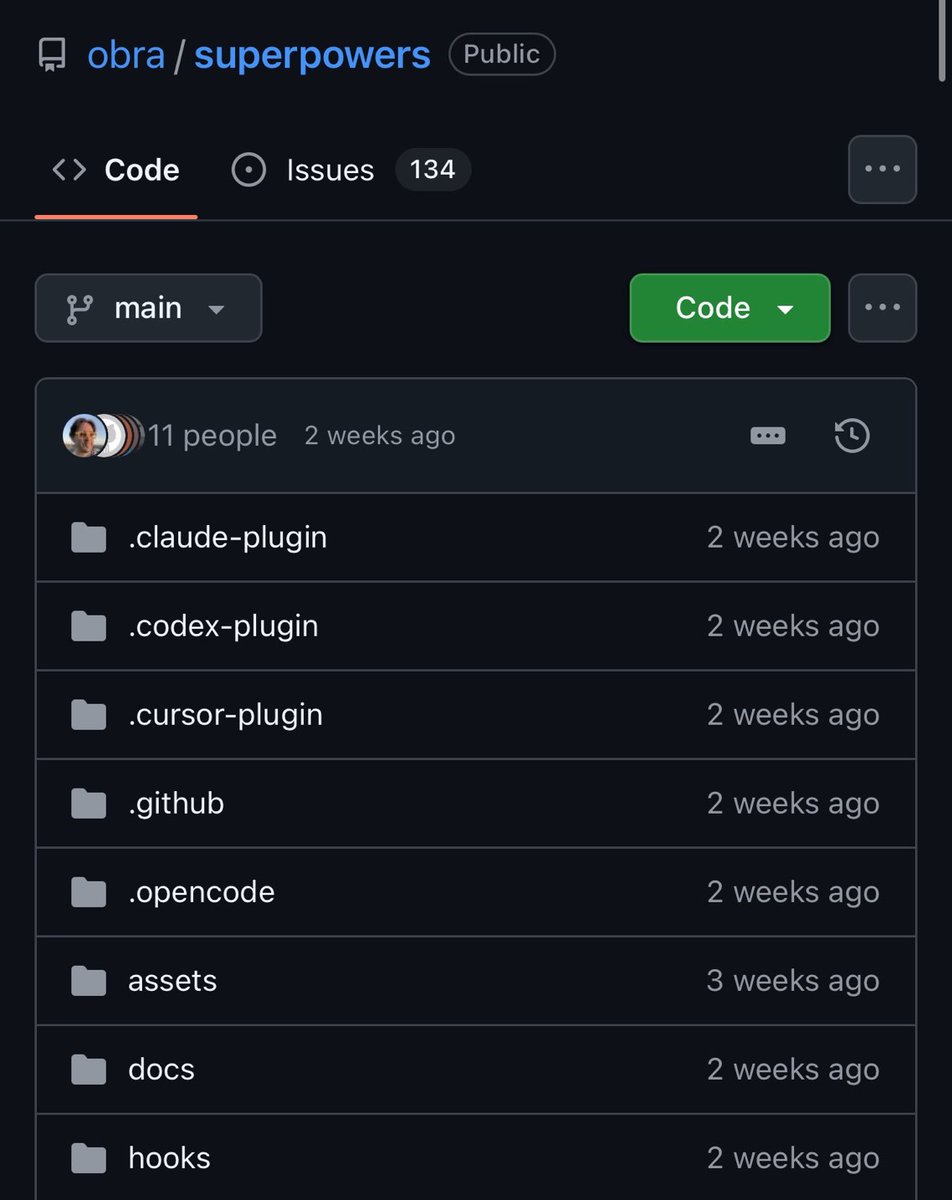
Acaban de convertir Claude Code, Codex y Cursor en un senior developer real.
Gratis.
Se llama Superpowers y ya tiene 204.000 estrellas en GitHub.
El problema con los agentes a partir de cierto tamaño de proyecto es siempre el mismo:
Van directo al código.
Debuggean a ciegas.
Abandonan los tests.
Y cuando el proyecto crece, empiezan a alucinar.
Superpowers lo resuelve forzando el proceso de un ingeniero senior:
→ Brainstorming siempre antes de escribir una sola línea
→ TDD red/green sin excepciones (borra el código si no hay test previo)
→ Subagentes en paralelo con git worktrees aislados
→ Contexto bajo control durante horas de trabajo autónomo
El flujo ya no es "prompt → código → rezar":
Brainstorm → Spec → Plan → TDD → Subagentes → Review → Ship
Cero código antes de tener tests pasando.
Compatible con Claude Code, Codex, Cursor, Gemini CLI, OpenCode y Copilot CLI.
100% open source. Licencia MIT.
Ya no escribes prompts a ciegas.
Tu agente trabaja como un senior.
Os dejo el link de la repo aquí ⬇️
Copers will buy in at multi millions
The big boys are coming in
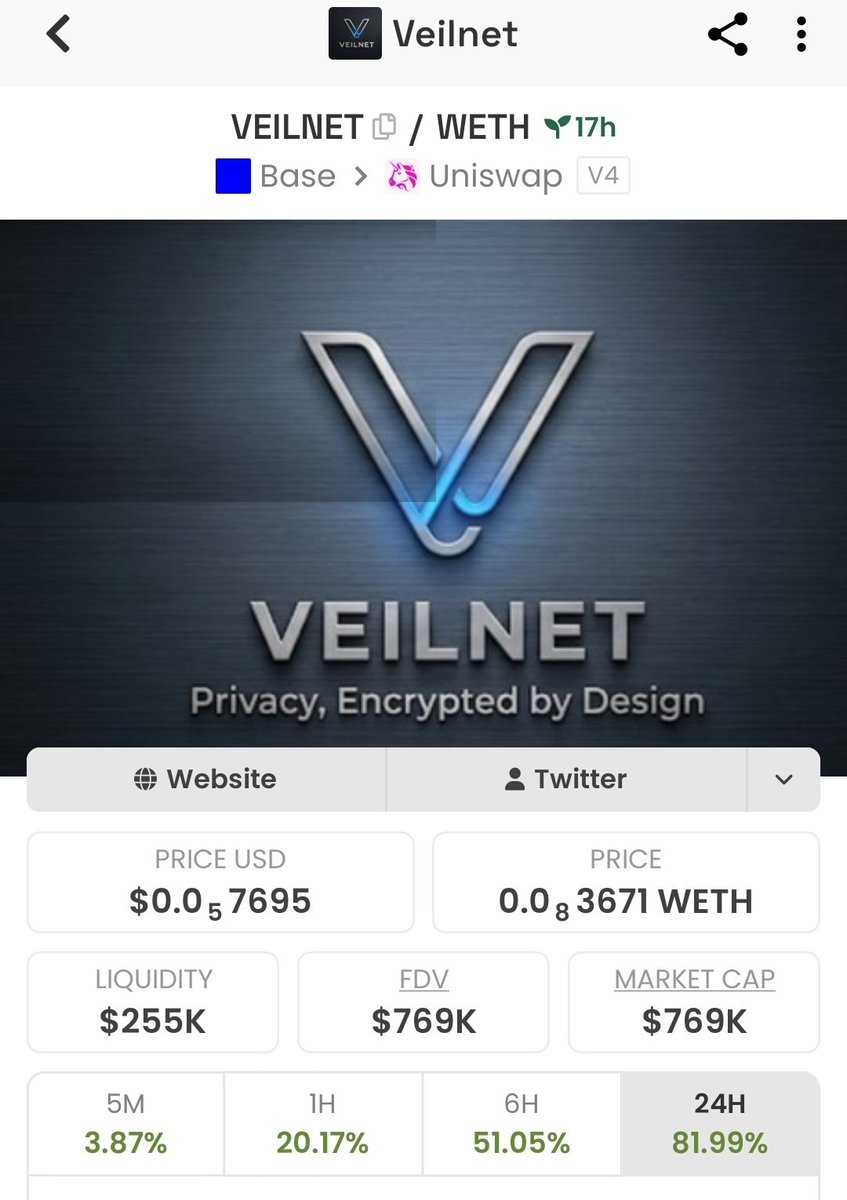
$VEILNET sending to millions already
The first FHE + Privacy play on the base chain sitting sub 1m mcap
Kapo in
Hanzo in
Hades in
Xenon in
@BarrySilbert speaking heavily on the privacy narrative
@CryptoHayes bullish on Privacy narrative
@KeetaNetwork founder commended @Veilnet_ already as a "cool" project.
Privacy dex, AI Privacy Prompting, and MCP servers already live and functioning
Currently, building their wallet context that gives agents one private portfolio view across:
Shielded Veilnet vault balances
Public ERC-20 holdings
Native ETH balances
Base + Ethereum assets
USD valuations
Veil DEX / strategy context
With the Wallet Context in mind, this completes the next Veil AI privacy stack with the following phases in mind; 👇
Phase 1: shield the prompt
Phase 2: shield the agent strategy
Phase 3: shield the wallet read
With @Veilnet_, the Private prompts protect what you ask, while the Private MCP protects what your agent runs.
Such a top privacy infra beast is still sitting sub 1m mcap
See you at multi millions.
Google acaba de publicar el estándar de Code Review que usan sus ingenieros internos.
Literalmente puedes darle esta documentación a un agente de IA y convertirlo en un revisor de código con estándares de Google.
La mayoría de IAs solo generan código.
Ahora también pueden:
→ detectar malas prácticas
→ revisar arquitectura
→ pedir cambios útiles
→ validar legibilidad y mantenibilidad
→ dar feedback estilo Google
El documento incluye cómo revisan código realmente dentro de Google:
→ criterios de aprobación
→ qué bloquea un merge
→ cómo escribir código fácil de aceptar
→ términos internos como LGTM y CL
No es teoría.
Es el sistema real que usa Google para revisar millones de líneas de código.
Enlace abajo 👇