Aneuploidy is a defining feature of cancer cells, but is it also present in healthy normal tissues? In our paper out today on @NatureGenet, we report hundreds of mosaic chromosomal alterations (mCAs) found in diverse tissues from #GTEx. A thread (1/7)
https://t.co/JtzP7d1oRL
1/ Excited to share our new preprint from a joint collaboration between @JswLab + @Bruce_Ksander!
Aging is marked by a progressive loss of resilience to stress. Can we systematically search the human ORFome for genes that make vulnerable cells more resilient?
Performing such a genome-scale ORF screen led us to NKX2-5—a heart transcription factor we engineered to restore vision, and improve health in aged mice.
A breakdown🧵
🔗 https://t.co/WVIO7JOx3p
🩸🧬 Delighted to share our new @Nature paper! Genetic studies of >28,000 people reveal a BACH2–NRF2 pathway for activating fetal hemoglobin, suggesting new tx avenues for sickle cell disease & β-thalassemia. Led by the amazing @guo_chunjie & co!
https://t.co/1qNunDlsjW
As someone who did this kind of genome mining work during my PhD, some thoughts on this Anthropic announcement:
First, the very simplified version of what they did is that they noticed two genes (one known, one new) sitting next to a weird repeating piece of DNA. More specifically, they described an unusual reverse transcriptase (RT) associated with a repetitive DNA array and an unknown accessory protein. This kind of process was used to understand CRISPR back in 2002 and was key to the gene editing tools we use today.
To put this into context, though, people have been finding RTs associated with CRISPR arrays since 2008, and this general kind of genome-neighborhood mining has been used to discover new biological systems for decades. The basic genome-mining strategy is well established, and there are now mature tools and published pipelines for doing much of this. There are papers that discover and experimentally validate dozens of new systems using this approach in a single study. Doing it in bacteriophage genomes is also nothing new (eg CasPhi).
Finding a weird cluster of genes and repeats is often the easy part. The hard part, and where the real discoveries come from, is figuring out what the system actually does. Eg for the bridge-RNA discovery in 2024 from @arcinstitute or the discovery of CasPhi in 2020 from @DoudnaJennifer they figured out the pieces of the system and the rules for what makes it work so it can be used.
Anthropic does not yet know what this does. They’ve shown that the repeat array produces RNAs, but not what those RNAs do, what the RT does with them, or whether the system has any of the programmable properties that make the CRISPR comparison justified.
I’m genuinely rooting for all of the frontier labs to seriously get into biological discovery, and I’m excited about what comes out of it. But announcing these very early, incremental findings with the framing of a major discovery doesn’t help. I’d much rather they set the bar high now, so that when an AI actually discovers a fundamentally new biological mechanism, everyone appreciates how big a deal it is.
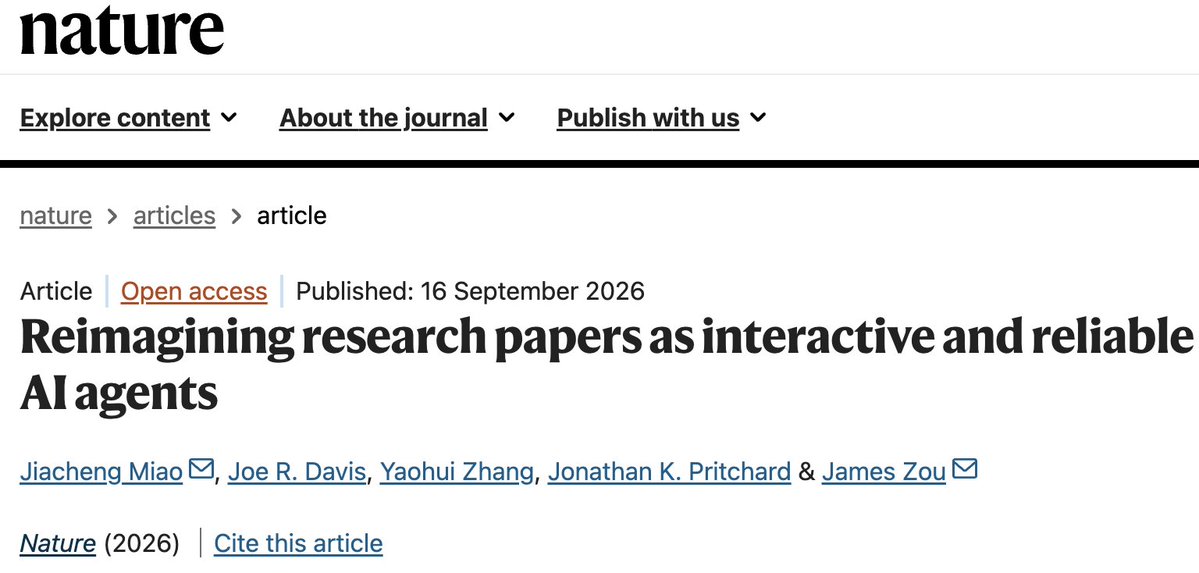
🔥 Excited to share that #paper2agent is published in @Nature today!
Papers have long been the primary format for communicating scientific knowledge, but they remain static. Putting that knowledge to work requires connecting findings to data, navigating supplementary materials, and adapting methods to new questions - effort repeated by each new reader.
We introduce Paper2Agent, a multi-agent framework that automatically turns research papers into virtual authors. Paper2Agent turns a paper’s manuscript, code, data, and supplements into an MCP server that any AI agent can access, with automated testing and iterative refinement in an agentic loop. The paper then becomes a virtual author you can talk to: trace claims to evidence, analyze your own data, and collaborate with other papers’ virtual authors
Agentifying a paper turns it from something people read into something people and AI agents can discover and build on - providing the context needed to interpret its findings and reuse its methods reliably. We tested how reliably these agents put papers to use. Across multiple benchmarks, agents created by Paper2Agent outperformed baselines such as Claude Code working directly with papers' PDFs and code repositories.
Once papers become virtual authors, they can collaborate - much like human researchers do. In one case study, agents built from AlphaGenome and two large-scale genetic perturbation studies worked together to propose a new computational approach for integrating evidence across different perturbation datasets. By connecting predictions from one paper with experimental data from others, they helped pinpoint a likely causal gene for psoriasis.
We hope Paper2Agent makes scientific knowledge easier to access, reuse, and build on - a first step toward a future where millions of paper agents proactively collaborate with human researchers and one another to advance discovery.
🤖Talk to the virtual author for Paper2Agent itself: https://t.co/wCzxUS4alX
📎Paper: https://t.co/2EGOPUgirB
💻Code: https://t.co/290bZWDmRt
VERY grateful to work with this incredible team: @james_y_zou, @jkpritch, Yaohui, and Joe!
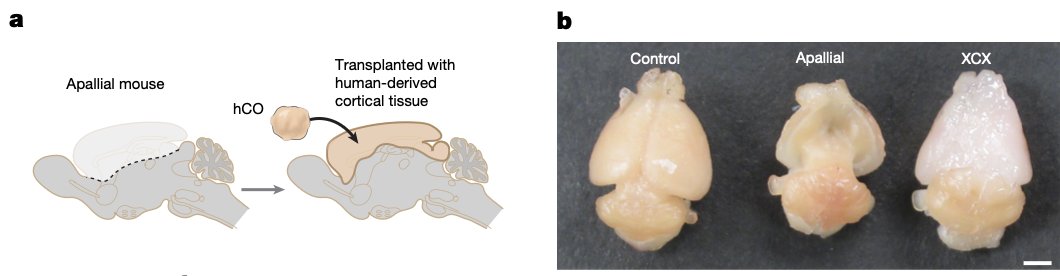
1/ I have long dreamed of systems that could causally model human neurobiology across scales, from molecular to behavioral.
In @Nature, delighted to share our efforts at creating xenocortical mice where human organoids grow to occupy most of mouse cortex.
How does interferon-alpha interfere with clonal evolution in human blood stem cells? We address it here @natureGenet: https://t.co/vPChdqnYzS
🎉 Congrats to our super talented students Chhiring Lama, @danielle_isakov! Wonderful collab w/ Ron Hoffman. @WCMC, @WCMCPathology
🧵⤵
I am very excited to share that our latest work on spatial lineage-tracing in the KP lung adenocarcinoma model has been published in @NatureGenet today! This is the latest work from my lab at @MITBiology@kochinstitute@MIT_IMES. Thread below👇
Happy to share the preprints of two complimentary studies from my Postdoc with @bloodgenes:
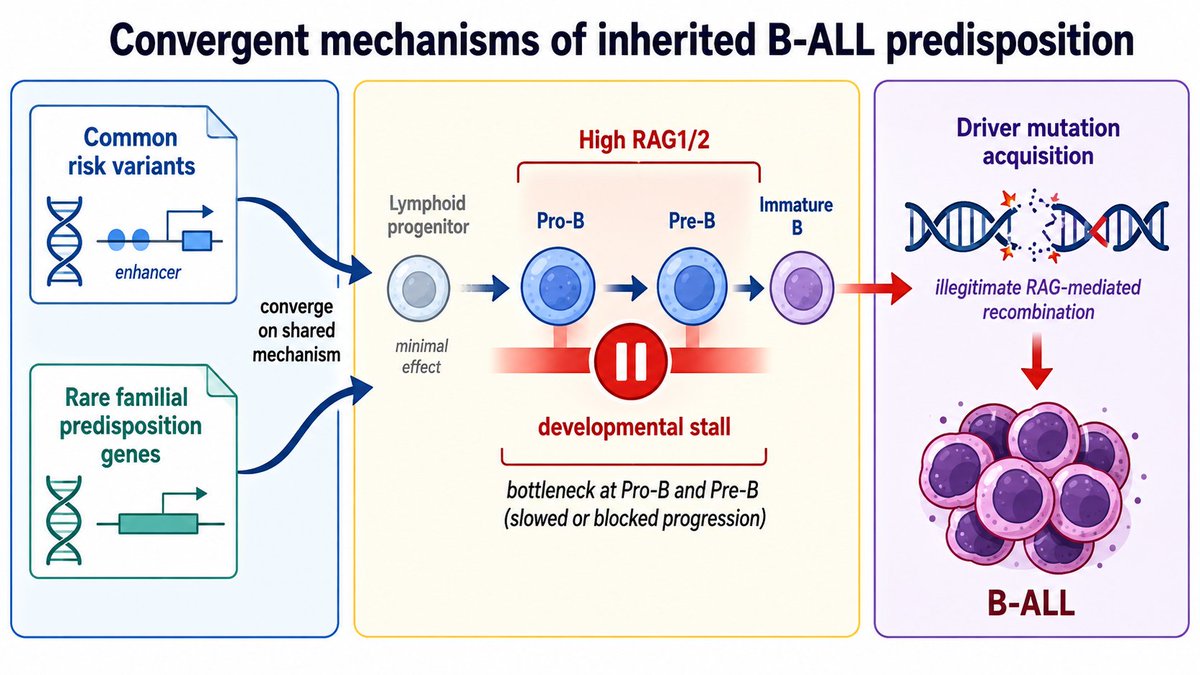
We set out to understand the mechanisms underlying inherited childhood B cell lymphoblastic leukemia (B-ALL):
https://t.co/Tbp3x7q1Gc
https://t.co/MUUh6Ol0WV
🚨Two complementary preprints from our group reveal convergent mechanisms of inherited B-ALL predisposition. Check out this terrific work led by @LWahlster, @ALNeehus & #AndrewLee!
https://t.co/dUgwHcMyHo
https://t.co/M6keNjn1b0
Thrilled to post thread re: new single-cell lineage of mouse embryo reconstructed w/ DNA Typewriter. One animal, zygote to late organogenesis (E13.5). Tree has 1,340,794 transcriptionally profiled, annotated tips (cells), 1,142,588 dated internal nodes, rooted at zygote
1/n
Gaining therapeutic access to the human brain is one of the biggest unsolved problems in biomedical science.
Today @nature, we uncover a massive influx of immune cells into the human brain during aging, revealing that the brain is more accessible than previously thought. 1/
https://t.co/BuHdVk1V2I
Nancy Wexler spent a lifetime pursuing a cure for Huntington’s disease (HD). Her work led to the discovery of the HD gene and helped make genetic testing possible.
Yet when Nancy and her sister, Alice, learned they each had a 50-50 chance of inheriting the disease, they made the decision not to be tested.
In a powerful recent New York Times feature, Nancy reflects on the deeply personal and scientific journey behind her memoir, My Life, My Science: Pursuing a Cure for Huntington’s Disease, published by CSHL Press this past March.
The book is currently on backorder via Amazon but copies are available NOW directly from CSHL Press for immediate delivery.
Read the full @nytimes story X Gina Kolata and order your copy through the link here: https://t.co/phb4fCxu6e
#CureHD #HuntingtonsDisease #NancyWexler #InspiringInnovation #InspiringDiscovery #ScienceMakesLifeBetter
Claude Science is incredible. I gave it some sequencing data, and in 8 hours it did a full analysis, generated figures, wrote a paper, submitted it for publication, got rejected, revised and resubmitted, got rejected again, it is now applying for positions in industry
Want to do spatial lineage tracing at single-cell resolution in mice at your favorite tissues? In a close collaboration with @Li_Li_666, we developed Spatio-DARLIN, now out at @naturemethods. https://t.co/KZc64V1JKr
Gloves are off!
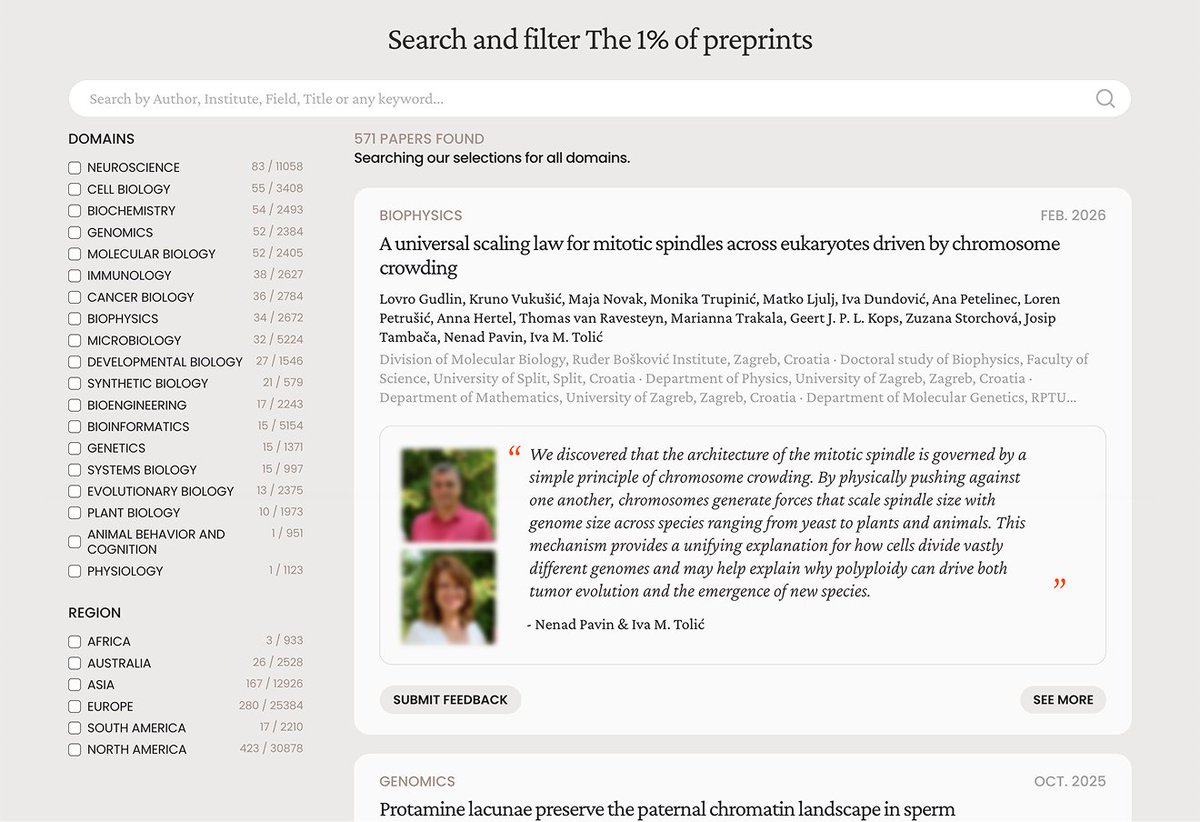
TODAY WE RELEASE THE 1%
A list of the year’s very best papers.
When we launched QED a little over half a year ago, I told you that our mission is to revolutionize scientific publishing. Revolutions don’t happen overnight… or maybe they do? When new technologies enable it? Time to put the power back in the scientists’ hands, not the journals’. Many scientists are depressed, and think journals will stay the same forever, no matter how dysfunctional, but no, it’s happening. Sooner than most people (or committees, or universities) can imagine. Check this out:
When we released our AI review platform, it started a whole debate (and social media storm) on what it is that human reviewers can do that AI review still can’t. There are such things (and I’m happy about it), but the list is getting shorter and shorter. Numerous scientists already use QED to find gaps in their manuscripts and grants and to get constructive feedback that improves their experiments. And now, with your help, we take it to the next level.
Today we release reviews and scores for all the experimental Life Science pre-prints that came out last year: 57,455 manuscripts!! If we are being conservative, and estimate that it takes a minimum of 8 hours to review a paper (it takes longer), and if we agree that 3 reviewers are typically required to review every submission, then reviewing this amount of manuscripts would take human experts >1 MILLION REVIEWER HOURS… Assuming you can find so many experts (not going to happen!), and assuming the experts who agree would have no conflict of interest (ha!!).
QED did it. Then, we chose the best papers in every field (you can browse and search for key words), based on the originality and validity of the claims being made. We benchmarked our reviews not only using eventual journal selections but also by comparing our evaluations to those of human experts. When there were disagreements between the QED score and journal rank, we asked domain experts to judge who’s right (blindly), and they overwhelmingly sided with QED. No need to rely on glam journals anymore. No need to wait for two years to get their stamp of approval. No need to beg the reviewers, or worse, to write less ambitious papers, so no one would be upset. Want to find the most interesting papers in your field? Want to see where your paper stands? (“What’s your QED SCORE?”) Just visit https://t.co/hLxNq9nDMc!
One last thing: We want good science to be seen (you can read the winners’ comments about their selection and the stories behind their discoveries on our website). We plan to organize a conference where the first authors (yes, the first authors, not the PIs) will present their work. We are not here to shame anyone (papers that got low scores). The reviews of the best papers that we selected explain why QED’s AI thought these papers are especially good - what’s unique about them, what their strengths are, which conceptual leaps were made, and what cutting-edge tools were developed. However, on the QED Science site you can analyze any paper in private, it’s fully transparent, and see if there are any gaps and what’s missing. Run your paper to see how it can improve, and maybe next time your paper will reach the top (if it’s not there already).
Whether you’re on the 1% list of just have a good score that you want to share, on our website you can download the report and share it, for example with your tenure, promotion, or hiring committee, or with your university PR department. Forget about journal embargoes and waiting for it to be “accepted”. Improve your work until it’s good enough for YOU. You decide.
A central limitation of cellular barcoding analyses has been the loss of native spatial context. With @insitubiology, we developed an adaptable platform for multiclonal lineage analysis that links clonal history to spatially resolved gene expression. https://t.co/jhwYqTMgTC
Exciting breakthrough technology from the lab, now live in @CellCellPress ! Instead of cutting the genome where proteins bind (e.g., Cut&Tag), D&D-seq scars the DNA with a deaminase, allowing single cell genome mapping of TFs and chromatin remodellers!