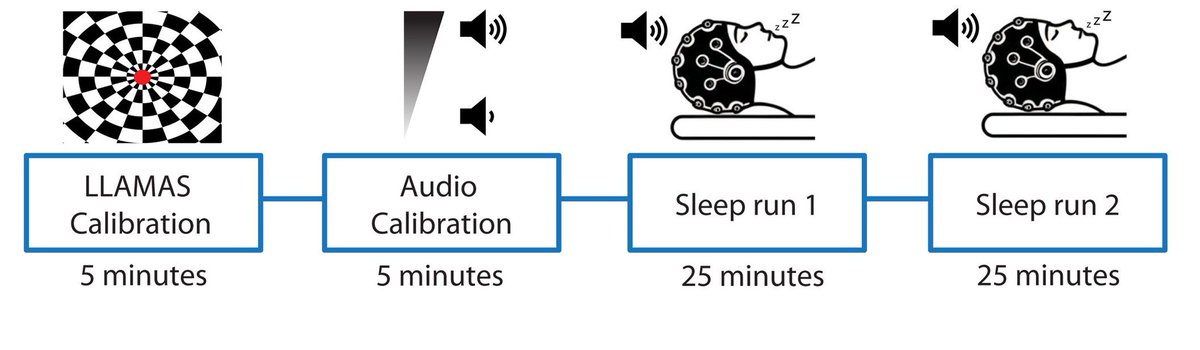
Auditory stimuli delivered in phase with peaks of #EEG slow waves in the brain increased cerebrospinal fluid (#CSF) flow in healthy adults napping inside an MRI machine, offering insight to treating dysfunctional CSF flow. @MIT_IMES@BostonU_BME https://t.co/w121MnsEue
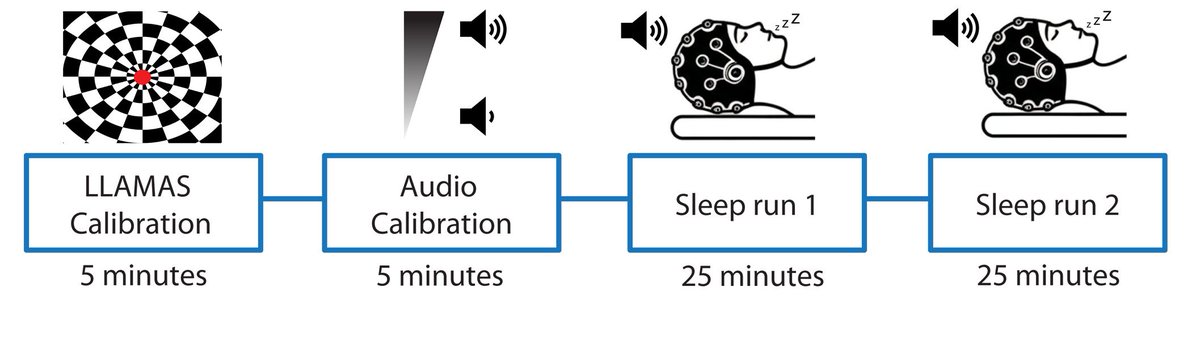
Auditory stimuli delivered in phase with peaks of #EEG slow waves in the brain increased cerebrospinal fluid (#CSF) flow in healthy adults napping inside an MRI machine, offering insight to treating dysfunctional CSF flow. @MIT_IMES@BostonU_BME https://t.co/w121MnsEue
Looking forward, we are excited to create quantitative fate maps of tumor evolution, and learn how other aspects of tumor progression - such as genomic instability - unfold over space and time. If you find these directions exciting too, we're recruiting postdocs so get in touch!
This was a years-long endeavor co-led by my stellar colleague @sundakao that started during the pandemic. It was an incredibly fun project across multiple labs including @dianyang1117@insitubiology@JswLab and @YosefLab. I am deeply grateful to these collaborators and mentors
This platform integrates our Cas9 lineage tracing technology with new spatial genomics platforms pioneered by Fei Chen's group (@insitubiology). These platforms perform unbiased capture of poly-A transcripts, enabling simultaneous spatial mapping of lineage and gene expression.
It's been known for decades that a tumor's spatial structure carries immense prognostic value. Yet, the spatial evolution of tumors has been difficult to track over time. Here, we introduce a new platform for performing spatial lineage tracing in tumors: https://t.co/BmDaIZoE5E
I am very excited to share that our latest work on spatial lineage-tracing in the KP lung adenocarcinoma model has been published in @NatureGenet today! This is the latest work from my lab at @MITBiology@kochinstitute@MIT_IMES. Thread below👇
Lydia Bourouiba, a professor in @MIT_CEE, @MITMechE, and @MIT_IMES, received the 2026 MathWorks Faculty Research Innovation Fellowship (FRIF).
📸: Conor McArdle
https://t.co/zCYEyQNBR4
When it comes to AI-assisted medical diagnosis, one size may not fit all.
A new study from @MarzyehGhassemi and team found that AI explanations affect clinicians and non-experts differently—highlighting the need to design AI support around user expertise.
https://t.co/NTbynwmUKj
In a new Science Translational Medicine study by a team including MIT-Novo Nordisk Postdoc Seyed Majed Modaresi and Prof. James Collins from @MITdeptofBE, researchers used deep learning to identify promising new compounds against drug-resistant gonorrhea.
https://t.co/5b8jLGv4NS
New paper from my group at @kochinstitute@MIT_IMES@MITBiology! I am thrilled to share that our paper describing scAmp, a new method for analyzing extrachromosomal DNA amplifications at single-cell resolution, has been published in @NatureComms. Thread below 👇
The visionary PhysioNet platform turns 25+--a system developed @MIT + @mit_hst in the 1970s. It has become one of the most comprehensive biomedical and clinical data repositories in existence! @MITEngineering Learn more https://t.co/TYDgsWLDKs
We're proud of Emery N. Brown, who recently received @MIT 's highest faculty honor: Institute Professor! He is now one of 12, inc. @MIT_IMES founding dir. Arup Chakraborty. Congrats to the brilliant physician + neuroscientist! @mit_hst https://t.co/8ufcsa5T0F
1. Can hydrogels breathe?
In our new Nature paper, we show that only 2-4 wt% aerogels can enhance hydrogel air permeability by more than 10× through viscoelastic phase separation—while preserving water-rich, tissue-like properties.
https://t.co/s4NA6gljLS
.@MIT_IMES pioneers research and education at the intersection of engineering, science and medicine to transform human health for all. @mit_hst empowers future clinician-scientists. @MIT#CuriousityOnAMission
We are looking for a Senior Lecturer/Director of Education! Responsibilities inc. overseeing @mit_hst academic affairs, educational policy+curriculum development. Help educate the next generation of clinician-scientists! Apply here: https://t.co/EYrmDXkRAj
A new study published in @ScienceMagazine led by Alex Shalek, director of @MIT_IMES, shows how a key T cell protein called LAT keeps immune responses in balance.
https://t.co/G1e7TjJ4k0