We’re sharing the next major milestone in our non-invasive brain-to-text decoder research: Brain2Qwerty v2.
Building on v1, which was published today in @Nature, Brain2Qwerty v2 is the highest-performing end-to-end pipeline capable of real-time sentence decoding from raw brain signals. It advances beyond character-level performance to decoding words and semantics, enabling accuracy for overall communication.
We believe this research has the potential to make a real difference for the millions of people who suffer from brain lesions or disorders that prevent them from communicating.
🧵👇
SAKANA FUGU ULTRA vs. CLAUDE OPUS 4.8 RESULTS
Prompt: "build a really high quality single html file crossy road game with three.js"
Sakana Fugu Ultra:
- Tokens Used: ~89k ($7.32)
- Time Elapsed: 22 minutes
- Issues: inverted directional turn, wonky camera, no sfx, not identical to Crossy Road game
Claude Opus 4.8 Ultracode:
- Tokens Used: ~940k (~$37.85)
- Time elapsed: 79 minutes
- Issues: got stuck twice in a retry loop (had to prompt to self-correct), wrong character position after restart, difficult from the start (whereas Fugu's version got significantly more difficult as you progress, which is the correct behaviour)
I think in terms of application functionality, quality, and design, Opus won. In terms of model speed and performance, Fugu on Opencode won.
What are your thoughts? Comment down below who you think won! ⬇️
🚨JAPANESE AI STARTUP JUST MATCHED CLAUDE FABLE 5 AND MYTHOS PERFORMANCE.
Japanese AI lab just launched Fugu, a model trained to command other models.
Sakana AI, a Tokyo-based AI startup, was co-founded by researchers including one of the authors of the original Transformer paper, the blueprint that basically every AI model today is built on.
Sakana Fugu is a multi-agent AI system that feels like a single model, automatically orchestrating specialized models behind one API endpoint.
Fugu Ultra is claimed to match Anthropic's Fable 5 & Mythos Preview on the hardest engineering/science/reasoning benchmarks — and to beat Gemini 3.1 Pro, Opus 4.8 & GPT-5.5 on tasks like AutoResearch, mechanical design & financial forecasting.
Everyone's racing to scale ONE giant model but Fugu flips it: an LLM that orchestrates a pool of the world's best models (choosing who does what, delegating, verifying and merging it into one answer), even calling itself recursively.
Think of it as a conductor. You send one request to one API, and Fugu figures out the move: answer it solo, or assemble a squad of expert models and run the whole thing for you.
Sakana AI launched two models:
Fugu - fast, low-latency, everyday coding/chat
Fugu Ultra - max quality on hard, multi-step problems (AI research, paper reproduction, cybersecurity, patent search)
Export controls are hitting frontier models now, but because Fugu's agent pool is swappable, if a provider restricts access, it routes around it.
Both Fugu and Fugu Ultra can be accessed through a unified API, with subscription plans for everyday users and pay-as-you-go pricing designed for high-volume and enterprise workloads.
This is brilliant corporate finance. Use your newly printed, low float, retail inflated currency to acquire real businesses ahead of the lockup expiring. Probably the most creative/accretive way to sell as much equity as possible into IPO pump. I wonder what acquisition is next.
BREAKING: SpaceX has agreed to acquire Cursor, the world's fastest growing software startup, for $60 billion in an all stock deal.
Cursor has over 1 million paying customers, more than $2 billion in annualized revenue, and is projected to hit $6 billion by end of 2026.
At $60 billion, this is the largest software acquisition in history, paying 20 to 30 times Cursor's current revenue.
The deal is subject to regulatory approval and expected to close in Q3 2026.
SpaceX now owns the rockets, the satellites, the AI models, the chips, and is about to own the tool every developer on earth uses to write code.
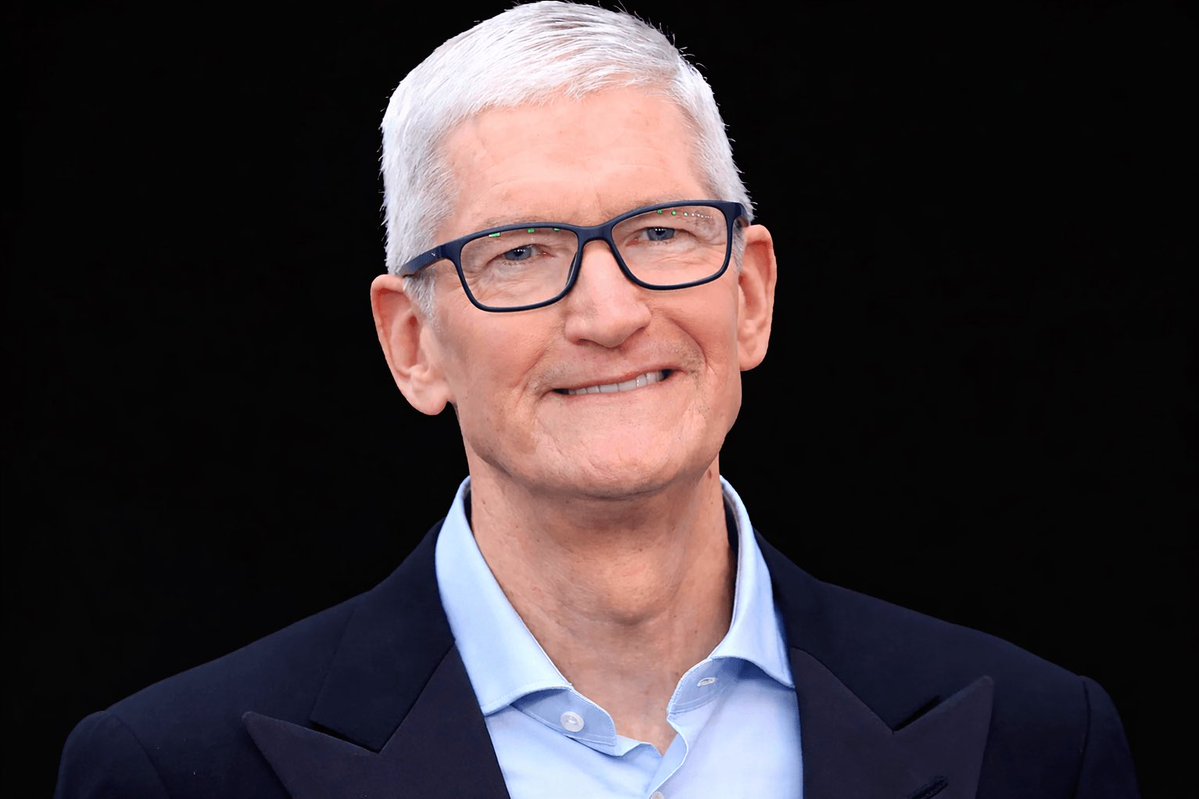
Tim got Cooked. Meet John Ternus, new Apple CEO.
— Led the shift to Apple Silicon. Killed Intel, shipped the M1
— Behind every iPhone, Mac, iPad, AirPods, and Vision Pro of the last decade
— Mechanical engineer from Penn. No MBA. No finance background. Pure hardware
— Youngest exec on Apple's leadership team
Cook turned Apple into a $4T company by being probably the best operator in tech history.
Ternus is a hardware engineer taking over in the middle of the AI war. Apple has the best devices on the planet and some of the worst AI.
Might be exactly the right guy at exactly the right time. What do you think?
Today, Tim Cook announced he is stepping down as CEO of Apple.
$AAPL was worth $350 billion when he became CEO in 2011.
Nearly 15 years later, it's now worth over $4 trillion, a 1050% increase.
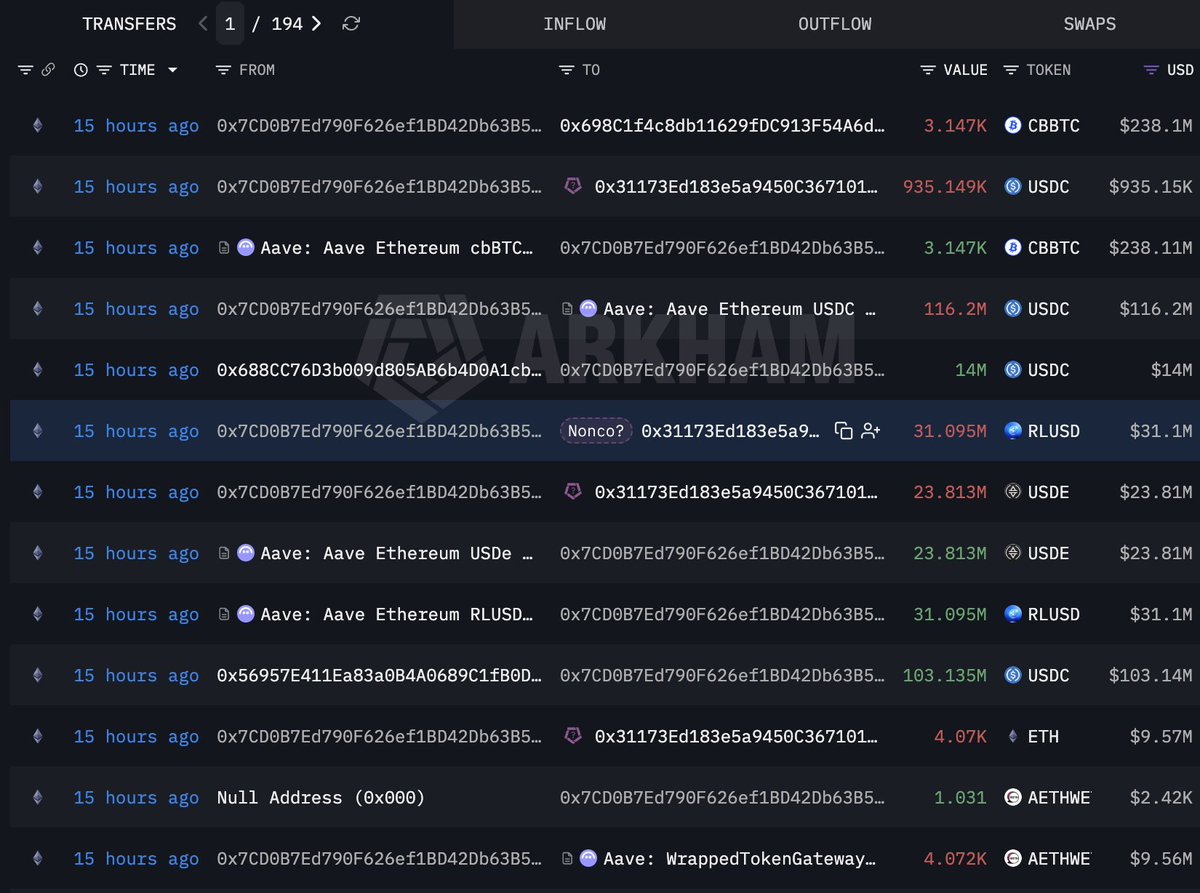
Due to the KelpDAO exploiter borrowing over 82,600 $ETH ($195M) from #Aave using $RSETH as collateral, bad debt has appeared on #Aave.
Many whales have withdrawn funds from #Aave, causing its TVL to drop from $26.396B to $20.114B — a decline of $6.28B.
Major withdrawals include:
• MEXC withdrew $431M
• Whale 0x7CD0 (possibly linked to Nonco) withdrew $405.7M
• Abraxas Capital withdrew $392M
...
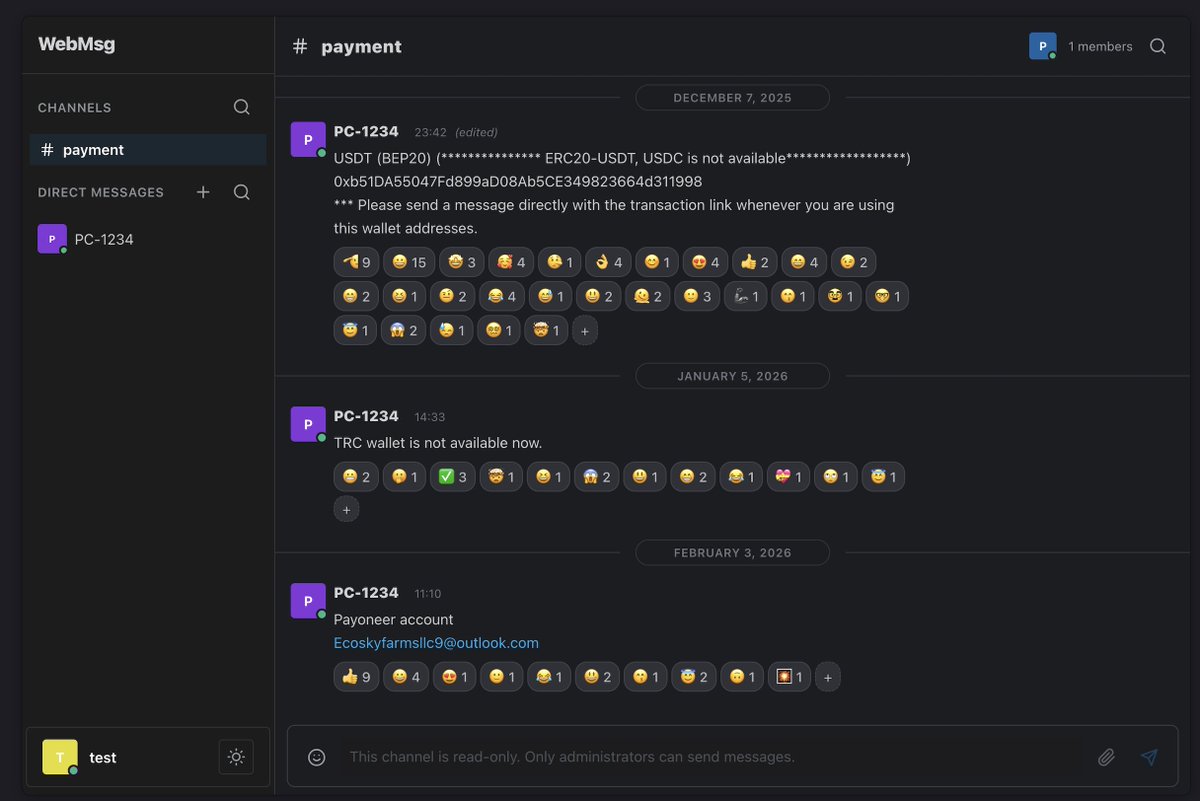
1/ Recently an unnamed source shared data exfiltrated from an internal North Korean payment server containing 390 accounts, chat logs, crypto transactions.
I spent long hours going through all of it, none of which has ever been publicly released.
It revealed an intricate ~$1M/month scheme of fraudulent identities, forged legal documents, and crypto-to-fiat conversion.
Enjoy the findings!
i'm not satoshi, but I was early in laser focus on the positive societal implications of cryptography, online privacy and electronic cash, hence my ~1992 onwards active interest in applied research on ecash, privacy tech on cypherpunks list which led to hashcash and other ideas.
north korea deposited $1M into drift, attended conferences for 6 months, and built real relationships with the team.
the most dangerous hackers don't look like hackers.