We’re opening a research preview of Claude Duet, a new app where Claude works as a proactive agent.
It comes to you with what needs your attention, completes tasks you ask of it, keeps working when you step away, and checks with you before it acts on your behalf.
Seven new models launching at Build: let’s go!
Reasoning. Code. Image. Transcribe. Voice.
Built from scratch on a clean data lineage, designed for efficiency, working seamlessly as a family of models
Thread 🧵
MAI-Code-1.1-Flash is going local with on-device model calls inside Github Copilot.
High-quality agentic coding on your device, with no inference charge for local model calls.
At 2:13 AM, an AI agent detects unusual login behavior, disables a compromised account, checks for malware, opens a ticket, and drafts an incident report.
That's not science fiction. And you don't need to write a single line of code to build something like it.
Learn how to create agents using Microsoft 365 Copilot: https://t.co/AZAEhZD8um
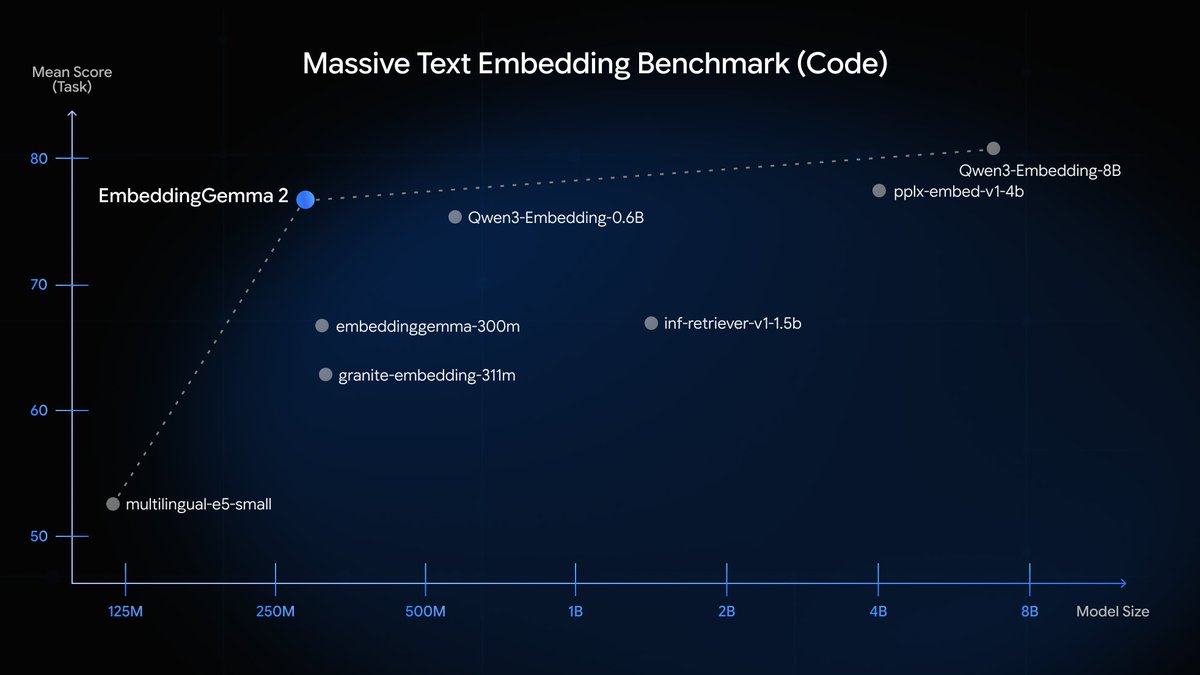
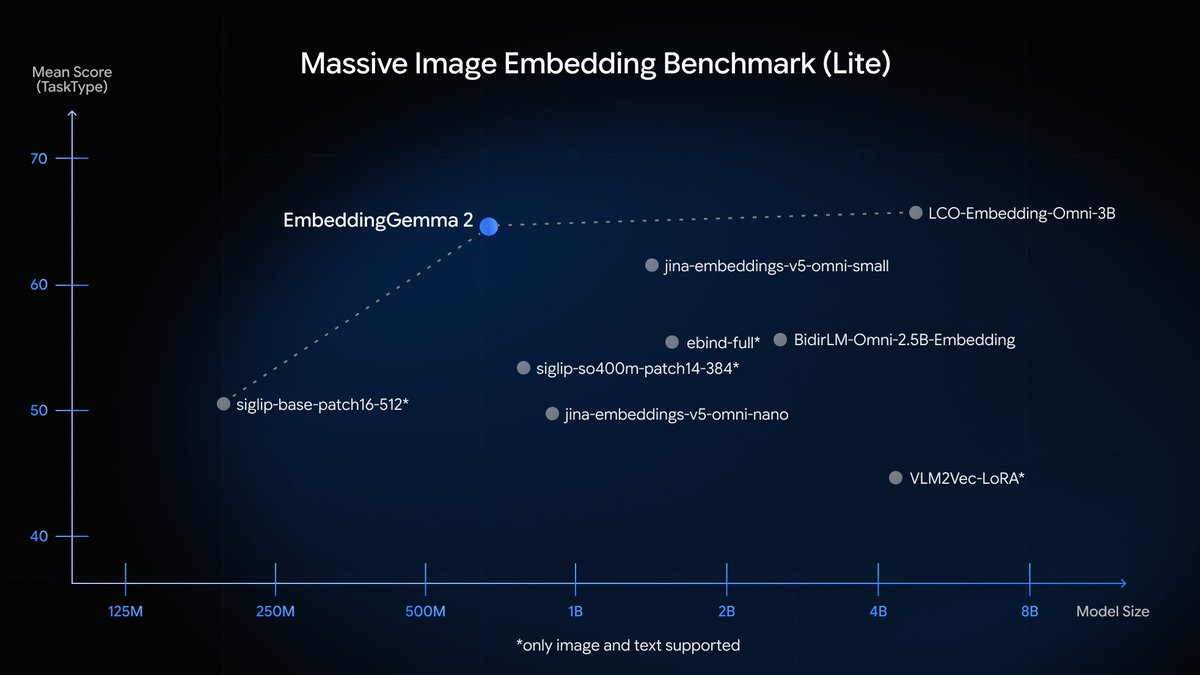
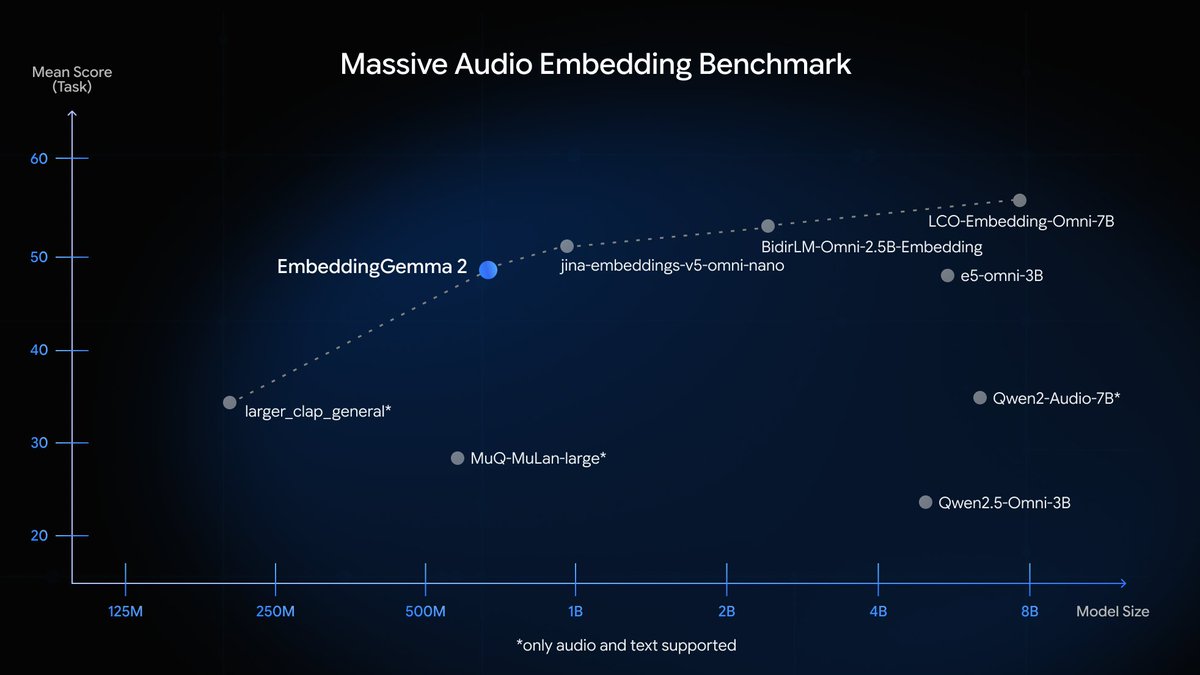
At 740M parameters, it’s competitive across benchmarks – even outperforming some specialist models more than twice its size.
Developers can use it to add multimodal search to their apps – like finding moments in a video using a voice memo – or pair it with Gemma 4 for private, on-device RAG.
EmbeddingGemma 2 is released under an Apache 2.0 license. Check out the weights on @HuggingFace and @Kaggle.
Find out more → https://t.co/lRsjbvR5VB
SynthID Detector is now available to everyone. 🌐
Check whether online content was generated using @GoogleAI, or with tools from our industry partners – including @OpenAI, @NVIDIA, Kakao and coming soon, @Apple.
Try it out → https://t.co/cPW2aNnqr6
Meet EmbeddingGemma 2, our first natively multimodal open model for on-device embeddings.
It expands beyond text to unify code, images, audio, and video in a shared space. 🧵
We'll be spending a lot more time trying to understand the outputs of language models. A few thoughts, tips & tricks:
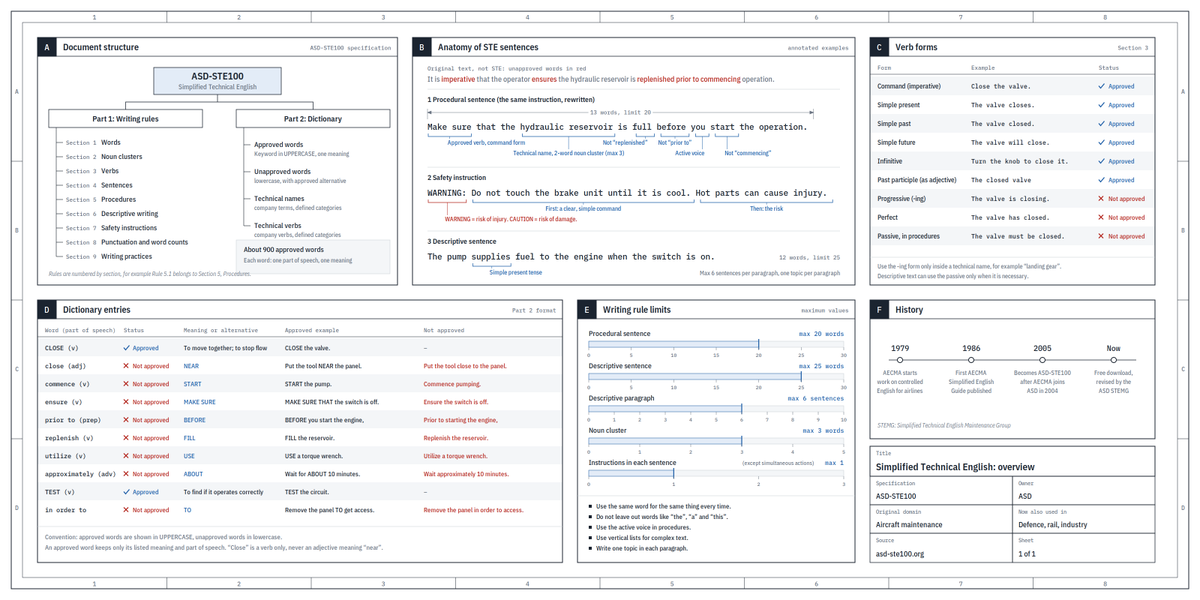
Writing. Something I've had success with: Ask your LLM to explain something in ASD-STE100, it's a controlled language specification originally developed for aerospace maintenance documentation. LLMs well-versed in this language and it comes with heavy constraints on clean writing style that I often find a lot more readable. Sometimes I've tried to soften it a bit e.g. ask for "80% of the way to ASD-STE100" because the spec is quite stringent. But even better:
Diagrams / images. Instead of writing, ask your LLM to create a diagram. These can be a lot easier to process, parse, and understand. But even better:
Web pages. Ask for output "in HTML" to get a beautiful, interactive webpage. LLMs are getting really good at frontend and can create beautiful experiences, animations, etc. But even better:
Explainer videos. The output format I am most bullish on is fully custom / bespoke explainer videos generated on any arbitrary topic. Experiment with things like "Create a 3b1b style video explainer on X. Use my ElevenLabs API key for audio narration". (you'd need an API key for the latter or you can ask your LLM to find you decent free alternatives that use your local compute). This is actually starting to work!
In summary:
- As LLMs get better, they will do more and more of the legwork autonomously, and a lot more of our work will rise up the abstractions into oversight and understanding.
- Luckily, LLMs can help here too because as intelligence and code are increasingly abundant, you can ask for large, custom, discardable software artifacts (e.g. web apps, video explainers) that would have never made sense to create before. Push the boundaries here and you'll be surprised.
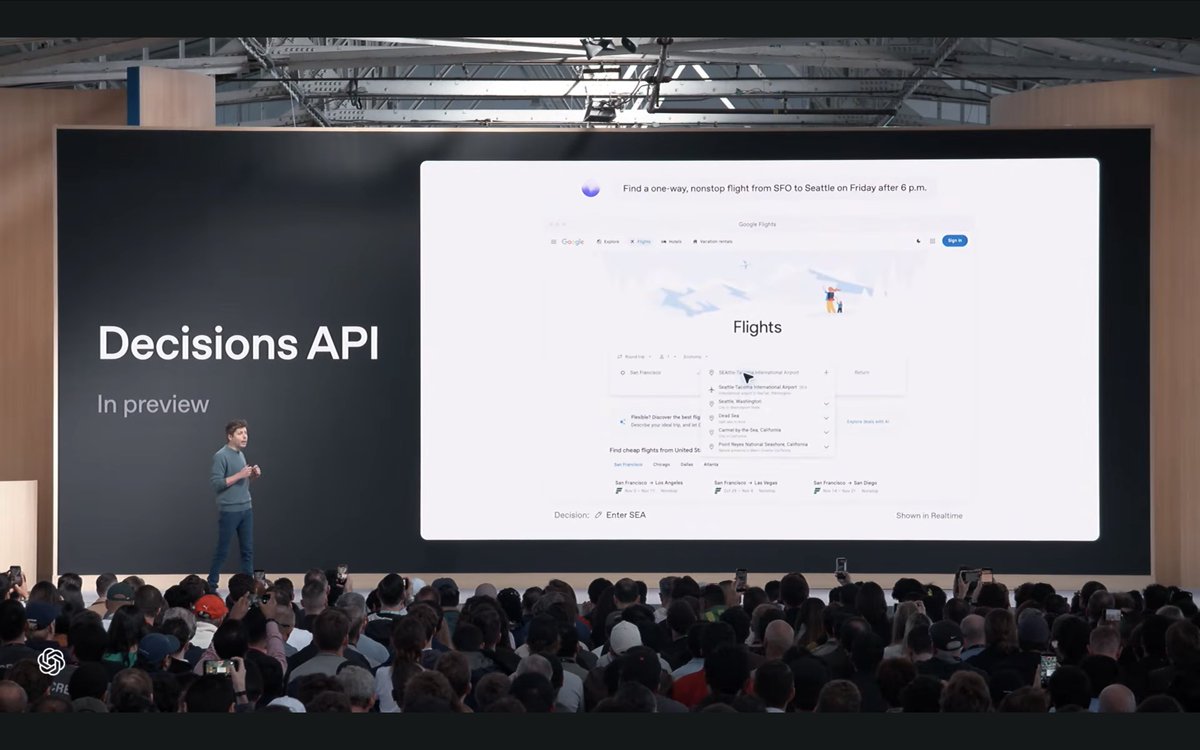
We turned Qwen3.8-27B into a multimodal decision model.
It beat Pokémon FireRed’s elite four and champion with sub-100 ms decisions from live game state.
With SGLang’s native /v1/decisions, you can now turn LLMs and VLMs into classification and scoring models.
We also added /v1/systemone so Jev-like open models can work with the TypeSafe SDK.
Didn't expect this 🤯
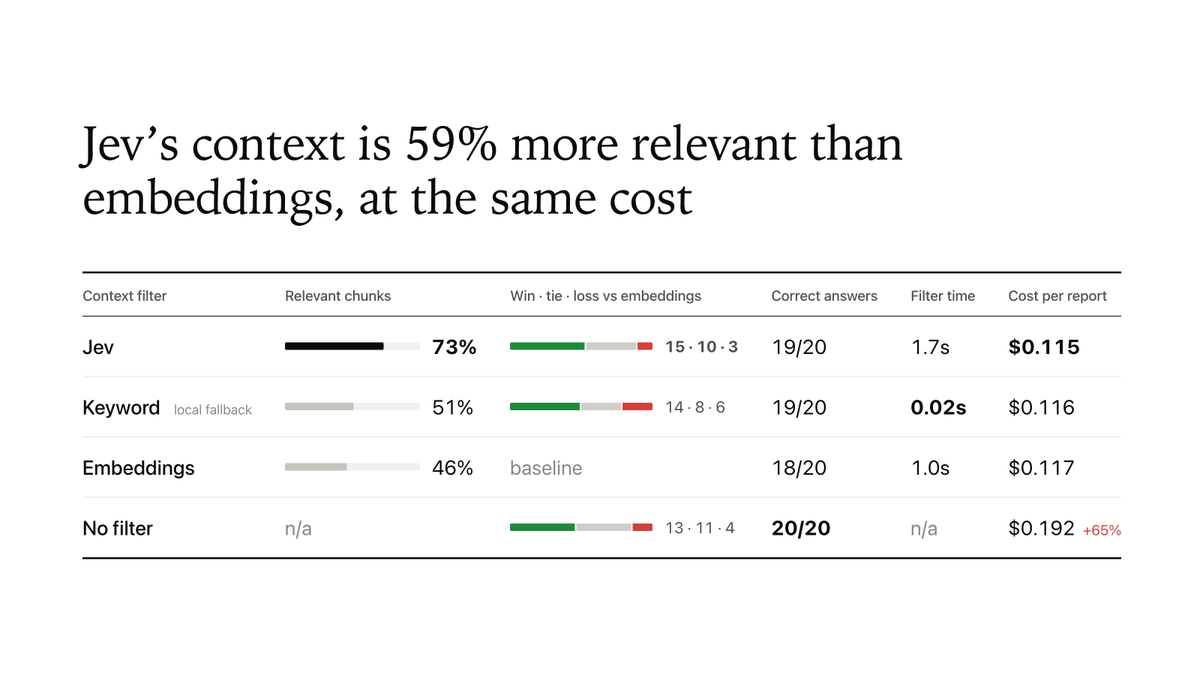
We replaced embeddings with Jev in GPT Researcher's RAG pipeline and tested both on 28 research tasks from SimpleQA and open ended research.
Jev beat embeddings on every quality measure we ran:
- 59% more relevant context (73% vs 46%)
- Reports preferred 15 to 3 in blind comparisons
- Same cost per report
GPT Researcher now runs on Jev by default, and no longer needs embeddings at all.
All you need is @LangChain + @tavilyai +Jev for the perfect RAG system.
Check out the repo here: https://t.co/kcvF5tPlWq
Research: https://t.co/QZIoRFnGQq
Kling 4.0 is coming this October. Kling 4.0 Flash is live now for Ultra Yearly subscribers.
Kling 4.0 brings video creation to a new level of visual realism, creative control, and narrative completeness.
🎞️ Upgraded Audio & Visuals: Stable dynamic motion, high-quality stereo audio, more accurate lip sync, up to 4K resolution, and 10-bit HDR output.
🔮 Omni Reference: Richer reference options with up to 15 multi-modal references, more consistent results, and enhanced video editing.
🎥 Seamless Storytelling: Multi-keyframe control supporting up to 10 keyframes, native 30-second generation.
🌍 Diverse Possibilities: Video extension, support for multiple languages, accents, and dialects.
The stage is set. You call the shots!
Introducing Team Bots, shared AI teammates that learn as your team works with them.
Give your Team Bot the skills, plugins, and credentials it needs for its role, then work with it in Slack or Grok Bot.
Ollama now supports Jev-like decision models all locally.
Use decision models like Nimble for tasks like ticket triaging, model routing, and content moderation.
ollama pull nimble
Here’s Nimble playing Ollama racer through the new local /v1/systemone API by making decisions in real-time. 🏎️
Today, with over 100 industry partners, we introduced the NVIDIA Open Agent Safety Platform, bringing together OpenShell and Sentry.
Artificial intelligence is extraordinary technology that will advance discovery, productivity, security, health, and prosperity for generations to come.
But its full promise can only be realized when people have confidence that AI is being built to be safe and deployed with wisdom and responsibility.
This is bigger than a single product. It's the beginning of an open ecosystem to build the trust layer for safe agent systems.
Together, we are building the foundation of the AI economy.
Trust and innovation are not in conflict. Safety is how trust is earned. We must build not only the most capable AI, but the most trusted AI, so that this extraordinary technology can realize its enormous promise for the world. https://t.co/ugYWQ1MyRi