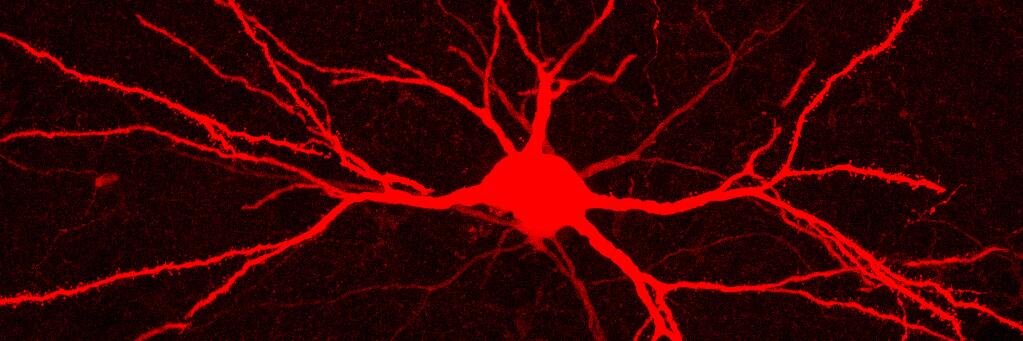
#JNeurosci: Adkins et al. explored how binge alcohol exposure and protracted abstinence impact the S1-insular circuit in mice, revealing how alcohol can reshape sensory processing to drive alcohol use disorder-related behavior.
https://t.co/SZpF2V8hmD
Institutions can be wrecked by well-intentioned decision heuristics, not just selfish admins and regulation... "Avoiding administrative bloat requires tolerating some noncritical problems or resolving them ad hoc, rather than codifying every potential issue into a process."
Between 1985--2023, MIT's faculty grew 9%. Administrative staff grew 189%. 📈 Why? In new @PNASNews paper, we use dynamical system model to show administrative bloat can emerge without empire-building--just from well-intentioned problem-solving gone awry https://t.co/MZgGkxilZ2
Excited to announce a powerful new one-two punch for voltage imaging from our lab and collaborators! In two new preprints, we introduce ASAP6c for high-throughput population spike-recording, and ASAP7yfor deep, subthreshold 2P imaging.
🧵 1/14
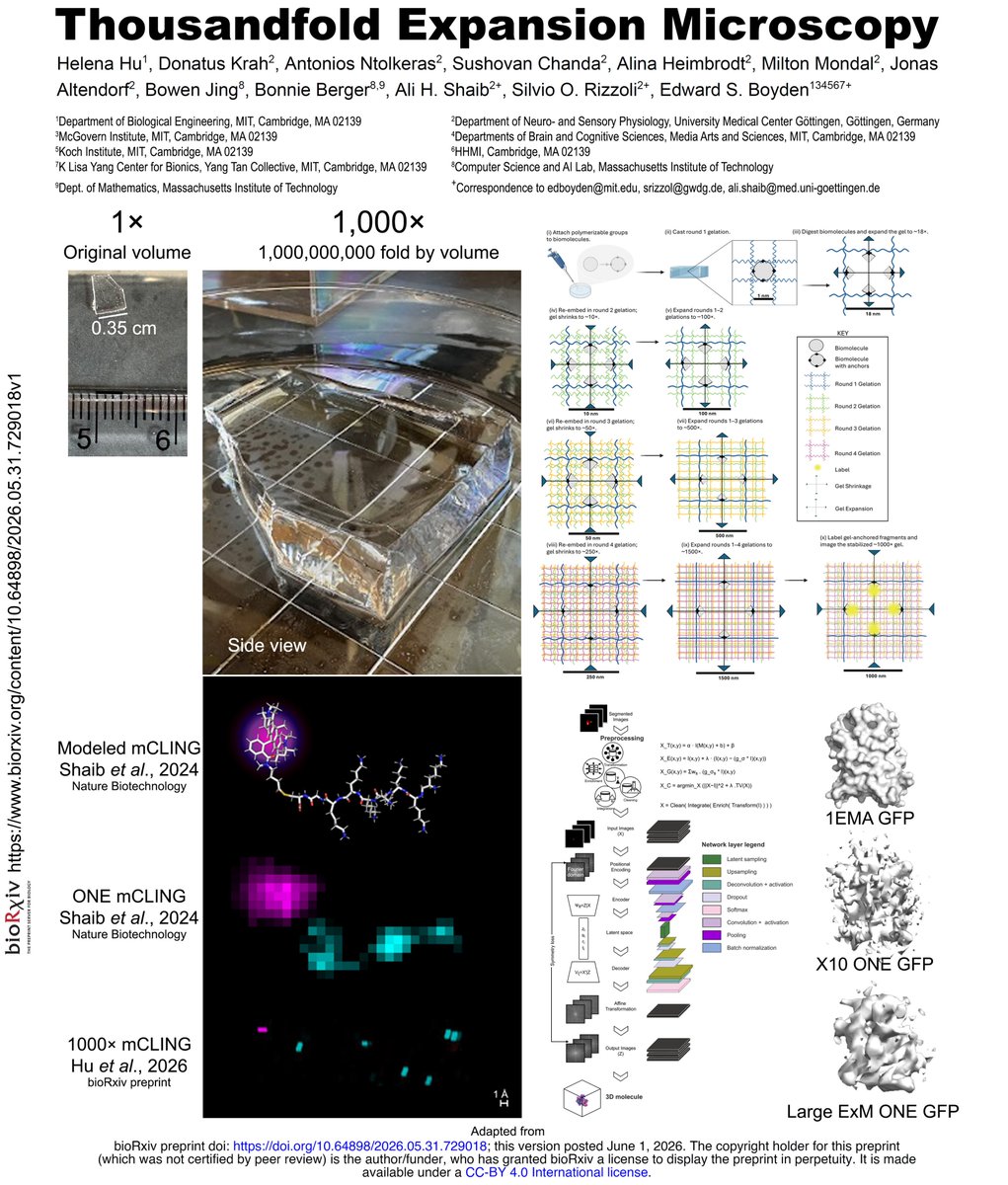
Hello world, meet 1,000× Expansion Microscopy.
1,000,000,000× expansion by volume! A gel that starts at a few centimeters will then expand to the volume of an Olympic swimming pool. https://t.co/E43kxx4O5M
In our new bioRxiv preprint, work carried out between MIT and UMG, led by Helena Hu in collaboration with scientists from the labs of @eboyden3 Ed Boyden, Silvio Rizzoli, and myself, we present Thousandfold Expansion Microscopy.
By enlarging biological specimens across multiple rounds of expansion, molecular-scale features, as small as the distances between adjacent amino acids, can be visualized with conventional optical microscopes.
Democratizing super-resolution microscopy.
Many congratulations to DPAG's own Professor Paul Riley and the 11 other University of Oxford scientists who have been made Fellows of The Royal Society https://t.co/SmFOoD0pTd
Introducing GLOBE—a new technology for brain-wide, single-cell recording of cellular activity in vivo. GLOBE can continuously record from nearly a quarter million individual neurons simultaneously across a mouse brain.
Preprint out on bioRxiv: https://t.co/JnP5bBvX9Q
🧵(1/6)
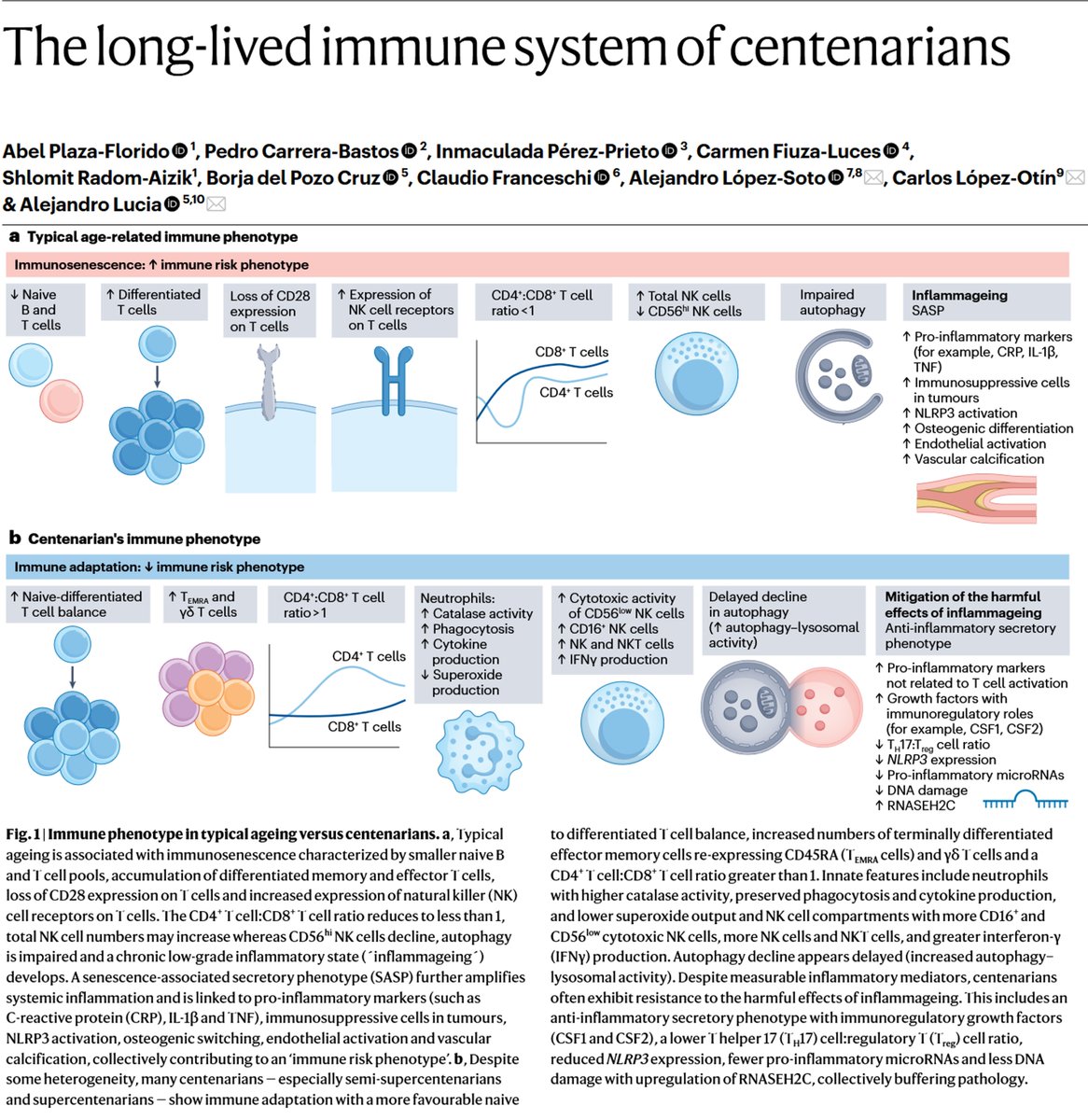
Centenarians show immune function found in younger individuals.
Their immune system show reduced inflammatory signaling, enhanced autophagy, and controlled cellular senescence. They have low or no autoimmune disease, robust immunity against cancer and a distinct immune cell profile. Together, these adaptations help maintain immune balance and may offer clues for extending healthspan.
https://t.co/9NN4XjRwSR
Today in @Nature, we report MouseMapper: foundation-model AI to map disease perturbations across the entire mouse body cell-by-cell.
In obesity, it revealed body-wide inflammation & unexpected facial nerve damage. 🧵👇🔉
https://t.co/BERf5GQ10Z led by @Dorie00 & @yingchen733
You are looking at NOBEL PRIZE WINNING work.
These are the stars orbiting the supermassive black hole at the heart of our galaxy. Here is everything you need to know about it:
𝗪𝗵𝗮𝘁 𝗱𝗼𝗲𝘀 𝗮 𝗯𝗿𝗮𝗶𝗻 𝗱𝗼 𝗮𝗻𝘆𝘄𝗮𝘆?
Fascinating and profound book on what brains are *not* and what they might be. Including criticism of the computational and predictive brain frameworks.
You might not agree with some of it but quite thought provoking.
A 2P voltage indicator compatible with standard resonant scanning microscopes –– dramatically reducing the technical and financial barriers to voltage imaging. Nice work St-Pierre lab!
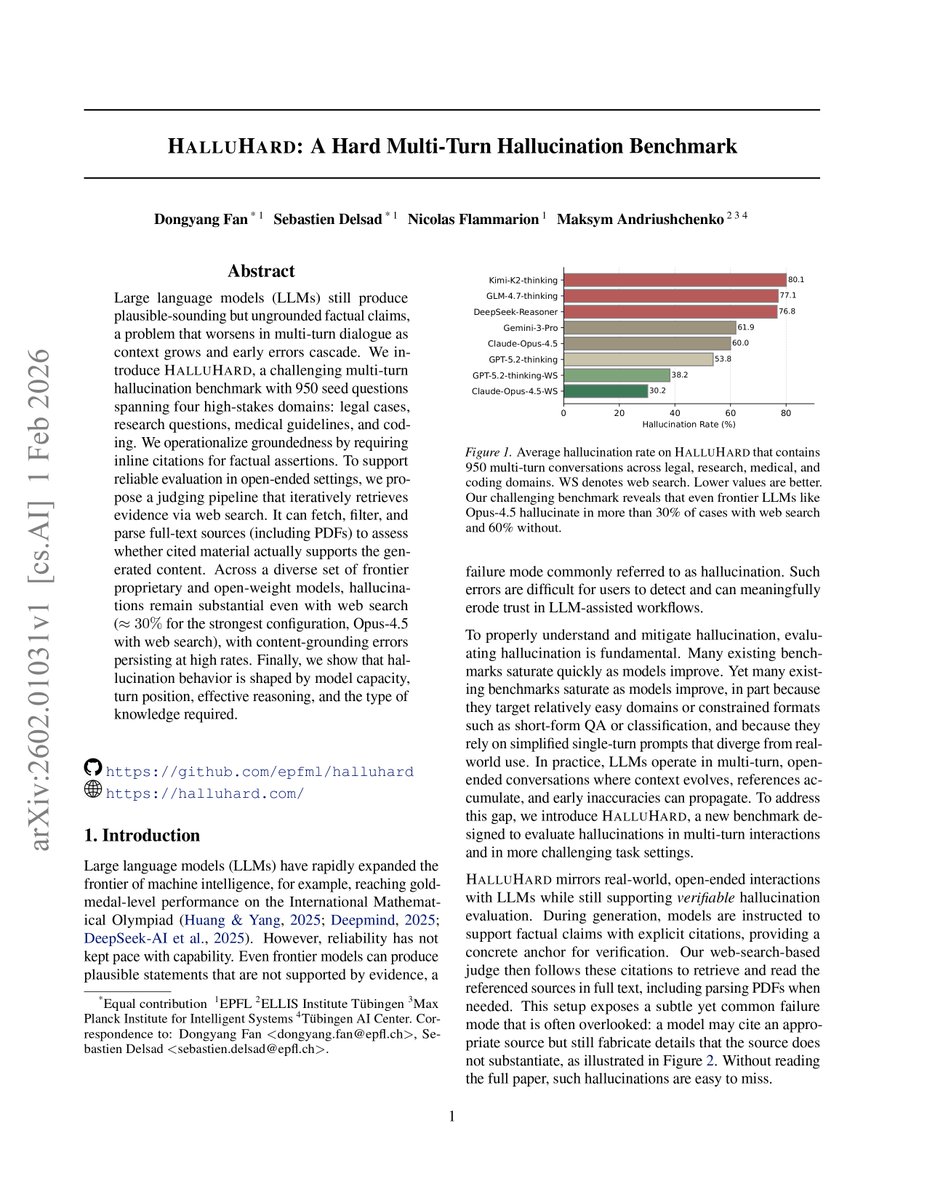
Researchers at EPFL proved your AI is lying to you.
Not sometimes. Most of the time.
They built one of the hardest hallucination tests ever made with Max Planck Institute. 950 questions. Four domains where being wrong actually hurts. Legal. Medical. Research. Coding.
Then they ran every top model on it.
The results.
GPT-5. Wrong 71.8% of the time.
Claude Opus 4.5. Wrong 60% of the time.
Gemini 3 Pro. Wrong 61.9% of the time.
DeepSeek Reasoner. Wrong 76.8% of the time.
These are the smartest AI models on Earth. The ones you trust with your career. Your health. Your money.
You think turning on web search fixes it.
It doesn't.
Claude Opus 4.5 with web search. Still wrong 30.2% of the time.
GPT-5.2 thinking with web search. Still wrong 38.2% of the time.
The internet attached. Still lying to you in 1 out of every 3 answers.
Now the part that should scare you.
Medical questions. The one place being wrong can kill you.
GPT-5 hallucinated 92.8% of the time on medical guidelines.
Claude Haiku 4.5 hallucinated 95.7% of the time.
Gemini 3 Flash hallucinated 89% of the time.
Nine out of ten medical answers from popular AI models. Wrong.
It gets worse.
The longer you talk to it, the more it lies.
Early mistakes cascade. The model starts citing its own earlier hallucinations as facts. Your third message is more wrong than your first.
The paper, in its own words: "hallucinations remain substantial even with web search."
This is what hundreds of millions of people are doing right now. Asking software that lies in the majority of its answers. About their health. About their job. About their legal case. About their code.
Most are not checking.
Most never will.
But please. Keep using ChatGPT for medical advice.
The doctors need a break.
https://t.co/dHBP5CDpTM
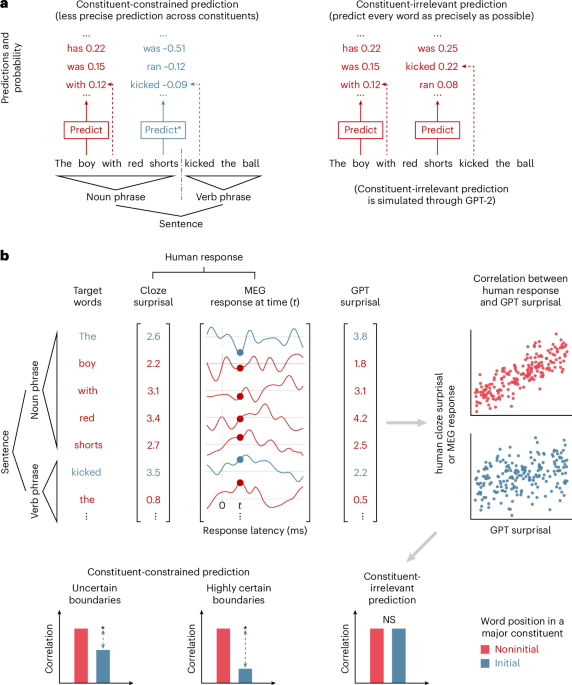
The brain does not predict every upcoming word during language comprehension with maximum precision, contradicting the assumption that next-word prediction serves as the central computational objective of the human language system.
https://t.co/pdDA755BYz
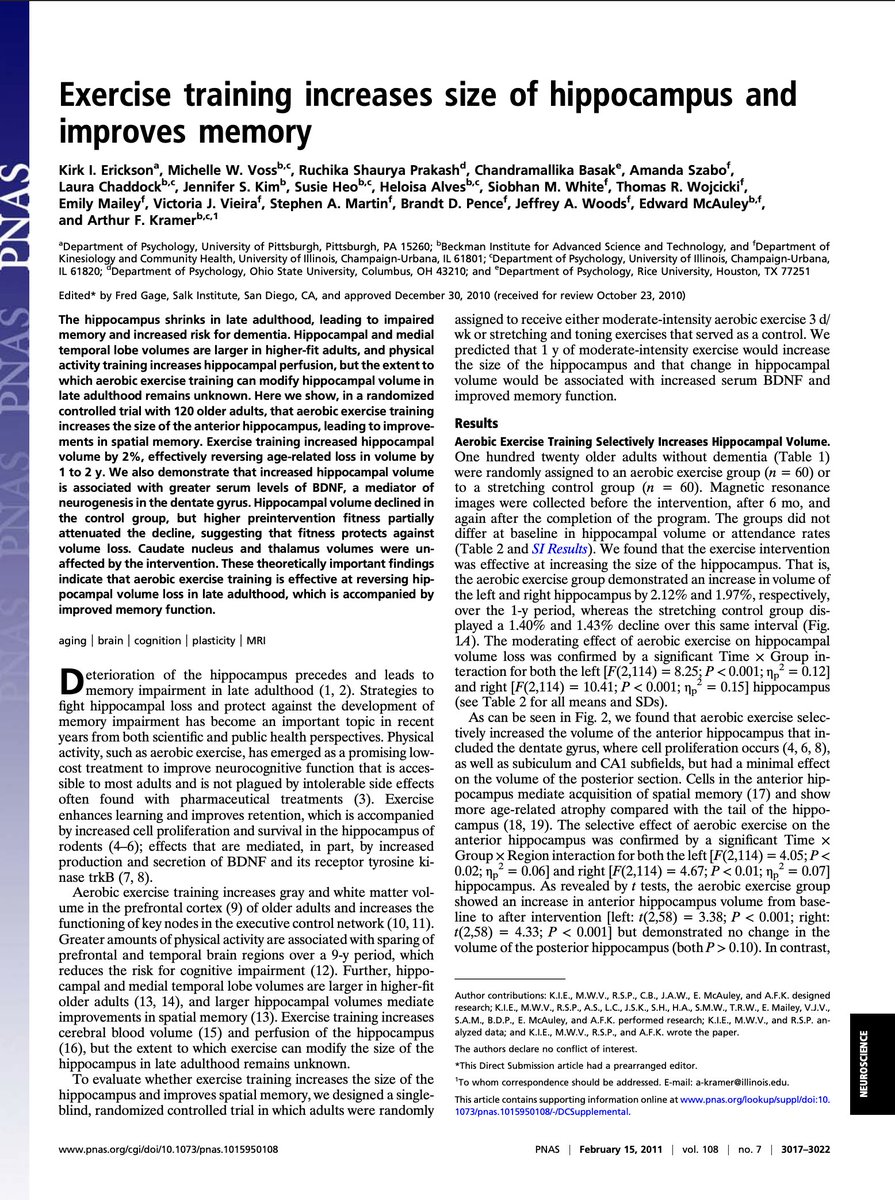
Your hippocampus shrinks ~1 – 2% per year as you get older. This leads to worse cognitive performance, especially memory.
In this study, adults grew back 2% of their hippocampus in a year by walking 40 min just 3 times per week.
The control group hippocampus continued to shrink by 1.4%.
Walking isn't just about burning calories. It's one of the best things you can do for brain longevity.
Just out in @NatureNeuro! Eyelash-sized Neuropixels probes show how brief electrical bursts between seizures ("interictal spikes") arise from consistent neurons in human cortex layers, hijack neurons used for cognition, & can be predicted up to 1-sec ahead
https://t.co/9vYLC56ic8
MIT researchers found a paradoxical phenomenon in optical physics: under the right conditions, a chaotic mess of laser light can spontaneously self-organize into a highly focused “pencil beam.” This could enable a fast, high-resolution bioimaging method. https://t.co/HrRwwsAikZ
A student asked: "If sore throats are caused by a virus or bacteria, how come sleeping under the fan or drinking cold water gives it?"
I am surprised most people are not aware of the answer to this.