This enormous disk object formed soon after the Big Bang, challenging what we know about how galaxies grow. @themiyan@Swinburne https://t.co/70J3gy5WtG
Long-period radio transients emit powerful polarized signals lasting up to ~an hour. While their origin is debated, ASKAP J1935+2148's discovery with diverse (neutron-star-like) emission modes challenges our ideas of these phenomena. @ManishaCaleb et al.: https://t.co/8OB1WRGcf4
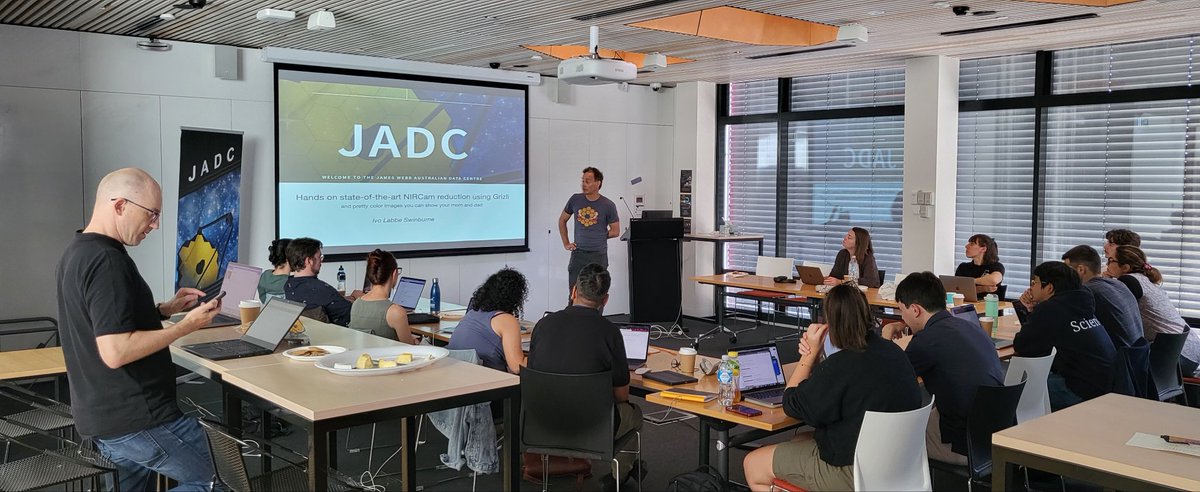
JWST Master Class in Melbourne. 3 days of learning how to plan, observe, and reduce data from @NASAWebb at JADC @Swinburne. Thanks for @AusSpaceAgency for financial support and @stsci for providing expertise.
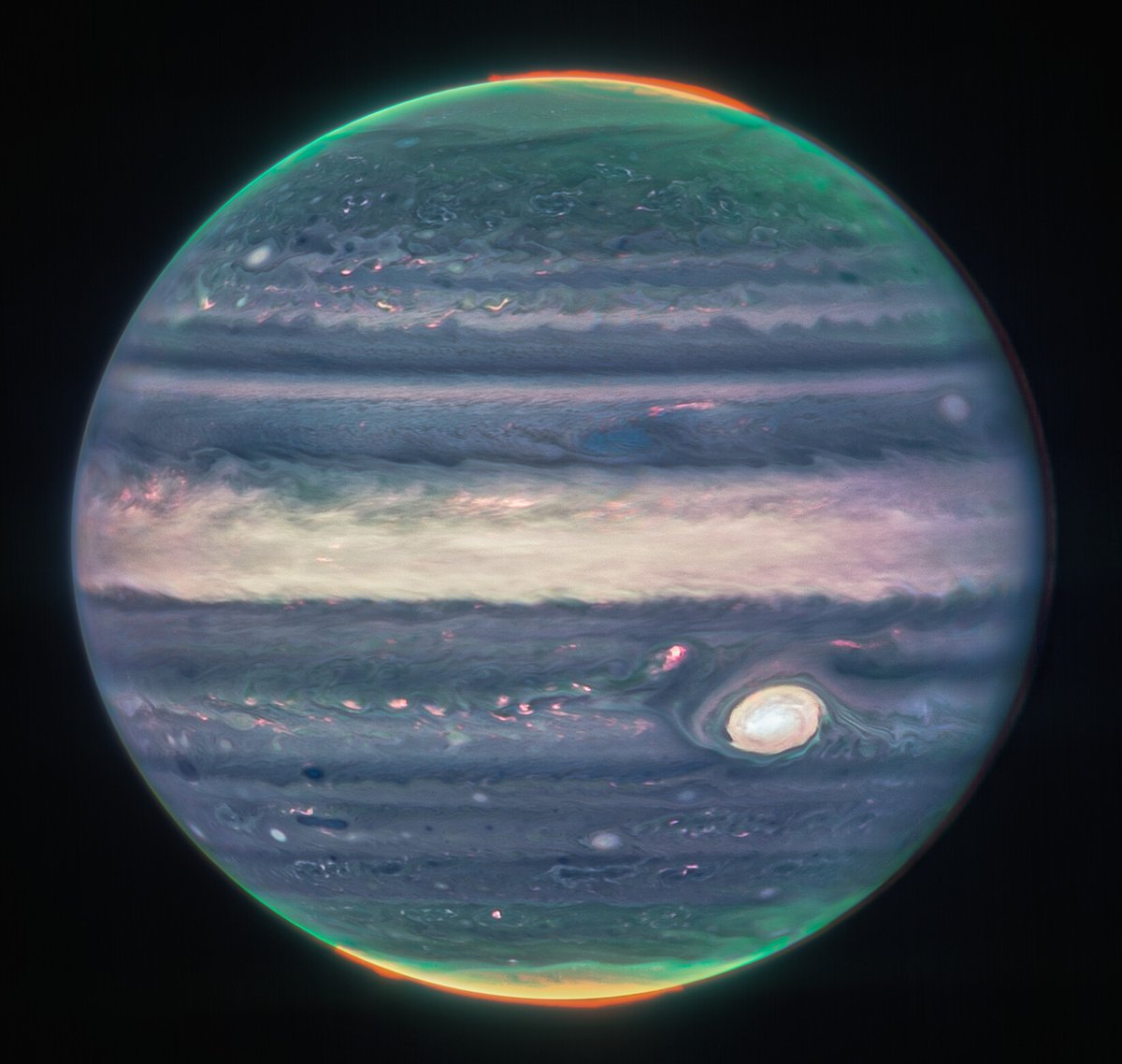
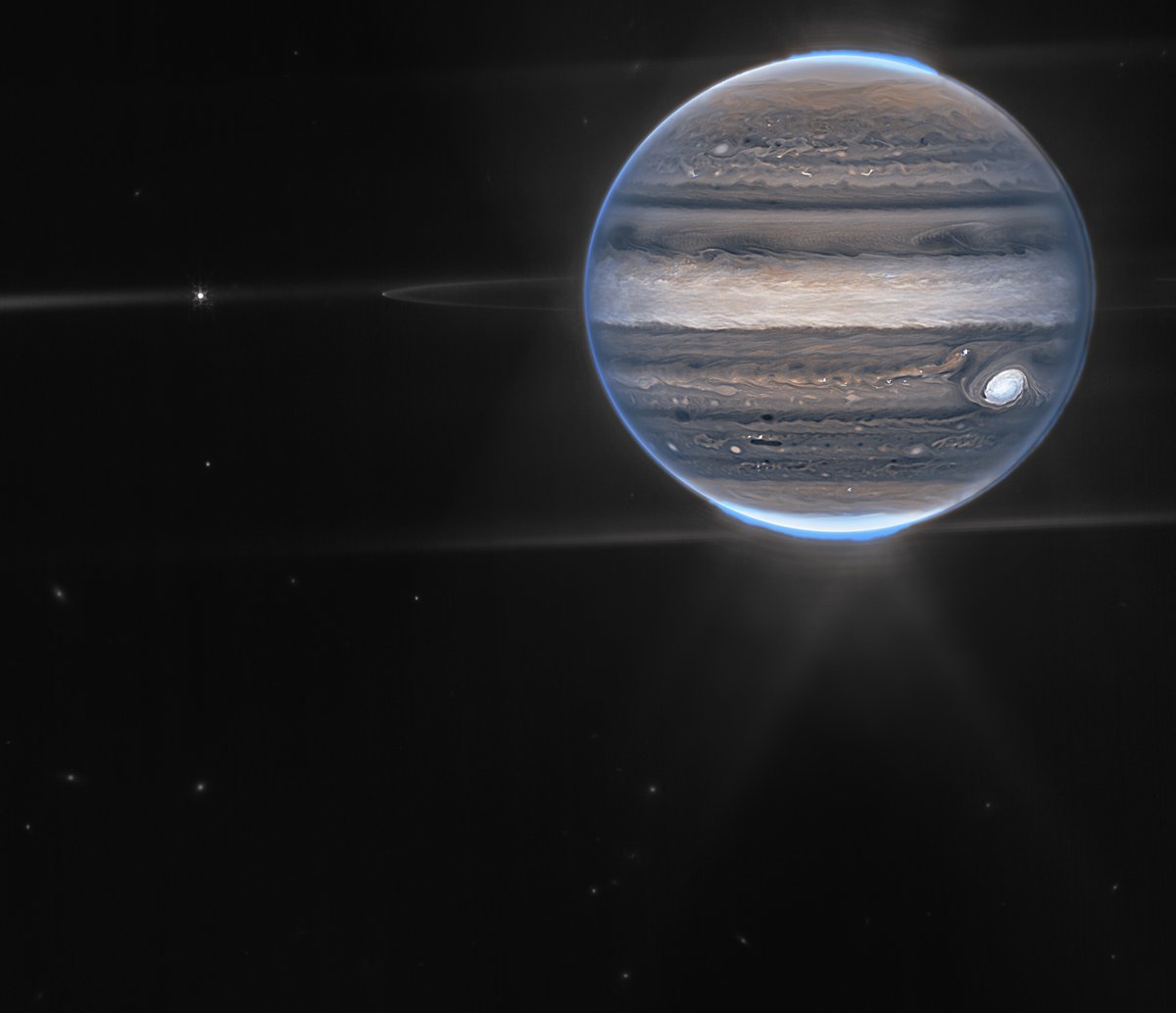
#Webb has captured new images of #Jupiter! The new observations feature visible auroras that extend to high altitudes above Jupiter's northern and southern poles. Explore the new images here: https://t.co/mn366GZ6BQ
Are you teaching a course on #LymanAlpha?
Giving a talk? Or just Lyman α-curious? 🧴
I made some nice animations that you can use, and wrote some short introductions to the wonders of Lyman α:
https://t.co/CqJocnYSJH
@jorryt_m@Introspect_Rych@sarahkendrew I wonder if nebular continuum from these (massuve, hence dustier?) galaxies can be that prominent? There can be slight ZP variations that drive this too I guess.
@janerrigby Thought v1.1 would be it! After tens of iterations with @karlglazebrook glad v7 made it! Astrometry (thanks @gbrammer!) and TA on "good" sources was the tricky part.