Since 2008, the OKC has brought together researchers to tackle the biggest challenges in physics. Learn more about what working at the OKC is like here 👇!
@Fysikum@astronomy_su
https://t.co/FAfEdFhpgN
The OKC is looking for a new science communicator, starting February 1.
The position is at 50%, and financed through the EDUCATE initiative within the OKC. Application deadline is December 31.
For information, please visit:
https://t.co/FyxfNUnOmX
OKC member Seán Brennan from the @Stockholm_Uni Astronomy Department will talk about "From Photons to Supernova: How Light Reveals the Secrets of Stars" at the Science Today event at the Nobel Prize Museum, Friday 22 November, 18:00-19:00.
https://t.co/nHPHUeajFq
⭐⭐ Congratulations to OKC members Matthew Hayes, Angela Adamo, Garrelt Mellema and Göran Östlin who were awarded 25 million SEK from the Wallenberg Foundation to do research into the reionization of the Universe. ⭐⭐
https://t.co/1Z5f36rd5H
Former OKC member Pedro de la Torre Luque and current member Tim Linden has analysed data from the AMS-02 experiment on the International space station to better understand the properties of dark matter:
https://t.co/t2YZFKmtT4
OKC member Matthew Hayes / @antihayestamine has written an article in @ConversationUK about the surprising result his team found concerning the number of black holes in the early Universe. Check it out!
https://t.co/Yy0e9N5CJl
Matthew Hayes and Alice Young from the @Stockholm_Uni Astronomy Department have used the @HUBBLE_space telescope to study the black hole population in the early Universe. Together with their colleagues they found more black holes than expected.
https://t.co/BB2bTtjpDM
Congratulations to OKC member Ludvig Doeser who won the Magnus Axelsson prize! You can read more about his science outreach on @Fysikum homepage:
https://t.co/kVgxJwUYHR
On 16, 18 and 20 September members from the OKC will visit Sundsvall, Umeå and Luleå, respectively, to talk about the 70th anniversary of CERN. Read more here:
https://t.co/UgB3Q5qAdM
Garrelt Mellema from the Astronomy Department of @Stockholm_Uni and OKC talks in @SRvetenskap about how the upcoming Square Kilometer Array / @SKAO can help solve some of the riddles of the universe:
https://t.co/T2VlkUeDiA
OKC communicator @Jonas_Enander has just published a popular science book about black holes. Read more about it on the @Fysikum / @Stockholm_Uni webpage:
https://t.co/GJIx3hMzaB
The article in @FoFramsteg describing the research by OKC member @antihayestamine into the origins of supermassive black holes can now be read online:
https://t.co/IMTbS0nlzx
The European Southern Observatory has given the green light for the installation of ANDES at the Extremely Large Telescope. The OKC and the Astronomy Department of @Stockholm_Uni are proud to be involved in this powerful spectrograph.
https://t.co/fjmhJ4N51z
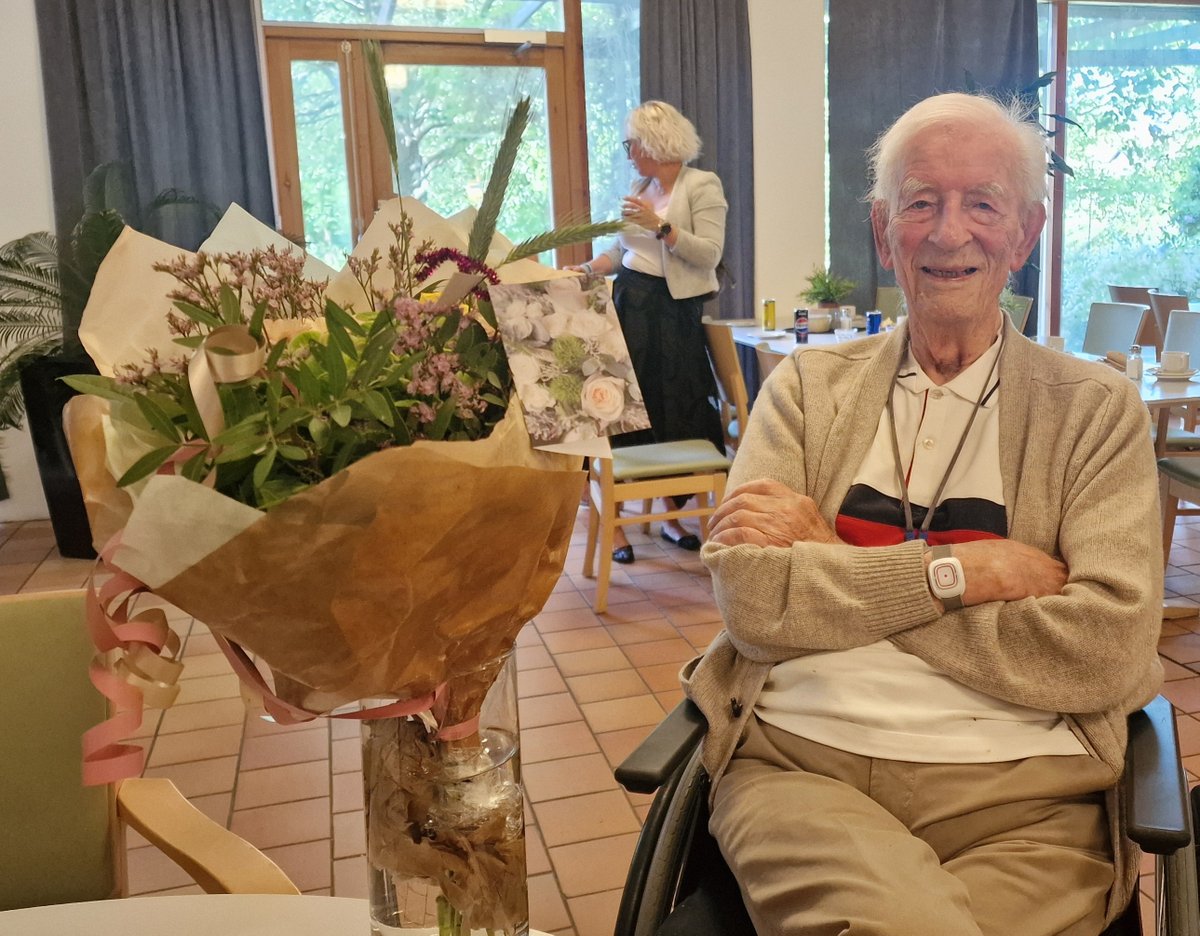
🌟 Congratulations on your birthday Jan Klein! 🌟
Jan is son of Oskar Klein, and he celebrated his 100th birthday last weekend. Via Thomas Klein Kvorning from @Stockholm_Uni the Oskar Klein Centre delivered a bouquet and our best wishes.
Jens Melinder from OKC and @Stockholm_Uni astronomy department explains on @sverigesradio the recent Webb telescope discovery of a high redshift galaxy:
https://t.co/kDlJd2P5u8
Very excited to attend (and, later this afternoon, speak) at a Gravitational Wave symposium hosted by the Royal Swedish Academy of Sciences (@ScienceAcad_swe) in Stockholm.
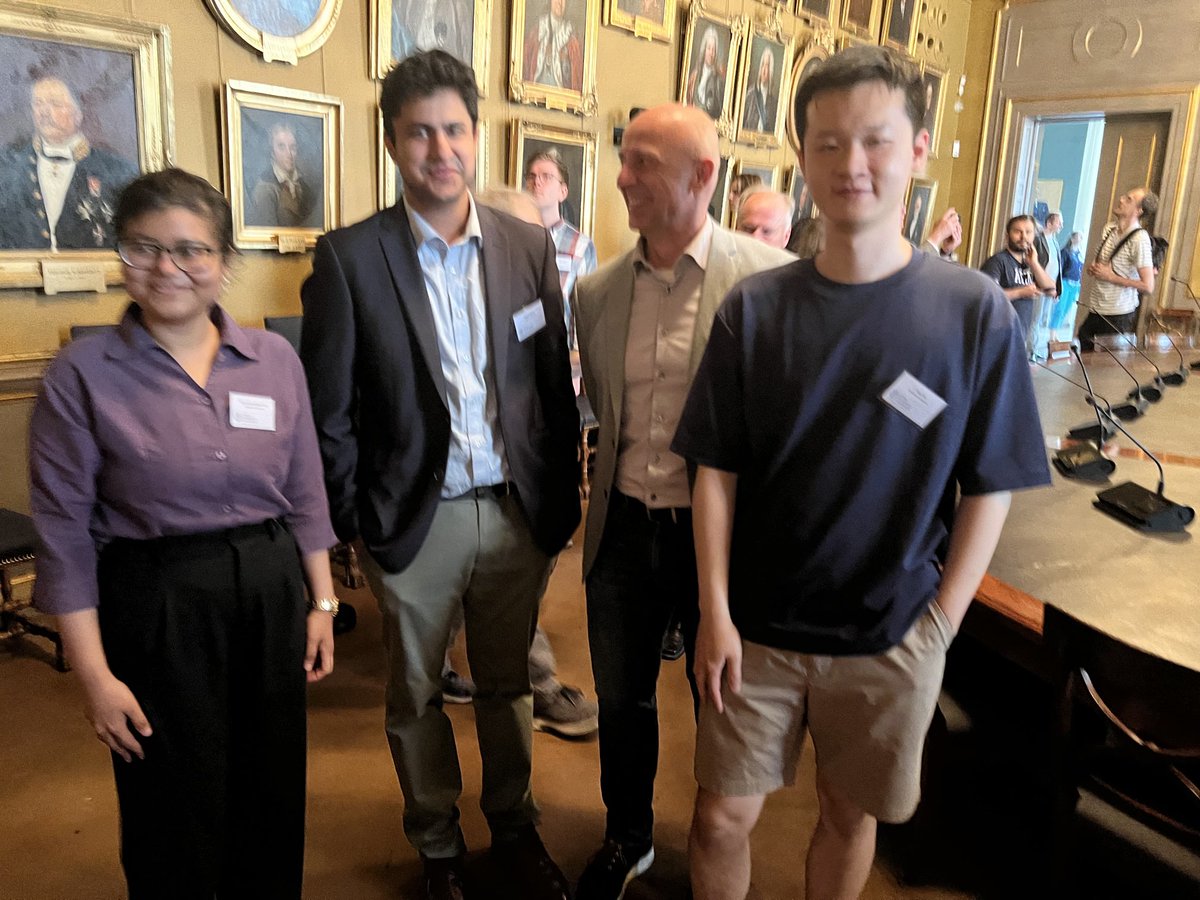
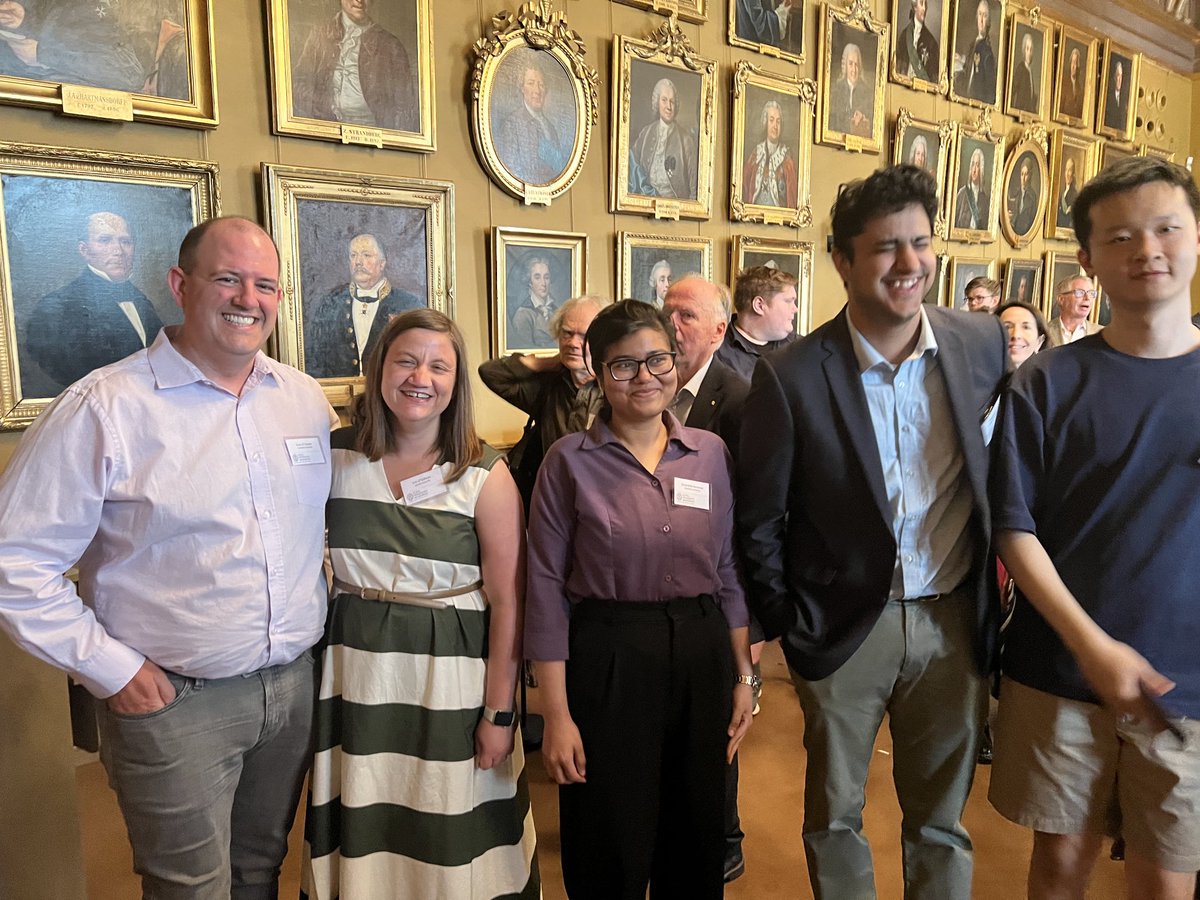
A symposium is not only a chance to listen to great talks (like the one by @samayanissanke), but also to meet new and old friends. Several Oskar Klein Centre members organised and participated in the Royal Swedish Academy of Sciences symposium on gravitational wave research.
OKC member Göran Östlin from the Astronomy Department at @Stockholm_Uni has collaborated with artist Cecilia Ömalm for a new exhibition at Liljevalchs called Stockholm’s Cosmology.
The exhibit takes place from June 14 to August 18. https://t.co/vmz6XwCxGd
Congratulations to OKC member Ragnhild Lunnan from @Stockholm_Uni, who has been elected to the Young Academy of Sweden! 🌟
Ragnhild Lunnan research is focused on how some of the largest stars in the universe can explode in extreme supernovae.
https://t.co/VJMggYRpv5