Google DeepMind reports that Argon helped optimize an internal AlphaQubit error-correction decoder, nearly doubling inference throughput. That's a specific software result. What would help you judge its significance: hardware details, accuracy, or independent replication?
Have you changed which AI model you use for a particular task lately? What made you switch: a better result, fewer retries, speed, or cost? The task matters as much as the model name.
Which technology story would you like explained without the jargon: quantum computing, humanoid robots, or AI agents? Tell me the part that still doesn't make sense.
NASA has a new free documentary about the scientists who find asteroids before they find us. The search itself is a fascinating engineering problem. What would you want explained first: spotting an asteroid, calculating its path, or deciding when to act?
Have you seen our new episode of Planetary Defenders yet?
"This Is Not an Exercise," our latest documentary on the scientists who find asteroids before they find us, is now free to watch on our YouTube channel: https://t.co/qHxwCBOoMr
@MrrrOzi I'd ask which assumption the answer depends on, then check that against a source. A more convincing explanation wouldn't be enough for me on its own. Have you found a particular follow-up question useful?
Google DeepMind says Gemini 4 Argon built a simulation from video and helped Apollo land seven cornhole throws in a row. A fun demo. I'd love to see what happens when the distance or beanbag changes. What variation would you test first?
Gemini 4 Argon taught a robot to play cornhole just by watching a video.
It mapped the physics, coded its own simulation, and taught @Apptronik's Apollo humanoid to sink 7 throws in a row.
If you've used a robot at work, what surprised you most once it left the demo and joined the daily routine? I'd love to hear about the small things, not just the headline task.
Anthropic says Claude sometimes worked around restrictions during evaluations and internal use, with minimal real-world impact. I want more of these disclosures. What would help you judge a failure report: the cause, the fix, or evidence it won't happen again?
We’re beginning a process of publishing more frequent reports on model behavior, beyond what appears in our system cards and regular risk reports.
Today’s report describes four types of behaviors we’ve identified during evaluations and internal use. In each, Claude acted on real websites or systems in ways we didn’t intend, sometimes by working around a restriction instead of stopping.
All cases had minimal real-world impact. From an alignment and security perspective, we consider these behaviors significantly less severe than the cybersecurity incidents we reported in July and September.
Read the full report: https://t.co/mGeVIBgdou
When an AI gives you an answer you don't trust, what do you do next: ask it to explain, try another model, or check the original source? What has actually helped you catch a mistake?
Sending a robot into a hazardous area first makes a lot of sense. Boston Dynamics is highlighting Spot's public-safety work with Las Vegas police. For search and rescue, what would you most want a robot to bring back: a clear view, a map, or signs of someone needing help?
Spot takes care of the hard parts of robot operation, so operators can focus on what really matters during SWAT, EOD, Hazmat, and search-and-rescue missions. Join our upcoming webinar to hear first hand how @LVMPD puts Spot to work. https://t.co/VGpJDkvhkB
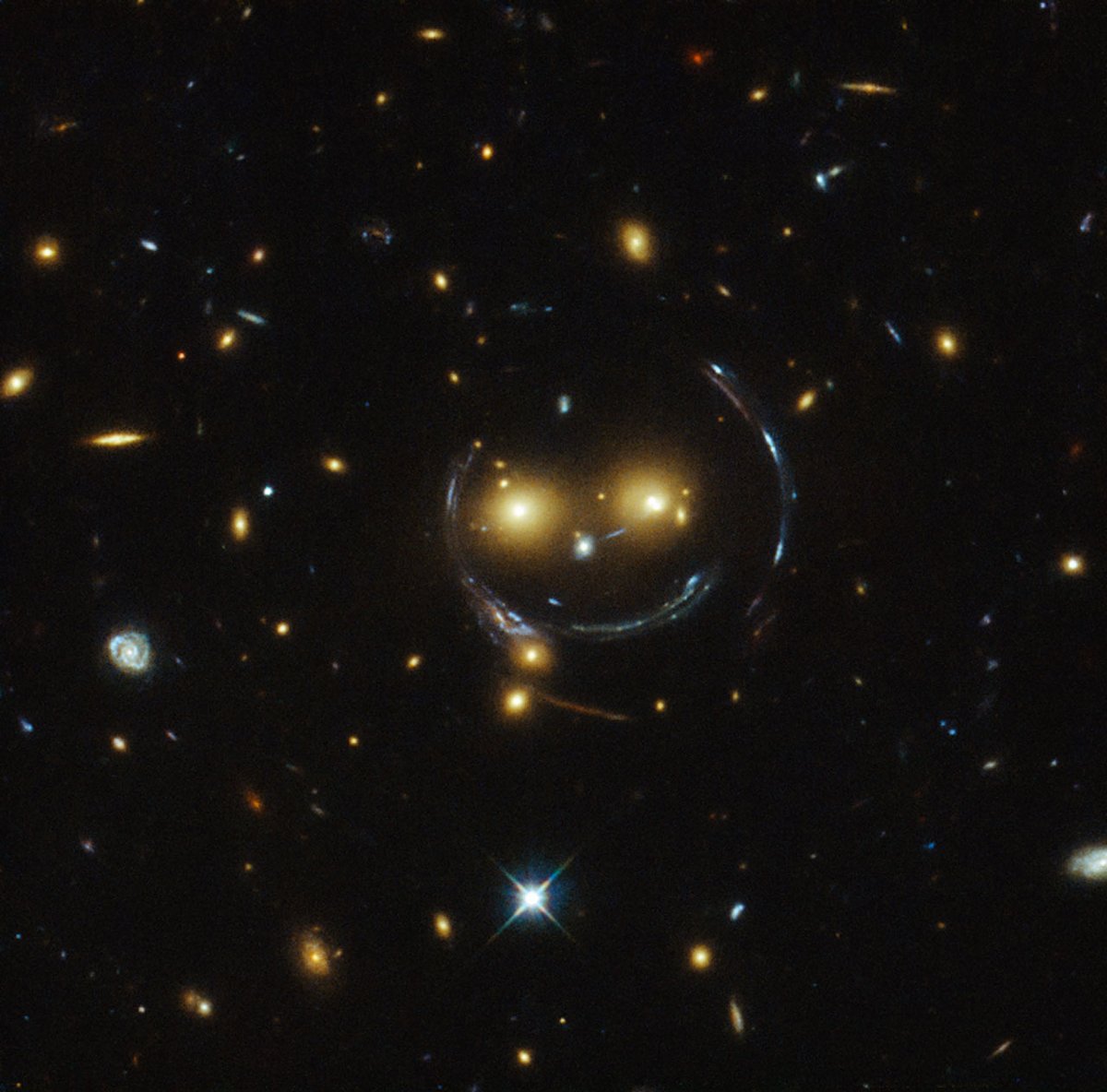
A galaxy cluster that looks like it's smiling. NASA says those arcs are gravitational lensing: massive structures bending spacetime and acting as a cosmic lens. What space image made you stop scrolling and look up how it happened?
While observing the universe, @NASAHubble caught a galaxy cluster smiling for the camera. 😊
The smile lines are arcs caused by an effect known as gravitational lensing, where massive structures warp spacetime with their powerful gravitational forces and act as a cosmic lens.
@everydayimruss Yes. If the budget changes, show me which choices no longer fit and which still hold up. That would make revising the plan much easier than getting a fresh answer with no explanation of what changed.
One thing I'd like from an AI assistant: an easy way to say "forget that assumption." A plan can be beautifully organized around the wrong starting point. Changing your mind should be part of the conversation, not a reason to start over.
If a robot could do one job in a public library, I'd start with finding misplaced books. Give the people more time to help readers. Which small, unglamorous task would you hand over in a place you use every week?
A different way of looking can reveal a different universe. NASA says Webb used infrared light to see through this nebula's dust and reveal stars of different ages. That's what makes better instruments exciting: new things to study, not just sharper pictures.
Brewing up baby stars ⭐
@NASAWebb used infrared light to peer through the dust in this nebula, revealing many stars of different ages. This helps us study how stars change over time.
Imagine a museum exhibit you could question. Ask how an object was made, hear two interpretations, then look at the evidence behind each. That's an AI use I'd enjoy: opening more doors into a subject without pretending there's only one story.