Google says Project Suncatcher put its first test satellite in orbit last week, with four TPUs on board. That number is the whole story. Four chips, on a Planet satellite, riding a SpaceX Falcon 9, is a survival test, not a data center in space. They are checking whether the hardware can take launch stress, radiation, and heat. Ground tests already suggested the Trillium TPUs can absorb more radiation than a five-year mission would deliver. Orbit is the part they could not fake in a lab. The power and cooling problem for a real cluster is still on the ground.
https://t.co/YksJpkcjM5
Project Suncatcher is our moonshot exploring whether we can one day host machine learning infrastructure in space 🚀
To do so, we need to know whether our AI hardware can operate in orbit. Can our TPUs handle the physical stress of spaceflight and the radiation and thermal extremes of space? These are the questions Google researchers have been exploring for the past few years.
Last week, we launched our first test satellite carrying four TPUs into orbit — putting us one step closer to getting answers.
Samsung builds Nvidia’s custom HBM base die at TSMC for the first time.
Seoul Economy reports Samsung will make the base die for Nvidia’s NVHBM on TSMC’s **3nm** process. The company has always done both the core and base dies itself. Nvidia wants the same process across suppliers so the memory behaves the same and needs less extra testing. Samsung is keeping its own turnkey line for regular HBM.
https://t.co/7ZIOhaB5p0
Samsung is making Nvidia’s custom high-bandwidth memory with TSMC for the first time.
Seoul Economy reports that Samsung will use TSMC’s process for the base die of Nvidia’s next custom HBM, called NVHBM. Until now Samsung has made both the core die and the base die itself. It is changing that turnkey approach to meet Nvidia’s technical request. This is the first time the two firms will cooperate from the manufacturing stage of the memory.
Industry sources say Nvidia, which unveiled NVHBM in August, asked Samsung, SK Hynix, and Micron to make the base die on TSMC’s 3nm process. It also asked that the core die be standardized to the 6th-generation DRAM process, known as 1c. NVHBM is based on the structure of HBM4E, the 7th generation.
The request is meant to keep performance consistent across suppliers and reduce the need for separate verification. After internal review, Samsung’s semiconductor division agreed. It has worked with TSMC on packaging compatibility before, but not from the memory manufacturing stage.
Samsung will still keep its full turnkey approach for standard HBM. Its own HBM4 and HBM4E base dies use its 4nm process, and the core dies are made on its 1c lines in Hwaseong and Pyeongtaek. It also plans to stay turnkey for custom work with other customers such as AMD. For NVHBM it is still checking whether its own foundry can make the base die, as a backup if demand exceeds TSMC capacity.
$SKHY $MU $NVDA
Microsoft walks away from a UK AI campus after the grid pushed power into the **2030s**.
The Telegraph reports Microsoft ended its deal for Nscale’s Loughton site in Essex, which was set to host 23,000 Nvidia chips. Grid officials said a supply is not expected until the 2030s. Nscale says the wider relationship is unchanged and it is looking at other power sources. The constraint is electrons, not silicon.
https://t.co/6yygZXzRaY ⚡
Microsoft ( $MSFT ) has canceled its 50MW data center lease with Nvidia-backed ( $NVDA ) Nscale in Essex, UK, after learning the facility may not receive grid power until after 2030, according to the Financial Times.
•Canceled project:
The site was expected to host 23,000 Nvidia GB300 chips and form part of Microsoft’s broader £22 billion UK investment initiative.
•Nscale impact:
The company, targeting a New York IPO at a $35 billion valuation, is seeking another tenant and alternative power sources. It says other Microsoft contracts remain unaffected.
•Anthropic risk:
Nscale’s separate $45 billion agreement with Anthropic could also be canceled if financing or delivery deadlines are missed.
•Expansion gap:
Nscale had just 25,000 advanced AI chips operational in August, versus nearly 500,000 planned.
•Power bottleneck:
Some 315 UK data centers await grid connections requiring 73GW, compared with the country’s 45GW peak electricity demand.
OpenAI is building a humanoid and targets a demo in **2027**.
Sam Altman said on the Sources podcast that the company will do a humanoid. He told Fortune a cool demo is the goal for next year, but robots on the streets are still years away. The hard part is the brain that runs it, not the body shape.
https://t.co/PP4DQrvn2L 🤖
OpenAI is building a humanoid, with a demo expected in 2027, per Engadget.
A model update ships over the air. A worn actuator does not. Someone has to show up and fix it. That is what we do.
https://t.co/o4pryJsSwb | 800-838-0156 | [email protected]
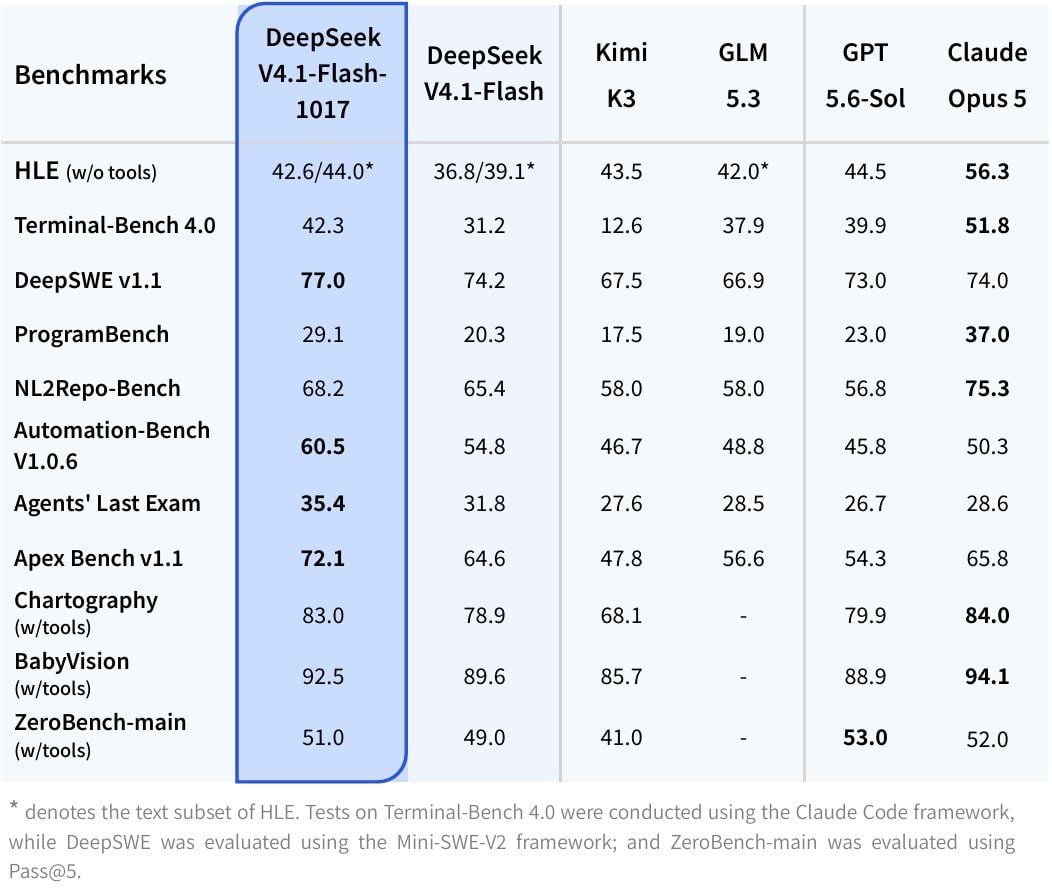
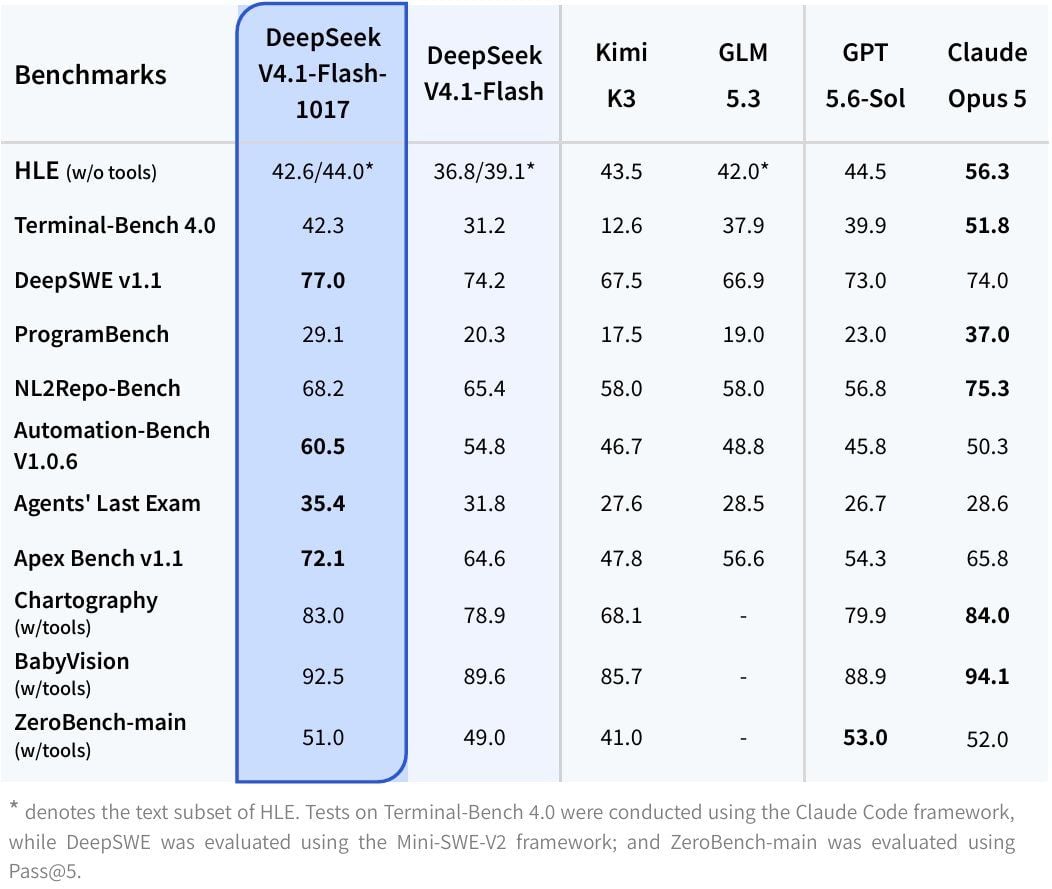
DeepSeek ships a faster Flash that tops the old version on coding and agents.
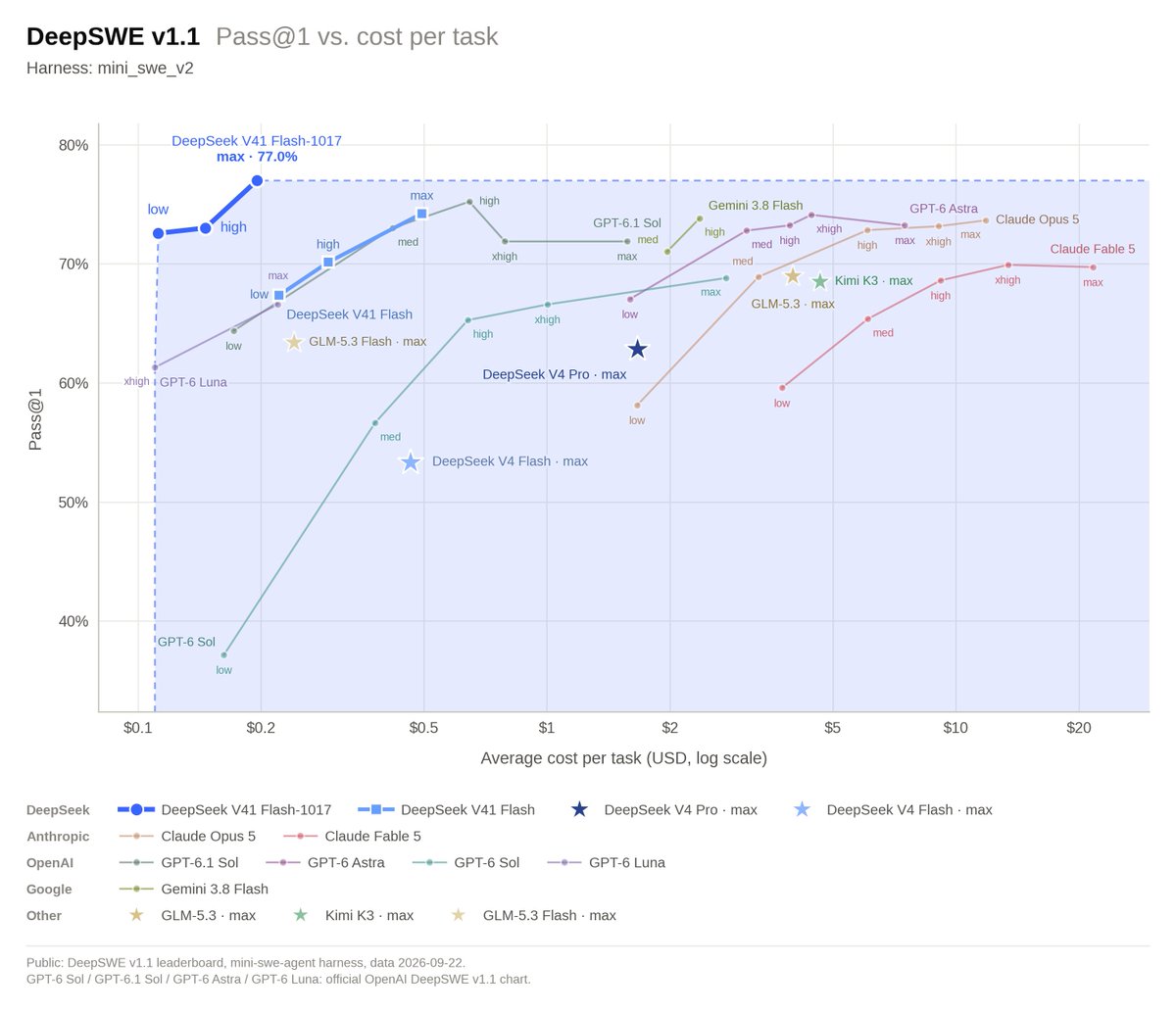
The V4.1-Flash-1017 update is live on the site, app, and API. It scores **77.0** on DeepSWE, up from 74.2, finishes tasks quicker, and writes shorter answers at the same price. Weights are open on Hugging Face.
https://t.co/01INN3yqrC 🚀
🚀 DeepSeek-V4.1-Flash-1017 is here!
Stronger benchmark performance, faster task completion, and shorter outputs than the previous version—a Pareto improvement in performance and cost. Now live on our website, app, and API.
🛠️ Optimized for @DeepSeekHarness, Tencent CodeBuddy, WorkBuddy, and more. Upgrade to DeepSeek Harness v0.2.1-rc.1 or later for the best experience with the new model.
1/4
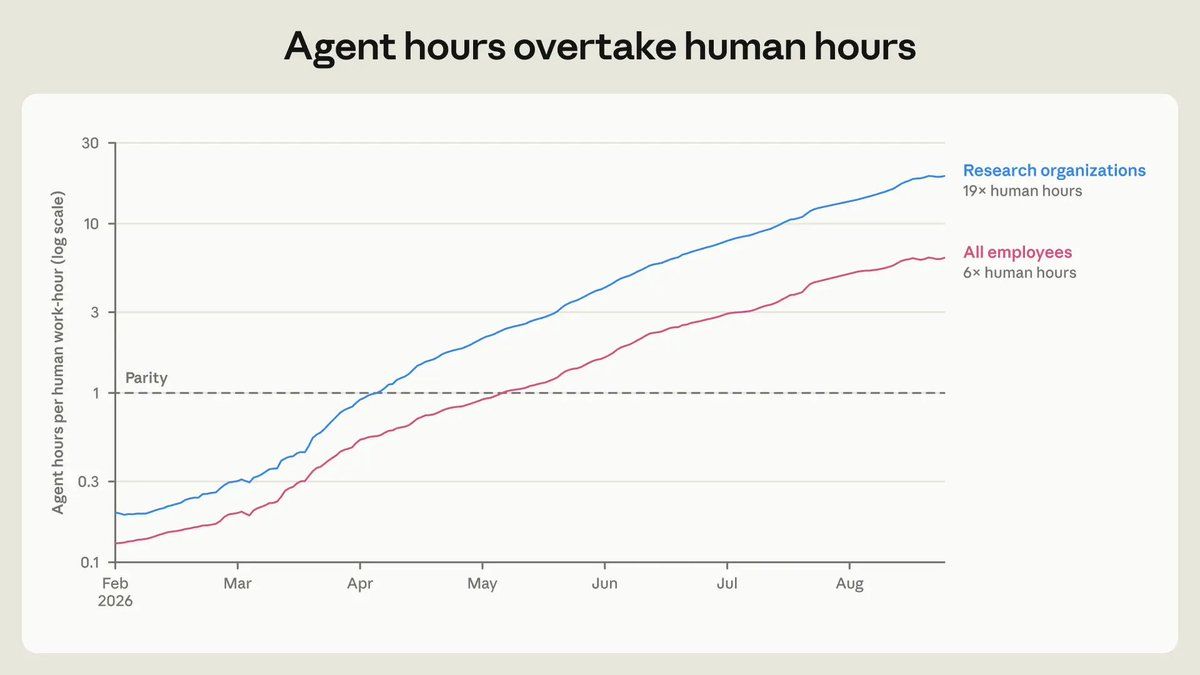
Anthropic cut junior tech hires to **9%**
The company still grew, but new technical hires who are junior dropped from 27% to 9%. By August its own agents were logging six hours for every hour a person worked. The remaining human job is mostly deciding what to ask next and checking the output.
https://t.co/7MUwdLcmJL
Today, we're publishing two new findings from inside Anthropic: how work and hiring are changing at a company at the frontier of AI adoption, and how Anthropic staff expect AI to change the economy.
https://t.co/ehPoxeJGH2
Anthropic locks in **95 MW** of Canadian power for Claude
EverWind is building the campus in Point Tupper, Nova Scotia. Anthropic will lease the first phase for at least 20 years so Claude can run closer to its Canadian users. The site starts at 95 megawatts in late 2027 and can grow to 420. Wind is part of the plan so the load does not just sit on the existing grid.
https://t.co/Ep1zZb55oT ⚡
Anthropic revealed as client for EverWind’s $10 billion Nova Scotia data centre. The 95-megawatt facility will power the AI giant's Claude AI models and is set to come online in late 2027.
https://t.co/Z6FwD66oLa
Venture Global opens a path to **10 GW** of off-grid AI power
The LNG company signed frame agreements with GE Vernova and Baker Hughes for up to 16 new 720 MW gas-fired islands. These run behind the meter at sites the company already controls, so they add compute capacity without extra demand on the public grid. First equipment order is expected by year-end; power could start arriving in late 2028.
https://t.co/NrH1NGyD7T ⚡
Google cut quantum errors by **40x** on Willow
Magic state cultivation ran on the actual chip and hit 99.99% fidelity for the T-states that used to consume most of a processor’s capacity. The team grafted the clean states into a larger error-correcting code. Results are in Science. This turns a two-decade bottleneck into hardware that works.
https://t.co/N6aucN8nN7 🔬
Anthropic opened the doors for independent evaluators.
Six METR researchers now have employee-level access: company hardware, office space, and internal tools roughly on par with Anthropic’s own risk team. They publish their risk analysis without a veto. Anthropic can only require redaction of predefined categories like customer data. This is the top tier of a three-level system the company is building with other groups as well.
The test is what the first public report actually says. Access is the easy part; unfiltered findings are the point.
https://t.co/wZg77xPNI0 🔍
Who checks whether an AI model is actually safe?
It's not enough for a company to evaluate its own product.
Independent assessment matters.
On October 15, Anthropic announced an expanded evaluation arrangement with METR, giving its team employee-like access to support risk assessments.
For AI governance, ask:
🔎 Who evaluates the model?
🛡️ Are safeguards tested?
📊 Can findings be published independently?
⚠️ How are incidents handled?
AI capability matters. Evidence of responsible deployment matters too.
Would you trust an AI system without independent evaluation?
SpaceX filed for **1 million** orbital AI satellites.
The FCC accepted the application for up to a million solar-powered Starmind units, meant to run in clusters of about ten so the lasers can link enough chips for real models. First-gen designs aim for roughly 70 meters across and 120 kW of continuous compute. The bet is constant sunlight and no water cooling instead of waiting years for grid upgrades on the ground.
https://t.co/dpVymHaJEz 🚀
SpaceX has applied to launch up to 1 million orbital AI data-center satellites.
Its proposed AI1 spacecraft spans 246 feet—wider than a Boeing 747-8.
Solar power is the promise. Heat, debris and cost are the test.
Would you support this?
#SpaceX#SpaceTech
Google locked in a 3.59 GW power package with Constellation in PJM: 890 MW of new nuclear from reactor uprates (20-year PPA, >$4.3B investment by Constellation) plus 2,700 MW of long-term supply from the existing fleet. First uprate expected 2028.
People will treat the headline as pure nuclear addition. Only about a quarter is incremental capacity; the rest is revenue certainty for operating plants.
What it locks in is that AI load growth is forcing long-duration contracts for firm power, with nuclear uprates as one of the faster paths to incremental GW. Grid operators like PJM are already tracking large loads more closely. ⚡
https://t.co/3fFrcGyOpY
SpaceX just sealed **32** payloads for Bandwagon-5.
Teams encapsulated the rideshare stack ahead of the Falcon 9 launch from Florida. These mid-inclination missions fill the coverage gaps that sun-synchronous flights leave open. Customers get access without waiting for a dedicated rocket.
https://t.co/Wwta00HY83 🚀
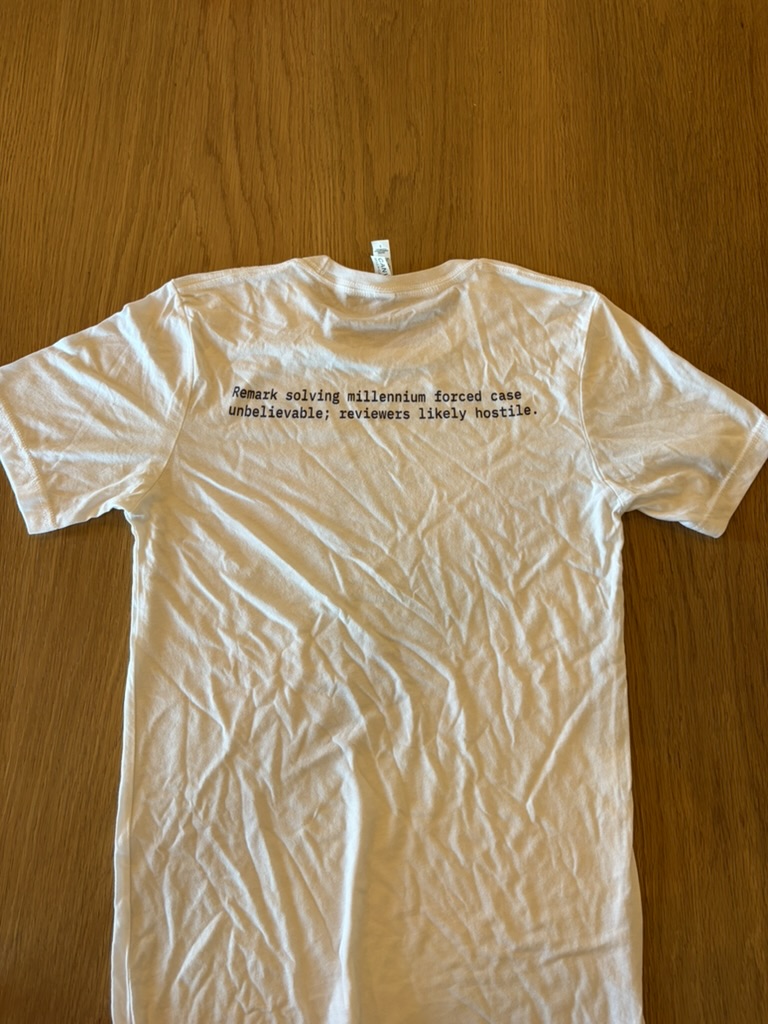
Sam Altman posted the back of OpenAI’s Navier-Stokes milestone shirt.
The line on the fabric is the final output from the agents’ chain-of-thought on the Millennium Prize problem. OpenAI said the system found a finite-time singularity after roughly **88** hours with about 10,000 agents and then formalized the proof in Lean.
Clay still has to review it. The forced case is on paper; the unforced smoothness question remains the one mathematicians are watching.
https://t.co/hLcueZ2RkC
Four Gemini agents just beat Minecraft from a random world with no human help.
They wrote **2,783** programs over **27 hours** and 14 minutes, split the work in chat, recovered each other's drops after 605 deaths, and finally took down the Ender Dragon. No game-specific tools, no pre-scouted map, just the standard programming interface and shared notes.
This is long-horizon teamwork, not a scripted demo. The same stack is aimed at real coding and research next.
https://t.co/nyaTrYqEv0 🚀
Four Gemini 4 Argon agents beat Minecraft from scratch in 27 hours.
Operating in a sandbox using only code and text, they wrote 2,783 programs, divided up jobs over chat, shared notes, and debugged errors together - all with no human help ↓
https://t.co/uyIhDOQXGT
DeepSeek just dropped a faster, leaner Flash model.
V4.1-Flash-1017 beats the last version on benchmarks while finishing tasks quicker and using fewer tokens. The company calls it a Pareto improvement in performance and cost. It is live now, open weights are out, and the new search endpoints run at **$0.75** per thousand calls.
This is the open-weight side of the agent race keeping pace.
https://t.co/01INN3yqrC 🚀
🚀 DeepSeek-V4.1-Flash-1017 is here!
Stronger benchmark performance, faster task completion, and shorter outputs than the previous version—a Pareto improvement in performance and cost. Now live on our website, app, and API.
🛠️ Optimized for @DeepSeekHarness, Tencent CodeBuddy, WorkBuddy, and more. Upgrade to DeepSeek Harness v0.2.1-rc.1 or later for the best experience with the new model.
1/4
AI found new fusion magnet designs in hours.
Gemini 4 Argon helped researchers discover novel 3D magnetic field solutions that further disprove Grad’s nearly **60**-year-old conjecture in plasma physics. The old assumption was that exact smooth equilibria for stellarator fields might not exist. Promising new families of counterexamples appeared within hours of the model working the problem.
Scientists checked the results by hand. This speeds the math for shaping magnets that hold plasma, not the arrival of a power plant.
https://t.co/lyWL1wYjbX 🔬
Researchers discovered novel 3D magnetic field designs with Argon that further disprove a 60-year-old assumption in plasma physics known as Grad's conjecture. ↓
https://t.co/kYKebBo3Su
SpaceX wants nearly one Starship launch every weekday from Texas.
The FAA is reviewing a plan for up to **456** launches and 912 landings a year at Starbase. That is about 18 times the current limit of 25 launches. Phase one allows 100 any day of the week. Phase two reaches the full number but only Monday through Friday.
This is a request under environmental review. Public meetings are set for mid-November near Brownsville.
https://t.co/nucWgCbpVf 🚀
FAA Reviews SpaceX Plan for 456 Starship Launches a Year
SpaceX has asked the Federal Aviation Administration for permission to conduct up to 456 Starship launches and 912 landings each year from its Starbase site in South Texas. That is roughly 18 times the current authorization of 25 launches and 50 landings.
The proposal is phased. The first stage would allow 100 launches and 200 landings any day of the week. The second would reach the full numbers but limit operations to weekdays. The FAA is preparing an environmental impact statement and has scheduled public meetings in Brownsville and Port Isabel for mid-November, plus a virtual session.
Starbase has flown far fewer vehicles so far this year. The request comes while regulators are also revising broader launch rules. Residents near the site have raised concerns in past reviews about noise, debris, and closures.
The higher cadence would support more frequent orbital flights once the vehicle is fully operational. Comments on the plan are open through the end of November.
#AmericanVoiceRising #FactsOverFeelings #SpaceX #Starship #FAA
Blue Origin is building the factory, not just the rocket.
Ian Richardson, SVP of Operations, on Florida:
- Manufacture vehicles at scale
- Prep customer payloads faster
- Run reliable launches
- Return reusable boosters to service quickly
**The point is the system, not the pad.** A high cadence only works if the booster that lands is back in the flow the next week.
People will read this as a slogan. It is the checklist for competing with a company that already lands and reflies. Florida is where Blue Origin has to prove it can do the loop.
https://t.co/2jTjoDDMMt
"Launching at a high cadence requires a connected system - one that manufactures vehicles at scale, prepares customer payloads efficiently, supports reliable launch operations, and quickly returns reusable boosters to service. We are building that system here in Florida." Read more from our Senior Vice President of Operations Ian Richardson. https://t.co/2ui8xitD5c