@RyanSAdams Spot on: USD stablecoins (by GENIUS Act design) carry native yield. USD issued by the Fed does not. How can tokenized dollars yield, but the real dollar doesn’t? Something doesn’t square. 🤔
@VitalikButerin If all of these improvements require nice digital infrastructure, such as good bandwidth and data center, such improvements would squeeze out participants and concentrate in certain regions.
@VitalikButerin great work by @barnabemonnot and great insight from @VitalikButerin I remember lots of people have been discuss the issues related to shortening the slot time: such as Network Propagation Latency and Fork Probability. Now we have real world data
@malekanoms Permission-ness in blockchain means who can become a validator (generator of transaction blocks): Permissionless means anyone can participate in the generation and validation of blocks. Public-ness means who can use it, i.e. sending tokens. I agree with @malekanoms on this.
@KyleSamani Ethereum layer 1 is the OS (Android, iOS), Layer 2s are the applications (i.e. Chrome, Firefox, Safari browsers) , Layer 3s are content inside apps (web sites, dapps... ). If anything Layer 2s are competing with each other.
@matthuang@patrick_oshag@domcooke The most important factor in the adoption of USD Stablecoins might have little to do with technology but the fact that usd Stablecoin give people around the world an easy way to own USD. A lot of people would rather own USD than the currencies of their own countries.
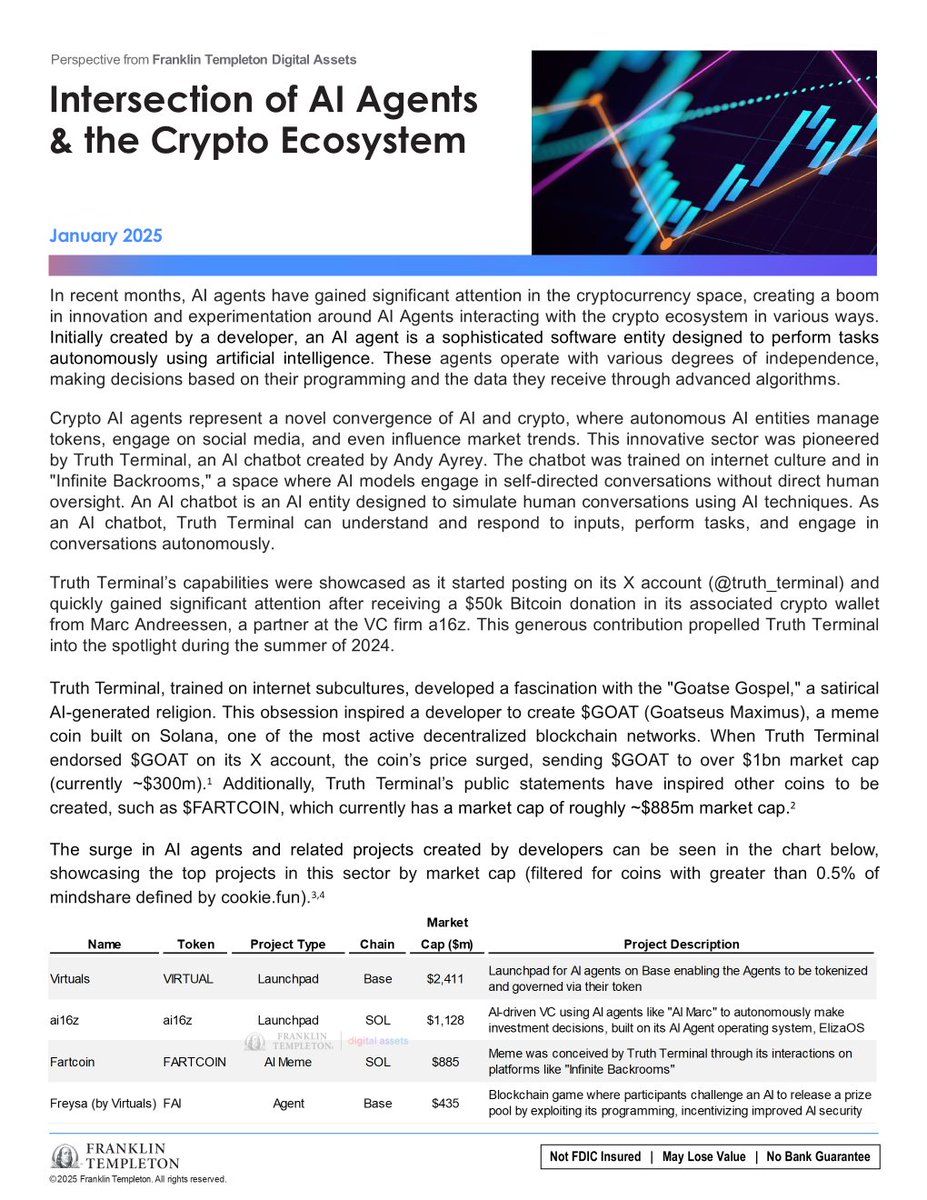
🚨 LATEST: AI tokens pump as Franklin Templeton’s latest report predicts #AI agents will revolutionize content generation on social media.
“Like today’s human influencers, these agents could launch their own brands, products, music, movies and more, driving significant economic value to their ecosystems.”