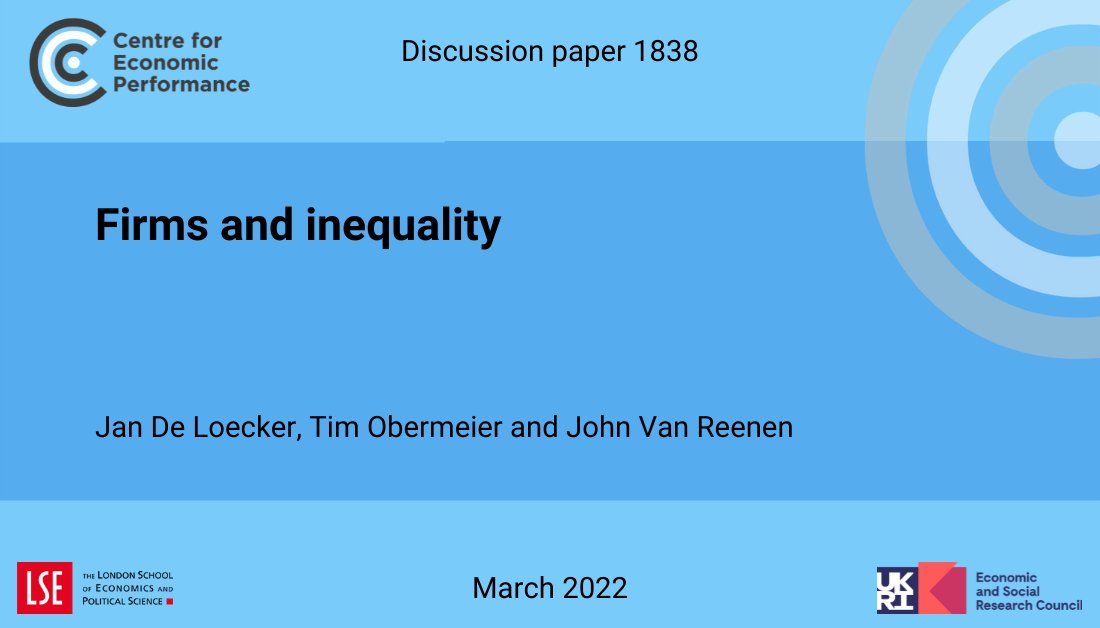
This research documents, at the micro level, increasing between-firm differences in productivity, wages, size and markups, similar to those in America.
By Jan De Loecker, Tim Obermeier, @JohnVanReenen@POID_LSE@LSEEcon
Read: https://t.co/zMQNk6aB7R
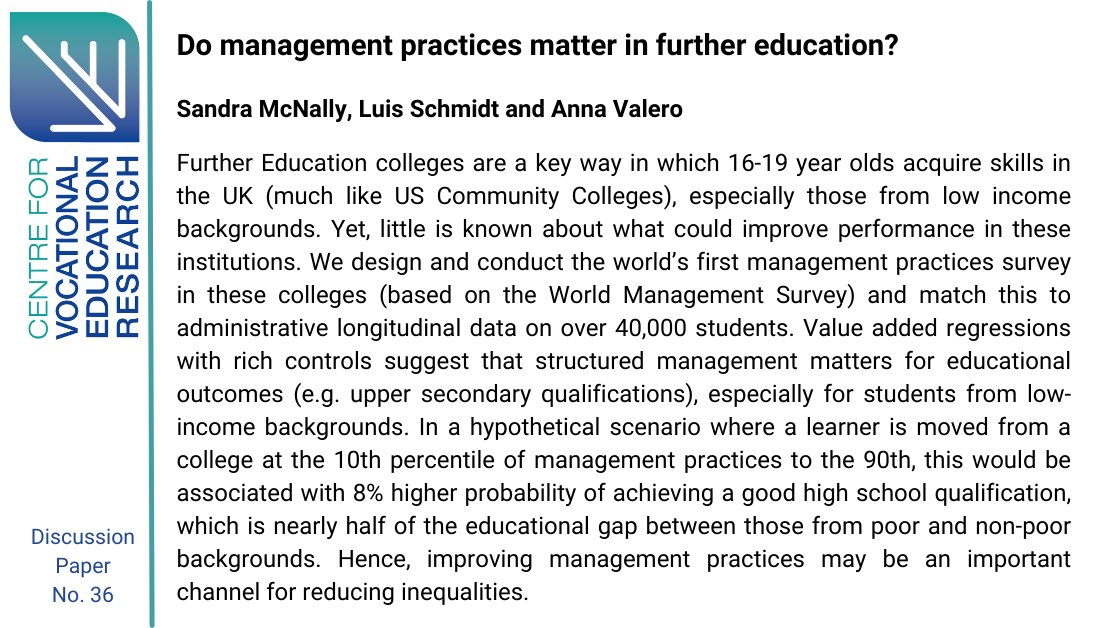
Improving management practices in FE colleges could be an important way of reducing inequalities.
By @Sandra_McNally , Luis Schmidt and @asvalero@CVER_LSE@POID_LSE
Read: https://t.co/EuRC7rxXPW
New @EBRD research by @helenaschweiger & @StepAlexander : "When good managers face bad incentives: Management quality and energy intensity in the presence of price distortions" using @worldbankdata https://t.co/12JtvQllDK
Hybrid WFH is here - offices are still only 40% full while leisure activities have returned
Office occupancy will eventually flatline at about 60% once the return to office is complete (3-2 hybrid for the average employee)
My thoughts on managing hybrid https://t.co/rrmz8e0zPB
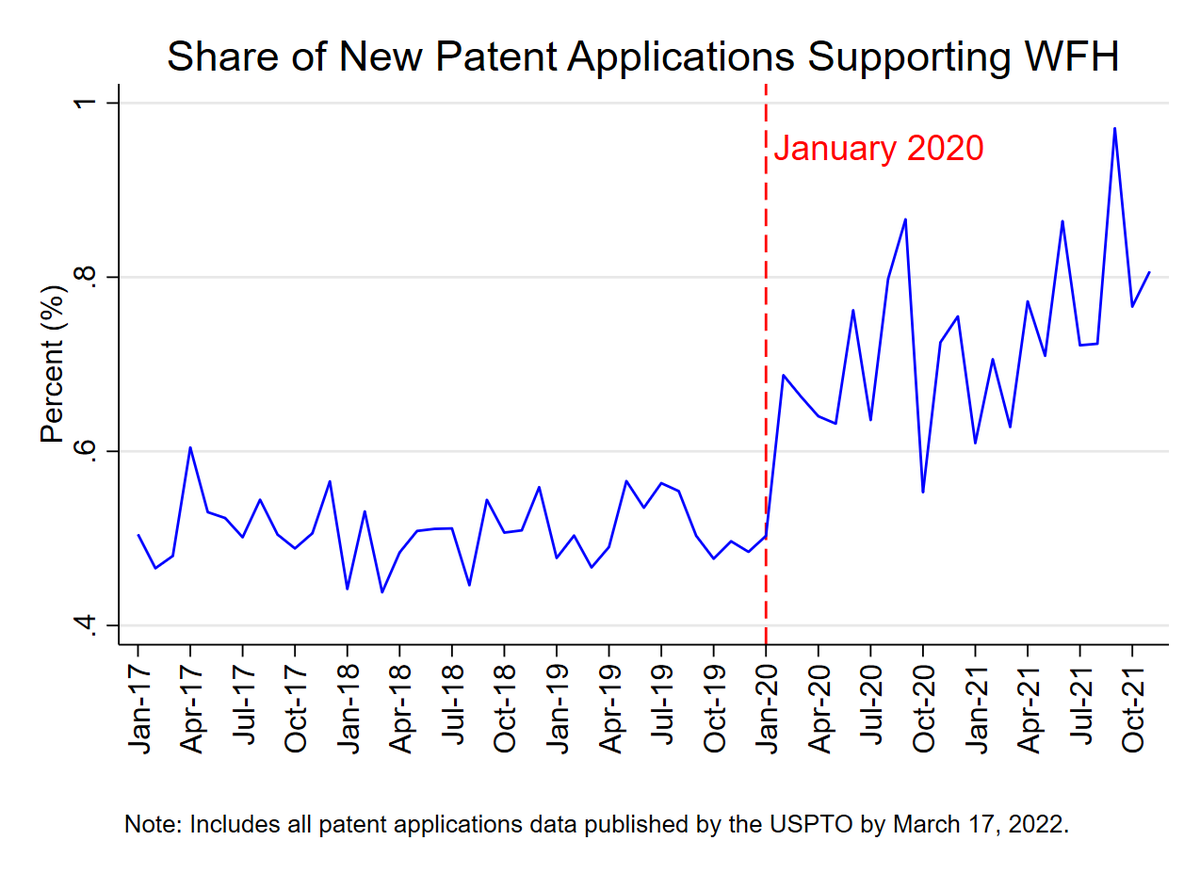
Market forces are driving #WFH
WFH has increased 500% so firms are ramping up R&D spending to support this
Big WFH use = big profits for better WFH products
So patents for WFH hardware and software are surging (updated figure from https://t.co/QflZijLtJR with @m_codreanu)
You can read this data two ways to support #WFH
1) If you WFH you save 9 minutes a day on less personal grooming (the red bars)
2) If you go to work a few colleagues will less than fully "groomed" (the blue bars)
Full slides https://t.co/9wCrZN3oIB
Great conference today about future of New York
1) Hybrid WFH is creating a "donut effect" - employees moving to the suburbs
2) City center real-estate and retail are soft
3) NY still has a bright future, but a bit less bright than pre-COVID
Full slides https://t.co/ci6J5tELCV
Just to follow-up WFH share is falling - so the BLS trend is right. We also find that https://t.co/l8DWf5AExv as does Kastle & Gallup
The problem with the BLS data is
A) The level is wrong (WFH is about 30%)
B) It is getting more wrong over time (the downward trend is too steep)
BLS WFH data is misleading. They ask
"At any time in the last 4 weeks, did you telework or work at home for pay because of the coronavirus pandemic?"
This excludes people that
1) WFH but not because of the pandemic
2) WFH pre-pandemic
Most data shows current WFH at 25% to 35%
VACANCIES: @thewmsproject are seeking over 20 interns for full time work on the 2022 wave of the World Management Survey. For full details and to apply, visit: https://t.co/nVR7uqatld
Our survey data on 3,000 firms finds the pandemic lowered the quality of goods and services that is not reflected in the price by 1.3%. This implies true inflation was likely about 1.3% higher over the period.
https://t.co/y2XOehvnZD
Desires to #WFH varies by party. Democrats want one third more days than Republicans. This gap is similar after controlling for education, income, demographics, location and occupation.
So politics seems to play a surprisingly large role in explaining Americans WFH preferences.
Many congratulations to @POID_LSE@raffasadun for the award of Grande Ufficiale of the Ordine al Merito della Repubblica Italiana https://t.co/X0EbBuAOEV for her work on economic recovery & COVID @Italyinus@HarvardHBS Very proud of my co-author & ex-PhD student!
“We argue that greater misallocation is a key driver of the worse management practices in Mexico compared to the US.”
Nicholas Bloom, @leoiacovone Mariana Pereira-López and @johnvanreenen@POID_LSE
Read: https://t.co/mBaVpuKP2P
Employees spend 28 minutes getting ready when they travel to work vs 19 minutes when they work from home. This #WFH time saving arises in every industry, occupation, education, location, race, age and gender - for example:
WFH saves employees about 70 minutes a day on average. Most (about 60 minutes) from no commute, and the rest (about 10 minutes) from less preparation in the morning. About 1/2 of this saved time goes to working more and 1/2 to leisure/tasks, so employers and employees benefit.
Online meetings are seen as particularly efficient by more educated employees. Perhaps BA/MsC/PhD employees have a better home office or internet, or value screen-sharing to analyze data, code or documents? Suggests the benefits of #WFH are dependent on many factors.
Small meetings are preferred online - no travelling between meetings. Large meetings are preferred in person - no muting, no tiny zoom boxes, and chatting before/after. This is a benefit of coordinating office days under hybrid #wfh - large meetings can always be in person
Survey reported WFH efficiency has increased from about 5% to 8% during the pandemic. Firms report this is due to investment, learning and adaptation - better equipment, management practices and home-organization.
The economics of adapting to and improving a new technology.