@Northernmedic Everyone’s favourite answer: it depends? What’s the context? Psychosis in the setting of stimulant toxicity might favour benzo, while in a hypoxic TBI probably reach for ketamine.
I’d be interested to hear rationale behind blanket 1°/2° agent or restrictive protocols.
@Okanaganscan@DaynaB18 High winds forecast to shift from W and then NW later today. Hwy 97 closure today is certainly possible with 🔥 spotting ranges of several km.
A Vancouver Island man who survived a grizzly bear attack four years ago says without blood donations he wouldn't be alive today. Now, he's encouraging others donate and potentially save others.
https://t.co/7ka3AadlL9
@mitchpage3@_Brian_Mc_ Depends a bit on Hx/exam incl. bedside echo impression. For distributive shock, I tend to start pressors with fluids and then titrate back/off if they respond dramatically. Can also easily give 500-1000 before I’ve mixed a bag and programmed a pump. Can just leave on standby.
I worked for BC Wildfire in Vanderhoof when Maddy disappeared 12 years ago. Our crews helped the massive community augmentation of GSAR efforts. We couldn’t find her. Hopefully the investigation succeeds in answering remaining questions.
BREAKING: The remains of Madison Scott, who has been missing for 12 years, have now been found on a rural property in Vanderhoof. https://t.co/G3Q06kfbU1
Reminds me of the first time I needed a blanket over my/patient’s head on a sunny beach for DL.
2 questions:
1. Could brighter light help maintain contrast in high ambient light?
2. Anyone comment on McGrath screen visibility in very bright conditions (say on snow/ski hill)?
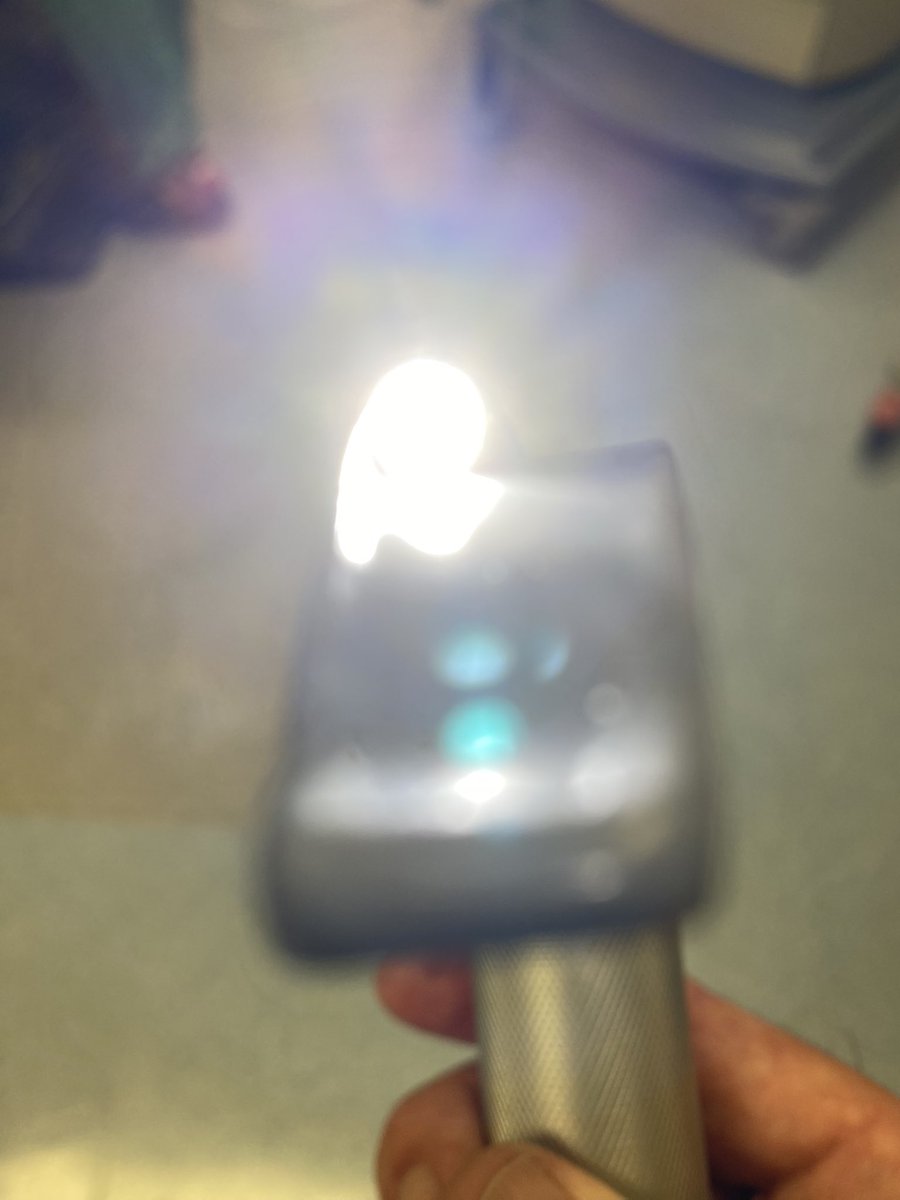
Why do companies that manufacture laryngoscopy blades think we use more and more and brighter LED lights? Today I used a disposable Macintosh blade for RSI direct laryngoscopy and because the light reflected on saliva, I could not see the glottis at all until I suctioned the larynx dry. I will need 🕶️ for my next intubation #wedonotneedmorelight @jducanto@airwayGladiator@NaveenEipe@fibroanestesia@bobfunn@cliffreid@EM_RESUS@maffygirl
@AndreiAxenov As to the VSD, not that I noticed or thought to put colour Doppler on. Septum looks more solid in this plane on SX view, but there was mention of a possible PFO, which I could believe from this clip
Critical care paramedic retrieval of 68f with cardiogenic shock in the setting of severe fluid overload and new AF RVR. 🎥 post-cardioversion. Hx tight MS and sev PHTN. Recent formal echo “LA size normal” 🫣
#echofirst#CardioTwitter@BCEHS_CPP@critcare_medics
@AndreiAxenov …but I think some chronicity to this? Despite 4+ edema up to neck, IVC still quite variable. Hopefully someone with expertise can chime in on this as my wresting volume assessment.
@CasselmanRyan but honestly, little formal training on mentoring/coaching from the perspective of the mentor/coach— onus has been on student. Developing reflective practice against competency frameworks and own ideal for practitioner has been well-integrated to all advanced paramedic training.
@CasselmanRyan Mostly appreciating the ways some preceptors have worked with me over the years, along with many notes of behaviours I hope to never replicate toward future learners.