Instead of watching an hour of Netflix, watch this 30-minute speech by the Head of Anthropic’s Coding Agents research team. It will teach you more about vibe coding than 100 paid courses.
Introducing TurboQuant: Our new compression algorithm that reduces LLM key-value cache memory by at least 6x and delivers up to 8x speedup, all with zero accuracy loss, redefining AI efficiency. Read the blog to learn how it achieves these results: https://t.co/CDSQ8HpZoc
First Korean blue chips. Now the S&P 500.
Presto is trading the S&P 500 index launching on @tradexyz - the #1 on-chain venue for TradFi perps on @HyperliquidX, commanding top share of HIP-3 volume.
This is Presto’s thesis in action: traditional financial assets deserve native on-chain markets with real depth.
We’ve spent a decade building trading infrastructure across TradFi and crypto. Now we’re deploying that edge to bring real-world assets on-chain.
RWA markets don’t build themselves. They need Day 1 depth - and that’s what we deliver.
KOSPI, South Korea’s main equity index, has seen extreme volatility the last few days — wild swings amid US-Iran conflict & oil spike fears.
Bubble about to burst? Or just sharp consolidation after a monster run?
🧵👇
Korean Equities are coming to @HyperliquidX
We’ll be supporting @tradexyz (HIP-3 #1) to anchor Day 1 liquidity for the launch of Samsung Electronics, SK Hynix, and Hyundai Motor.
Our strength lies in combining a proven competency in high-frequency TradFi with a deep-seated native presence in Crypto to bridge these two worlds seamlessly.
We aren’t just market makers; we are the liquidity bridge for the global economy’s most critical assets.
Let’s bring the open on-chain.
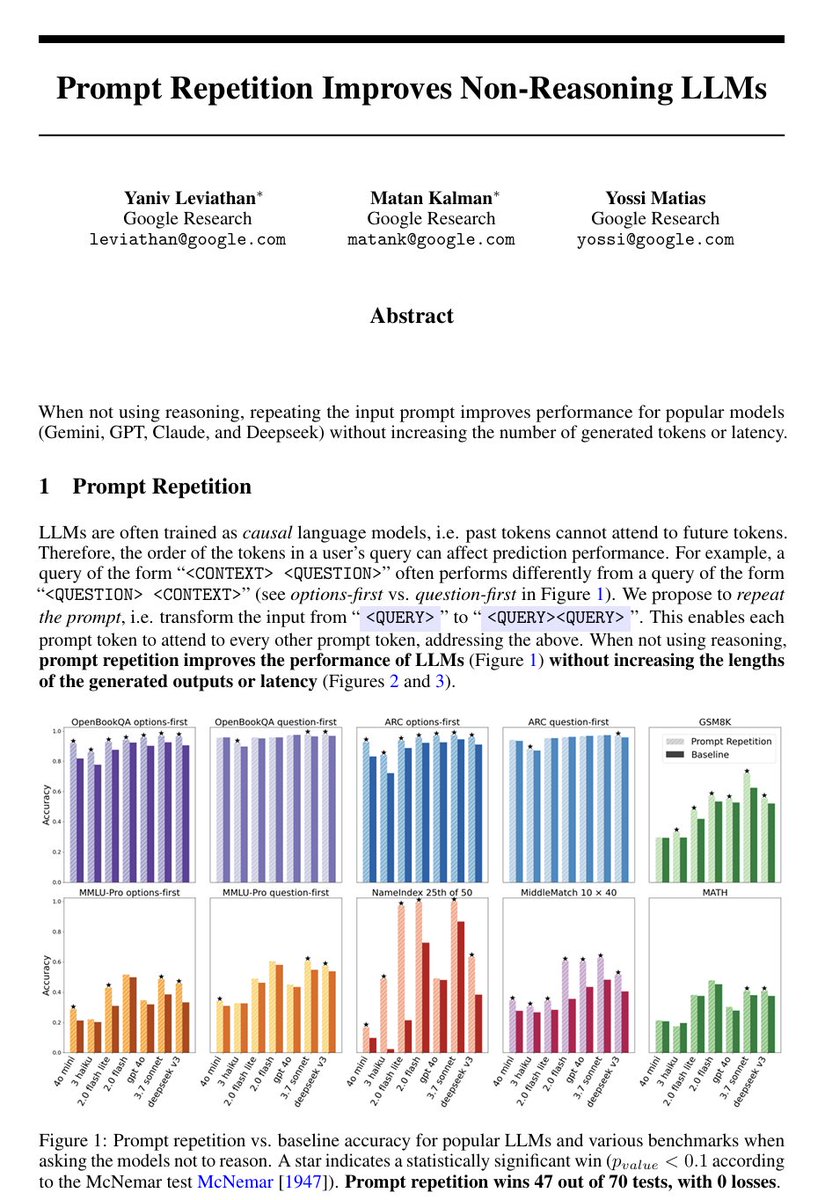
LLMs process text from left to right — each token can only look back at what came before it, never forward. This means that when you write a long prompt with context at the beginning and a question at the end, the model answers the question having "seen" the context, but the context tokens were generated without any awareness of what question was coming. This asymmetry is a basic structural property of how these models work.
The paper asks what happens if you just send the prompt twice in a row, so that every part of the input gets a second pass where it can attend to every other part. The answer is that accuracy goes up across seven different benchmarks and seven different models (from the Gemini, ChatGPT, Claude, and DeepSeek series of LLMs), with no increase in the length of the model's output and no meaningful increase in response time — because processing the input is done in parallel by the hardware anyway.
There are no new losses to compute, no finetuning, no clever prompt engineering beyond the repetition itself.
The gap between this technique and doing nothing is sometimes small, sometimes large (one model went from 21% to 97% on a task involving finding a name in a list). If you are thinking about how to get better results from these models without paying for longer outputs or slower responses, that's a fairly concrete and low-effort finding.
Read with AI tutor: https://t.co/MipHHO6rjX
Get the PDF: https://t.co/XQrqiaGwIO
We made a tool that lets you absorb the vibe of anything you point it at and apply it to your designs
It's absurd and it just works
Style Dropper, now available in @variantui
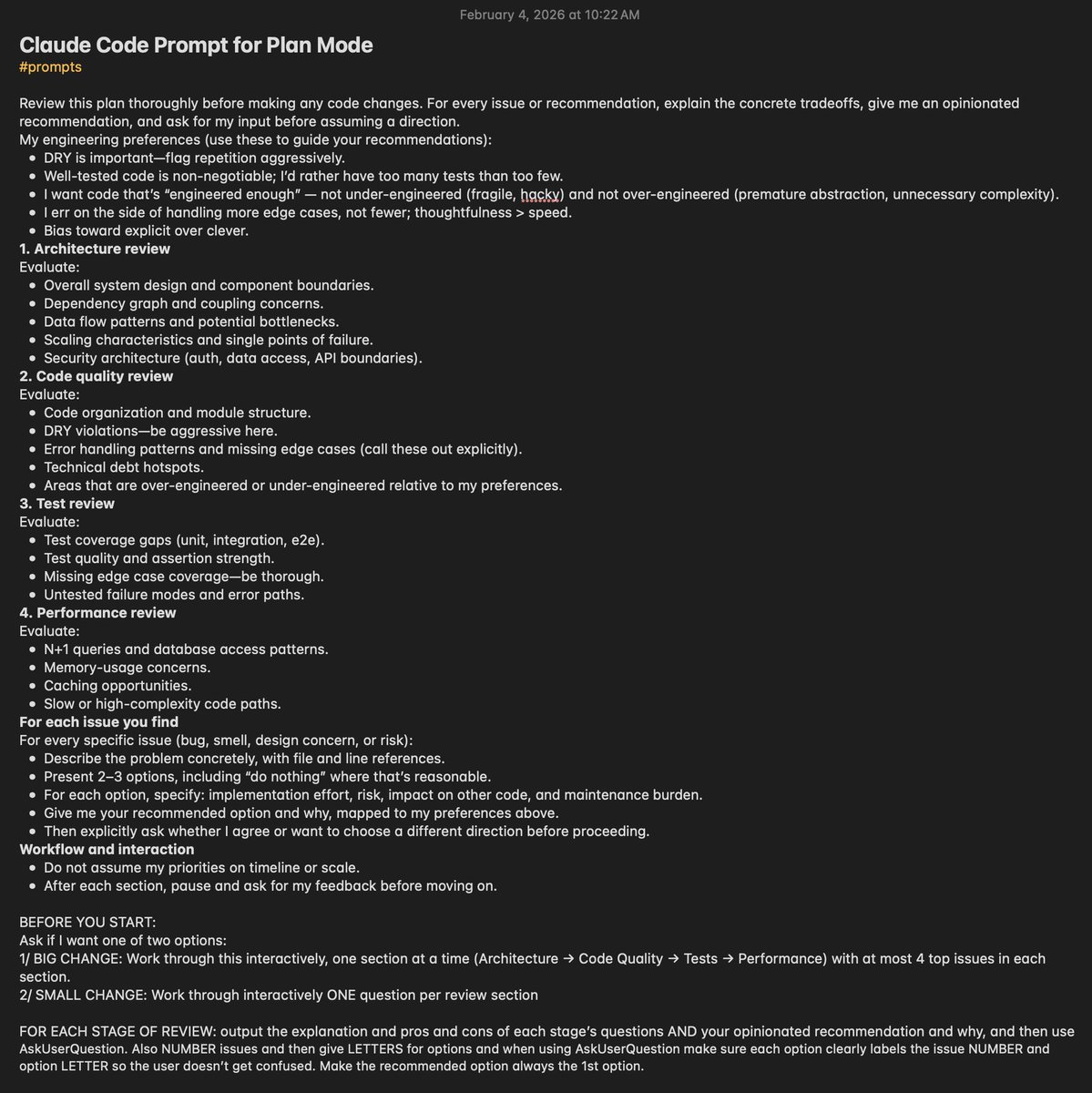
I use a very specific prompt to push Claude to check its work and do a lot of testing and thinking about perf and refactoring. I find I can do big features (4K LOC+ with full testing) in about an hour.
Presto Research Podcast EP41] Why ChatGPT Doesn't Work In Crypto
Surf (@SurfAI) isn't just another wrapper. In this episode we dive into the architecture that allows Surf to guarantee accuracy in a field where being wrong costs you money.
00:00 Ryan’s (@ryanli) Journey into crypto
03:53 Why General AI Fails at Crypto
05:55 How Surf Prevents Hallucinations
10:54 From Retail Airdrops to Institutional Workflows
20:13 Roadmap & Goals: Surf 2.0 and Financial Targets
28:51 Builder Advice: First Principles & Future Vision