Let's not panic folks. Datacenter neo clouds are highly leveraged business which leverage cuts both ways but credit isn't in crisis.
That said at current cost of leverage data center inputs demand should slow a tad
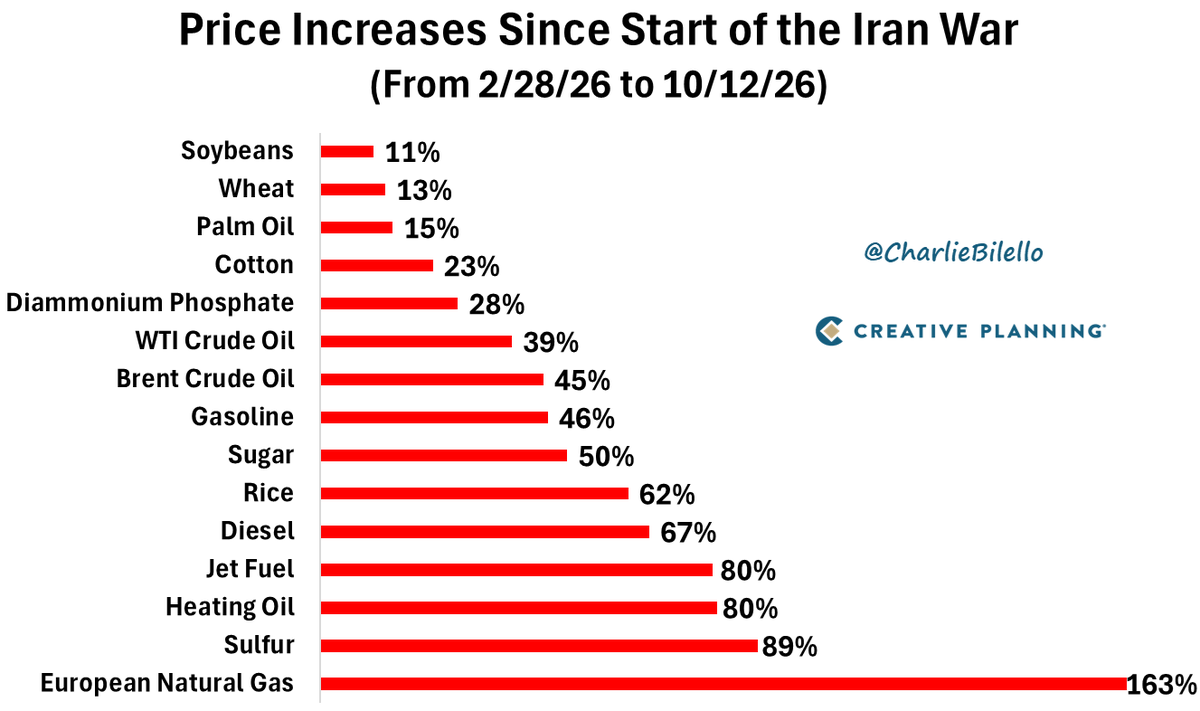
Since the start of the Iran war...
European Natural Gas: +163%
Sulfur: +89%
Heating Oil: +80%
Jet Fuel: +80%
Diesel: +67%
Rice: +62%
Sugar: +50%
Gasoline: +46%
The inflationary shock continues to build.
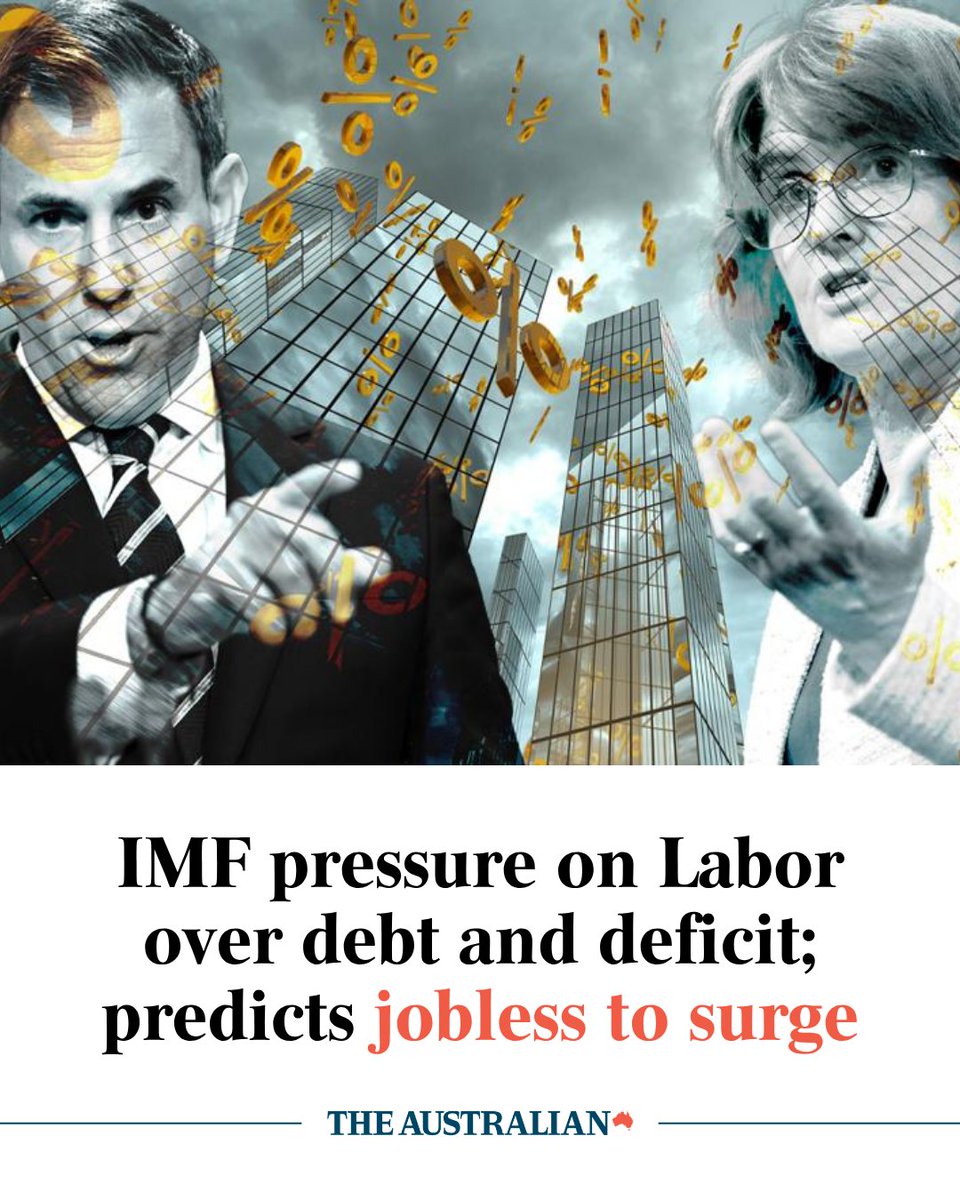
The Albanese government must urgently prioritise budget repair and rein in ballooning levels of public debt, the International Monetary Fund has warned. Latest: https://t.co/yamJ5NtZ8O
Family businesses could spend $8bn to $13.3bn just working out how to survive these trust tax changes.
The budget expects the tax to raise $4.5bn over five years. The Government is asking small business to spend two to three times that much before a single dollar is collected.
That is madness.
https://t.co/S2lxgSyrRX
Who is responsible? Does @AlboMP own this? His May Budget made Australia one of the highest CGTers in the world.
@finder co-founder Fred @Schebesta has now flown to Singapore and is moving his family. His verdict: the “nail in the coffin”. “The innovators are leaving. We’re done.”
Singapore has no capital gains tax and is recruiting the companies Australia is taxing out. Capital is mobile. Builders are mobile. Punish the upside and the tax payments plus the jobs leave with them. Time to wake up @AlboMP #StoptheCGTtoGetAhead #JoinWARonCGT
https://t.co/UhboUIVQoX
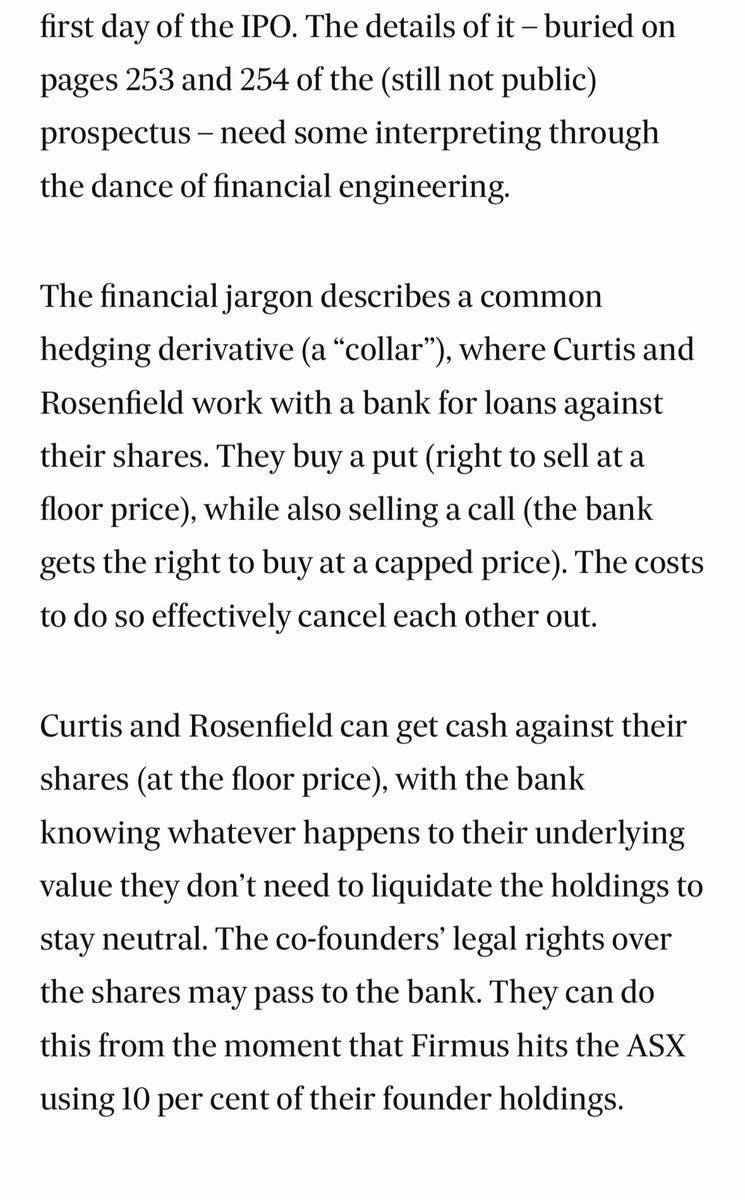
Firmus – I called the valuation "delusional" on @ausbiztv this morning.
One of the major industry funds has refused to take stock. OpenAI, SB Energy and Oura have all delayed their IPOs in the US, but not Firmus in Australia.
$215 million worth of broker fees ensures a lot of self-interested commentary and coverage. I think we'll look back and see this as the peak attempt to exploit data centre sentiment. Only this time, it's on Australian soil.
https://t.co/blX7hNxQCf
TWO MISTAKES COLLIDED
Australia has messed up housing and infrastructure in a way that has perfectly collided with how we’ve messed up migration:
1) We said ‘no’ to building what needed to be built. Even when we said ‘yes’, we ladled loads of rules and regulations on top, ensuring what we build is incredibly high cost
2) And at the same time our immigration system lost its focus on skills, while also losing its ability to keep a sensible lid on the number of ‘permanently temporary’ migrants by allowing rollovers of bridging visas and by fumbling the removal of visa overstayers
Those mistakes have increasingly collided. The upshot has been that Australia got more people, but not enough of the ‘everything else’ that people need to be happy and productive citizens
Productivity stalled, so our living standards stalled too
This is all our fault. We’ve massively messed up both housing and migration
But by failing to correct course as those mistakes became increasingly clear, we’ve ended up with a risk that we will make even more mistakes with rapidly applied bandaids
Worse still, action on our fundamental fail – the collapse in the productivity of the building sector – remains in its infancy
The frustrating thing has been watching this train crash unfold
Here’s what I wrote three years ago (second half in reply below)
I wouldn’t change a thing …
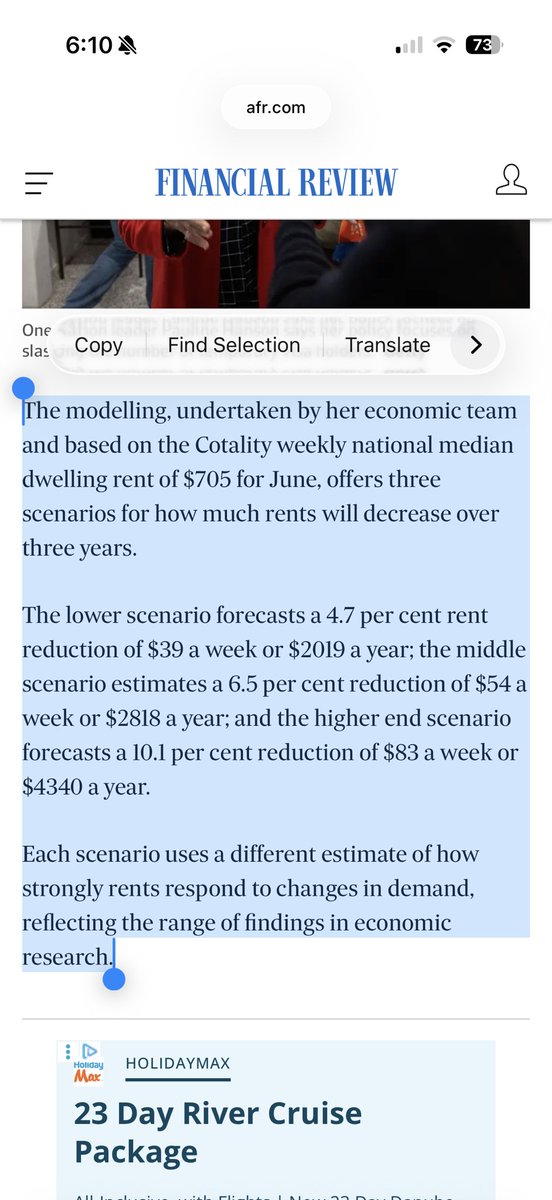
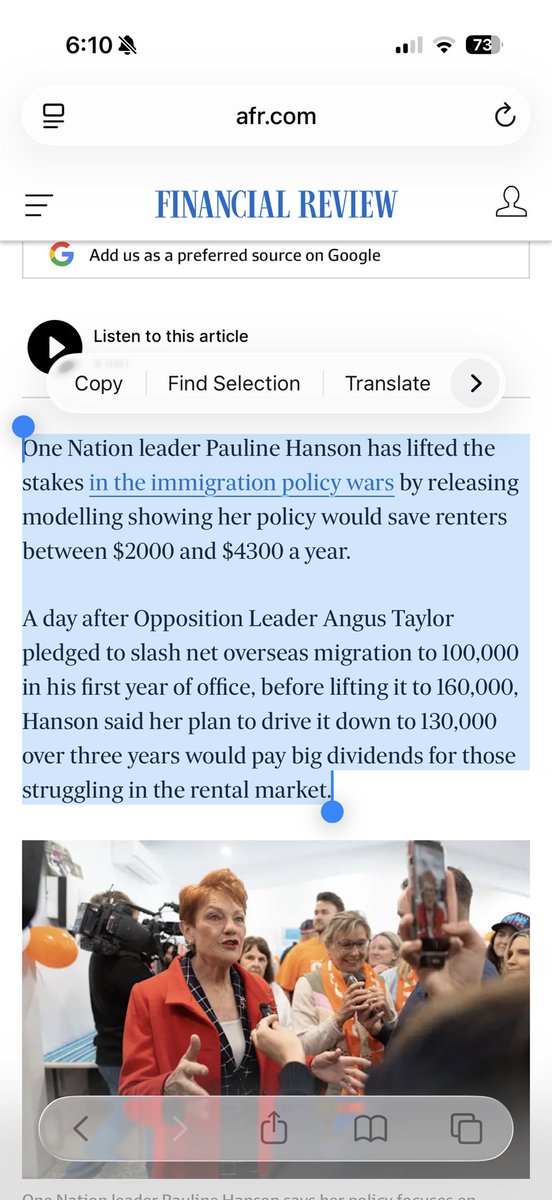
'One Nation's three-year net negative migration reset could save renters $54 a week or $2,800 a year'
This modelling is going to cop flak, but honestly given the Kiwi & Canadian experiences I would say it is conservative about the positive impact
https://t.co/SxIASoDEhg
This is actually a proper power move by One Natiom.
Labor made a big song and dance about tax cuts of like $400 a year in a budget and Hanson offering 10x that in reduced rents.
This will be hard to combat and very popular in a rental crisis
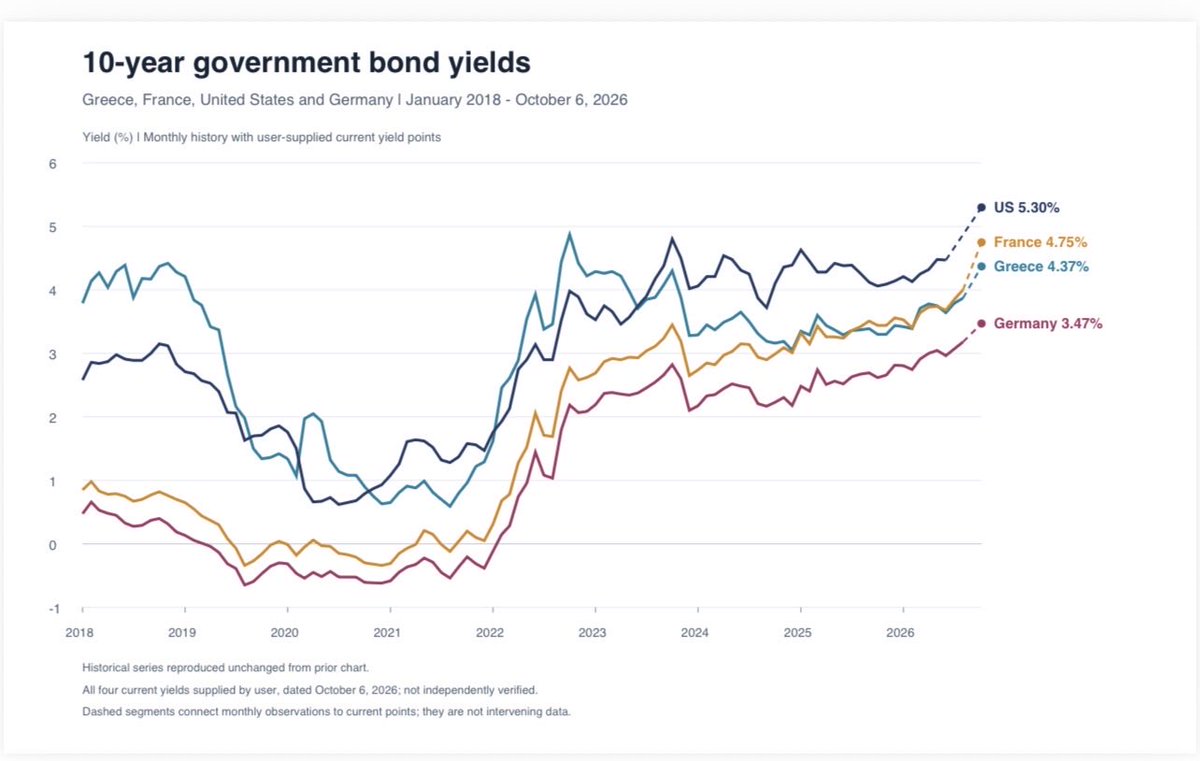
Bond Vigilantes insanity.
The yield on the UST 10 year is higher than Germany, France and Greece.
Almost 200bps difference between German and US yields.
Think about that for one minute.
Have a nice day.
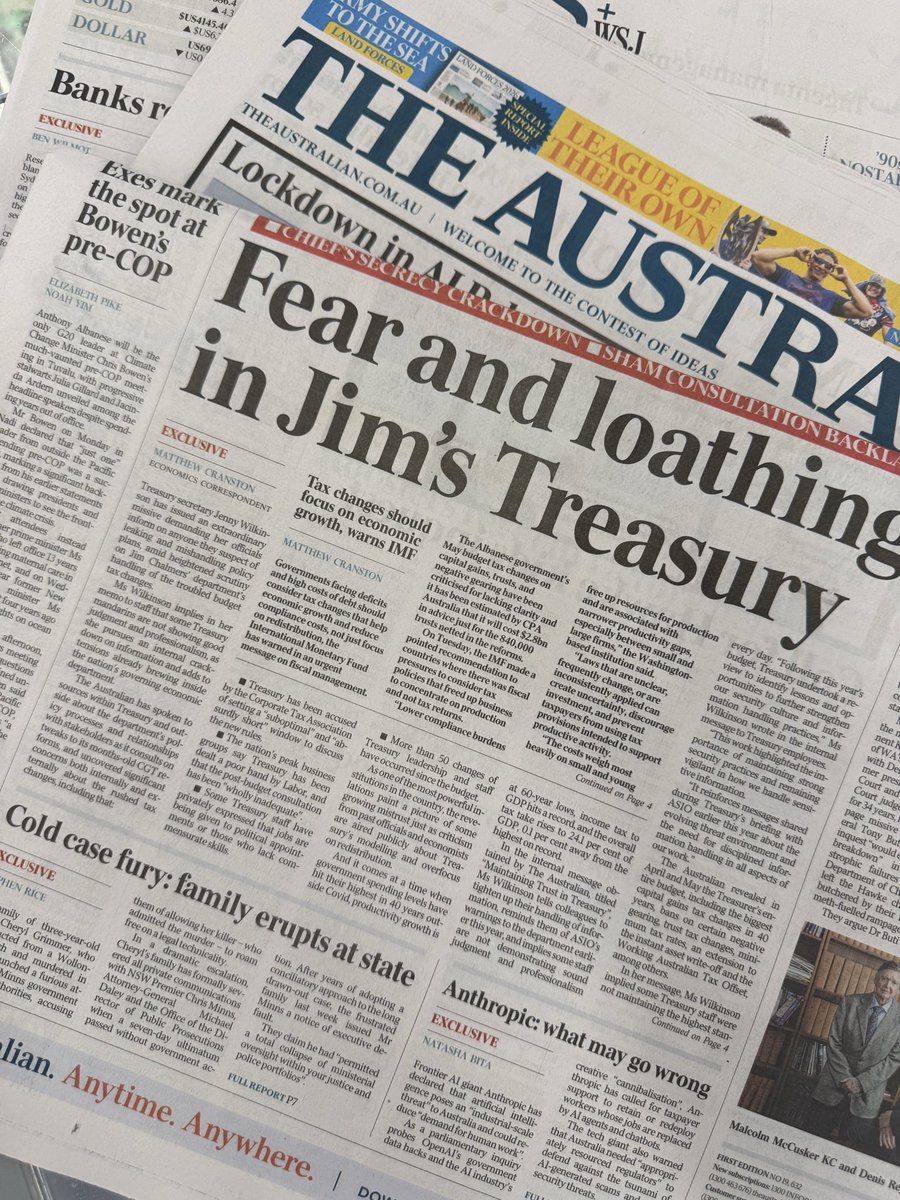
Exceptional work @mcranston1 You has done all Australians a service. When Treasury’s answer to a rotten budget is an order to dob in anyone who might leak it, the policy cannot survive daylight.
Sham consultation. Weeks, not months, on the biggest capital-gains changes in a generation. Fifty-plus staff and leadership changes since Budget night. The IMF ( @IMFNews ) warning growth is being sacrificed for redistribution. @cpaaustralia putting the trust changes alone at $2.8bn in compliance costs.
Productivity at 60-year lows. Tax take at a record. And @JEChalmers ’ department more worried about who talked than about what the tax does to all Australians. The impact on jobs, investment, productivity, ambition and aspirations.
This budget is economic vandalism. Wake up @AlboMP . It needed to be leaked. It needed to be exposed. Credit to @mcranston1 and everyone at Treasury who stood up for the Australian way of life 🙏 #StoptheCGTtoGetAhead #JoinWARonCGT
The physical crude oil market is out of control.
The cost to ship 2 million barrels of crude oil from West Africa to China is now up to $27.22/barrel.
To put this into perspective, in July, the cost for the same shipment ~$6.50/barrel.
That's a +319% surge in shipping costs in just over 2 months.
The scramble for physical crude inventories is in full-swing.
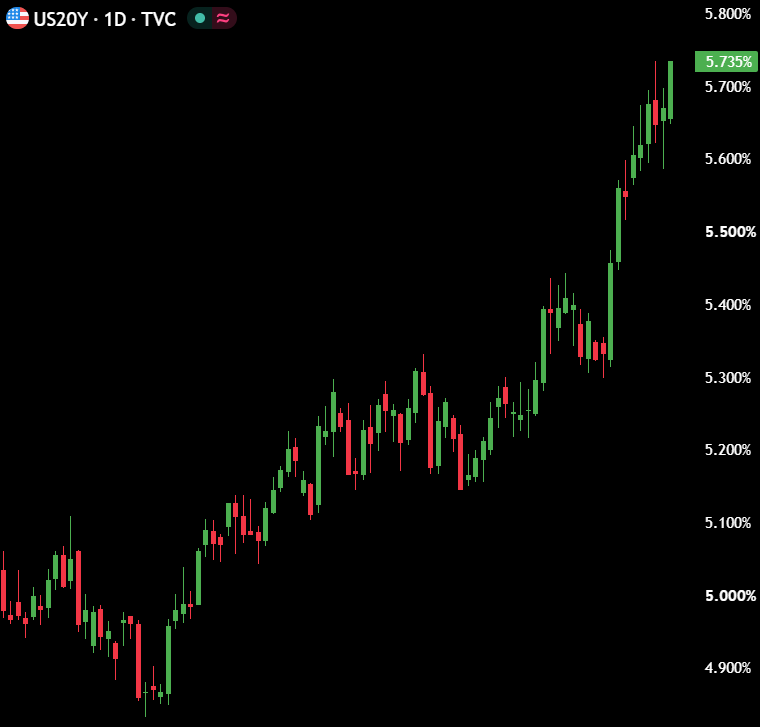
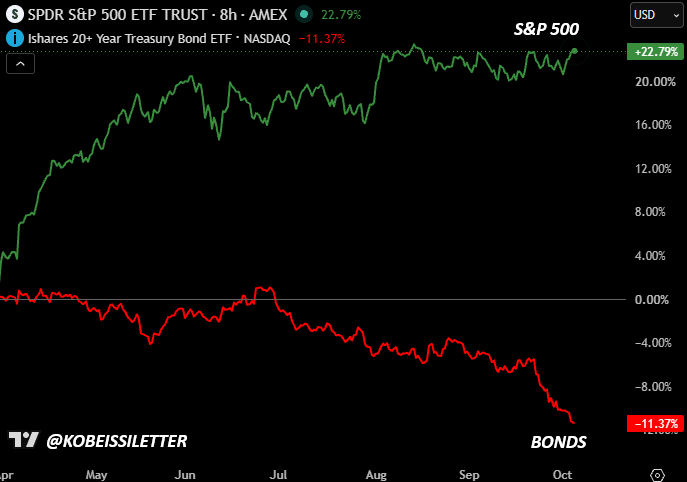
New 24-year high for the 10Y Note Yield and the S&P 500 is up another +50 points today.
This puts the S&P 500 less 0.5% away from a new record high.
Meanwhile, the most common question right now is:
"How is the S&P 500 nearing record highs with surging yields?"
When you zoom out and look at the real drivers behind this market, it all makes sense and it all adds up.
Assets are repricing accordingly.
Perth consumes about 337 billion litres of water annually.
This year, Perth’s rainfall collection will struggle to supply 3% of Perth’s water consumption.
https://t.co/ArKW480mhj
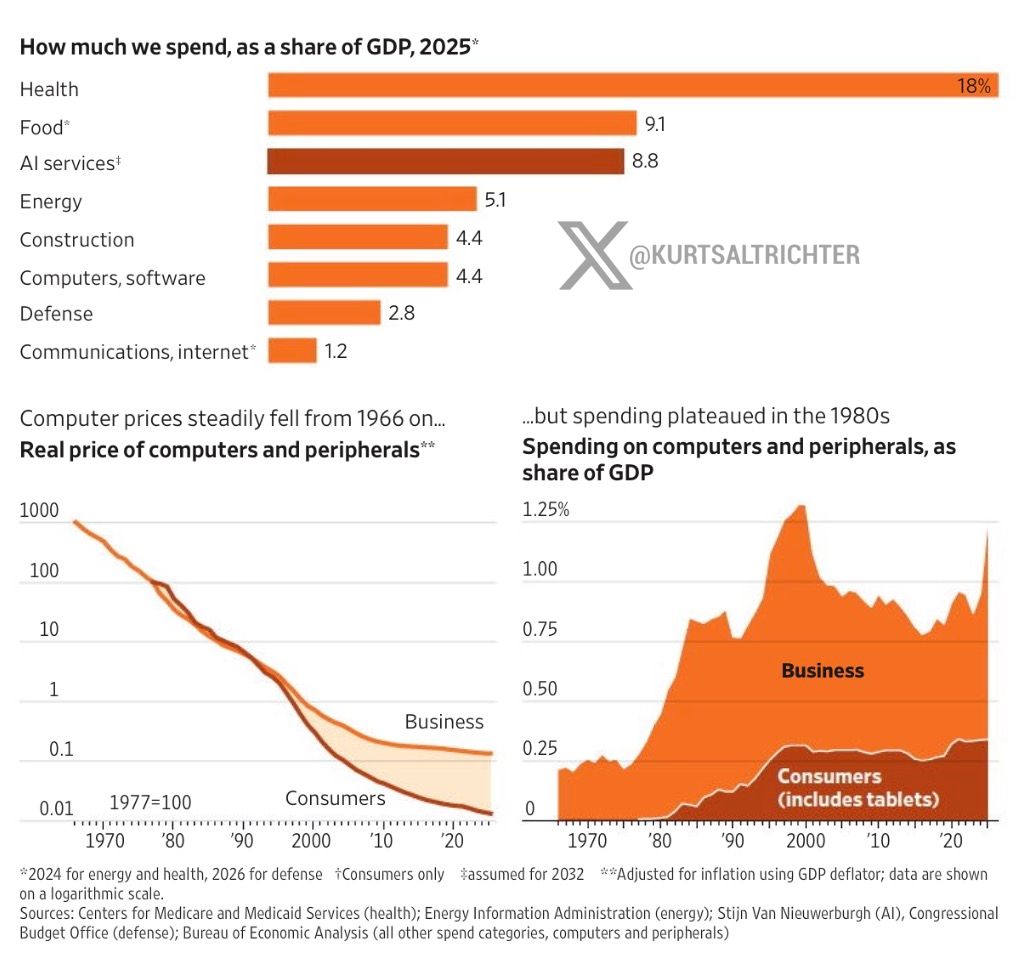
For the AI buildout to pay off, Americans will eventually have to spend about 9% of GDP a year on AI services. Sit with that number.
That is roughly what the entire country spends on food.
A Columbia paper presented at Brookings estimates AI revenue would need to hit $3.5 trillion by 2032, about 8.8% of GDP, to justify what is being committed today. That is bigger than any investment boom in US history, and 7 times what Americans spend on phone, streaming, and internet combined.
Now look at computers. Prices fell for 50 straight years, but business spending on them as a share of GDP plateaued in the 1980s and never climbed again. Cheaper and better did not mean an ever-larger slice of the economy.
AI will almost certainly raise productivity. Whether it delivers the revenue investors are pricing is another matter. That gap is what the buildout is underpricing.
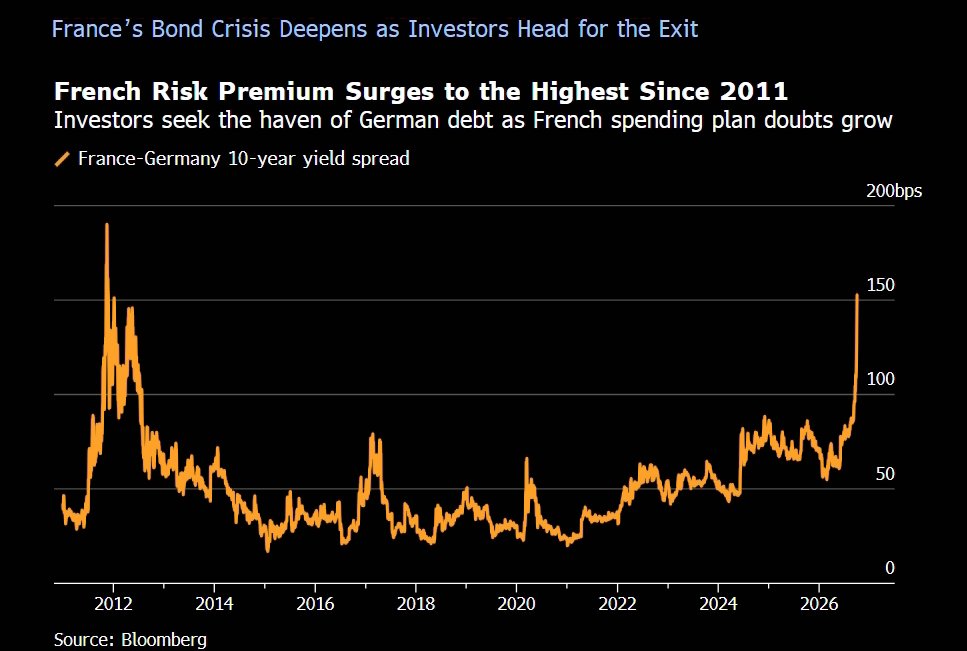
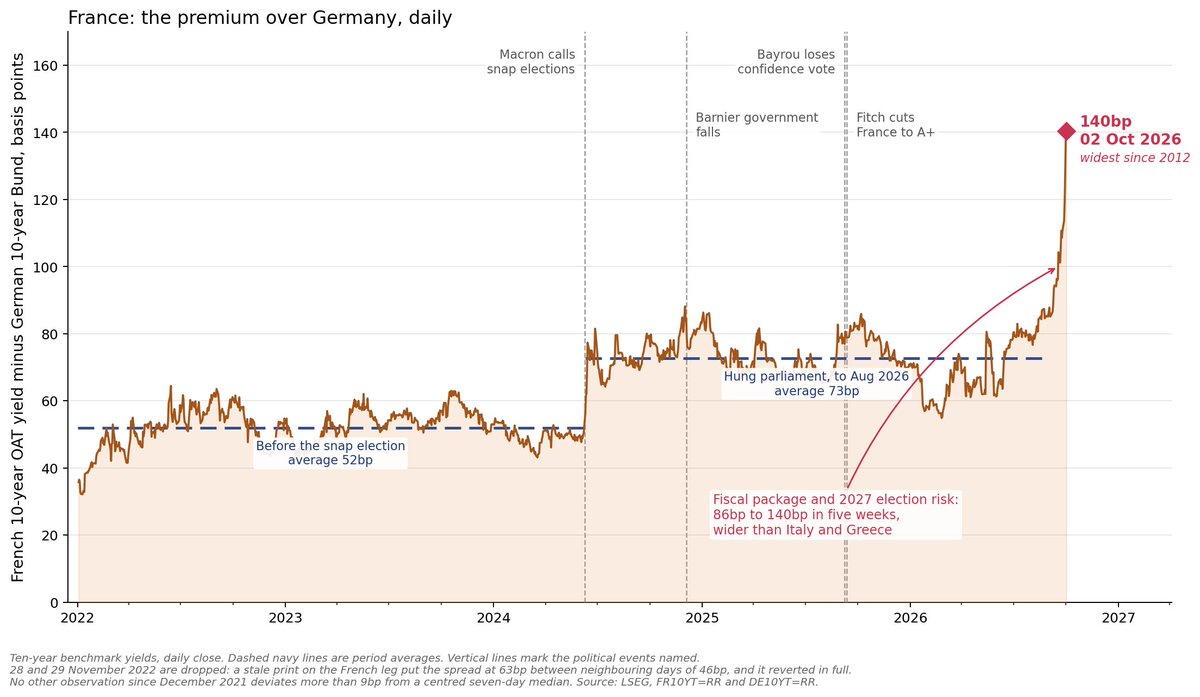
La crise économique mondiale que va déclencher la France est écrite quasiment depuis plusieurs années. Malheureusement pour nous, les investisseurs fuient et ne veulent plus racheter la dette. Les Japonais ont ouvert la marche funèbre de la crise financière.
La goutte qui fait déborder le vase, ce ne sont pas les lycéens qui brûlent les poubelles, les investisseurs y voient un mal être profond d’une société malade, mais ce n'est pas le problème.
Le problème est le budget 2027. Nous avons un gouvernement qui ne comprend pas, toujours pas, qu'il faut baisser drastiquement les dépenses et supprimer des centaines d'agences, de hauts comités, etc. Il faut sabrer dans les milliards consacrés aux associations, à l’immigration, il faut stopper net le soutien à l’Ukraine, il faut arrêter tous les programmes "net zéro" écolos... Il faut réduire les dépenses d’au moins 120 milliards. L'aveuglement de Lecornu et Macron est sidérant : ils demandent des efforts aux Français et les médias leur tendent encore servilement le micro. L'endettement explose ! Même en doublant l'impôt sur le revenu, on ne comblerait pas le trou budgétaire des 6 premiers mois de l’année. C'est dire le niveau catastrophique de l'exécutif !
Quelle sera l'étincelle ? C'est la dernière question qui se pose. Est ce que les signaux actuels en France sont suffisants pour créer une onde de choc mondiale ? Réponse : oui.
France collapses. The biggest public sector in developed economies, massive regulation, uncontrolled immigration, and the highest taxes in the OECD. Asphyxiating the private sector in a country with high human and entrepreneur capital.
What could go wrong?
Result. Vandalism, discontent, stagnation, and a massive debt crisis
https://t.co/KLSfA3DlUV
Why France, why now? Over the last couple of years, the French political class has been signaling to the bond market that its pensioners/boomers are the de facto senior claimants on the French Treasury's revenue. And that's not what bond investors wanted to hear, especially now that they're being asked to absorb a much larger share of issuance than a couple of years ago.
https://t.co/6xMTlWWxt9