A history of viral encephalitis is one of the strongest risk factors for developing dementia. With @JacobJacobog02, Yifan Chen, @RNA_Life, and @RyanDhindsa, we refine this link by describing a neuronal cell type that can reactivate HSV-1 in humans 1/n
https://t.co/y8D2orzUur
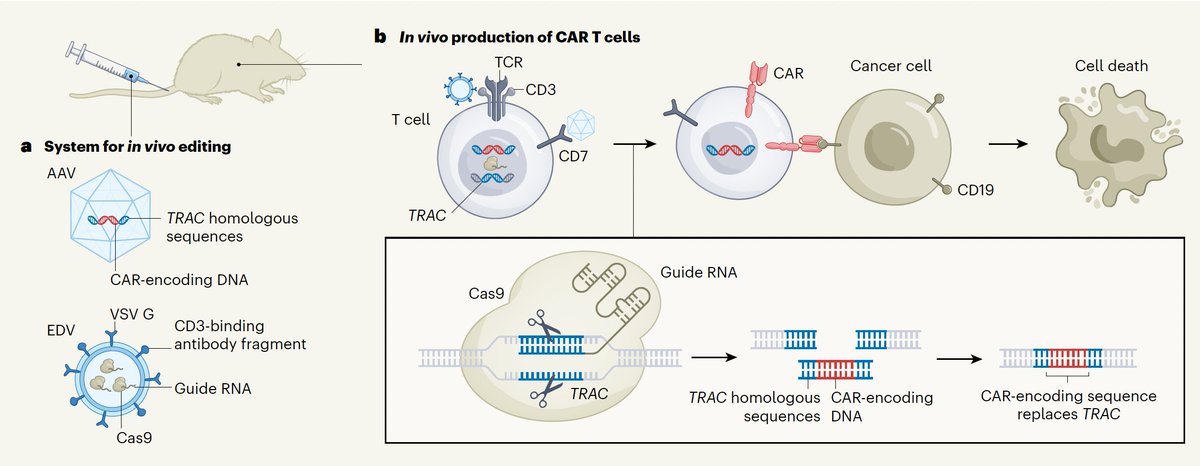
I am so excited to share our new paper in @Nature: the first programmable, site-specific integration of a large DNA payload into T cells in vivo.
A single IV injection results in therapeutic levels of TRAC-targeted CAR T cells in multiple models.
https://t.co/t3pyjHyGWS
a 🧵
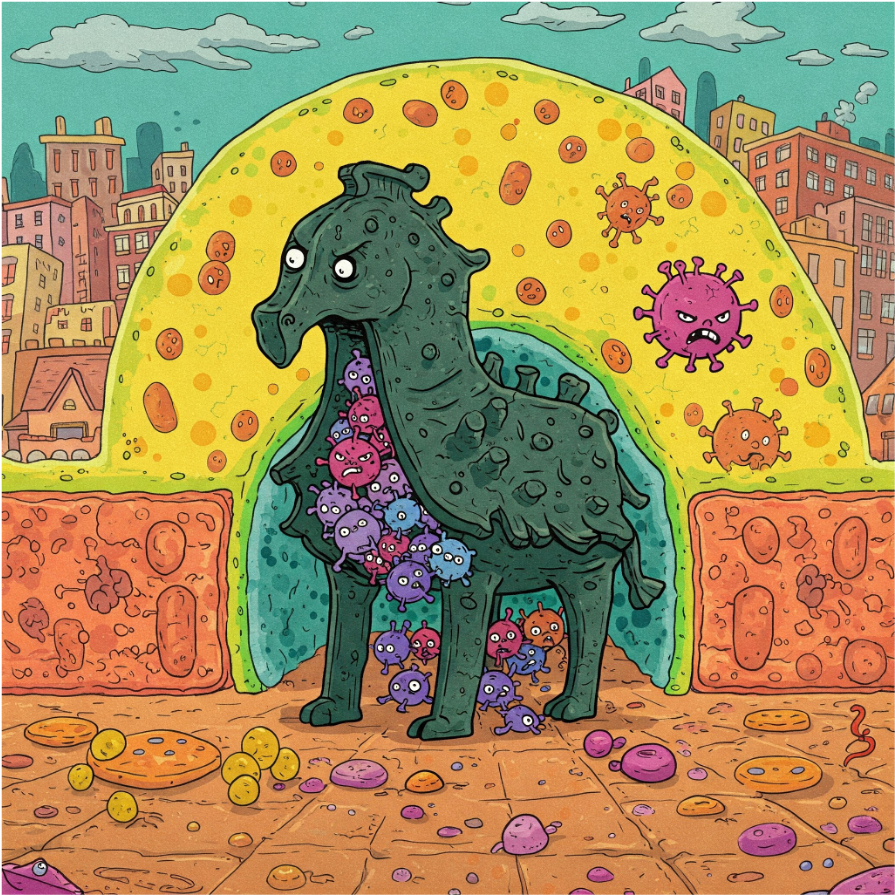
This one surprised us : deltaviruses don’t just borrow a helper virus. They can travel inside it. A literal Trojan Horse “virus-in-a-virus” route into cells. 🤯 Kudos to 1st author Joe McKellar and all co-authors ! published in Cell https://t.co/Tl9qTfgia4
Metastasis kills most cancer patients and grows from invisible seeds. How do these seeds escape from attack by immune cells? These seeds harness stress hormones!🤯
thanks to @nyscf @parkerici for their support. Today at @Nature https://t.co/rMKnHEqQwb
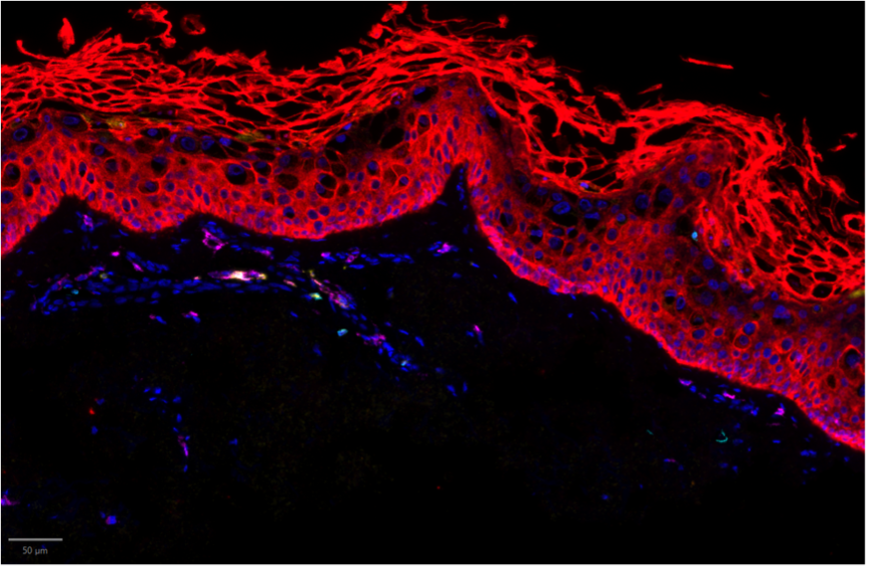
1/ We are excited to report in @SciImmunology that human complete and selective LFA-1 deficiency causes isolated Epidermodysplasia Verruciformis (EV). This surprising phenotype revealed a surprising mechanism 🙂https://t.co/fJ1QJ8JjBn
Thrilled to share the primary focus of my PhD thesis work, now out in @ScienceMagazine today!
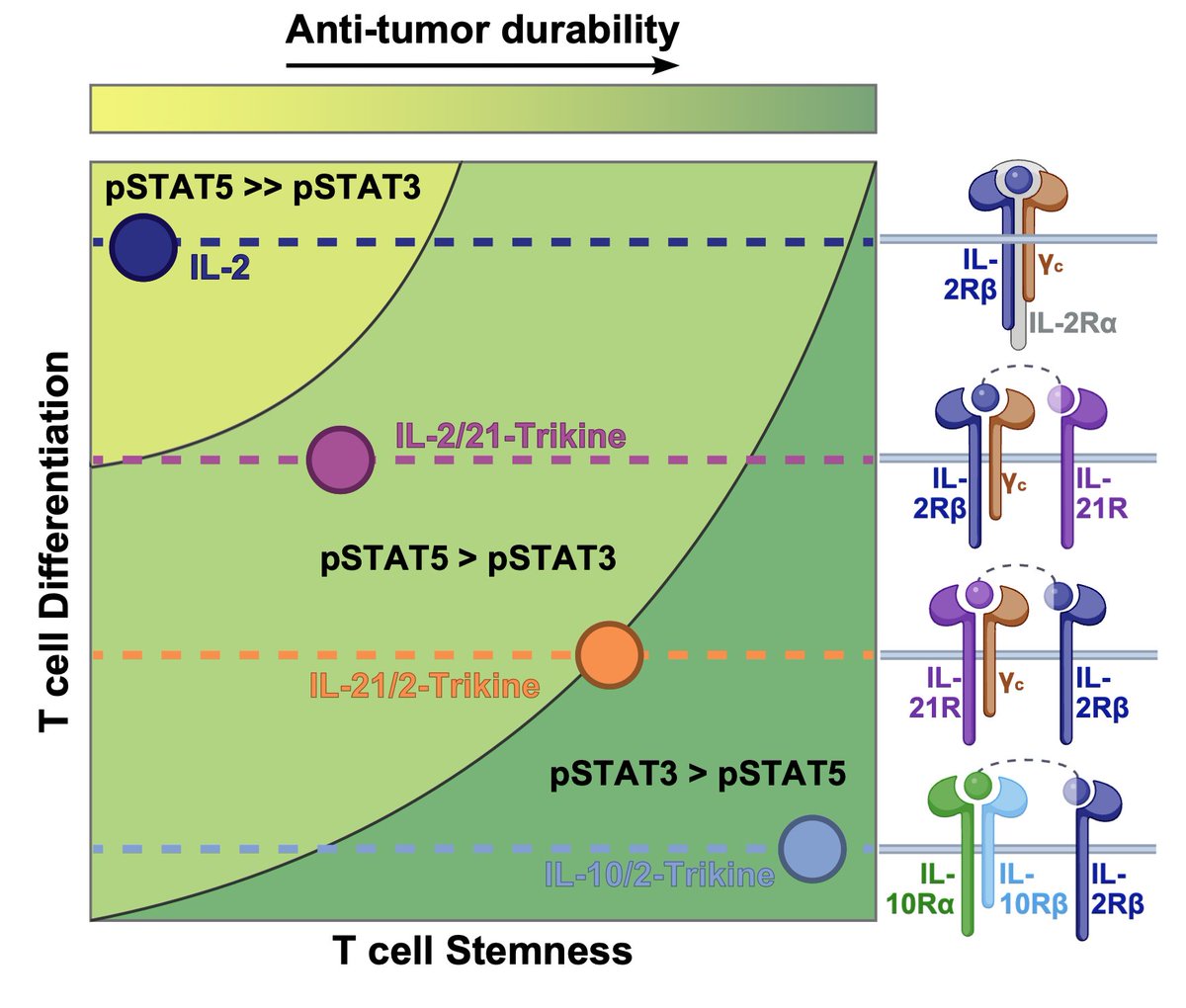
We developed Trikines — engineered cytokines that reconfigure receptor complex assembly to reshape signaling directly in endogenous immune cells.
https://t.co/UCixfysaUl
⚠️ If you’re reading this, you’ve been infected* ⚠️
*~95% the human population has been infected by the Epstein-Barr Virus (EBV).
Today in @Nature with @nyeo_sherry, @EMC22381830, @RyanDhindsa@SlavePetrovski, we shed some light on what happens next.
https://t.co/Db1j4aHeFO
🤔How do you design a promoter for stable titration of expression?
💡Try programmable promoter editing with DIAL!
📰Now published at @NatureBiotech 🧵 [1/n]
🔗 below
The first really big piece of research coming out of our Singaporean lab, this is Fadi's work @biofadialnaji , started in Chris Brooke's lab and completed here, over a four year period. Fadi serially passaged Flu over 80 times in conditions favouring defective genomes. He observes interesting patterns of competition and population dynamics. He observes selection of defective genomes that get better at competing with WT virus! Interestingly this variant improves defective genome replication when it is on the defective genome, but if it hops onto the full virus genome, it is a nonviable mutation!
Interesting improvement and safety feature for defective genomes as nucleic acid antiviral therapies!
https://t.co/7qmHUZ3dPo
Many proteins bind RNA, yet we still don’t know what RNAs most bind because methods map one RBP at a time. In @CellCellPress, with the Jovanovic lab, we describe SPIDR – a method for mapping the RNA binding sites of dozens of RBPs in a single experiment. https://t.co/Zs2Rn35D3s
Antigen-specific antibodies secreted by plasma cells are rapidly identified using microfluidics and fluorescence-activated cell sorting (FACS) https://t.co/31FyXyzdti
https://t.co/ZrqR06ImUT
So you want to change transgene expression: just change your promoter, right? Changing the promoter increases RNA and thus protein levels. What more could be happening?
[1/n] Well, promoters don’t just set RNA levels; they uniquely transform how RNAs are transmitted into protein levels. 🧵
Out Now! Breadth of influenza A antibody cross-reactivity varies by virus isolation interval and subtype https://t.co/ADxpAecH0s #Influenza#Antibodies#Immunology


![GallowayLabMIT's tweet photo. 🤔How do you design a promoter for stable titration of expression?
💡Try programmable promoter editing with DIAL!
📰Now published at @NatureBiotech 🧵 [1/n]
🔗 below https://t.co/CK055qeMNV](https://pbs.twimg.com/media/G4GwsleWgAAzh4G.png)

![GallowayLabMIT's tweet photo. So you want to change transgene expression: just change your promoter, right? Changing the promoter increases RNA and thus protein levels. What more could be happening?
[1/n] Well, promoters don’t just set RNA levels; they uniquely transform how RNAs are transmitted into protein levels. 🧵](https://pbs.twimg.com/media/GuVwps3WEAAyqss.png)


