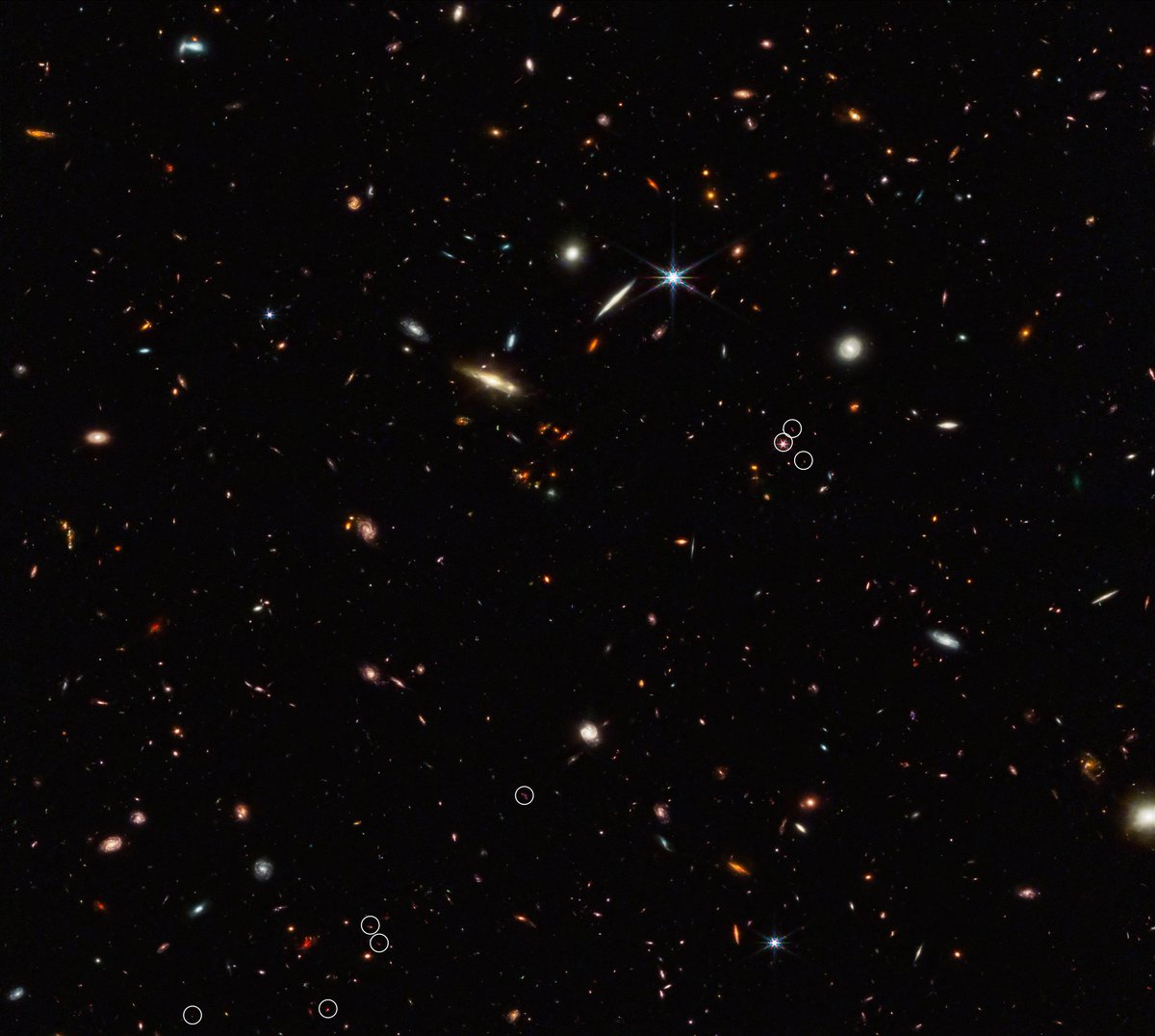
We pointed @ESA_Webb at the most distant galaxy previously discovered by the @HUBBLE_space telescope, and... We found there is a supermassive black hole lurking at its centre! 🛰️🕳️
Using @NASAWebb, a team of scientists led by University of Arizona astronomers has discovered a threadlike arrangement of 10 galaxies that existed just 830 million years after the Big Bang. https://t.co/1aFYEwcnB2
Cosmic Webb, meet cosmic web 🤝
Galaxies gather in clusters and threads stretching across the universe, punctuated by vast voids. Now Webb has discovered an early strand of this cosmic web — 10 galaxies that existed 830 million years after the big bang: https://t.co/cUuZMDgZ7J
It's time. #UnfoldTheUniverse with us, and join the global watch party for the first full-color images from the world's most powerful space telescope, @NASAWebb. https://t.co/iLDER3c8k6 https://t.co/iLDER3c8k6
From the description, it seems to be a relatively minor issue (Hopefully there are not any collisions). More updates will be provided by the end of this weak according to the NASA article.
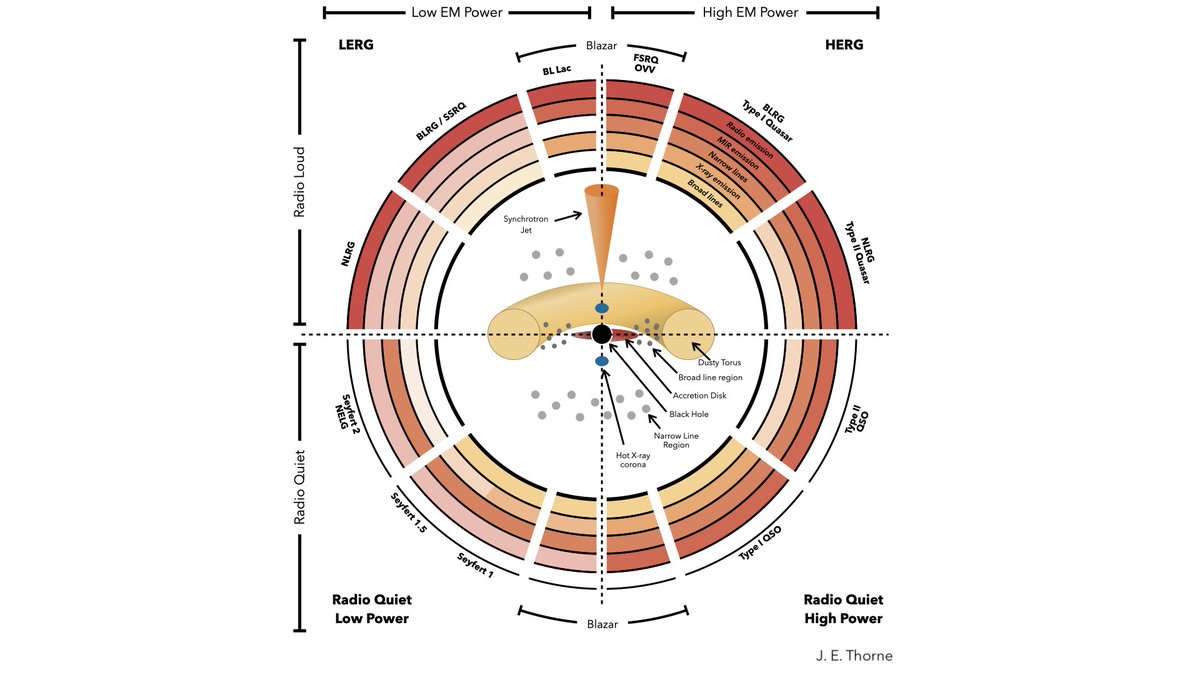
I’ve put together an AGN unification diagram split into radio loud/quiet and low/high EM power. I’ve added rings to show whether a particular combination of radio emission+EM power+geometry is expected to produce broad or narrow emission lines, or MIR, radio, or X-ray emission.