Kasich is also the reason Ohio doesn't have commuter rail running between all it's major cities. The republican party and John Kasich in general have been a blight upon Ohio's prosperity.
@JohnMMacgregor@davidsirota Agreed! A genuine reform agenda IMO has to include 1/ getting private money out of elections 2/ getting rid of the electoral college & 3/ creating a viable third party
I’m sorry but @60Minutes has been a total joke perhaps before but at the very least since they put this laughable “story” out there over two years ago. Anybody with half a brain can instantly realize this is pure nonsense https://t.co/aKWUsNg9k3
"Releasing live specimens of any kind is an incredibly perilous — read: irreversible — task that can have unforeseen consequences on the environment, not to mention local populations.” @Google you left “Don’t be evil” behind long ago and never looked back
Bernie’s view on AI is incoherent. Even if you accept that vertically integrated shitty monopolies are the only possible way to deploy technology, why only have the state take 50%? Why not just nationalize? https://t.co/Na8ah6RSKM
BREAKING: Bernie Sanders will introduce a bill to have the public take a 50% ownership stake in the country's biggest AI companies.
The American AI Sovereign Wealth Fund Act would have the government tax AI companies, take 50% of the stock, and put it under public control.
I will soon be introducing a bill to give the public a 50% ownership stake in the largest AI companies in America.
This would guarantee that the trillions created by AI are used to improve the lives of all of us — and block oligarch decisions that harm the American people.
@RachelCoyleOhio They’ll never give up this long legacy of total losers! “The term was initially used in 1982 for Democratic politicians' focus on investing in high tech industries… primarily Gary Hart, Bill Bradley, Michael Dukakis, Al Gore, Paul Tsongas, and Tim Wirth.” https://t.co/0nC4KlhrUF
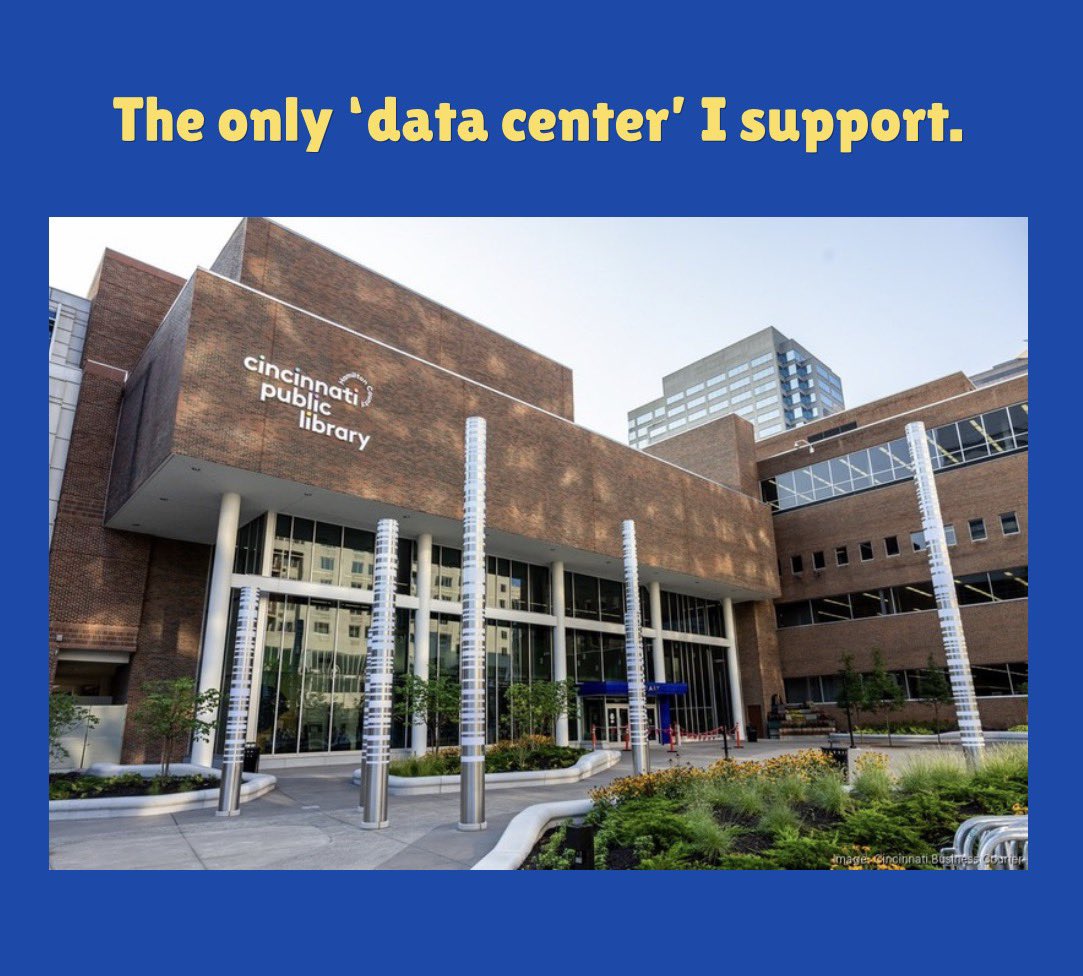
The backlash against data centers isn't about servers, AI, or technological progress in the abstract.
It's a backlash against;
>a vision of the future, where the good outcomes involve hazy hand waving and the bad ones are clear as day.
>a future that we are being coerced to accept, at every level, without complaint or discussion, let alone taking action to ensure a positive outcome (similar to COVID, the financial crisis, etc.).
>a technological, financial, and political leadership that almost nobody would trust with watching their dog while on vacation (a distrust built on decades of hard won experience).
With each failed promise over the last few decades, anger has grown. However, up until now, there hasn't been a way to oppose this future. It's been too amorphous.
Now, there is. Data centers are a tangible embodiment of a future nobody appears to want or trust. A focal point for opposition and disruption.
We have @GregCasar today announcing his proposal for a token tax on AI firms, the proceeds of which would go into a mass employment fund to offset job loss from AI deployment, with the rate adjusted periodically to level out the jobless rate.
https://t.co/HYQj4s8Oya
@NewYorker David Zweig's An Abundance of Caution and Lee/Macedo’s In Covid’s Wake both show how public health officials had sensible pandemic response plans that got thrown out the window when Covid hit.