@joni_jaakkola Joskus riittää ihan vaan ajatella. Että "eipä oo ollu mitään flunssia koko syksynä" (joulukuussa). No, nyt sitten melkein koko tammikuu meni flunssassa ja sen päälle keuhkokuumeessa.
"Kumpi on todennäköisempää: vuodesta 2006 alkanut lasku oppimistuloksissa johtuu vuonna 2016 lanseeratuista menetelmistä, joiden nykyinen käyttöaste on n. 5% – vai että syynä on vuonna 2007 alkanut älykännyköiden ja sosiaalisen median esiinmarssi?"
https://t.co/BCDvywWOcA
@joni_jaakkola Hyvä, kun ymmärrät! Koulu on vaan koulua ja ei se silleen jousta. Kuintenkin nää yrittäjähenkiset nykynuoret osaa ihmeesti juttuja, joihin ovat paneutuneet!
Opiskelu yliopistossa on vaativaa ja siihen täytyy keskittyä. Se on erilaista kuin lukiossa. Tässä jutussa hyviä vinkkejä, ja omani lisäksi:
1. Lue tehtävä! Huomaan, että opiskelijat näkevät hurjasti vaivaa sellaisiin asioihin, joita ei ole pyydetty. 1/ https://t.co/sB7f78Rg2K
@HietarantaSirpa@Migreeni Tästä on kokemusta, valitettavasti. Koin jotenkin rankaisevana varhaisen puuttumisen mallin, jossa menettää luvan itse ilmoittaa sairaudesta, jos on 3 irrallista poissaoloa 6 kk sisällä, joten sinnittelin töissä ja olin lopulta yli 4kk migreenikierteessä + pitkällä sair.lomalla
Itse olen enemmän huolissani siitä, että liian suuri osa esim. migreeniä sairastavista kertoo olleensa säännöllisesti sairaana töissä.
Tämä voi tarkoittaa hitaampaa toipumista, sairauden kroonistumista ja lopulta jopa työkyvyn menetystä.
#migreeni#työkyky
We asked teachers what tiny shifts made a difference in their classroom—and their answers surprised us. Just a few words can have a positive impact!
Here are 5 Tiny Language Shifts (that can make a *big* difference)
🧵1/6
Our brains are wired to forget, but there are research-backed strategies you can use to make your teaching stick. 🧠
🧵 Adapted from this article: https://t.co/qlaCDhA1R6
1/11
Studies on the role of background music for sake of learning and attention show varied results but collectively show that if your goal is focus and information retention then working in silence > purely instrumental music > music w/lyrics… BUT that listening to music during brief (5-20min) breaks between cognitive tasks (done in silence) is best.
https://t.co/wCT0aDEJtp
In school, time pressure on tests favors the fastest sprinters. But in life, success is a marathon.
The students with the greatest potential aren’t always the ones who rapidly spit out the right answers.
They’re often the ones who take the time to ask the right questions.
https://t.co/RCtvEMYwqA
Thirty-eight years into being a stand-up comedian, Jerry Seinfeld was asked how his daily work routine has evolved over the years.
“It’s the exact same,” he said. “I do the exact same now as I did when I was 21 in 1975.”
He sits down with a yellow legal pad, he said, and
"my writing technique is just: You can’t do anything else. You don’t have to write, but you can’t do anything else.”
That’s your day? the interviewer asks. That’s what you’ve done every day for thirty-eight years? That, to me, sounds torturous.
“It is,” Seinfeld admits. “But you know what? Your blessing in life is when you find the torture you’re comfortable with…Find the torture you’re comfortable with, and you’ll do well.”
Takeaway 1:
To most, what Jerry Seinfeld does every day sounds like torture. But Seinfeld loves what he does. "I love my big, yellow legal pad," he said. "Once I get that pad open, I can’t stop…the next thing I know, the day is gone.”
Paul Graham has a great essay on this imbalance.
"My father is a mathematician," Graham writes. "To me the exercises at the end of each chapter in a math textbook represent work...To him the problems [are] the reward."
"It seemed curious that the same task could be painful to one person and pleasant to another."
If what is torturous to other people is rewarding to you, Graham writes, "that's something you're well suited for."
Takeaway 2:
In the early 1980s, the sociologist Daniel Chambliss spent 5 years studying swimmers at every level of ability.
In 1989, he published his research in a paper, “The Mundanity of Excellence.” Essentially, Chambliss found that Olympic champions don’t train more than the average swimmer. Instead, they train differently. In particular, they do “what others see as boring.”
Chambliss tells the story of a group of coaches from around the world visiting a U.S. Olympic Team practice. “The visiting coaches were excited at first…then soon they grew bored, walking back and forth, glancing down at their watches, wondering, after the long flight out to California, when something dramatic was going to happen.”
“They all have to come to see what we do,” the U.S. Olympic Team coach said. “They think we have some big secret.”
There is no secret. There is only the doing of the mundane, boring, torturous work, day after day.
Find the mundane, boring, torturous work you like, as Seinfeld said, "and you’ll do well."
- - -
"Your blessing in life is when you find the torture you’re comfortable with." — Jerry Seinfeld
Follow @bpoppenheimer for more content like this!
Strategia selkeään ajatteluun (James Clear): Älä yritä olla oikeassa. Oleta, että olet väärässä, ja yritä olla vähemmän väärässä.
Jos yrität olla oikeassa, alat puolustamaan uskomuksiasi.
Jos yrität olla vähemmän väärässä, syntyy uteliaisuutta ja älyllistä nöyryyttä.
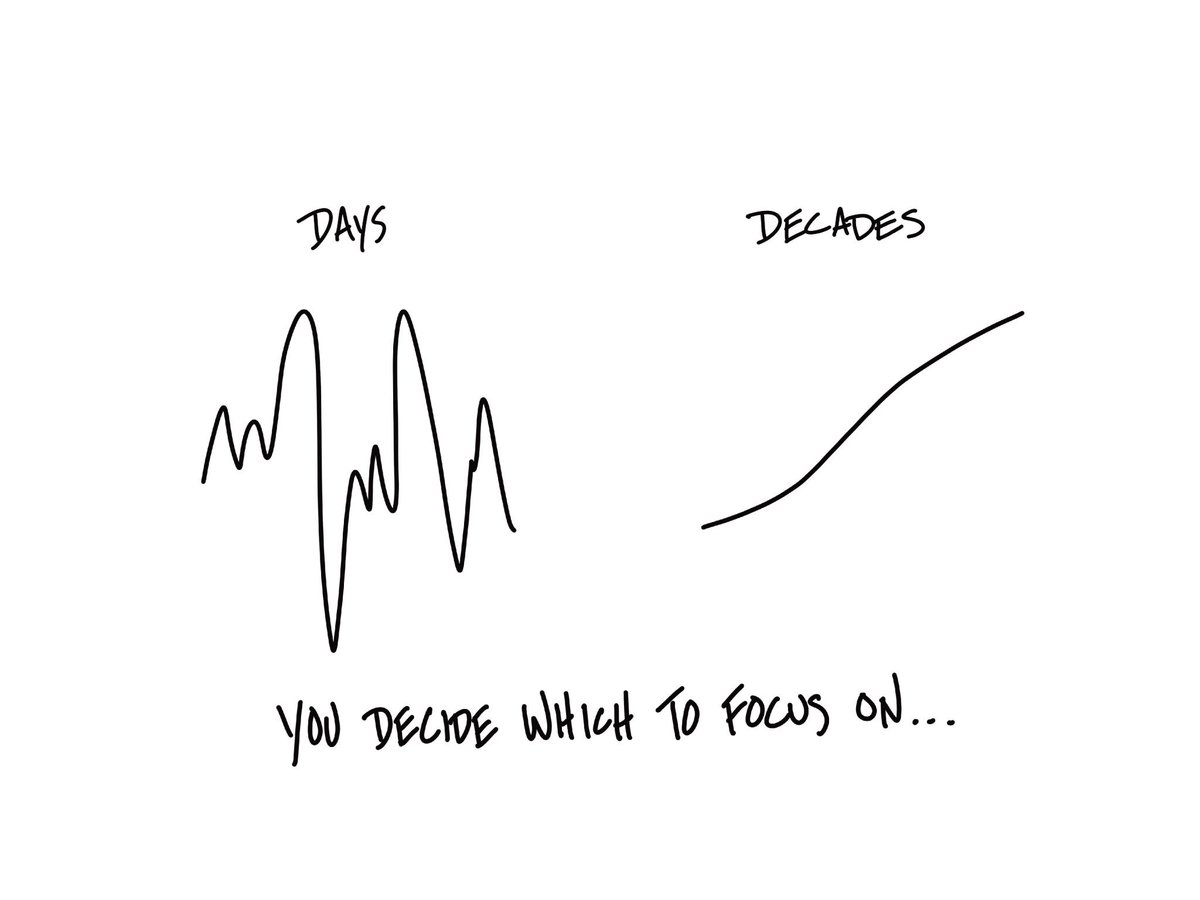
Important Rule for Life: When in doubt, zoom out.
Being perpetually zoomed in creates two challenges:
1. Struggle feels bigger than it really is.
2. Growth feels smaller than it really is.
The 10,000 foot view provides perspective—on the manageable nature of your struggles and the impressive nature of your growth.
Two effective ways to zoom out:
1. Vertically: Zoom out via "altitude" and see the bigger picture context of the moment.
2. Horizontally: Zoom out via “mental time travel” to the past or the future and observe the present through that new lens. Go back 10 years and think about how your past self would be in awe of where you are today. Go forward 50 years and think about how your future self would give anything to be back doing the things you get to do today.
Both can work wonders.
Always remember: When in doubt, zoom out.
@TiinaTahka @katri_is Eikai blogisti ole kyseenalaistamassa stressitason nousua. Minusta blogissa esitetty on erittäin relevanttia, nyt stressiä luovat myös liioitellut mielikuvat järjestelmän ongelmista suhteessa vanhaan. Epäsuhtaa pisteytyksessä ollaan korjaamassa. Lukiossa on lops-uudistuksen 1/
@katri_is @raudasmiika@TiinaTahka Stressiin auttaa kertoa, mitä vaihtoehtoja ja reittejä on olemassa. Kognitiivinen uudelleenarviointi on tutkitusti hyvä tapa lievittää stressiä :-). Teen tätä nuorten kanssa koko ajan. Teksti on syntynyt nuorten kokemusten kuuntelemisesta ja halusta auttaa heitä.
@katri_is Stressitason nousulle on monta syytä. Väärinkäsitykset opiskelijavalinnasta ja median kuva ei sitä helpota. Uusvalu-hanke katsoi lukiolaisten näkökulmia https://t.co/qzm2RWRkot
@Marjo47220206@TiinaTahka Ei näistä paineista tietenkään päästä eroon. Hakupainealoille hakeminen on aina tuottanut suorituspaineita, oli systeemi mikä vaan. Aallon tuta on vaikein tekniikan aloista päästä sisälle.





![bpoppenheimer's tweet photo. Thirty-eight years into being a stand-up comedian, Jerry Seinfeld was asked how his daily work routine has evolved over the years.
“It’s the exact same,” he said. “I do the exact same now as I did when I was 21 in 1975.”
He sits down with a yellow legal pad, he said, and
"my writing technique is just: You can’t do anything else. You don’t have to write, but you can’t do anything else.”
That’s your day? the interviewer asks. That’s what you’ve done every day for thirty-eight years? That, to me, sounds torturous.
“It is,” Seinfeld admits. “But you know what? Your blessing in life is when you find the torture you’re comfortable with…Find the torture you’re comfortable with, and you’ll do well.”
Takeaway 1:
To most, what Jerry Seinfeld does every day sounds like torture. But Seinfeld loves what he does. "I love my big, yellow legal pad," he said. "Once I get that pad open, I can’t stop…the next thing I know, the day is gone.”
Paul Graham has a great essay on this imbalance.
"My father is a mathematician," Graham writes. "To me the exercises at the end of each chapter in a math textbook represent work...To him the problems [are] the reward."
"It seemed curious that the same task could be painful to one person and pleasant to another."
If what is torturous to other people is rewarding to you, Graham writes, "that's something you're well suited for."
Takeaway 2:
In the early 1980s, the sociologist Daniel Chambliss spent 5 years studying swimmers at every level of ability.
In 1989, he published his research in a paper, “The Mundanity of Excellence.” Essentially, Chambliss found that Olympic champions don’t train more than the average swimmer. Instead, they train differently. In particular, they do “what others see as boring.”
Chambliss tells the story of a group of coaches from around the world visiting a U.S. Olympic Team practice. “The visiting coaches were excited at first…then soon they grew bored, walking back and forth, glancing down at their watches, wondering, after the long flight out to California, when something dramatic was going to happen.”
“They all have to come to see what we do,” the U.S. Olympic Team coach said. “They think we have some big secret.”
There is no secret. There is only the doing of the mundane, boring, torturous work, day after day.
Find the mundane, boring, torturous work you like, as Seinfeld said, "and you’ll do well."
- - -
"Your blessing in life is when you find the torture you’re comfortable with." — Jerry Seinfeld
Follow @bpoppenheimer for more content like this!](https://pbs.twimg.com/media/F6Zhkp1W4AA3vX4.jpg)