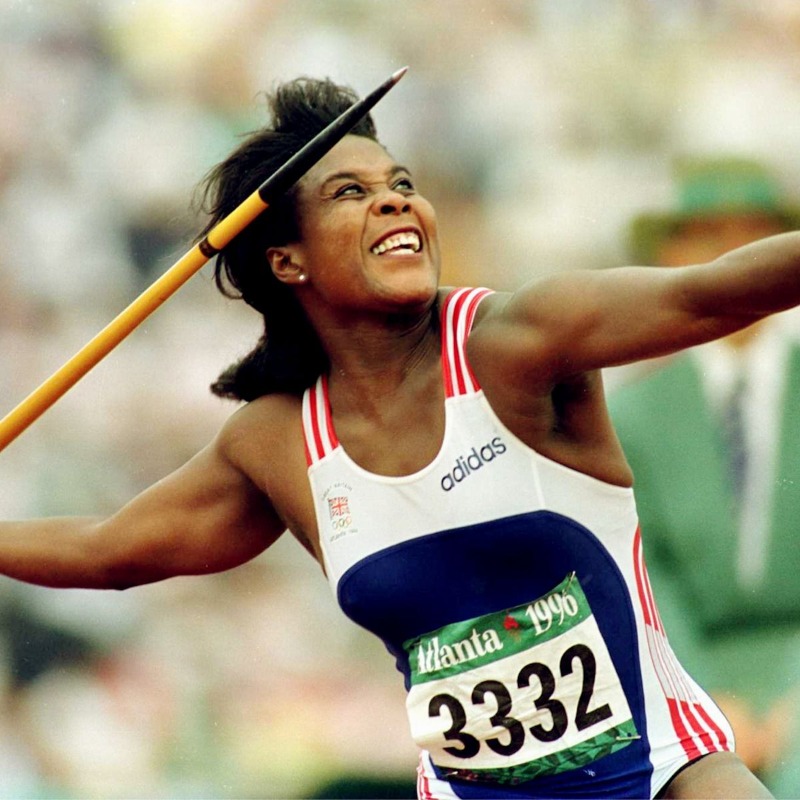
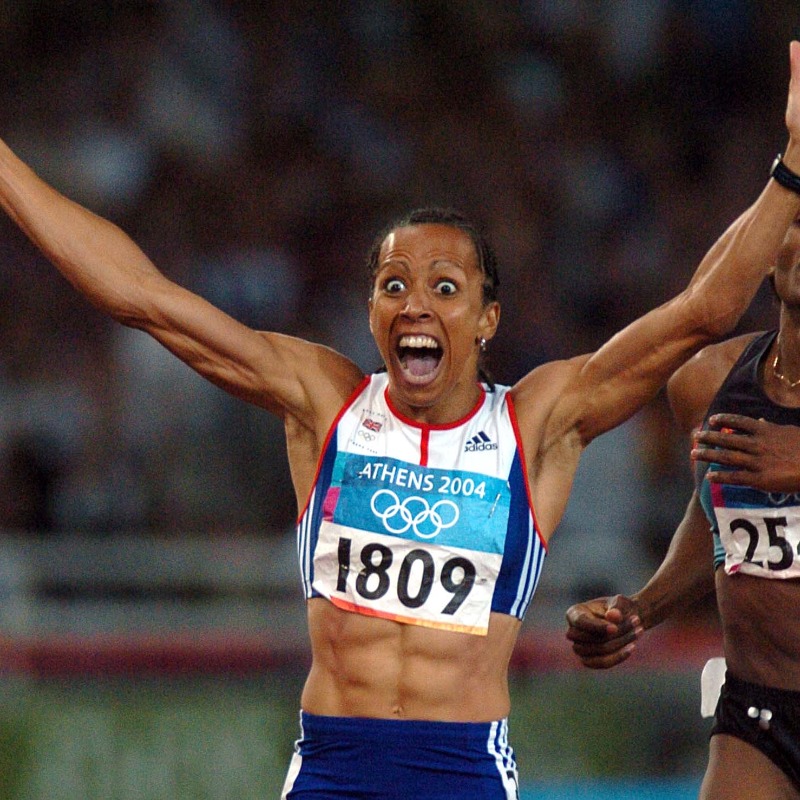
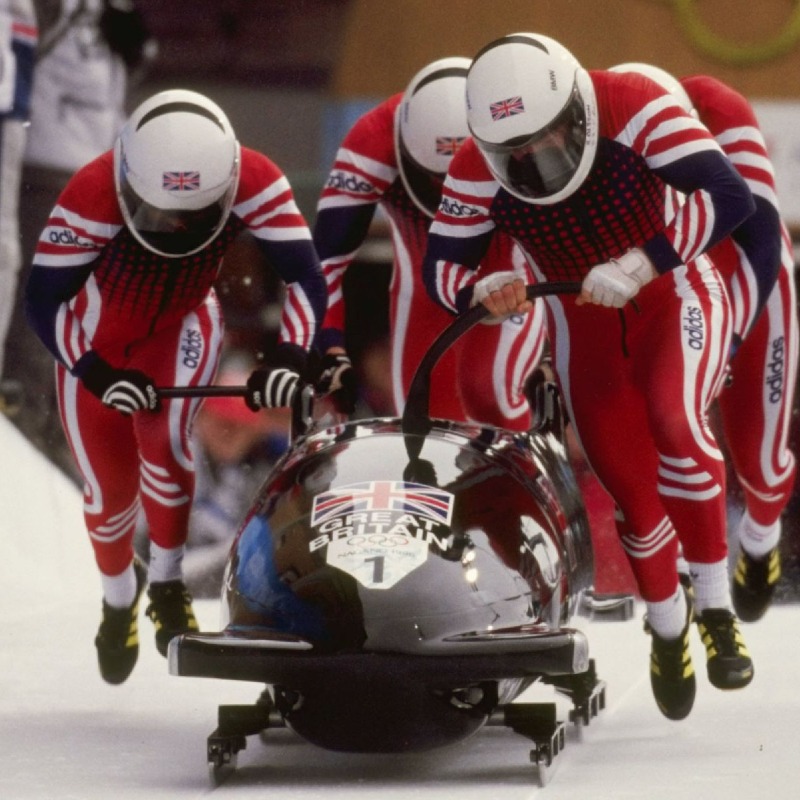
To represent Team GB is to stand on the shoulders of giants 👏
For more than a century, black British athletes have been blazing a trail ☄️
This #BlackHistoryMonth, take a trip down memory lane to celebrate some of the biggest names in British sport ✨�To represent Team GB is to stand on the shoulders of giants 👏
For more than a century, black British athletes have been blazing a trail ☄️
This #BlackHistoryMonth, take a trip down memory lane to celebrate some of the biggest names in British sport ✨�To represent Team GB is to stand on the shoulders of giants 👏
For more than a century, black British athletes have been blazing a trail ☄️
This #BlackHistoryMonth, take a trip down memory lane to celebrate some of the biggest names in British sport ✨�To represent Team GB is to stand on the shoulders of giants 👏
For more than a century, black British athletes have been blazing a trail ☄️
This #BlackHistoryMonth, take a trip down memory lane to celebrate some of the biggest names in British sport ✨�To represent Team GB is to stand on the shoulders of giants 👏
For more than a century, black British athletes have been blazing a trail ☄️
This #BlackHistoryMonth, take a trip down memory lane to celebrate some of the biggest names in British sport ✨�To represent Team GB is to stand on the shoulders of giants 👏
For more than a century, black British athletes have been blazing a trail ☄️
This #BlackHistoryMonth, take a trip down memory lane to celebrate some of the biggest names in British sport ✨👇
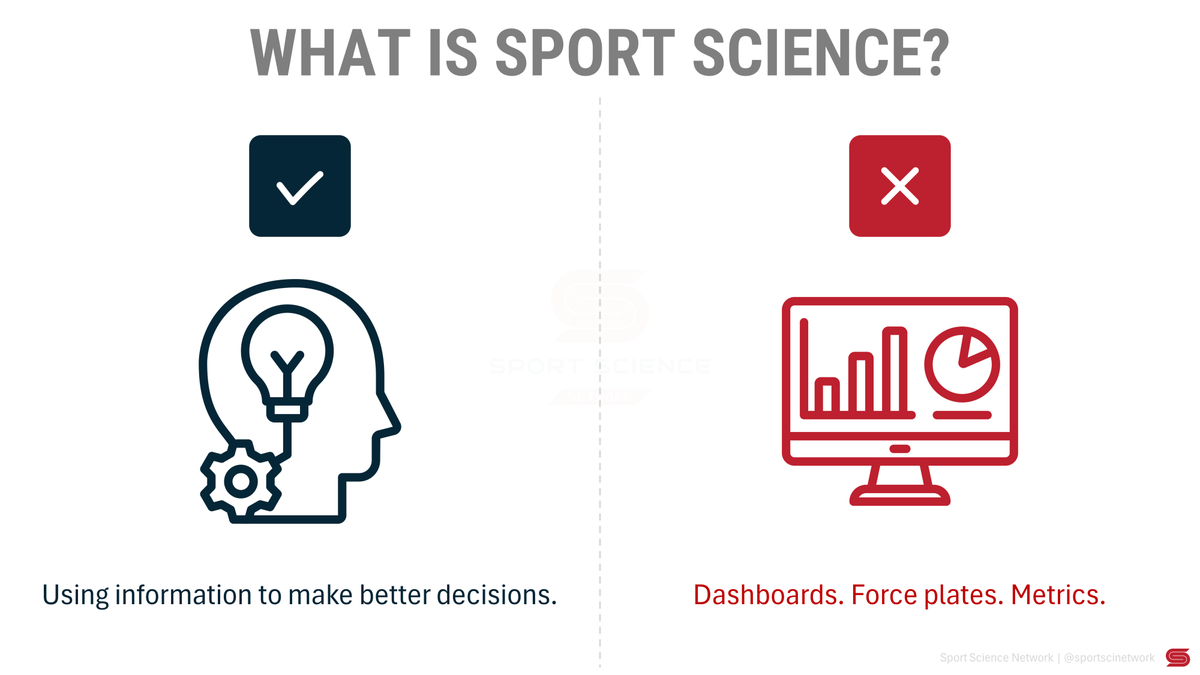
What is sport science?
Sport science isn’t dashboards, force plates, or a wall of metrics.
Those are just tools.
Real sport science is about applying information to improve athlete performance and health — in messy, complex, real-world environments.
That means:
• Starting with your context, not someone else’s blueprint
• Building simple, sustainable systems that actually get used
• Turning information into clear actions, not just pretty reports
• Navigating uncertainty instead of chasing false certainty
• Choosing technology that truly fits your needs, not just your wishlist
• Connecting the dots across performance, health, and communication
The most valuable sport science doesn’t come from having the most expensive tools.
The best sport science doesn’t come from having the most expensive tools.
It comes from asking the right questions, working within constraints, and helping teams make better decisions for their athletes.
More on how to apply these principles will be shared in The Sport Science Handbook.
📣 NEW #Infographic on bone stress injury ⚠️
Translating the international Delphi consensus on bone stress injuries into clinical practice ✅
Article ➡️ https://t.co/ydAcP6u8bG
"We aren't currently facing a "disengagement crisis" at work. What we're really facing is a mattering deficit".
Mattering is knowing we’re significant to our leaders & key members of our group. When we experience mattering, we flourish - we’re more motivated & persistent & experience greater well-being. But when we feel we don’t matter, we languish & either act out in desperation or withdraw. Noticing is a key component of mattering. It is the deliberate act of paying attention to the details, ebbs & flows of someone’s life and work.
Three ways leaders can become better noticers:
1) identify barriers to seeing others: the biggest barrier is being too busy to take the time.
2) deliberately make space & use time for connection.
3) ask questions & check in, in order to gather information & address the concerns of people in our teams:
https://t.co/IzE8rGMo62. By @ZachMercurio in @HarvardBiz
An overview of his new book: https://t.co/l9djLNQYrv
📢JOB ANNOUNCEMENT📢
We are recruiting for a new full time S&C coach at the Royal Ballet. You could be a key part of our performance team delivering programmes to some the world's best ballet dancers. We are looking for experienced coaches who are keen to make an impact to our performance and rehab delivery.
Applications close 2nd of June 2025.
https://t.co/f3oRmr41Rv
Tickets now available for my upcoming webinar on hamstring tendon adaptation to injury and training. We’ll summarise the latest research followed by a Q&A.
Weds 4th June @ 18:30 BST
Sign up here: https://t.co/Gw9fvhHo3T
Tell your colleagues. Bring your friends.
If you’re on the far side of the world to Europe, i.e. Aus/NZ, keep your eyes peeled for a more time-zone friendly option coming your way.
Students! Promo codes also coming your way. 👀
MSc Open Evening - 1st May: We invite those interested in our Sports Medicine, Exercise & Health MSc programme, run in partnership with UCL to join us for an in-person Information Session at our facility this Thursday from 4:30pm.
🔗 https://t.co/gNh4P10xmX
The effects of acute exercise/diet induced low energy availability on next day performance 🪫
This new study investigated the effects of 24-hrs of low energy availability (LEA) on next day performance and metabolism in endurance athletes 🔍
The participants completed 5 x 3-day trials 🗓️
1️⃣ Day 1 = standardised high energy availability (EA)
2️⃣ Day 2 = Low (15 kcal) / High (45 kcal) / Higher (75 kcal) EA
(with Low + High EA conditions achieved either through energy intake or exercise energy expenditure ➡️ 4 separate trials)
3️⃣ Day 3 = post-intervention testing
Here is what they found ⬇️
🔥 Highest peak fat oxidation occurred under LEA induced by exercise
🩸 Postprandial glucose and insulin responses were highest when LEA was induced by diet
Whereas, 24-hr of LEA did not impair any markers of performance including…
💪 Strength/power
⏱️ Sprint capacity
🧠 Cognitive performance
There were also no differences between male and female endurance athletes across the assessed parameters ❌
24-hrs of LEA is not long enough to incur impairments to performance ⏰
Therefore, for acute (< 24-hr) weight making practices, LEA does not appear to be a negative practice ✅
And for future research investigating the effects of LEA should utilise protocols > 24-hr 🔬
Final PhD study is out
🦶 Slow, high-load eccentric calf training leads to the greatest acute Achilles tendon thinning (↓8.9%) & stiffening (↑54.5%)—suggesting more fluid exudation & lower intratendinous pressure.
🏋️ Loading speed & intensity matter!
🔗 https://t.co/yfBqaJzZzm
**MANUSCRIPT PUBLISHED ONLINE (FREE OPEN-ACCESS)**
Clark, K. P., Meng, C. R., Walts, C. T., Ryan, L. J., & Stearne, D. J. (2025). Angular kinematics during top speed sprinting in male intercollegiate track and field and team sport athletes. Frontiers in Sports and Active Living, 7, 1535798.
https://t.co/PC9ehFaz47
10-minute summary video posted here and on YouTube. Shorter highlight clips to follow next week.
https://t.co/WxfkQe0pwP
PhDone!
Honoured to defend >10yrs of work alongside my promotors, Prof. Kerkhoffs & Prof. @Jltol.
Massive thanks to our team, opponents, friends & family.
Thesis available here: https://t.co/l8l7dWXSA1
Made possible by @ACES_Amsterdam@AMSmovement@deorthopedie, thank you!
Our muscles get sore and weak after unaccustomed eccentric contractions. I've seen a few Tweets & blogs lately, with some interesting takes. So, for lay audiences and scientists, here's what I think we currently know: https://t.co/t249DpQAeB.
Interested in respiratory health in sport? There's still a few remaining places on the upcoming ISEH Breathing to Win CPD course that's taking place at the ISEH on Fri 4th April. https://t.co/lQXQkU23EU
Today marks a pivotal moment for women’s sport with @theAIS, UKSI, High Performance Sport New Zealand and @TeamUSA forming an alliance aimed at advancing female health and performance worldwide 👇
https://t.co/j5kpkcT5kK