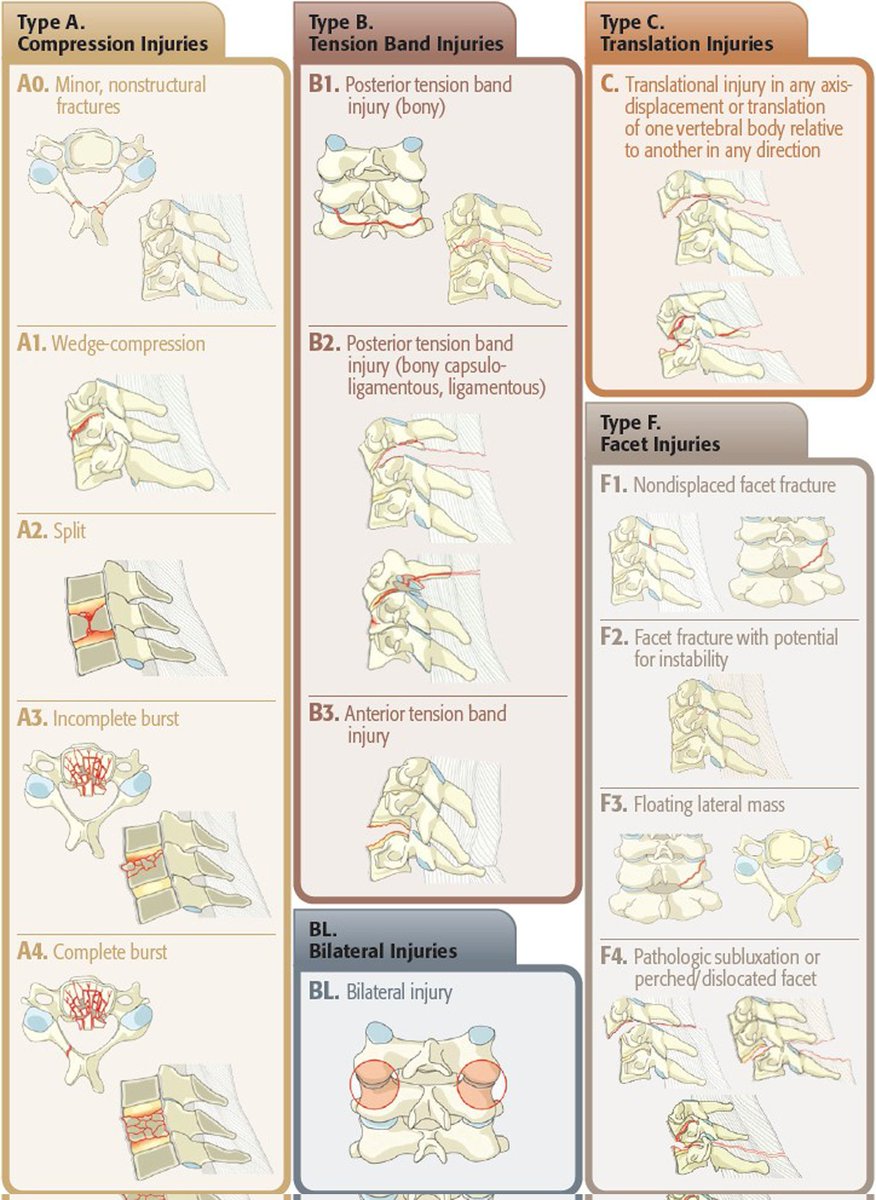
🔴The current AOSpine Trauma classification subdivides spinal column into 4 regions: upper C spine , subaxial C spine, thoracolumbar spine , & sacral spine (S1-S5, including coccyx).
Here➡️ Subaxial C spine.See also the comment 1 & 2 & 3 for other parts
https://t.co/382fmGpaMB
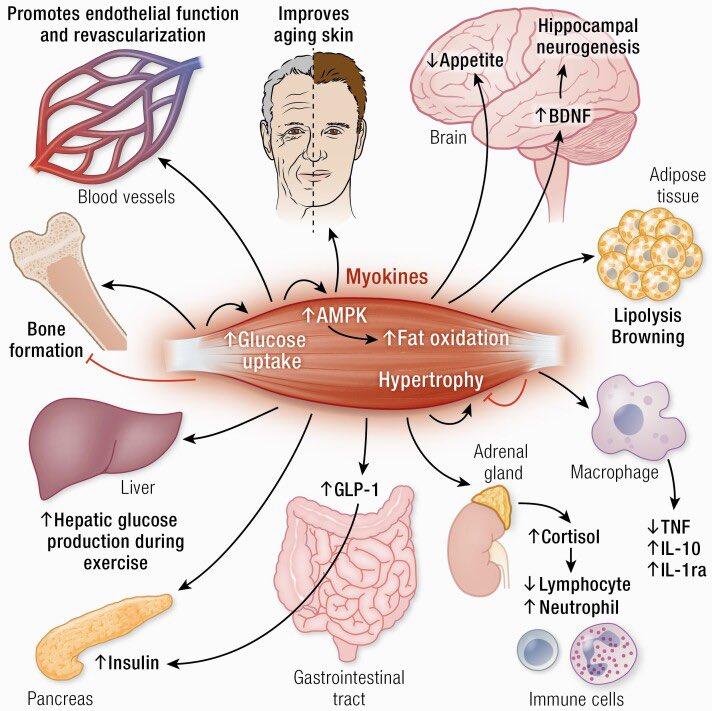
“Muscle-Organ” Crosstalk
Myokines👉released by muscle fibres in response to exercise training
Myokines mediate communication btw muscle and other organs including brain, adipose tissue, bone, liver, gut, pancreas, vascular bed, skin
#myokine#muscle
https://t.co/auSGNpLyp3
📢Exciting News
The programme for the 7th IOC World Conference on Prevention of Injury and Illness in Sport is now live 🚀 This includes over 40 symposia, 20 oral sessions, 36 workshops and nearly 300 e-posters 🙌
Full programme ▶️ https://t.co/Tlvz1pqC0n
#MonacoConference2024
In a world where things can sometimes get too complex
Don’t forget these 10 elementary & essential strength movements
1. Goblet squats
2. Barbell inverted row
3. Heavy sled push
4. Barbell push-up
5. KB RDL
6. Classic DB Row
7. Side lunge
8. Chin-up ISO Hold
9. Bulgarian split squat
10. Chest supported row
Anterior Interosseous nerve (AIN) Syndrome.
♦️Common causes:
1. Compression neuropathy (It's one of the 3 common median nerve entrapments)
2. Brachial plexus neuritis
♦️It's a pure motor palsy.
♦️AIN innervate:
-FPL
-FDP of index & middle finger
-Pronator quadratus.
This is why I get so frustrated when I see people post rubbish about persistent hip pain being driven by tightness in muscles, or mobility issues, or because they have switched off glutes.
It’s so much more complex. I’d like to think I’m at the coal face of dealing with patients who often have persistent pain for years and years. They struggle and it really can take a toll, physically and mentally. Unfortunately all too often these patients have had masses of input, all often forgetting about the number one important thing, the patient, and treating them as a person.
People deal with mental health issues in various ways and as healthcare practitioners we need to consider how we screen and manage those who maybe struggle more. It’s self perpetuating as ultimately the anxiety will grow with the poorer level of management. Those being managed incorrectly, ultimately leads to no positive outcome, that increases anxiety that the issue won’t resolve, and ultimately it’s a spiral. We need to break that cycle, it isn’t easy. It definitely is not so simplistic as to just strengthen your hip flexors, or to do some stretches. It’s about building physical and emotional resilience with rehab and that for me is a skill that sets apart the best physios from the rest.
Remember: We treat people with hip pain. We don’t treat hip pain.
📣 #BestofBJSM for September 🔥
🥇 #ConsensusStatement - IOC Consensus on REDs ⚡️ https://t.co/w48QZFjq5h
🥇 #PhDAcademyAward - Hip Imaging in Football Players ⚽️ https://t.co/Qkfy750Hsj
🥇 #BJSMBlog - Exercise Training and Blood Pressure 💪 https://t.co/y7UITe1uB5
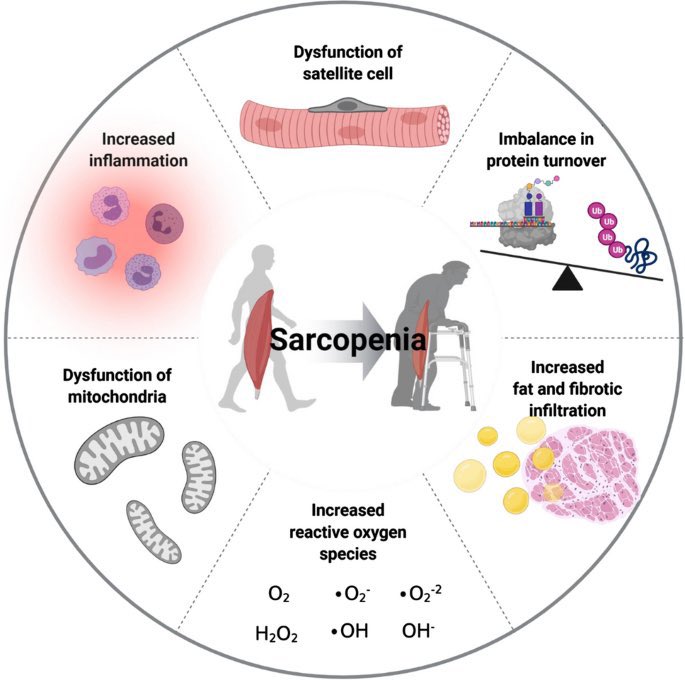
Sarcopenia: age-related loss of skeletal muscle mass & function👇🏼
>reduced regenerative capacity
>imbalance in protein turnover
>alteration of muscle’s fat composition
>increased reactive oxygen species
>mitochondrial dysfunction
>increased inflammation
https://t.co/LwWqQaMRlE
✴️TENNIS ELBOW (LAT. EPICONDYLITIS)
✔️a form of tendonitis(=tendinitis).
✔️an overuse injury.
Tendinitis: acute injury due to inflammation.
Tendinosis: result of degeneration over time.
✴️5 Types of Tennis elbow can be palpated by specific palpation techniques.
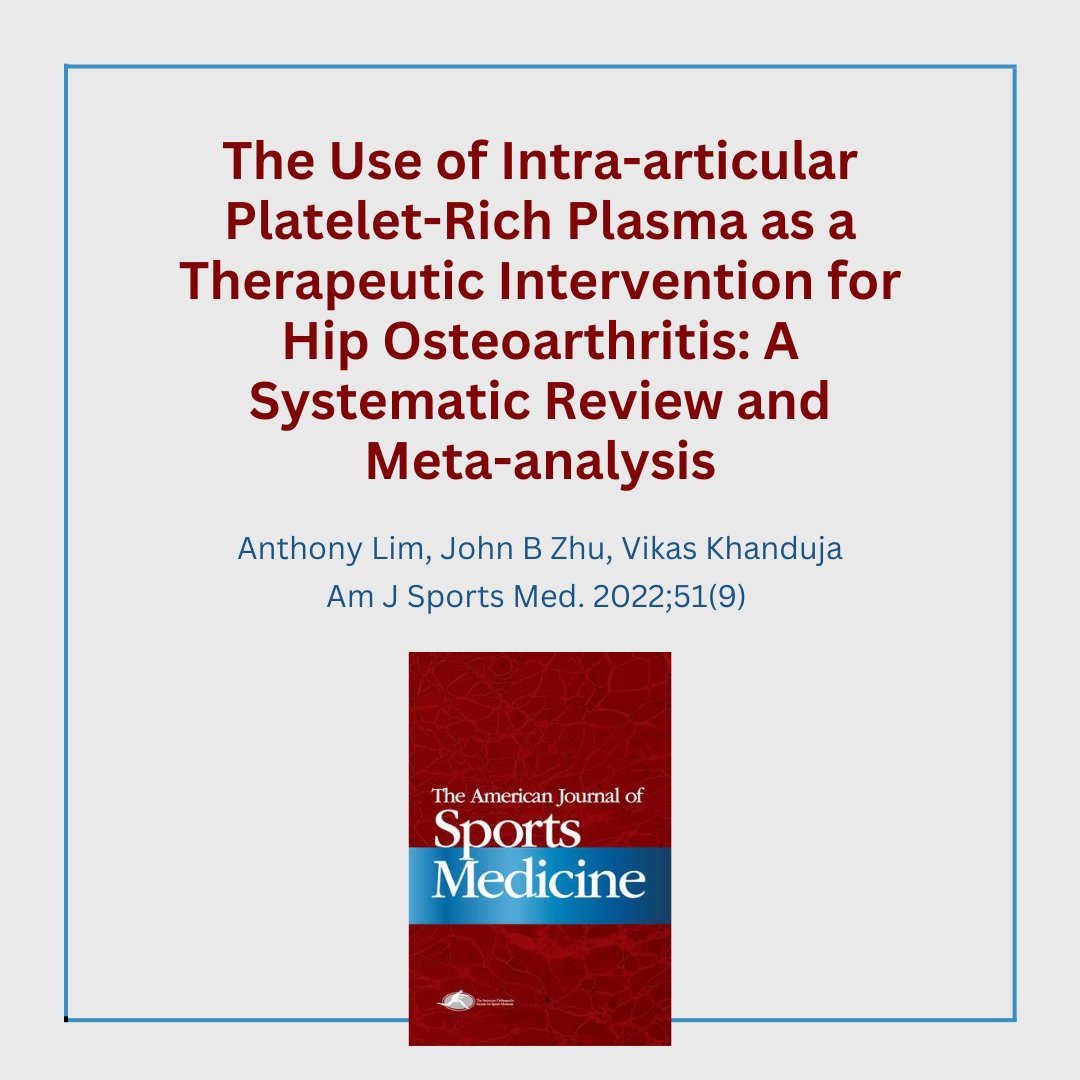
Do PRP injections have a benefit for patients with hip osteoarthritis over other forms of nonsurgical management? We carried out a meta-analysis & systematic review to find out what the literature said https://t.co/bLjOQ7mtlQ #PRP#Osteoarthritis#Orthopedics@BritishHip
Over the last few years I’ve started incorporating more and more low amplitude plyometric exercises into my programs.
They:
• Build ankle stiffness.
• Build capacity in the Achilles.
• Build ankle stability.
The video shows single leg plate taps, an example low amp plyo.